



Search titles
Displaying results 61 to 70 of 362.

Competing for Influence »
The Role of the Public Service in Better Government in Australia
Authored by: Barry Ferguson
Publication date: July 2019
Amidst growing dissatisfaction with the state of government performance and an erosion of trust in our political class, Competing for Influence asks: what sort of public service do we want in Australia?
Drawing on his experience in both the public and private sectors – and citing academic research across the fields of public sector management, industrial organisation, and corporate strategy – Barry Ferguson argues the case for the careful selection and application of private sector management concepts to the public service, both for their ability to strengthen the public service and inform public policy. These include competitive advantage, competitive positioning, horizontal strategy and organisational design, and innovation as an all-encompassing organisational adjustment mechanism to a changeable environment.
But these are not presented as a silver bullet, and Ferguson addresses other approaches to reform, including the need to rebuild the Public Sector Act, the need to reconsider the interface between political and administrative arms of government (and determine what is in the ‘public interest’), and the need for greater independence for the public service within a clarified role. This approach, and its implications for public sector reform, is contrasted with the straitjacket of path dependency that presently constricts the field.

The Chinese Economic Transformation »
Views from Young Economists
Edited by: Ligang Song, Yixiao Zhou, Luke Hurst
Publication date: July 2019
The Chinese Economic Transformation, the 19th volume in the China Update book series, provides an opportunity for young economists to share their views on various issues relating to the Chinese economic transformation. More than half of the contributors to this book are female scholars. Some of the contributors are rising stars in the studies of the Chinese economy and economic transition, and some only recently received their PhDs and are on their way to establishing themselves in the field of China studies. But they have one thing in common: to passionately observe, study and research what is going on in the Chinese economic transformation during the reform period; and, by so doing, make contributions to the policy debates on, and general understanding of, the Chinese economy.
The chapters in this volume include an in-depth probe into challenges in capital and credit allocation due to financial friction and policy distortions; investigating the causes of growth slow-down in China and suitable policy responses; the evolution of the household registration system and its impact on off-farm employment and the integration of rural and urban labour markets; the growth, scale and characteristics of nonstandard employment; the development of rural e-commerce and its economic impact; innovation performance of listed enterprises in China; financial services liberalisation and its impact on firms’ performance; financing support schemes for small and medium-sized enterprises (SMEs) and the effect on banks’ credit allocation to SMEs; the potential costs of US–China trade conflict and ways to mitigate them; gender income gap in China’s labour market; causes of blockage of Chinese overseas direct investment and strategies to reduce the probability of encountering obstacles; and the role of state capital in the iron ore boom in Australia.
The great variety of topics in this year’s Update allows readers to understand the current shape of the Chinese economy and to think deeply about policies and necessary reforms for future growth and development.
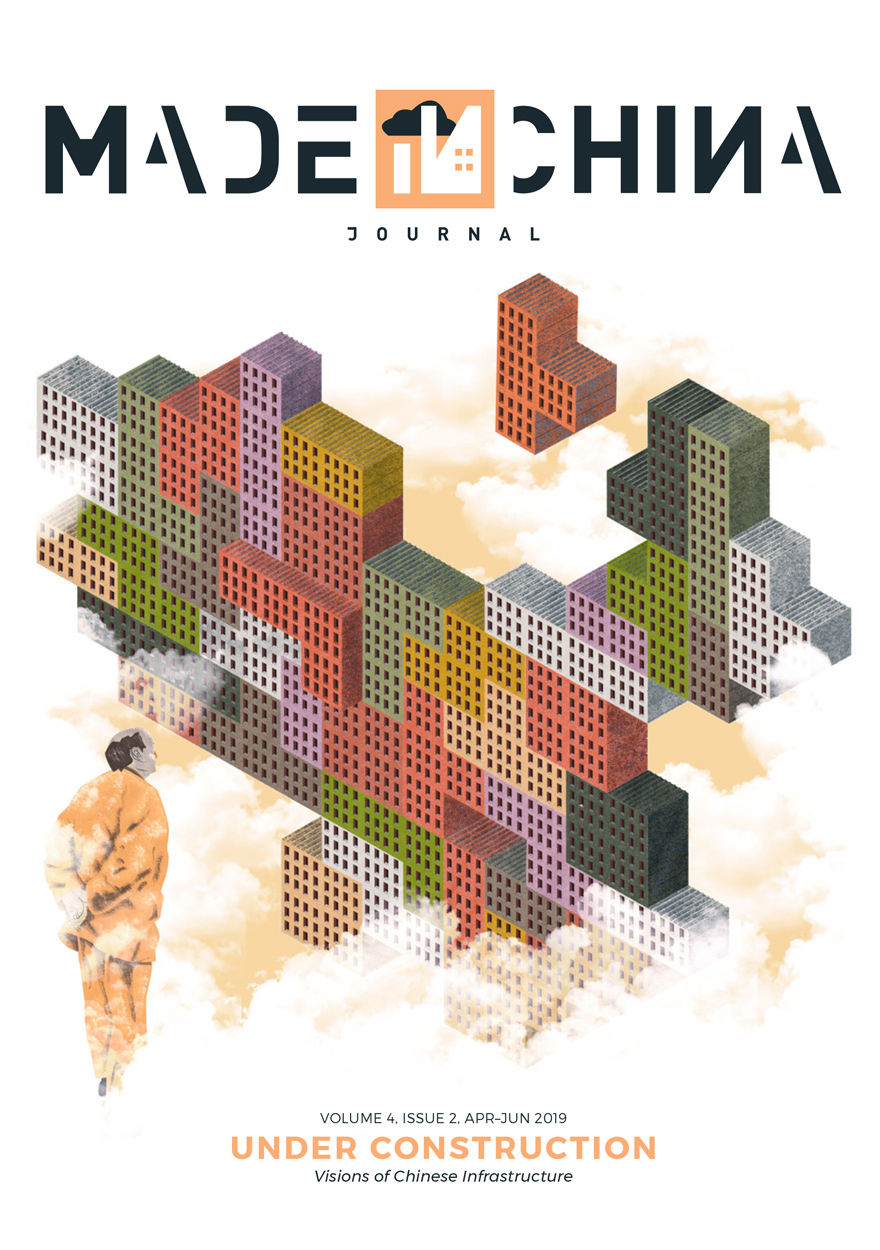
Made in China Journal: Volume 4, Issue 2, 2019 »
Publication date: June 2019
We shall sing the great masses shaken with work, pleasure, or rebellion: we shall sing the multicolored and polyphonic tidal waves of revolution in the modern metropolis; shall sing the vibrating nocturnal fervor of factories and shipyards burning under violent electrical moons; bloated railroad stations that devour smoking serpents; factories hanging from the sky by the twisting threads of spiraling smoke; bridges like gigantic gymnasts who span rivers, flashing at the sun with the gleam of a knife; adventurous steamships that scent the horizon, locomotives with their swollen chest, pawing the tracks like massive steel horses bridled with pipes, and the oscillating flight of airplanes, whose propeller flaps at the wind like a flag and seems to applaud like a delirious crowd.
— Filippo Tommaso Marinetti, The Manifesto of Futurism (1909, translated by R.W. Flint)
Although the smoking serpents of erstwhile have been replaced by the sinuous lines of aseptic high-speed trains, and steamships have long disappeared from the horizon, these words penned by an Italian poet at the beginning of the twentieth century are a surprisingly apt description of the infrastructural frenzy that has overcome China in recent history.
Rushing to catch up after the political turmoil of the twentieth century, over the past four decades the Chinese authorities have been remoulding the urban and rural landscapes in the service of economic growth. Starting from the township and village enterprises and special economic zones of the 1980s, factories have sprung up everywhere in China, boosting a new industrial revolution that has carried the country’s economic miracle well into this century. This was before the Party-state decided that it was time to launch a new green tidal wave of revolution in the now-postmodern metropolis, in an attempt to sever the pillars of spiralling smoke that used to link these plants to the sky (but in so doing, also forcing an entire working class to set their eyes to the ground).
New highways and high-speed railways now crisscross the country, enabling the great masses shaken with work, pleasure, and (little) rebellion to travel with an ease and a speed never experienced before. Bridges of unprecedented length span rivers and seas, bringing together places and people that do not always desire to be connected. If there is a place where the futurist utopia of the early twentieth century has come to fruition, it is China. It is to this infrastructural fever that we dedicate this issue of the Made in China Journal.
Download for free
Not available for purchase

Afterlives of Chinese Communism »
Political Concepts from Mao to Xi
Publication date: June 2019
Afterlives of Chinese Communism comprises essays from over fifty world- renowned scholars in the China field, from various disciplines and continents. It provides an indispensable guide for understanding how the Mao era continues to shape Chinese politics today. Each chapter discusses a concept or practice from the Mao period, what it attempted to do, and what has become of it since. The authors respond to the legacy of Maoism from numerous perspectives to consider what lessons Chinese communism can offer today, and whether there is a future for the egalitarian politics that it once promised.

Successful Public Policy »
Lessons from Australia and New Zealand
Publication date: April 2019
In Australia and New Zealand, many public projects, programs and services perform well. But these cases are consistently underexposed and understudied. We cannot properly ‘see’—let alone recognise and explain—variations in government performance when media, political and academic discourses are saturated with accounts of their shortcomings and failures, but are next to silent on their achievements.
Successful Public Policy: Lessons from Australia and New Zealand helps to turn that tide. It aims to reset the agenda for teaching, research and dialogue on public policy performance. This is done through a series of close-up, in-depth and carefully chosen case study accounts of the genesis and evolution of stand-out public policy achievements, across a range of sectors within Australia and New Zealand. Through these accounts, written by experts from both countries, we engage with the conceptual, methodological and theoretical challenges that have plagued extant research seeking to evaluate, explain and design successful public policy.
Studies of public policy successes are rare—not just in Australia and New Zealand, but the world over. This book is embedded in a broader project exploring policy successes globally; its companion volume, Great Policy Successes (edited by Paul ‘t Hart and Mallory Compton), is published by Oxford University Press (2019).
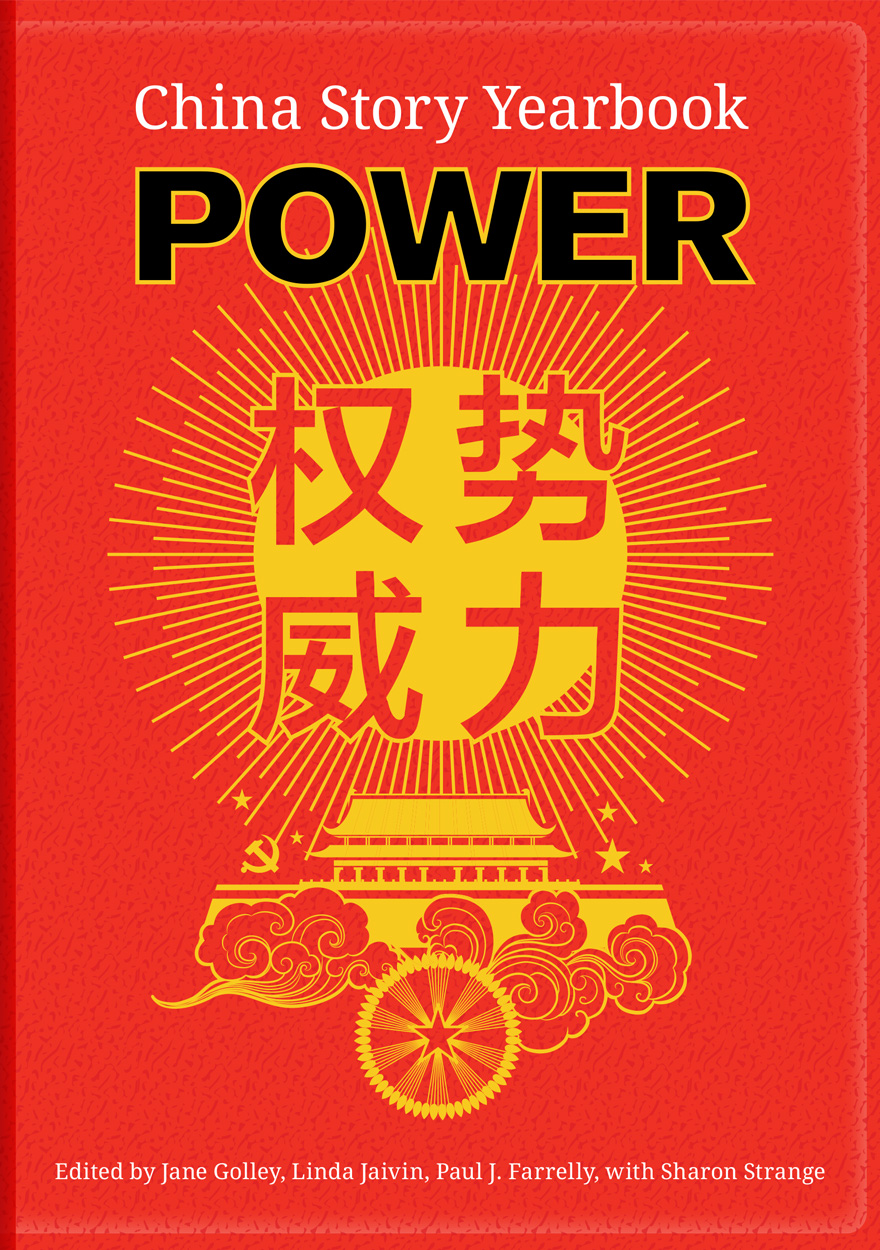
Power »
Edited by: Jane Golley, Linda Jaivin, Paul J. Farrelly, Sharon Strange
Publication date: April 2019
In 2018, the People’s Republic of China (PRC) was, by most measures, more powerful than at any other time in its history and had become one of the most powerful countries in the world. Its economy faced serious challenges, including from the ongoing ‘trade war’ with the US, but still ranked as the world’s second largest. Its Belt and Road Initiative, meanwhile, continued to carve paths of influence and economic integration across several continents. A deft combination of policy, investment, and entrepreneurship has also turned the PRC into a global ‘techno-power’. It aims, with a good chance of success, at becoming a global science and technology leader by 2049 – one hundred years from the founding of the PRC.
In surveying the various ways in which the Party-state wields its hard, soft, and sharp power, the China Story Yearbook: Power offers readers a sense of the diversity of power at work both in China and abroad. Citizens of the PRC have long negotiated the state’s influence; increasingly, diaspora communities and other actors are now being subject to its might. As with previous editions in the series, we place important developments in historical context, and adopt a cross-disciplinary approach: it is our view that economy and politics cannot be divorced from culture, history, and society. The Yearbook provides accessible analysis of the main events and trends of the year and is an essential tool for understanding China’s growing power and influence around the world.
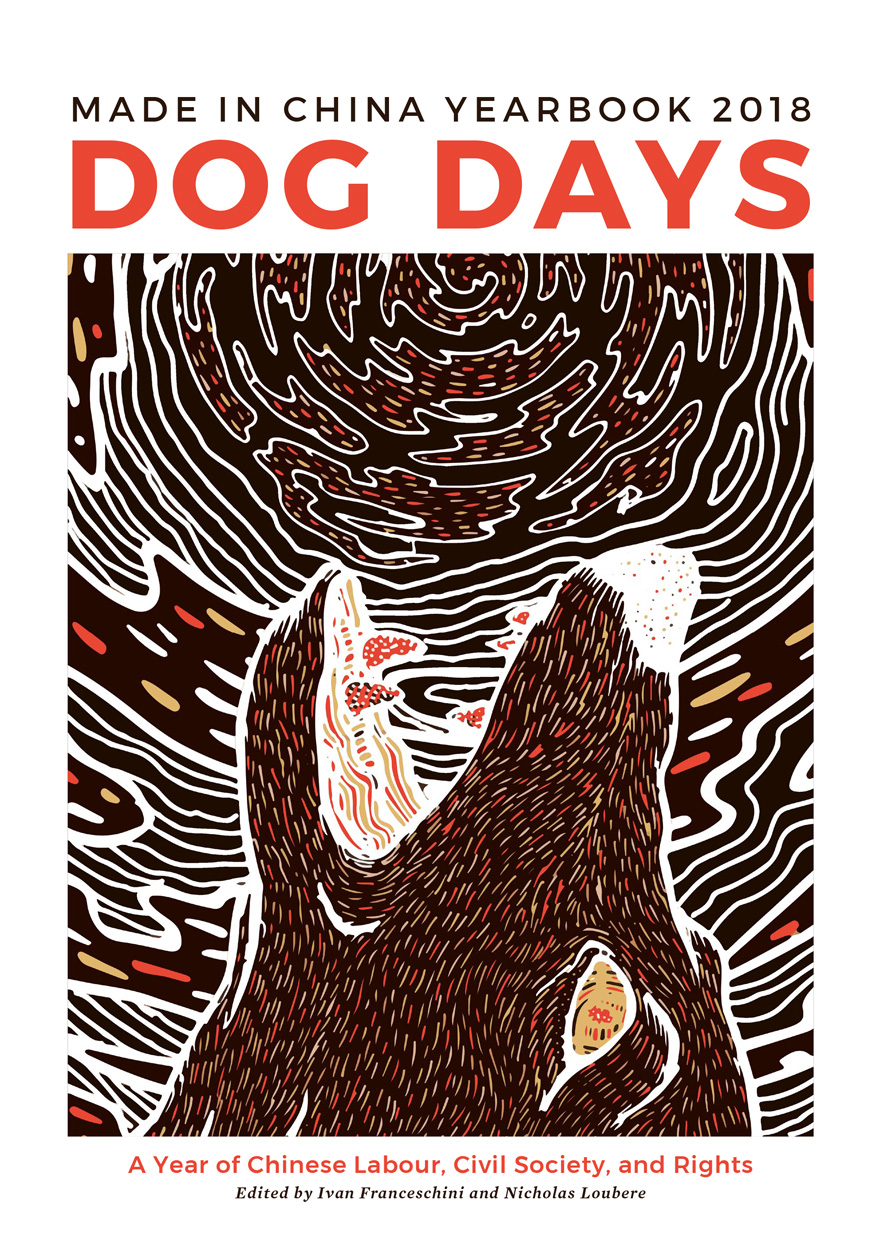
Dog Days »
Made in China Yearbook 2018
Edited by: Ivan Franceschini, Nicholas Loubere
Publication date: April 2019
According to the Chinese zodiac, 2018 was the year of the ‘earthly dog’. In the middle of the long, hot, and feverish dog days of the summer of 2018, some workers at Shenzhen Jasic Technology took their chances and attempted to form an independent union. While this action was met by the harshest repression, it also led to extraordinary demonstrations of solidarity from small groups of radical students from all over the country, which in turn were immediately and severely suppressed. China’s year of the dog was also imbued with the spirit of another canine, Cerberus—the three-headed hound of Hades—with the ravenous advance of the surveillance state and the increasing securitisation of Chinese society, starting from the northwestern region of Xinjiang. This Yearbook traces these latest developments in Chinese society through a collection of 50 original essays on labour, civil society, and human rights in China and beyond, penned by leading scholars and practitioners from around the world.

Made in China Journal: Volume 4, Issue 1, 2019 »
Edited by: Ivan Franceschini, Nicholas Loubere
Publication date: March 2019
Sun and moon have no light left, earth is dark; / Our women’s world is sunk so deep, who can help us? / Jewelry sold to pay this trip across the seas, Cut off from my family I leave my native land. / Unbinding my feet I clean out a thousand years of poison, / With heated heart arouse all women’s spirits. / Alas, this delicate kerchief here / Is half stained with blood, and half with tears.
— Qiu Jin, 1904 (translated by Jonathan Spence)
As she bode farewell to China in the summer of 1904, early revolutionary Qiu Jin penned these words to bemoan the fate of herself and of uncountable Chinese women. She was leaving behind her husband—whom she had married out of obligation—and two young children to go to study in Japan. Having returned to China, she would continue to engage in revolutionary activities, and was ultimately beheaded by the Qing authorities in July 1907 at the age of 31. Martyrdom made her into a legend. More than a century later, bound feet belong to another age and kerchieves stained with blood and tears have become an overused trope in revolutionary literature. Still, Qiu Jin’s spirit is more alive than ever in a whole new generation of Chinese feminists who are fighting for women’s rights—a renewed attempt to smash the bell jar of China’s patriarchal society. This issue of the Made in China Journal offers a series of perspectives on the plight and struggles of women and sexual minorities in today’s China.
Download for free
Not available for purchase
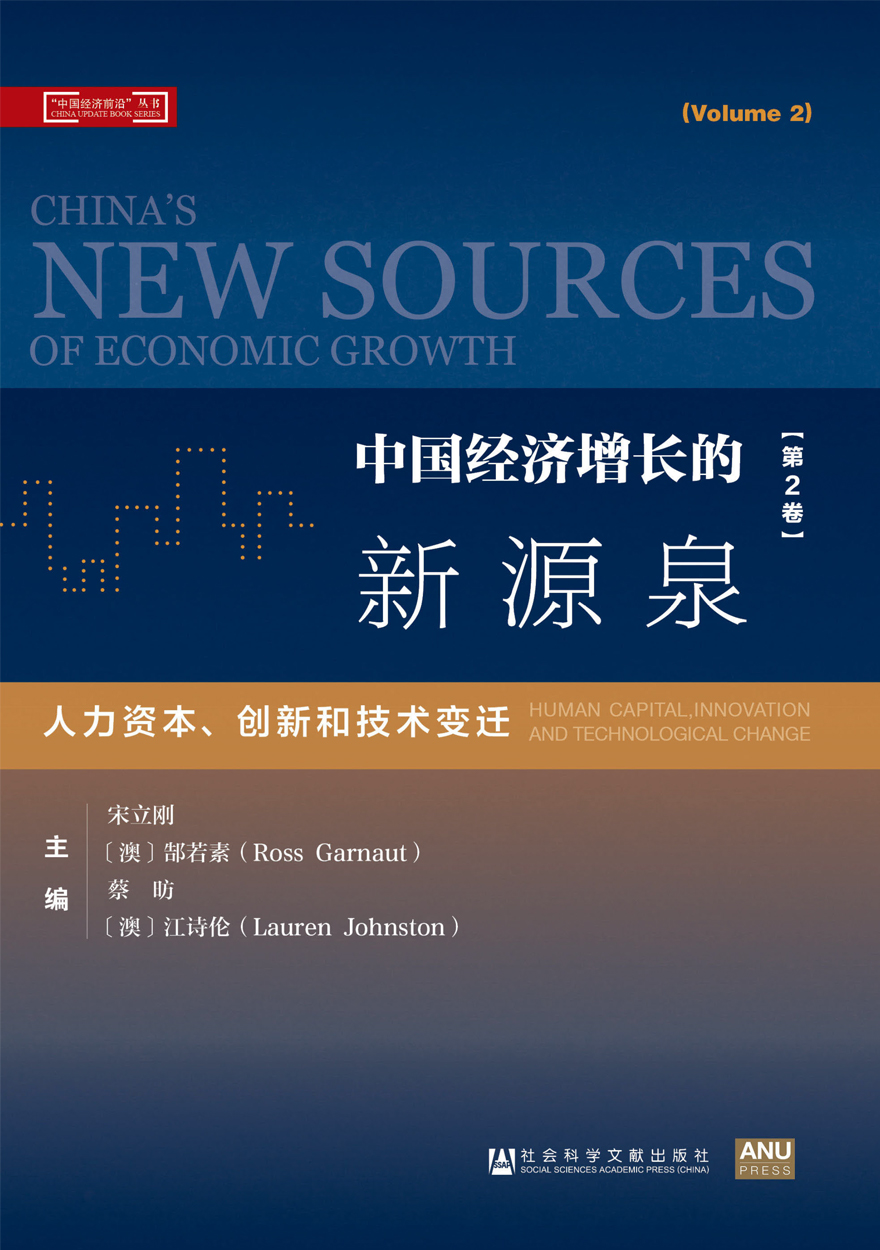
China's New Sources of Economic Growth: Vol. 2 (Chinese version) »
人力资本、创新和技术变迁
Edited by: 宋 立刚, Ross Garnaut, 蔡 昉, Lauren Johnston
Publication date: March 2019
本书试图对人力资本、创新和技术变迀在转型经济中的作用做深层次分析,并讨 论中国的经历在何种方式上为中国自身和其他国家提供了重要的经验教训。我们生活 在一个现代技术越来越多地影响着我们方方面面生活的全新时代。虽然中国正付出极 大努力通过增加人力资本和技术创新来完成经济结构调整和转型,但仍面临巨大的挑 战。为此,本书深入研究了人力资本、创新和技术变迀在影响中国经济增长模式和中 国经济总体发展格局中的作用,考察了宏观经济最新发展情况以及教育和创新发展的 趋势,还研究了结构变化是如何为中国获得一系列更先进增长驱动力做好准备的。
Chinese print version of this book is available from Social Science and Academic Press

Made in China Journal: Volume 3, Issue 4, 2018 »
Edited by: Ivan Franceschini, Nicholas Loubere
Publication date: December 2018
In December 2018, the Chinese authorities commemorated the 40th anniversary of China’s reform and opening up. These four decades of unprecedented economic growth and transformation have been rooted in a fundamental socioeconomic restructuring. Contemporary China has changed from a largely agrarian society predominantly inhabited by peasants, to a rapidly urbanising one, characterised by a floating populace moving back and forth between rural and urban spaces, which are in a continuous state of flux. Going hand in hand with China’s ascent into modernity is the subordination of rural areas and people. While rural China has historically been a site of extraction and exploitation, in the post-reform period this has intensified, and rurality itself has become a problem. This issue of Made in China focuses on the labour that these attempts to restructure and reformulate rural China have entailed, and the ways in which they have transformed rural lives and communities.
Download for free
Not available for purchase