



Search titles
Displaying results 81 to 90 of 362.

Prosperity »
Edited by: Jane Golley, Linda Jaivin
Publication date: April 2018
A ‘moderately prosperous society’ with no Chinese individual left behind—that’s the vision for China set out by Chinese President Xi Jinping in a number of important speeches in 2017. ‘Moderate’ prosperity may seem like a modest goal for a country with more billionaires (609 at last count) than the US. But the ‘China Story’ is a complex one. The China Story Yearbook 2017: Prosperity surveys the important events, pronouncements, and personalities that defined 2017. It also presents a range of perspectives, from the global to the individual, the official to the unofficial, from mainland China to Hong Kong and Taiwan. Together, the stories present a richly textured portrait of a nation that in just forty years has lifted itself from universal poverty to (unequally distributed) wealth, changing itself and the world in the process.

Opening Government »
Transparency and Engagement in the Information Age
Edited by: John Wanna, Sam Vincent
Publication date: April 2018
Transparency and citizen engagement remain essential to good government and sound public policy. Indeed, they may well be the key to restoring trust in government itself, currently at an all-time low in Australia. It is ironic, then, that this has occurred at a time when the technological potential for information dissemination and interaction has never been greater.
Opening Government: Transparency and Engagement in the Information Age explores new horizons and scenarios for better governance in the context of the new information age, focusing on the potentials and pitfalls for governments (and governance more broadly) operating in the new, information-rich environment. Its contributors, a range of international and Australian governance academics and practitioners, ask what are the challenges to our governing traditions and practices in the new information age, and where can better outcomes be expected using future technologies. They explore the fundamental ambiguities extant in opening up government, with governments intending to become far more transparent in providing information and in information sharing, but also more motivated to engage with other data sources, data systems and social technologies.
Gilded Age »
Made in China Yearbook 2017
Edited by: Ivan Franceschini, Nicholas Loubere
Publication date: April 2018
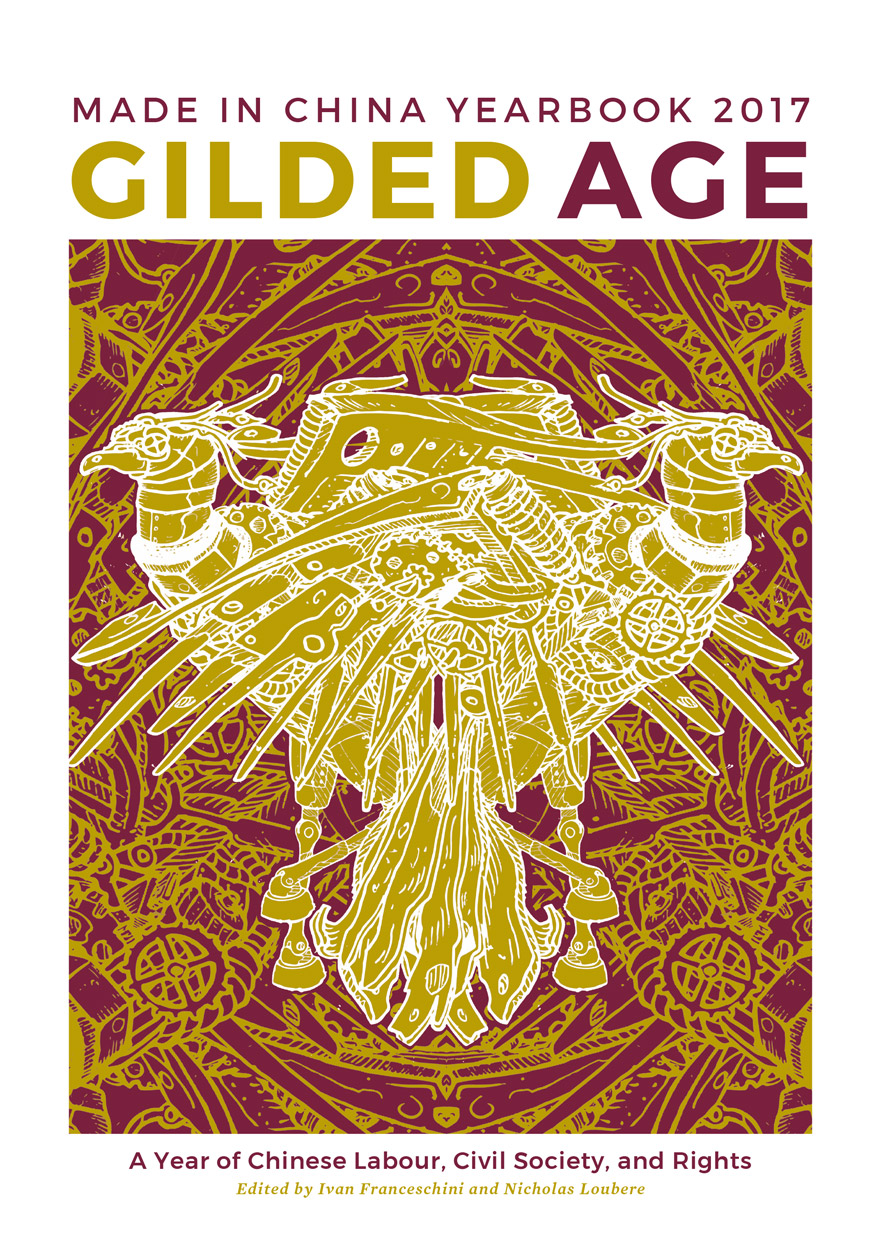
According to the Chinese zodiac, 2017 was the year of the ‘fire rooster’, an animal often associated with the mythical fenghuang, a magnificently beautiful bird whose appearance is believed to mark the beginning of a new era of peaceful flourishing. Considering the auspicious symbolism surrounding the fenghuang, it is fitting that on 18 October 2017, President Xi Jinping took to the stage of the Nineteenth Party Congress to proclaim the beginning of a ‘new era’ for Chinese socialism. However, in spite of such ecumenical proclamations, it became immediately evident that not all in China would be welcome to reap the rewards promised by the authorities. Migrant workers, for one, remain disposable. Lawyers, activists and even ordinary citizens who dare to express critical views also hardly find a place in Xi’s brave new world. This Yearbook traces the stark new ‘gilded age’ inaugurated by the Chinese Communist Party. It does so through a collection of more than 40 original essays on labour, civil society and human rights in China and beyond, penned by leading scholars and practitioners from around the world.

Made in China Journal: Volume 3, Issue 1, 2018 »
Publication date: March 2018
On 12 May 2008, a 7.9 magnitude earthquake hit Wenchuan county, Sichuan province. Felt as far as Beijing, the tremors caused horrific damage: 69,229 people died and 17,923 went missing. Yet, the aftermath of the seism was also a time of hope—with Chinese citizens from all over the country outdoing each other to show solidarity with the victims. As local governments began to recognise the importance of NGOs in providing disaster relief and social services, 2008 was widely seen as a ‘Year Zero’ for Chinese civil society. At that time, hardly anybody could have foreseen the wave of repression against civil society that was to come and that is today the norm. This issue looks back at the legacy of this disaster, and the ways in which state and civil society actors renegotiate their positions during ‘states of emergency’.
Download for free
Not available for purchase

Hybridity on the Ground in Peacebuilding and Development »
Critical Conversations
Publication date: March 2018
Hybridity on the Ground in Peacebuilding and Development engages with the possibilities and pitfalls of the increasingly popular notion of hybridity. The hybridity concept has been embraced by scholars and practitioners in response to the social and institutional complexities of peacebuilding and development practice. In particular, the concept appears well-suited to making sense of the mutually constitutive outcomes of processes of interaction between diverse norms, institutions, actors and discourses in the context of contemporary peacebuilding and development engagements. At the same time, it has been criticised from a variety of perspectives for overlooking critical questions of history, power and scale. The authors in this interdisciplinary collection draw on their in‑depth knowledge of peacebuilding and development contexts in different parts of Asia, the Pacific and Africa to examine the messy and dynamic realities of hybridity ‘on the ground’. By critically exploring the power dynamics, and the diverse actors, ideas, practices and sites that shape hybrid peacebuilding and development across time and space, this book offers fresh insights to hybridity debates that will be of interest to both scholars and practitioners.
‘Hybridity has become an influential idea in peacebuilding and this volume will undoubtedly become the most influential collection on the idea. Nuance and sophistication characterises this engagement with hybridity.’
— Professor John Braithwaite
China's New Sources of Economic Growth: Vol. 1 (Chinese version) »
改革、资源能源与气候变化
Edited by: 宋 立刚, Ross Garnaut, 蔡 昉, Lauren Johnston
Publication date: February 2018
本书针对近年来中国经济增速的下滑,从供给侧角度出发,探讨中国如何启动经 济增长的新源泉,论证了通过改革进一步提高劳动生产率的重要性。全书分为两个部 分,第一部分为“改革与宏观经济发展”,主要内容包括宏观经济的展望、新经济增 长模式、新型城镇化、互联网金融的发展、供给侧结构性改革、中国的全球投资、农 民工的储蓄与消费行为、证券市场的泡沫检验、企业层面的杠杆率与去杠杆进程等;第二部分为“资源、能源、环境与气候变化”,主要内容包括中国低碳城市发展、能 源政策的变化、钢铁产业重组、工业用水和能耗趋势、水资源和森林资源的保护、电 力行业与环境保护的关系以及中国气候环境战略面临的挑战等。
Chinese print version of this book is available from Social Science and Academic Press

Value for Money »
Budget and financial management reform in the People's Republic of China, Taiwan and Australia
Publication date: January 2018
The Greater China Australia Dialogue on Public Administration has held annual workshops since 2011 on public administration themes of common interest to the People’s Republic of China, Taiwan and Australia.
This book presents and discusses a selection of papers developed from the Dialogue’s fifth workshop held in late 2015 hosted by the National Taiwan University in Taipei. The theme, ‘Value for Money’, focused on budget and financial management reforms, including how different nations account for the relative performance of their public sectors.
All governments face the challenge of scarce resources requiring budgetary management processes for identifying the resources required by and available to government, and then for allocating them and ensuring their use or deployment represents value for money. Such budgetary and financial management processes need to inform decision-making routinely and protect the integrity of the way public resources are used – with some public accountability to indicate that their uses are properly authorised and reflect the policies of legitimate government leaders.
The chapters in this book explore budgeting and financial management in three very different jurisdictions: Australia, the People’s Republic of China and the Republic of China (Taiwan). These activist and at times innovative countries are keen to analyse and reflect upon each other’s policy achievements and patterns of public provision. They are keen to learn more about each other as their economic and social engagement continues to deepen. They are also conscious that fundamental differences exist in terms of economic development and global strategic positioning, and levels and philosophies of political development; to an extent these differences are representative of differences amongst countries around the globe.

Asian Economic Integration in an Era of Global Uncertainty »
Edited by: Shiro Armstrong, Tom Westland
Publication date: January 2018
The Pacific Trade and Development (PAFTAD) conference series has been at the forefront of analysing challenges facing the economies of East Asia and the Pacific since its first meeting in Tokyo in January 1968.
The 38th PAFTAD conference met at a key time to consider international economic integration. Earlier in the year, the people of the United Kingdom voted to leave the European Union and the United States elected Donald Trump as their next president on the back of an inward-looking ‘America First’ promise. Brexit and President Trump represent a growing, and worrying, trend towards protectionism in the North Atlantic countries that have led the process of globalisation since the end of the Second World War.
The chapters in the volume describe the state of play in Asian economic integration but, more importantly, look forward to the region’s future, and the role it might play in defending the global system that has underwritten its historic rise. Asia has the potential to stand as a bulwark against the dual threats of North Atlantic protectionism and slowing trade growth, but collective leadership will be needed regionally and difficult domestic reforms will be required in each country.

Made in China Journal: Volume 2, Issue 4, 2017 »
Edited by: Ivan Franceschini, Nicholas Loubere
Publication date: December 2017
This issue includes a series of essays that examine different declinations of precarity experienced by Chinese workers. The contributions explore precarity from both conceptual and empirical points of view, focussing on aspects such as the nexus between precarious work and migration, the contentious relationship between precarity and class, new divisions of labour in the Chinese workplace, the consequences of layoffs in the state sector, and the fallout of the ongoing environmental crackdown.
Download for free
Not available for purchase
Teaching ‘Proper’ Drinking? »
Clubs and pubs in Indigenous Australia
Authored by: Maggie Brady
Publication date: December 2017
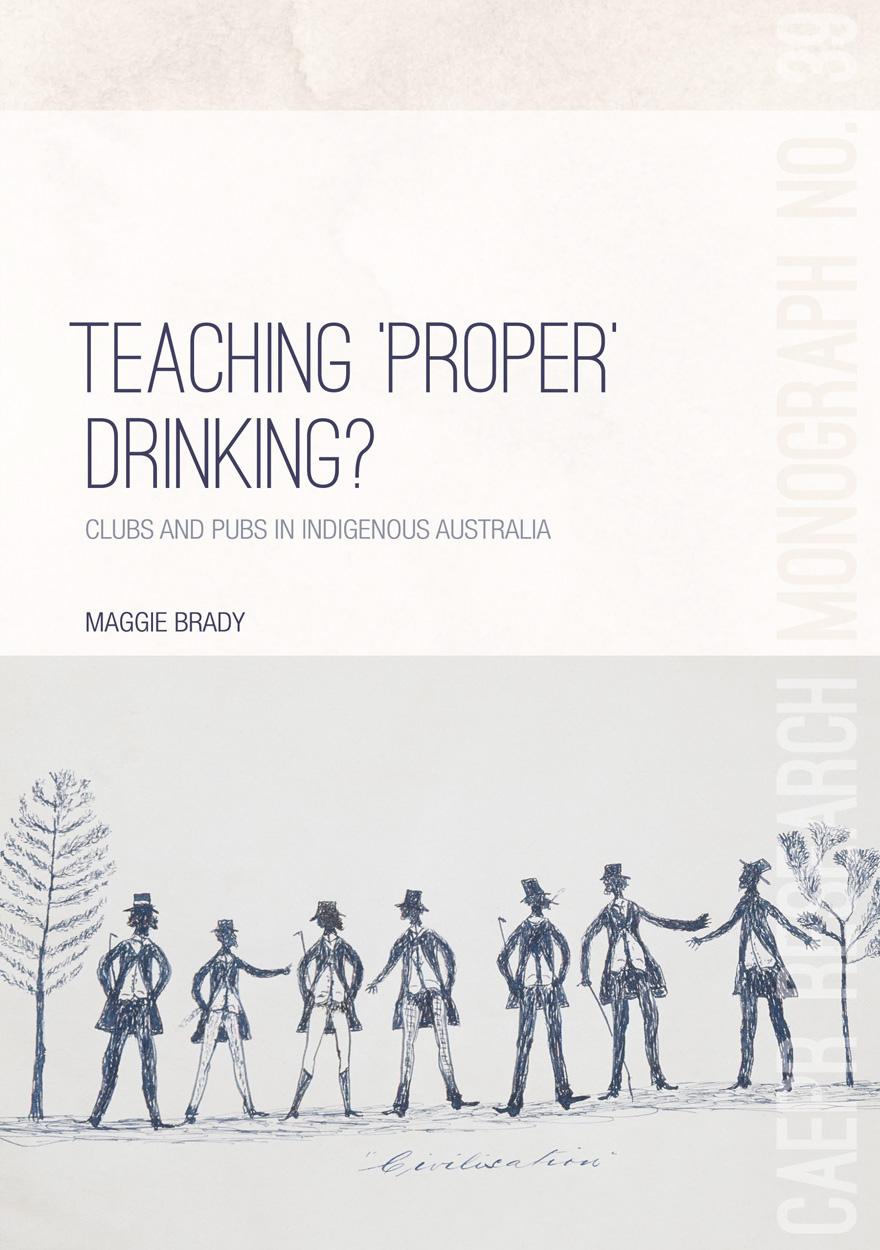
In Teaching ‘Proper’ Drinking?, the author brings together three fields of scholarship: socio-historical studies of alcohol, Australian Indigenous policy history and social enterprise studies. The case studies in the book offer the first detailed surveys of efforts to teach responsible drinking practices to Aboriginal people by installing canteens in remote communities, and of the purchase of public hotels by Indigenous groups in attempts both to control sales of alcohol and to create social enterprises by redistributing profits for the community good. Ethnographies of the hotels are examined through the analytical lens of the Swedish ‘Gothenburg’ system of municipal hotel ownership.
The research reveals that the community governance of such social enterprises is not purely a matter of good administration or compliance with the relevant liquor legislation. Their administration is imbued with the additional challenges posed by political contestation, both within and beyond the communities concerned.
‘The idea that community or government ownership and management of a hotel or other drinking place would be a good way to control drinking and limit harm has been commonplace in many Anglophone and Nordic countries, but has been less recognised in Australia. Maggie Brady’s book brings together the hidden history of such ideas and initiatives in Australia … In an original and wide-ranging set of case studies, Brady shows that success in reducing harm has varied between communities, largely depending on whether motivations to raise revenue or to reduce harm are in control.’
— Professor Robin Room, Director, Centre for Alcohol Policy Research, La Trobe University
In the Media
Read the Alice Spring News article: ‘Proper’ drinking: elusive goal but how hard have we tried?
Awards
Shortlisted – 2019 Chief Minister's Northern Territory History Book Award