



Search titles
Displaying results 51 to 60 of 101.

Taxonomic Tapestries »
The Threads of Evolutionary, Behavioural and Conservation Research
Edited by: Alison M. Behie, Marc F. Oxenham
Publication date: May 2015
This volume explores the complexity, diversity and interwoven nature of taxonomic pursuits within the context of explorations of humans and related species. It also pays tribute to Professor Colin Groves, whose work has had an enormous impact on this field. Recent research into that somewhat unique species we call humankind, through the theoretical and conceptual approaches afforded by the discipline of biological anthropology, is showcased. The focus is on the evolution of the human species, the behaviour of primates and other species, and how humans affect the distribution and abundance of other species through anthropogenic impact. Weaving together these three key themes, through the considerable influence of Colin Groves, provides glimpses of how changes in taxonomic theory and methodology, including our fluctuating understanding of speciation, have recrafted the way in which we view animal behaviour, human evolution and conservation studies.

Protected Area Governance and Management »
Publication date: April 2015
PAGM briefing note
Protected Area Governance and Management presents a compendium of original text, case studies and examples from across the world, by drawing on the literature, and on the knowledge and experience of those involved in protected areas. The book synthesises current knowledge and cutting-edge thinking from the diverse branches of practice and learning relevant to protected area governance and management. It is intended as an investment in the skills and competencies of people and consequently, the effective governance and management of protected areas for which they are responsible, now and into the future.
The global success of the protected area concept lies in its shared vision to protect natural and cultural heritage for the long term, and organisations such as International Union for the Conservation of Nature are a unifying force in this regard. Nonetheless, protected areas are a socio-political phenomenon and the ways that nations understand, govern and manage them is always open to contest and debate. The book aims to enlighten, educate and above all to challenge readers to think deeply about protected areas—their future and their past, as well as their present.
The book has been compiled by 169 authors and deals with all aspects of protected area governance and management. It provides information to support capacity development training of protected area field officers, managers in charge and executive level managers.

The Representation of Science and Scientists on Postage Stamps »
A science communication study
Authored by: Christopher B. Yardley
Publication date: February 2015
The Representation of Science and Scientists on Postage Stamps examines how the postal authorities of the world have developed unique techniques to portray science and scientists in order to convey a message behind the stamp issue. It is a multi-disciplinary examination that investigates visual representation, semiotics, science, science history and politics, amongst other issues.
The author introduces and describes a technique for looking at how and why images may have been chosen. Is the image a mirror reflecting a known reality or is it a lens to challenge, to prompt further thought or action? He also hypothesises that the Internet created a real change to science communication, influencing the way images of science were used. The stamp message changed from that of pursuing a public understanding approach to an awareness of science with its increasing contextual content.
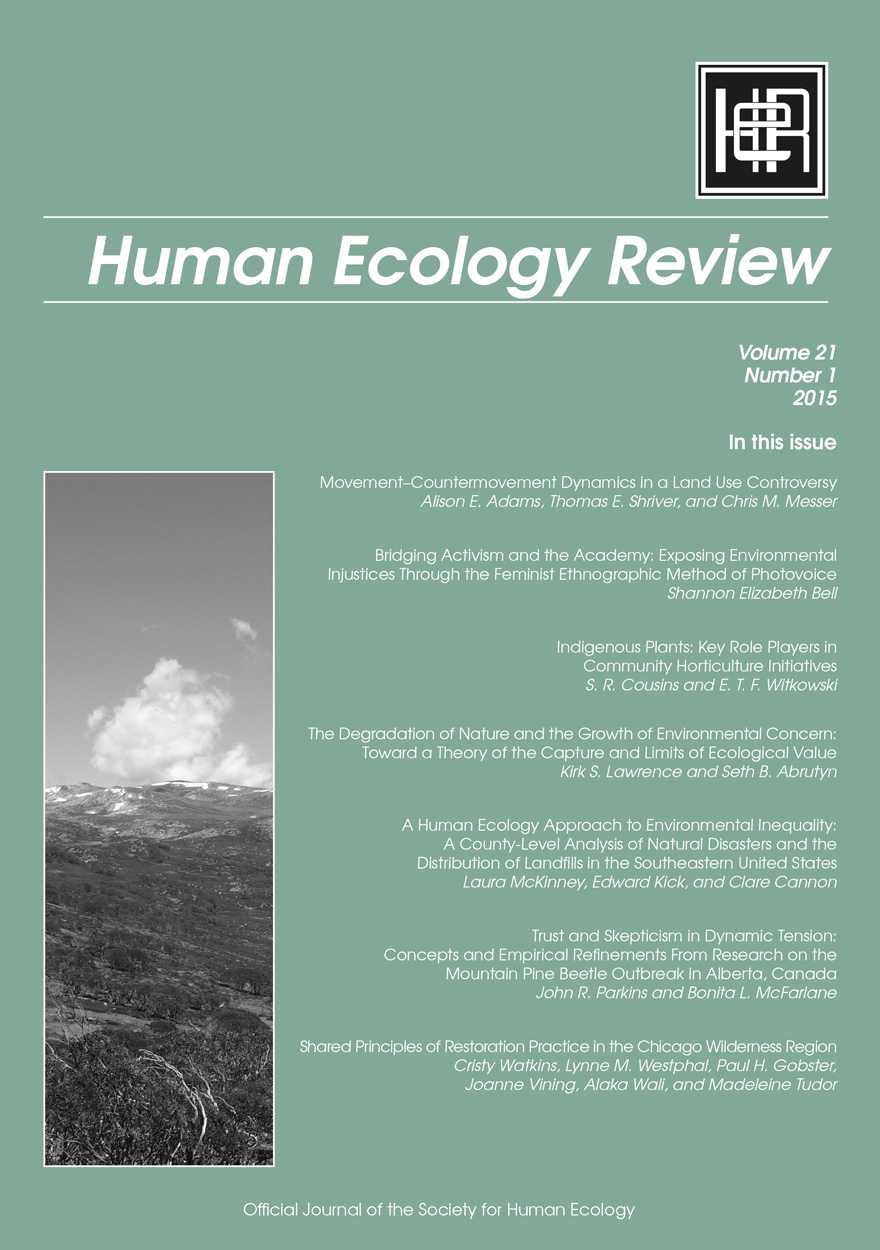
Human Ecology Review: Volume 21, Number 1 »
Publication date: February 2015
Human Ecology Review is a semi-annual journal that publishes peer-reviewed interdisciplinary research on all aspects of human–environment interactions (Research in Human Ecology). The journal also publishes essays, discussion papers, dialogue, and commentary on special topics relevant to human ecology (Human Ecology Forum), book reviews (Contemporary Human Ecology), and letters, announcements, and other items of interest (Human Ecology Bulletin). Human Ecology Review also publishes an occasional paper series in the Philosophy of Human Ecology and Social–Environmental Sustainability.
Download for free
Not available for purchase

The Plant Detective's Manual »
A research-led approach for teaching plant science
Authored by: Gonzalo M. Estavillo, Ulrike Mathesius, Michael Djordjevic, Adrienne Nicotra
Publication date: November 2014
If global challenges in food production and the impact of ever-declining biodiversity are to be tackled, every country will need plant biologists who have a deep understanding of plant morphology, physiology and genetics, and how these interact to affect plant function in changing environments. These scientists will also need the capacity to use an effective and powerful set of technologies and research strategies. To prepare and inspire our students to become that next generation of researchers and to instill a meaningful involvement in research we created an integrated set of laboratory investigations that we felt truly reflected the mysteries of plant biology and puzzle-solving processes that we had encountered in our research experience. Rather than a set of unconnected experimental activities, we created a series of closely related experiments that focused on solving ‘mysteries’ in the life of the plant Arabidopsis thaliana (thale cress). The activities charge students with finding the ‘suspect’ gene responsible for the specific phenotypes of an unknown Arabidopsis mutant, which are encountered when they expose the plants to different environmental stresses. This, we hoped, would give keen but inexperienced student scientists a realistic taste of the joys (and frustrations!) of plant science research.
Although thrilled by numerous university and national awards for our innovative teaching, we have been most excited by the interest in our ideas and experimental approaches from other plant science educators in Australia and overseas, who are also seeking to improve their plant biology curriculum and attract more students to plant sciences. We are thus proud to present this manual as a gift to our colleagues worldwide. Here you will find a detailed collection of state-of-the-art procedures in plant biology, as well as background information on more commonly used techniques, and tips for class preparation. The concepts and methods we present can be adapted to meet the specific needs and expertise of the teaching staff, and provide inspiration for scaling up for larger audiences, or simplifying for more junior classes. Through this publication, we hope to support our teaching colleagues in making a significant impact on improving the learning experience of plant biology students worldwide, and hope that we will motivate and inspire a new generation of plant detectives.
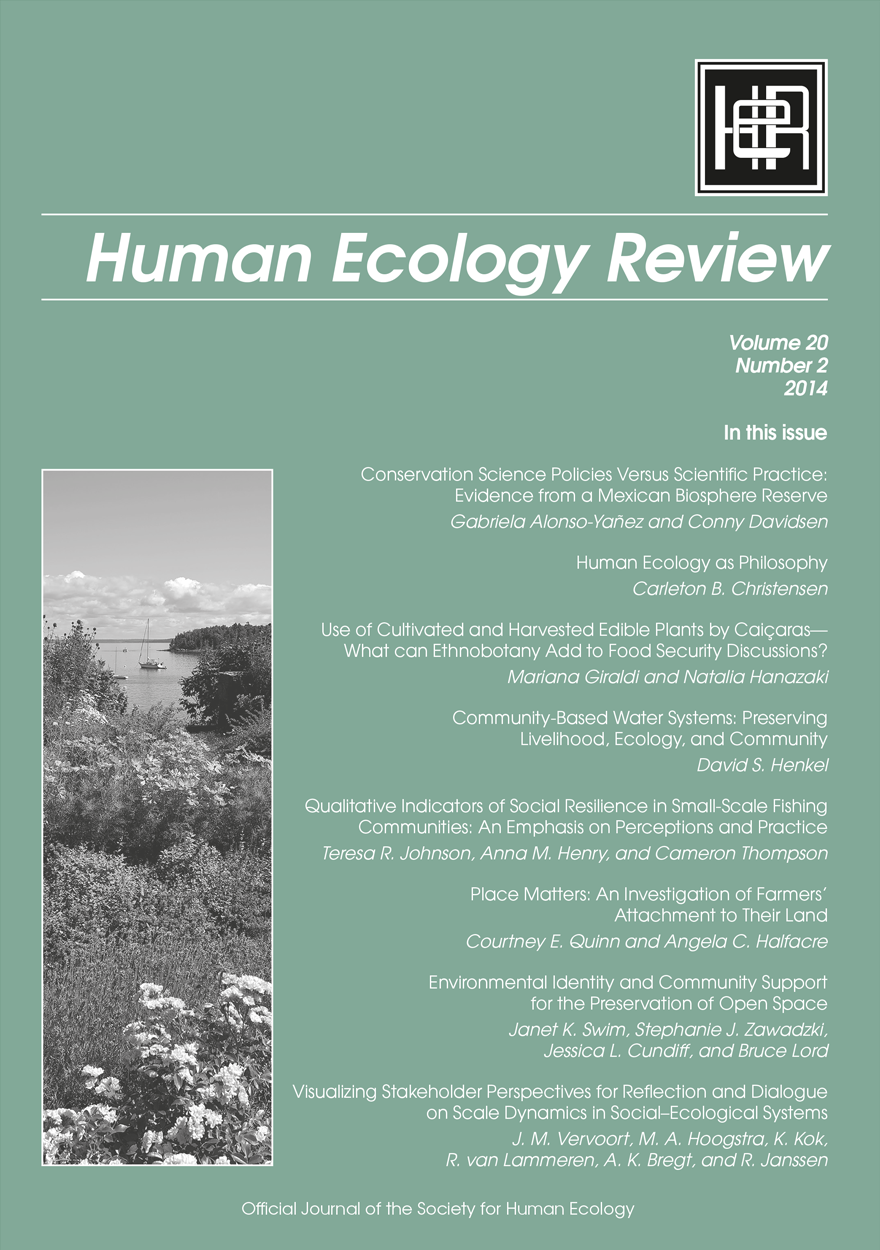
Human Ecology Review: Volume 20, Number 2 »
Publication date: September 2014
Human Ecology Review is a semi-annual journal that publishes peer-reviewed interdisciplinary research on all aspects of human–environment interactions (Research in Human Ecology). The journal also publishes essays, discussion papers, dialogue, and commentary on special topics relevant to human ecology (Human Ecology Forum), book reviews (Contemporary Human Ecology), and letters, announcements, and other items of interest (Human Ecology Bulletin). Human Ecology Review also publishes an occasional paper series in the Philosophy of Human Ecology and Social–Environmental Sustainability.
Download for free
Not available for purchase
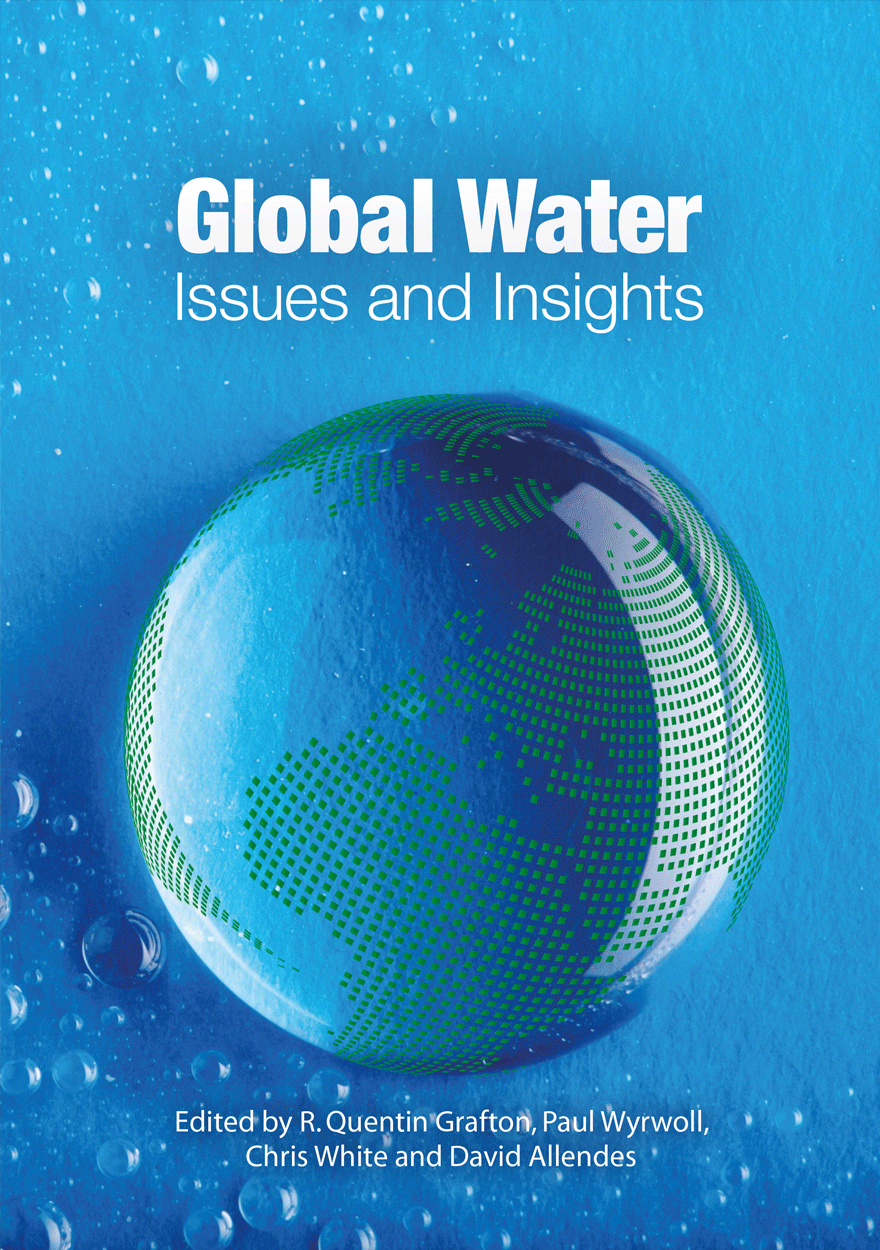
Global Water »
Issues and Insights
Publication date: May 2014
This book brings together some of the world’s leading water researchers with an especially written collection of chapters on: water economics; transboundary water; water and development; water and energy; and water concepts.

Building a Sustainable and Desirable Economy-in-Society-in-Nature »
Authored by: Robert Costanza, Gar Alperovitz, Herman Daly, Joshua Farley, Carol Franco, Tim Jackson, Ida Kubiszewski, Juliet Schor, Peter Victor
Publication date: December 2013
The world has changed dramatically. We no longer live in a world relatively empty of humans and their artifacts. We now live in the “Anthropocene,” era in a full world where humans are dramatically altering our ecological life-support system. Our traditional economic concepts and models were developed in an empty world. If we are to create sustainable prosperity, if we seek “improved human well-being and social equity, while significantly reducing environmental risks and ecological scarcities,” we are going to need a new vision of the economy and its relationship to the rest of the world that is better adapted to the new conditions we face. We are going to need an economics that respects planetary boundaries, that recognizes the dependence of human well-being on social relations and fairness, and that recognizes that the ultimate goal is real, sustainable human well-being, not merely growth of material consumption. This new economics recognizes that the economy is embedded in a society and culture that are themselves embedded in an ecological life-support system, and that the economy cannot grow forever on this finite planet.
In this report, we discuss the need to focus more directly on the goal of sustainable human well-being rather than merely GDP growth. This includes protecting and restoring nature, achieving social and intergenerational fairness (including poverty alleviation), stabilizing population, and recognizing the significant nonmarket contributions to human well-being from natural and social capital. To do this, we need to develop better measures of progress that go well beyond GDP and begin to measure human well-being and its sustainability more directly.

On the Dual Uses of Science and Ethics »
Principles, Practices, and Prospects
Edited by: Brian Rappert, Michael J. Selgelid
Publication date: December 2013
Claims about the transformations enabled by modern science and medicine have been accompanied by an unsettling question in recent years: might the knowledge being produced undermine – rather than further – human and animal well being? On the Dual Uses of Science and Ethics examines the potential for the skills, know-how, information, and techniques associated with modern biology to serve contrasting ends. In recognition of the moral ambiguity of science and technology, each chapter considers steps that might be undertaken to prevent the deliberate spread of disease. Central to achieving this aim is the consideration of what role ethics might serve. To date, the ethical analysis of the themes of this volume has been limited. This book remedies this situation by bringing together contributors from a broad range of backgrounds to address a highly important ethical issue confronting humanity during the 21st century.
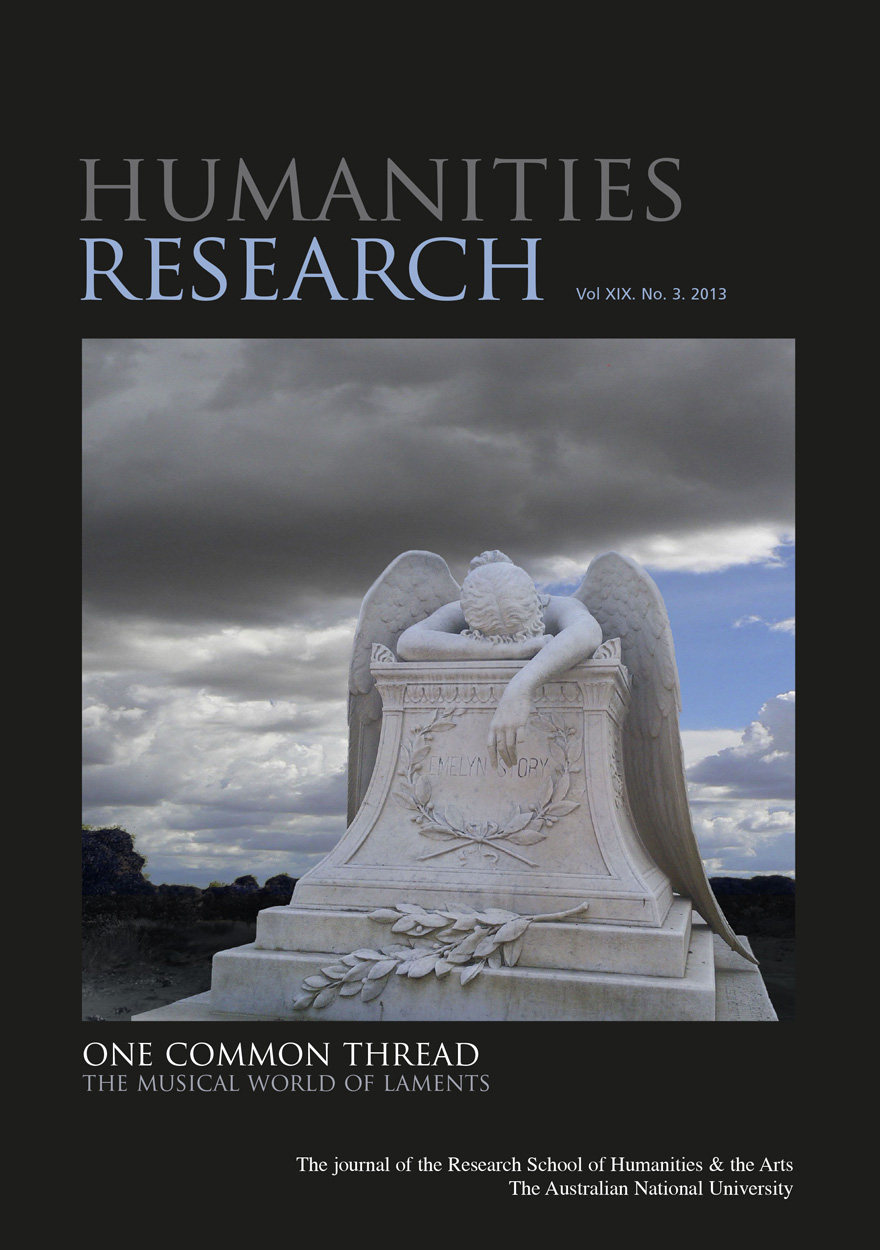
Humanities Research: Volume XIX No. 3. 2013 »
One Common Thread: The Musical World of Lament
Edited by: Aaron Corn, Ruth Lee Martin, Di Roy, Stephen Wild
Publication date: September 2013
Humanities Research is an internationally peer-reviewed journal published by the Research School of Humanities at The Australian National University. The Research School of Humanities came into existence in January 2007 and consists of the Humanities Research Centre, Centre for Cross-Cultural Research, National Europe Centre and Australian National Dictionary Centre. Launched in 1997, issues are thematic with guest editors and address important and timely topics across all branches of the humanities.
Download for free
Not available for purchase