



Search titles
Displaying results 331 to 340 of 642.

Fiji: A Place Called Home »
Authored by: Daryl Tarte
Publication date: November 2014
Few people have been in the unique position of being able to observe and record the dramatic changes that have taken place in the islands of Fiji over the past 80 years than fourth-generation citizen, Daryl Tarte. He writes emotively, in great detail, about his personal experience of growing up on a remote island during the colonial era, when races were segregated, and white people lived an elite existence.
Following independence, he has been personally involved with many of the key economic, political and social activities that have evolved and enabled the nation to progress during the 20th century. These include the sugar industry, tourism, commerce and industry, religion, the media, women and of course, the coups.
His observations into the complexities of leadership in these areas of national development are fascinating and perceptive. Much of the story is told through the eyes of the many people of all races with whom he has interacted.
Fiji is made up of over 300 unique islands. Tarte has been to many of them, and in a final chapter he gives an insightful commentary of how different they all are.

In the Eye of the Beholder »
What Six Nineteenth-century Women Tell Us About Indigenous Authority and Identity
Authored by: Barbara Dawson
Publication date: November 2014
This book offers a fresh perspective in the debate on settler perceptions of Indigenous Australians. It draws together a suite of little known colonial women (apart from Eliza Fraser) and investigates their writings for what they reveal about their attitudes to, views on and beliefs about Aboriginal people, as presented in their published works. The way that reader expectations and publishers’ requirements slanted their representations forms part of this analysis.
All six women write of their first-hand experiences on Australian frontiers of settlement. The division into ‘adventurers’ (Eliza Fraser, Eliza Davies and Emily Cowl) and longer-term ‘settlers’ (Katherine Kirkland, Mary McConnel and Rose Scott Cowen) allows interrogation into the differing representations between those with a transitory knowledge of Indigenous people and those who had a close and more permanent relationship with Indigenous women, even encompassing individual friendship. More pertinently, the book strives to reveal the aspects, largely overlooked in colonial narratives, of Indigenous agency, authority and individuality.
For more information on Aboriginal History Inc. please visit aboriginalhistory.org.au.

Ngapartji Ngapartji »
In turn, in turn: Ego-histoire, Europe and Indigenous Australia
Publication date: November 2014
In this innovative collection, Indigenous and non-Indigenous scholars from Australia and Europe reflect on how their life histories have impacted on their research in Indigenous Australian Studies. Drawing on Pierre Nora’s concept of ego-histoire as an analytical tool to ask historians to apply their methods to themselves, contributors lay open their paths, personal commitments and passion involved in their research. Why are we researching in Indigenous Studies, what has driven our motivations? How have our biographical experiences influenced our research? And how has our research influenced us in our political and individual understanding as scholars and human beings? This collection tries to answer many of these complex questions, seeing them not as merely personal issues but highly relevant to the practice of Indigenous Studies.
I think this rich collection will become a landmark text and a favourite within Australian scholarship. I am keen to see it published so that I can recommend it to others
— Professor Emerita Margaret Allen, Gender Studies and Social Analysis, University of Adelaide
The idea was to explain the link between the history you have made and the history that has made you
— Pierre Nora

Power and International Relations »
Essays in Honour of Coral Bell
Edited by: Desmond Ball, Sheryn Lee
Publication date: November 2014
Coral Mary Bell AO, who died in 2012, was one of the world’s foremost academic experts on international relations, crisis management and alliance diplomacy. This collection of essays by more than a dozen of her friends and colleagues is intended to honour her life and examine her ideas and, through them, her legacy.
Part 1 describes her growing up during the Great Depression and the Second World War, her short-lived sojourn in the Department of External Affairs in Canberra, where she was friends with some of the spies who worked for Moscow, and her academic career over the subsequent six decades, the last three of which were at The Australian National University.
Most of Coral’s academic career was spent in Departments of International Relations. She was disdainful of academic theory, but as discussed in Part 2, she had a very sophisticated understanding of the subject. She was in many ways a Realist, but one for whom agency, in terms of ideas (the beliefs and perceptions of policy-makers) and institutions (including conventions and norms of behaviour), essentially determined events.
Part 3 is concerned with power politics, including such matters as Cold War competitions, crisis management, alliance diplomacy, and US and Australian foreign policies. She recognised that power politics left untrammelled was inevitably catastrophic, and was increasingly attracted to notions of Concerts of Power.
‘Coral would be touched by this collection of essays about her professional and personal life. The contributors offer honest, professional and insightful reviews of her many academic achievements and especially her ideas, many of them the forerunners of others’ work, that makes her one of the very best international relations and strategic thinkers.’
— Dr. Pauline Kerr, Asia-Pacific College of Diplomacy, The Australian National University
‘It’s a rare thing in an international relations expert to possess a balance of theory and experience, history and imagination, realism and hope. Coral had this, and she had a 19th-century prose style to match it. Through her writing she explained the chaos of international events and human affairs in simple and clear language to her baffled compatriots. For the rest of the world, she brought an antipodean temperament and perspective to the great questions of our time; she was our George Kennan in thick glasses, blue floral dress, white sneakers and a string of pearls.’
— Minh Bui Jones, The Lowy Interpreter, 5 October 2012
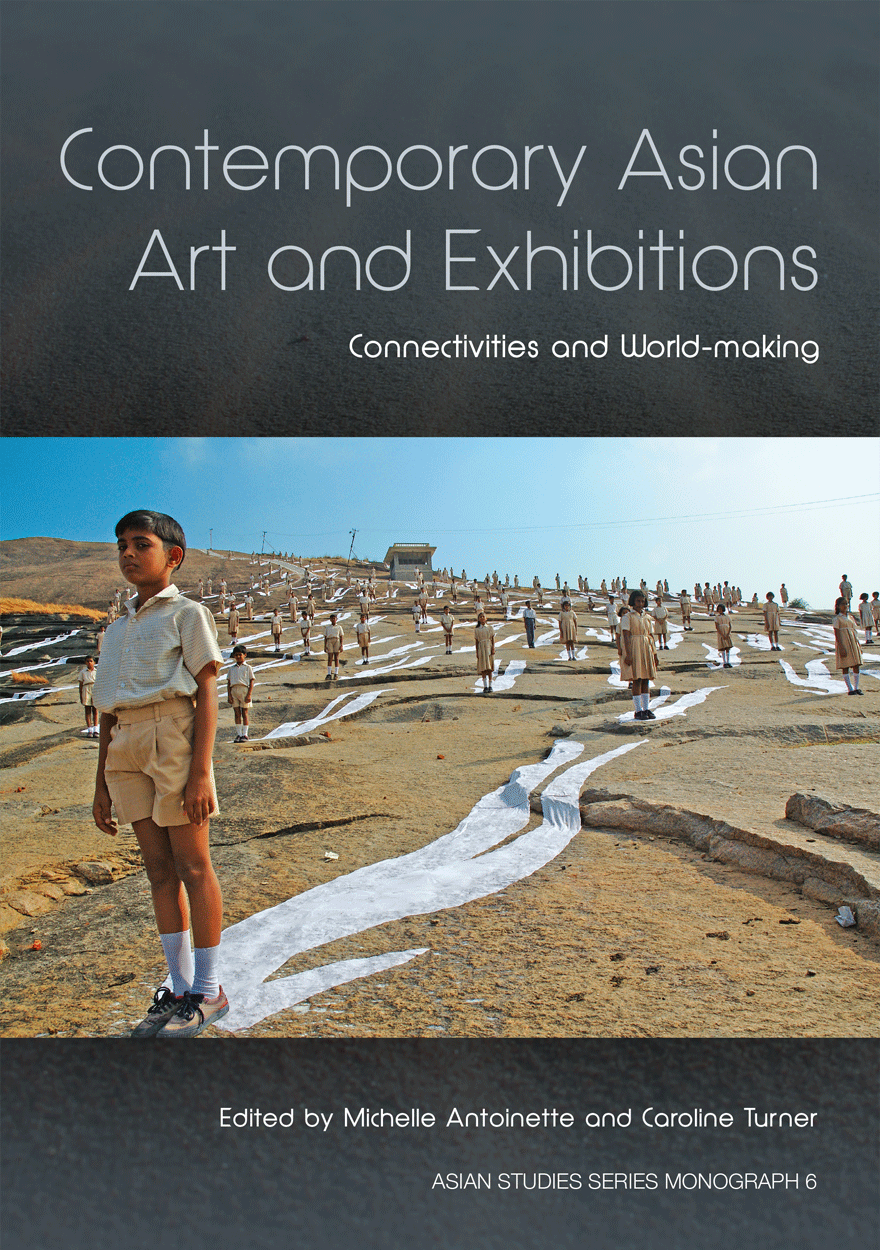
Contemporary Asian Art and Exhibitions »
Connectivities and World-making
Edited by: Michelle Antoinette, Caroline Turner
Publication date: October 2014
“… a diverse and stimulating group of essays that together represents a significant contribution to thinking about the nascent field of contemporary Asian art studies … Contemporary Asian Art and Exhibitions: Connectivities and World-making … brings together essays by significant academics, curators and artist working in Australia, Asia and the United Kingdom that reflect on contemporary art in the Asia-Pacific region, and Australia’s cultural interconnections with Asia. It will be a welcome addition to the body of literature related to these emergent areas of art historical study. ”
— Dr Claire Roberts, Senior Lecturer in Art History, University of Adelaide
This volume draws together essays by leading art experts observing the dramatic developments in Asian art and exhibitions in the last two decades. The authors explore new regional and global connections and new ways of understanding contemporary Asian art in the twenty-first century.
The essays coalesce around four key themes: world-making; intra-Asian regional connections; art’s affective capacity in cross-cultural engagement; and Australia’s cultural connections with Asia. In exploring these themes, the essays adopt a diversity of approaches and encompass art history, art theory, visual culture and museum studies, as well as curatorial and artistic practice.
With introductory and concluding essays by editors Michelle Antoinette and Caroline Turner this volume features contributions from key writers on the region and on contemporary art: Patrick D Flores, John Clark, Chaitanya Sambrani, Pat Hoffie, Charles Merewether, Marsha Meskimmon, Francis Maravillas, Oscar Ho, Alison Carroll and Jacqueline Lo.
Richly illustrated with artworks by leading contemporary Asian artists, Contemporary Asian Art and Exhibitions: Connectivities and World-making will be essential reading for those interested in recent developments in contemporary Asian art, including students and scholars of art history, Asian studies, museum studies, visual and cultural studies.
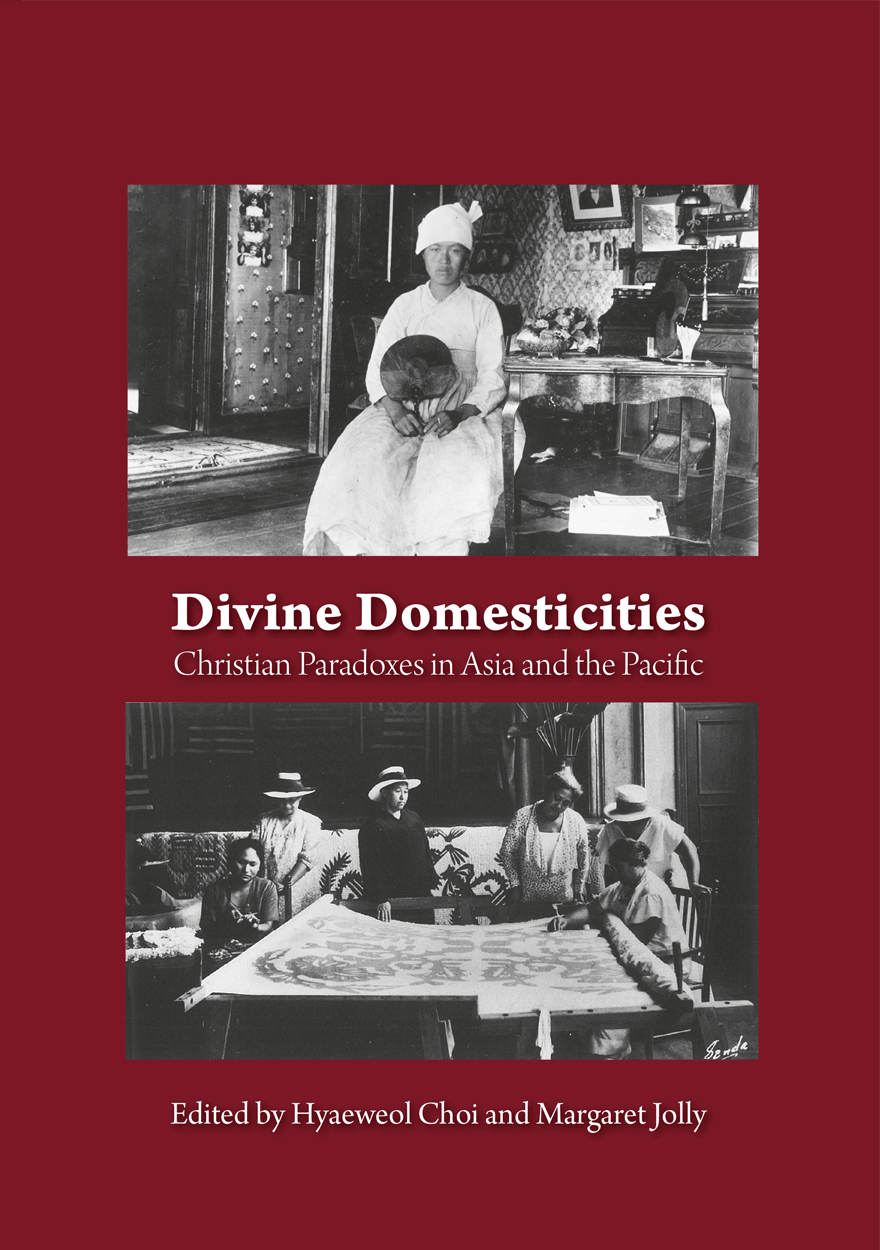
Divine Domesticities »
Christian Paradoxes in Asia and the Pacific
Edited by: Hyaeweol Choi, Margaret Jolly
Publication date: October 2014
Divine Domesticities: Christian Paradoxes in Asia and the Pacific fills a huge lacuna in the scholarly literature on missionaries in Asia/Pacific and is transnational history at its finest. Co-edited by two eminent scholars, this multidisciplinary volume, an outgrowth of several conferences/seminars, critically examines various encounters between western missionaries and indigenous women in the Pacific/Asia … Taken as a whole, this is a thought-provoking and an indispensable reference, not only for students of colonialism/imperialism but also for those of us who have an interest in transnational and gender history in general. The chapters are very clearly written, engaging, and remarkably accessible; the stories are compelling and the research is thorough. The illustrations are equally riveting and the bibliography is extremely useful.
—Theodore Jun Yoo, History Department, University of Hawai’i
The editors of this collection of papers have done an excellent job of creating a coherent set of case studies that address the diverse impacts of missionaries and Christianity on ‘domesticity’, and therefore on the women and children who were assumed to be the rightful inhabitants of that sphere … The introduction to the volume is beautifully written and sets up the rest of the volume in a comprehensive way. It explains the book’s aim to advance theoretical and methodological issues by exploring the role of missionary encounters in the development of modern domesticities; showing the agency of indigenous women in negotiating both change and continuity; and providing a wide range of case studies to show ‘breadth and complexity’ and the local and national specificities of engagements with both missionaries and modernity. My view is that all three aims are well and truly fulfilled.
—Helen Lee, Head, Sociology and Anthropology, La Trobe University, Melbourne

The Naturalist and his 'Beautiful Islands' »
Charles Morris Woodford in the Western Pacific
Authored by: David Russell Lawrence
Publication date: October 2014
‘I know no place where firm and paternal government would sooner produce beneficial results then in the Solomons … Here is an object worthy indeed the devotion of one’s life’.
Charles Morris Woodford devoted his working life to pursuing this dream, becoming the first British Resident Commissioner in 1897 and remaining in office until 1915, establishing the colonial state almost singlehandedly. His career in the Pacific extended beyond the Solomon Islands. He worked briefly for the Western Pacific High Commission in Fiji, was a temporary consul in Samoa, and travelled as a Government Agent on a small labour vessel returning indentured workers to the Gilbert Islands.
As an independent naturalist he made three successful expeditions to the islands, and even climbed Mt Popomanaseu, the highest mountain in Guadalcanal. However, his natural history collection of over 20,000 specimens, held by the British Museum of Natural History, has not been comprehensively examined. The British Solomon Islands Protectorate was established in order to control the Pacific Labour Trade and to counter possible expansion by French and German colonialists. It remaining an impoverished, largely neglected protectorate in the Western Pacific whose economic importance was large-scale copra production, with its copra considered the second-worst in the world.
This book is a study of Woodford, the man, and what drove his desire to establish a colonial protectorate in the Solomon Islands. In doing so, it also addresses ongoing issues: not so much why the independent state broke down, but how imperfectly it was put together in the first place.
David Russell Lawrence is an anthropologist who has managed environmental programs in Melanesia and Southeast Asia for the Great Barrier Reef Marine Park Authority. His most recent book was a re-examination of the place in Melanesian anthropology of the Finnish sociologist Gunnar Landtman who spent two years working with the Kiwai people of the lower Fly estuary. He recently managed a large-scale survey of 300 communities in the Solomon Islands for the Community Sector Program and has assisted with a number of the annual RAMSI People’s Surveys in the islands. This work has given him insight into the colonial heritage of the Solomon Islands and a desire to tell the story of the establishment of the British Solomon Islands Protectorate through the eyes of the first Resident Commissioner, Charles Morris Woodford.

A Political Memoir of the Anglo-French Condominium of the New Hebrides »
Authored by: Keith Woodward
Publication date: October 2014
Keith Woodward has produced an inside account of the intricacies of official politics in the latter stages of the history of the Anglo-French Condominium of the New Hebrides, which will be essential reading for anyone interested in the colonial period of Vanuatu. Woodward spent 25 years in the New Hebrides (1953 to 1978) based in the British Residency and it is his long service which makes his memoir so informative and important. Following a fascinating and insightful description of Port Vila and the New Hebrides when he arrived in the 1950s, Woodward focuses the rest of his memoir on issues relating to the difficulties the British faced in convincing the French that the two powers should come to an agreement on decolonisation of the New Hebrides—that is, to establish a process of constitutional advancement leading ultimately to independence.
— Howard Van Trease, Honorary Research Fellow, Emalus Campus, University of the South Pacific, Port Vila
This is a highly original, evocative and engaging memoir which offers an insightful firsthand account of colonial administration, bilateral French and British relations, political change and decolonisation in Vanuatu. It addresses some lacunae in the historiography of Vanuatu and dispels a number of assumptions about French intentions there. It will be of great benefit to people interested in Vanuatu, and more broadly in political change in the Pacific, constitutional arrangements, decolonisation, French-British relations, and particularly the divergent colonial policies of France and the United Kingdom.
— Gregory Rawlings, Anthropology, University of Otago

Caretaker Conventions in Australasia »
Minding the shop for government
Authored by: Jennifer Menzies, Anne Tiernan
Publication date: October 2014
In the second revised edition of this monograph, Jennifer Menzies and Anne Tiernan capably chart the often hazardous terrain of the ‘caretaker period’ that ensues from the time an election is called until a new government is formed. This is a landscape fraught with political and administrative dangers – particularly for public servants who are required to ‘mind the shop’ and keep the basically machinery of government going.
The conventions represent an historical accretion of custom, practice and rules, often leavened with uncertainty. In tackling their subject, Menzies and Tiernan draw upon their shared past experiences as public servants and ministerial ‘staffers’ as well as the highest standards of academic scholarship – this is a ‘must read’ for politicians, public servants and students of government. The second edition expands on the first edition by documenting recent controversies and trends which have had an impact on caretaker conventions.
The analysis of the contemporary application of caretaker conventions has been updated and new case studies included – particularly from the last federal election. Also included is additional material about lengthy government formation after election day and the management of caretaker conventions during that time. The New Zealand material has been revised and updated.
The caretaker conventions
Australia (PDF, 127KB)
Australian Capital Territory (PDF, 187KB)
New South Wales (PDF, 234 KB)
Northern Territory (PDF, 175KB)
Queensland (PDF, 94KB)
South Australia (PDF, 224KB)
Tasmania (PDF, 232KB)
Victoria (PDF, 178KB)
Western Australia (PDF, 430KB)
New Zealand (PDF, 280KB)
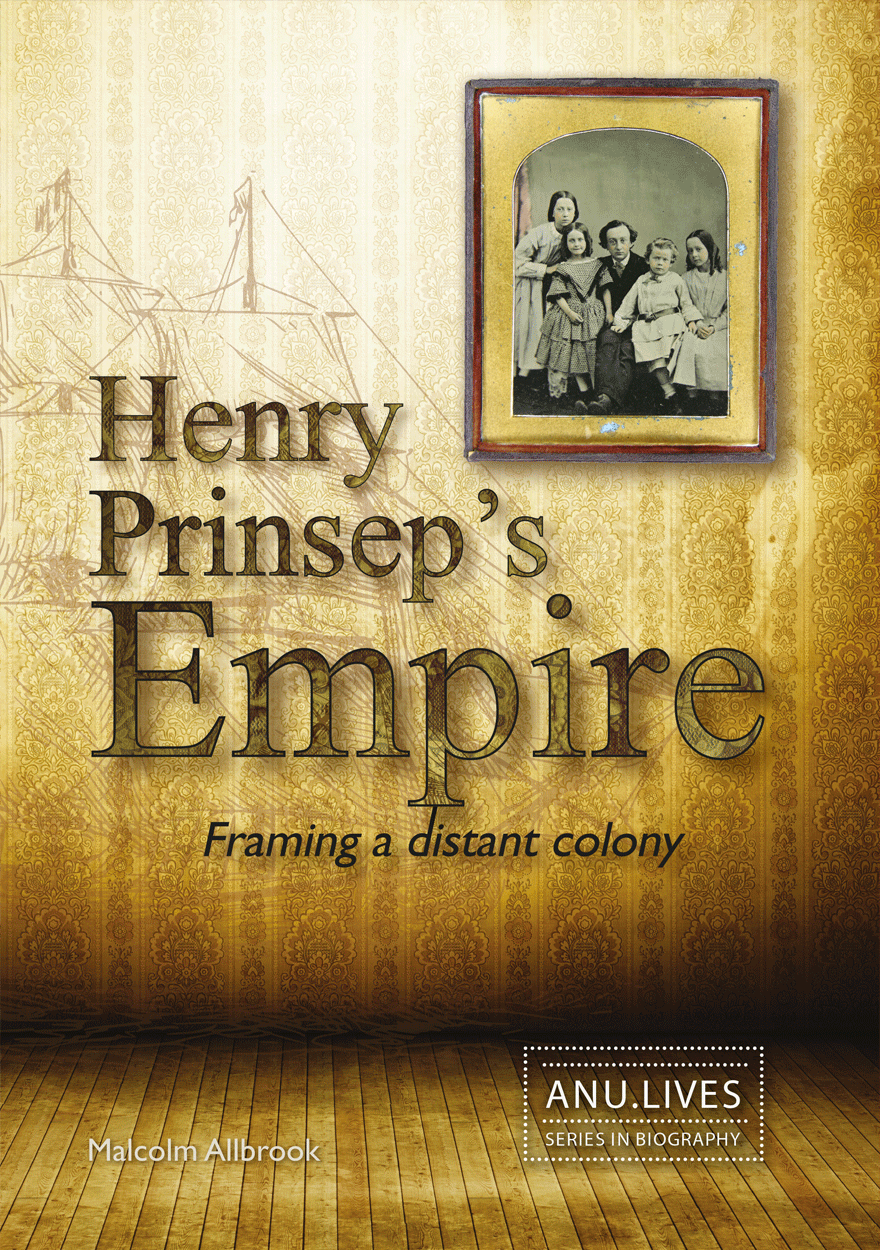
Henry Prinsep's Empire »
Framing a distant colony
Authored by: Malcolm Allbrook
Publication date: September 2014
Henry Prinsep is known as Western Australia’s first Chief Protector of Aborigines in the colonial government of Sir John Forrest, a period which saw the introduction of oppressive laws that dominated the lives of Aboriginal people for most of the 20th century.
But he was also an artist, horse-trader, member of a prominent East India Company family, and everyday citizen, whose identity was formed during his colonial upbringing in India and England. As a creator of Imperial culture, he supported the great men and women of history while he painted, wrote about and photographed the scenes around him. In terms of naked power he was a middle man, perhaps even a small man. His empire is an intensely personal place, a vast network of family and friends from every quarter of the British imperial world, engaged in the common tasks of making a home and a career, while framing new identities, new imaginings and new relationships with each other, Indigenous peoples and fellow colonists. This book traces Henry Prinsep’s life from India to Western Australia and shows how these texts and images illuminate not only Prinsep the man, but the affectionate bonds that endured despite the geographic bounds of empire, and the historical, social, geographic and economic origins of Aboriginal and colonial relationships which are important to this day.