



Search titles
Displaying results 321 to 330 of 642.

Innamincka Words: Yandruwandha dictionary and stories »
Edited by: Gavan Breen
Publication date: April 2015
Innamincka Words: Yandruwandha dictionary and stories is one of a pair of companion volumes on Yandruwandha, a dialect of the language formerly spoken on the Cooper and Strzelecki Creeks and the country to the north of the Cooper, in the northeast corner of South Australia and a neighbouring strip of Queensland. The other volume is entitled Innamincka Talk: a grammar of the Innamincka dialect of Yandruwandha with notes on other dialects. Innamincka Words is for readers, especially descendants of the
original people of the area, who are interested in the language. It is also a necessary resource for users of the more technical Innamincka Talk.
These volumes document all that could be learnt from the last speakers of the language in the last years of their lives by a linguist who was involved with other languages at the same time. These were people who did not have a full knowledge of the culture of their forebears, but were highly competent, indeed brilliant, in the way they could teach what they knew to the linguist student.
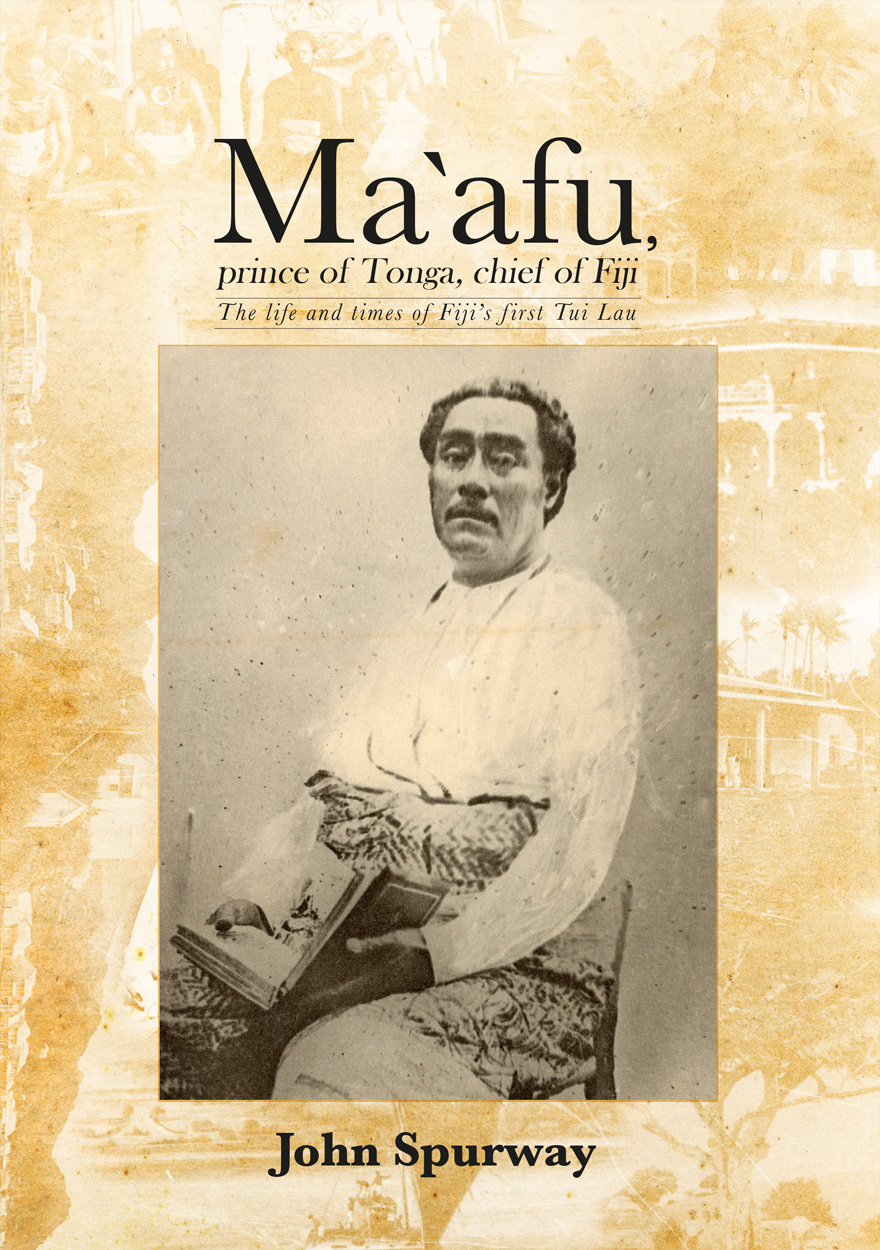
Ma`afu, prince of Tonga, chief of Fiji »
The life and times of Fiji’s first Tui Lau
Authored by: John Spurway
Publication date: February 2015
Enele Ma`afu, son of Aleamotu`a, Tu`i Kanokupolu, grew up during a time of unprecedented social and political change in Tonga following the advent of Christianity. Moving to Lau, Fiji, in 1847 when he was about 21, he skilfully exploited kinship links to establish a power base there and in eastern Cakaudrove. His achievements were recognised in 1853 when his cousin King Tupou I appointed Ma`afu as Governor of the Tongans in Fiji.
Acting as a putative champion of the lotu, Ma`afu undertook successful military campaigns elsewhere in Fiji and, after adding the Yasayasa Moala and the Exploring Isles to the nascent Lauan state, he was able to establish the Tovata ko Lau, a union of Lau, Cakaudrove and Bua, with himself as head. His power was formally recognised in 1869 when the Lauan chiefs appointed him as Tui Lau, a new title in the polity of Fiji. Ma`afu was now able to challenge Cakobau for the mastery of Fiji.
After serving as Viceroy during the farcical planter oligarchy known as the Kingdom of Fiji, Ma`afu underwent a severe humiliation when, in order to maintain his power in Lau, he was forced to accede to the wishes of Fiji’s other great chiefs in offering their islands to Great Britain. He would end his days as Roko Tui Lau, a ‘subordinate administrator’ in the Crown Colony of Fiji, presiding over a province characterised by corruption and maladministration but where the legacy of his earlier innovative land reforms has endured.

The Representation of Science and Scientists on Postage Stamps »
A science communication study
Authored by: Christopher B. Yardley
Publication date: February 2015
The Representation of Science and Scientists on Postage Stamps examines how the postal authorities of the world have developed unique techniques to portray science and scientists in order to convey a message behind the stamp issue. It is a multi-disciplinary examination that investigates visual representation, semiotics, science, science history and politics, amongst other issues.
The author introduces and describes a technique for looking at how and why images may have been chosen. Is the image a mirror reflecting a known reality or is it a lens to challenge, to prompt further thought or action? He also hypothesises that the Internet created a real change to science communication, influencing the way images of science were used. The stamp message changed from that of pursuing a public understanding approach to an awareness of science with its increasing contextual content.
Human Ecology Review: Volume 21, Number 1 »
Publication date: February 2015
Human Ecology Review is a semi-annual journal that publishes peer-reviewed interdisciplinary research on all aspects of human–environment interactions (Research in Human Ecology). The journal also publishes essays, discussion papers, dialogue, and commentary on special topics relevant to human ecology (Human Ecology Forum), book reviews (Contemporary Human Ecology), and letters, announcements, and other items of interest (Human Ecology Bulletin). Human Ecology Review also publishes an occasional paper series in the Philosophy of Human Ecology and Social–Environmental Sustainability.
Download for free
Not available for purchase

Aboriginal History Journal: Volume 38 »
Edited by: Shino Konishi
Publication date: January 2015
Volume 38 features a special section on Western Australian Aboriginal history. Clint Bracknell translates and contextualises nineteenth-century Noongar songs. Amanda Nettelbeck considers the role of magistrates and justices of the peace in the ‘frontier legal networks’ of the Pilbara and Kimberley regions. Anne Scrimgeour traces the changing approach to the administration of Aboriginal people in the twentieth-century north-west through the biography of Laurie O’Neill, a former mounted policeman and travelling inspector. Craig Muller studies the history of the Wongatha of the north-east part of the Goldfields. Muller finds that Elkin’s account of his brief 1930 visit to the region was used as evidence in the recent Wongatha native title case without sufficient historical contextualisation. Together, the papers draw on rich archival sources, complicate our understandings of the way in which Aboriginal lives were controlled in the past, and highlight Aboriginal voices and perspectives.
The other four articles exploring Aboriginal histories from other parts of Australia. Nicholas Brodie reconstructs the life of Dalrymple Briggs, a Vandemonian woman of mixed-descent. Noah Riseman examines the lives of three Aboriginal servicemen who all had media profiles as successful examples of assimilation. The other two articles examine different non-Indigenous accounts of Aboriginal people and culture. Marguerita Stephens critically examines discourses on Aboriginal infanticide in colonial Victoria. The history of tourist visits to Palm Island, an Aboriginal reserve in Queensland is the focus of Toby Martin’s article.
Aboriginal History Inc. is a publishing organisation based in the Australian Centre for Indigenous History, Research School of Social Sciences, The Australian National University, Canberra.
For more information on Aboriginal History Inc. please visit aboriginalhistory.org.au.
Download for free
Not available for purchase
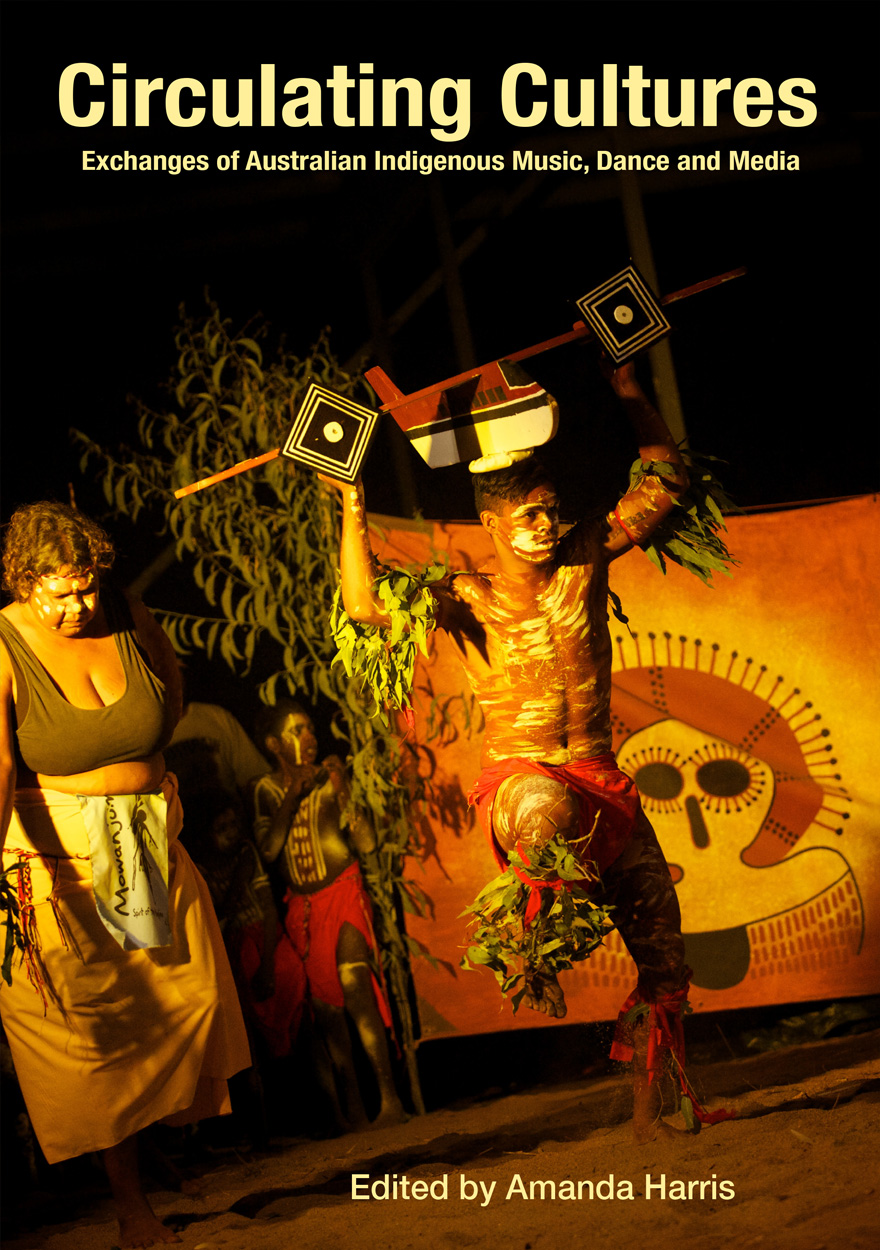
Circulating Cultures »
Exchanges of Australian Indigenous Music, Dance and Media
Edited by: Amanda Harris
Publication date: December 2014
Circulating Cultures is an edited book about the transformation of cultural materials through the Australian landscape. The book explores cultural circulation, exchange and transit, through events such as the geographical movement of song series across the Kimberley and Arnhem Land; the transformation of Australian Aboriginal dance in the hands of an American choreographer; and the indigenisation of symbolic meanings in heavy metal music. Circulating Cultures crosses disciplinary boundaries, with contributions from historians, musicologists, linguists and dance historians, to depict shifts of cultural materials through time, place and interventions from people. It looks at the way Indigenous and non-Indigenous performing arts have changed through intercultural influence and collaboration.

Law and Democracy »
Contemporary Questions
Edited by: Glenn Patmore, Kim Rubenstein
Publication date: December 2014
Law and Democracy: Contemporary Questions provides a fresh understanding of law’s regulation of Australian democracy. The book enriches public law scholarship, deepening and challenging the current conceptions of law’s regulation of popular participation and legal representation. The book raises and addresses a number of contemporary questions about legal institutions, principles and practices:
How should the meaning of ‘the people’ in the Australian Constitution be defined by the High Court of Australia?
How do developing judicial conceptions of democracy define citizenship?
What is the legal right to participate in the political community?
Should political advisors to Ministers be subject to legal accountability mechanisms?
What challenges do applied law schemes pose to notions of responsible government and how can they be best addressed?
How can the study of the ritual of electoral politics in Australia and other common law countries supplement the standard account of democracy?
How might the ritual of the pledge of Australian citizenship limit or enhance democratic participation?
What is the conflict between legal restrictions of freedom of expression and democracy, and the role of social media?
Examining the regulation of democracy, this book scrutinises the assumptions and scope of constitutional democracy and enhances our understanding of the frontiers of accountability and responsible government. In addition, key issues of law, culture and democracy are revealed in their socio-legal context.
The book brings together emerging and established scholars and practitioners with expertise in public law. It will be of interest to those studying law, politics, cultural studies and contemporary history.

Name, Shame and Blame »
Criminalising Consensual Sex in Papua New Guinea
Authored by: Christine Stewart
Publication date: December 2014
Papua New Guinea is one of the many former British Commonwealth colonies which maintain the criminalisation of the sexual activities of two groups, despite the fact that the sex takes place between consenting adults in private: sellers of sex and males who have sex with males. The English common law system was imposed on the colonies with little regard for the social regulation and belief systems of the colonised, and in most instances, was retained and developed post-Independence, regardless of the infringements of human rights involved.
Now the HIV pandemic has thrown a spotlight, not altogether welcome, on the sexual activities of these two groups. In Papua New Guinea, a growing body of behavioural research has focused on such matters as individual sexual partnering, condom use and awareness of HIV. My work, however, has a different purpose. I chose the terms in the title to highlight a nexus which I believe exists between the criminal law and negative attitudes of society. At an international level, the argument has been put that decriminalising sex work and sodomy will facilitate HIV epidemic management, reducing the stigma and discrimination these groups encounter and making them easier to reach. I undertook my research therefore with the aim of gaining deeper understanding of the effects the current situation of criminalisation might have on the social lives of these criminalised people today, in the country generally and in Port Moresby the capital in particular, and whether these effects might provide evidence to support the argument for law reform.
This is a rich and well-researched study of the legal, social and moral issues surrounding the criminalisation of two forms of consensual sex…. A very impressive piece of work, it is extensively documented, relies on a wide range of material and makes a clear and coherent argument about the place of law in producing identities and exclusions…. The attention to change over time and the complexity of the ways in which sexual behaviour is enacted and punished is a particular strength of the book.
—Professor Sally Engle Merry, Anthropology, Law and Society, New York University
This book is an exceptional contribution to our knowledge of the nexus between the criminal law and negative attitudes of society, and what effects criminalization has on the social lives of prostitutes and males who have sex with males, and whether these effects might provide evidence to support the argument for law reform…. The author’s experience of Papua New Guinea allows her to comment in depth on such matters as the United Nations’ human rights approach to the HIV epidemic and their call to decriminalize all sexual acts between consenting adults…. She shows that criminal laws—with the help of the normative discourse of religion and media—underpin and legitimize high levels of stigma, discrimination and abuse of prostitutes and males who have sex with males…. The quality of the writing and general presentation are exceptional.
—Laura Zimmer-Tamakoshi, Truman State University (retired)
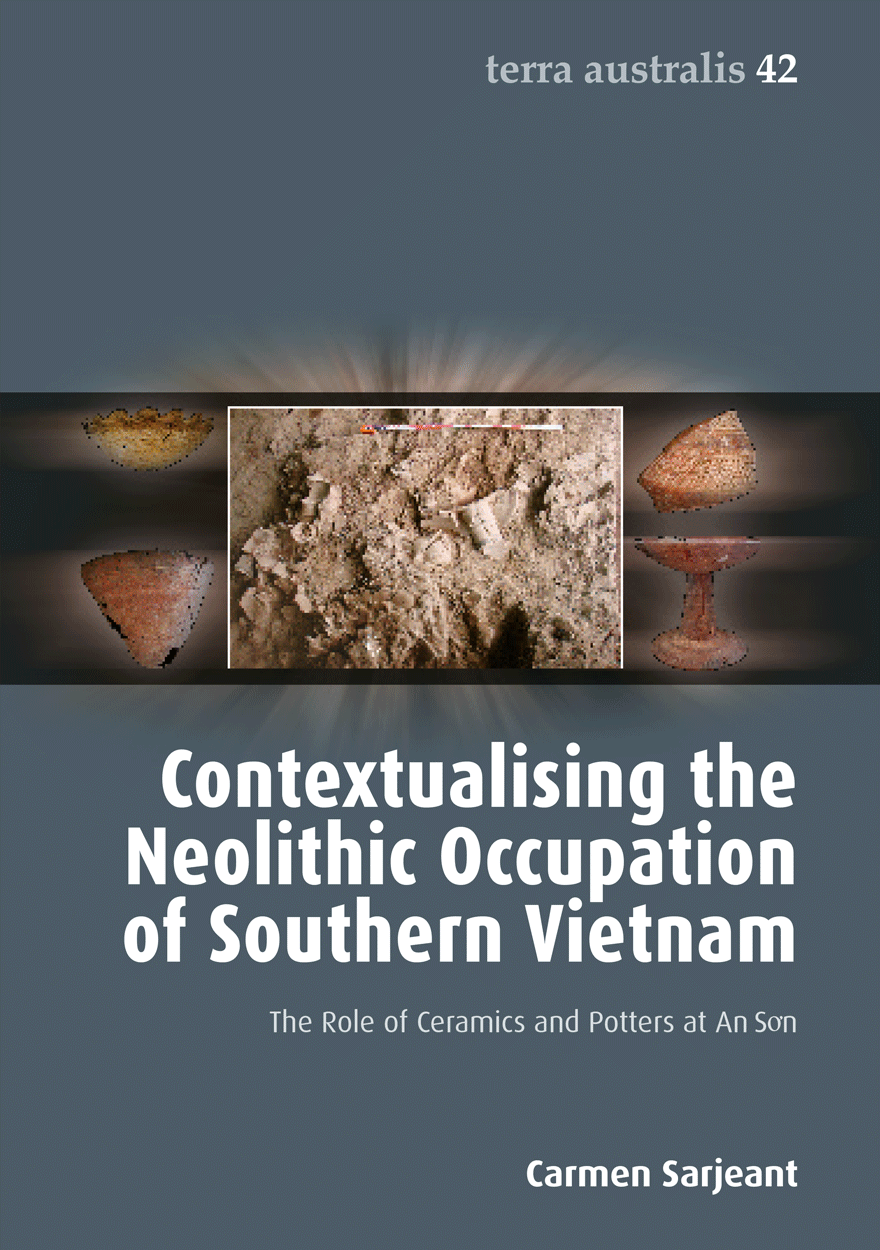
Contextualising the Neolithic Occupation of Southern Vietnam »
The Role of Ceramics and Potters at An Son
Authored by: Carmen Sarjeant
Publication date: November 2014
Excavated in 2009, An Son, Long An Province, southern Vietnam has been dated to the second millennium BC, with evidence for neolithic occupation and burials. Very little is known about the neolithic period in southern Vietnam, and the routes and chronology for the appearance of cultivation, domestic animals, and ceramic and lithic technologies associated with sedentary settlements in mainland Southeast Asia are still debated. The ways in which the ceramic material culture at An Son conforms to the wider neolithic expression observed in Southeast Asia is investigated, and local and regional innovations are identified. The An Son ceramic assemblage is discussed in great detail to characterise the neolithic occupation, while considering the nature of craft production, manufacturing methods and the transference of traditions.
Contextualising the neolithic in southern Vietnam is conducted through a comparative study of material culture between An Son and the sites of Bến Ðò, Bình Đa, Cù Lao Rùa, Cái Vạn, Cầu Sắt, Đa Kai, Đình Ông, Lộc Giang, Rạch Lá, Rạch Núi and Suối Linh, all in southern Vietnam. Another analysis is presented to contextualise An Son in the wider neolithic landscape of mainland Southeast Asia, between An Son and Ban Non Wat, early Ban Lum Khao, early Ban Chiang, early Non Nok Tha, Khok Charoen, Tha Kae, Khok Phanom Di, Nong Nor (phase 1), Samrong Sen, Laang Spean, Krek, Bàu Tró, Mán Bạc and Xóm Rền. The aspects of material culture at An Son that appear to have ancestral links are considered in this research as well as local interaction spheres.

Diversity in Leadership »
Australian women, past and present
Edited by: Joy Damousi, Kim Rubenstein, Mary Tomsic
Publication date: November 2014
While leadership is an over-used term today, how it is defined for women and the contexts in which it emerges remains elusive. Moreover, women are exhorted to exercise leadership, but occupying leadership positions has its challenges. Issues of access, acceptable behaviour and the development of skills to be successful leaders are just some of them.
Diversity in Leadership: Australian women, past and present provides a new understanding of the historical and contemporary aspects of Indigenous and non-Indigenous women’s leadership in a range of local, national and international contexts. It brings interdisciplinary expertise to the topic from leading scholars in a range of fields and diverse backgrounds. The aims of the essays in the collection document the extent and diverse nature of women’s social and political leadership across various pursuits and endeavours within democratic political structures.