



Search titles
Displaying results 1 to 10 of 647.

Australian Journal of Biography and History: No. 12, 2026 »
Special Issue: Intellectual Biography
Publication date: 2026
This special number of the Australian Journal of Biography and History consists of papers presented at a workshop on intellectual biography, held at The Australian National University in December 2024. The guest editor, Melanie Nolan, notes that historians increasingly do not agree on one kind of approach to intellectual biography. She surveys the kinds of postwar intellectual biographies historians have published, together with current debates over whether intellectual biography should entail methodological individualism or collectivism, internalist or externalist approaches, and whether to lump or split lives and intellectual developments. The first group of papers then considers intellectual biography written through the lens of the Cambridge School of intellectual history, which continues to dominate the field. Richard Whatmore and Thomas Ashby examine the historian J.G.A. Pocock’s methodology and his own biography. Kate Fullagar comments on this work, as she did at the workshop. A second group of papers—by Ian Kumekawa on A.C. Pigou, Emile Chabal on Eric Hobsbawm, and Matthew Birchall on Edward Gibbon Wakefield—are part of the push by historians to extend the span of intellectual biography. The authors argue respectively for a more ‘capacious’ approach to the category of economic intellectuals, the wider social influences on intellectual historians, and the need to consider how ideas have been applied as much as their disembodied theories. Finally, a pair of papers consider historians’ push of intellectual biography inwardly. That is, they are participating in what scholars identify as the more general ‘interventional’ or ‘reflexive’ turn in historiography. Jaume Aurell considers historians’ autobiography as intellectual biography, while Alison Bashford considers the intellectual biographies she has written metabiographically, weaving the biographies of intellectuals with her own historical self-reflection on intellectual biography.
Coming soon
Notify me
Made in China Journal: Volume 11, Issue 1, 2026 »
Publication date: August 2026
In recent years, political depression has emerged not only as a psychological condition but also as a culturally embedded affective response shaped by broader socio-political forces. Clinically, it resembles depression, but its aetiology is tied explicitly to political events and structural disenfranchisement. It manifests as hopelessness, a loss of faith in personal agency, and a pervasive sense that hard work and creativity no longer matter. Although the term has a longer history in feminist and affect theory, it gained traction in the United States during Donald Trump’s first presidency. Its resonance has since spread transnationally, with notable uptake in China during the COVID-19 pandemic and in the wake of the 2022 White Paper movement. Significantly, political depression in China does not simply mirror the global far-right turn but rather emerges as a long-standing condition rooted in specific historical traumas and the evolving dynamics of authoritarian rule. It is this condition that the present issue of the Made in China Journal sets out to explore.

No Borders »
Journeys Across Islands and Continents
Authored by: Wang Gungwu
Publication date: 2026
Over the course of a long life, the author, historian and university leader Wang Gungwu has travelled between and spent periods in Asia, Europe and Australia. Born in the Dutch East Indies at the start of the 1930s, and growing up in Ipoh, British Malaya, Wang was to study at the National Central University in Nanjing, China, before the Revolution, at the University of Malaya (Singapore) and at the School of Oriental and African Studies, University of London. Returning to Malaya, Wang ultimately found that serious scholarship of historical and contemporary China could only be undertaken from a greater distance, at The Australian National University, Canberra, which offered him a position as Chair of Far Eastern History. Later, Wang would serve as Vice-Chancellor of Hong Kong University during the lead-up to the handover of this key trading island from Britain back to China, before returning to Singapore as executive chairman of the Institute of East Asian Political Economy (IEAPE).
In No Borders, Wang takes the reader into these disparate personal and social worlds, as well as into the imagined worlds of history and, at times, the present, that formed the focus of his enduring fascination and enquiry as a major scholar of China, Southeast Asia and international relations.
To read this autobiography is to spend memorable time with a singular, urbane intellectual whose life has been lived at the intersection of competing forces of order and disorder within turbulent decades across both the East and West. A vivid historical and personal portrait is here enriched by thoughtful insight and deeply learned reflection.
Coming soon
Notify me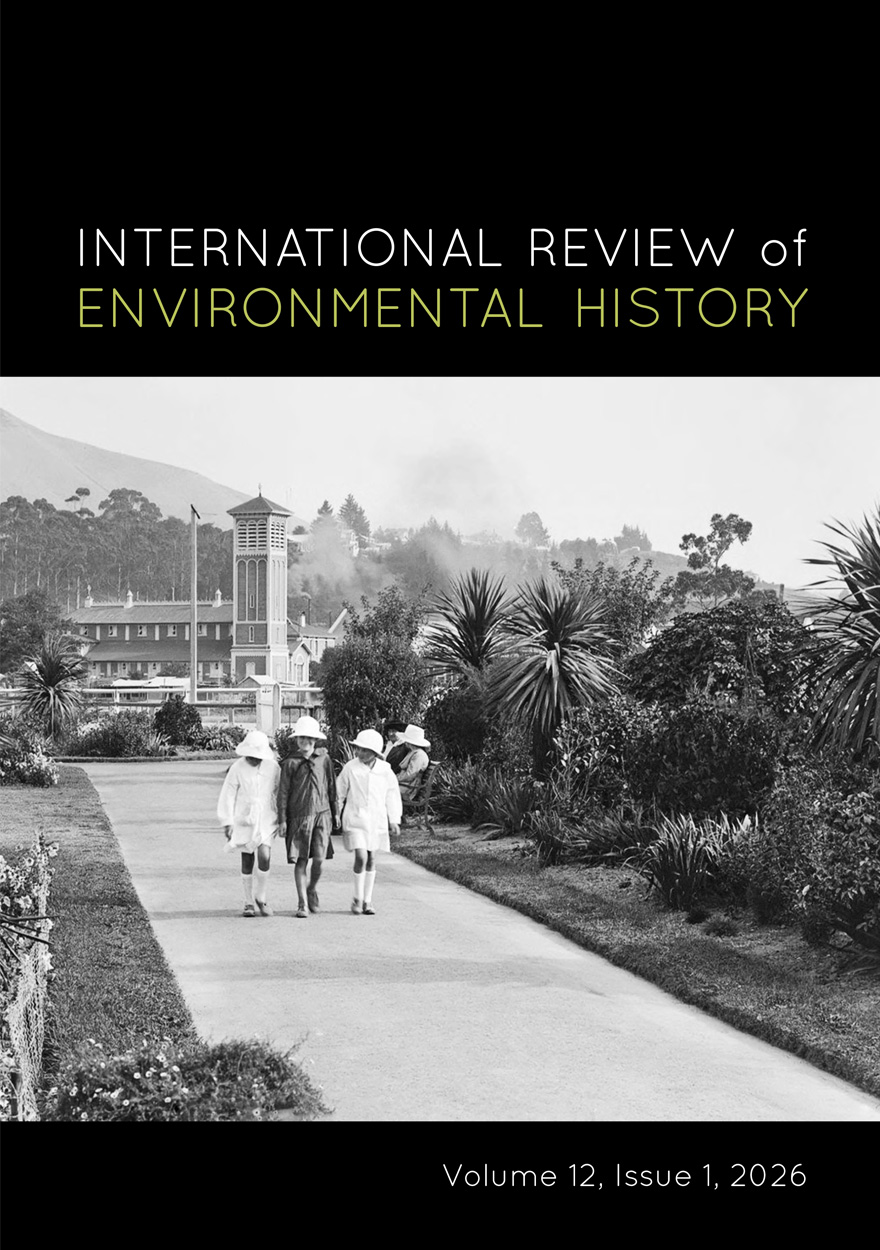
International Review of Environmental History: Volume 12, Issue 1, 2026 »
Edited by: James Beattie, Ruth Morgan
Publication date: July 2026
This issue of the International Review of Environmental History is planted firmly in Asia and the Pacific, tracing the rise and politics of local environmental knowledge and place-making from the seventeenth century. Shifting cultures of disaster management along the Yangtze River and the sponsorship of post-colonial botany in Indonesia meet conservation tourism and arboreal remembrance in twentieth-century Aotearoa. Threaded through the contributions, the lives and afterlives of imperialism and colonialism gesture to the possibilities of environmental history for shedding light on the enduring role of the state in the mediation of culture, politics, and environmental change.

An Adventurous Life »
Johan Koren, polar explorer and naturalist
Authored by: Steinar Wikan, Cathrine Harboe-Ree
Publication date: 2026
Johan Koren commenced a life of exploration at the age of 17, when he attained a position on the RV Belgica, leaving his native Norway in 1897 on an expedition to the Antarctic. Trapped by ice floes closing in around them, Koren and his fellow crew members over-wintered in the Antarctic, the first people ever to do so.
An ardent naturalist by the time he became an orphan at age 11, this far-from-ordinary teenager was to grow into an extraordinary adult, participating in expeditions in the polar north and south and becoming a ship’s captain leading expeditions in northeastern Siberia and Alaska. During a period in which museums and private collectors clamoured for rare flora and fauna specimens, Koren’s personal qualities and professional expertise made him almost uniquely qualified for their pursuit. Enduring shipwrecks in the sub-Antarctic and polar north, destructive storms and the deaths of expedition companions, and surviving for a time in Siberia with assistance from local Chukchi people, Koren would eventually make important ornithological discoveries and have bird and animal species named after him by the Museum of Comparative Zoology at Harvard University.
An Adventurous Life is the first English language translation of Steinar Wikan’s comprehensive biographical study, published in Norwegian in 2000. Cathrine Harboe-Ree’s careful and sensitive translation will make known to the world the remarkable story of this major figure of polar exploration and zoology.
‘A fascinating reflection on the period of scientific exploration when collecting was central to the huge expansion of knowledge of the natural world taking place in the late 19th and early 20th centuries’.
—Michael Pearson
Coming soon
Notify me
Indigenous Songs of Victoria »
Publication date: June 2026
Indigenous Songs of Victoria seeks to do justice to the songsters, the clever men and women of traditional Indigenous societies who made these artistic treasures, as well as to the many people who have valued, written down or otherwise recorded these songs, so that they can be heard, read and delighted in today.
The rich diversity of Indigenous songs collected in this book is a cultural treasure of Victoria and Australia. The authors bring together here well over 100 different song texts with musical transcriptions and analysis, cultural context and, for many, translations.
This volume brings the rich knowledge and artistic skill of the song-makers of Indigenous Victoria to a wider audience and makes the sources of these songs, in manuscripts, old journals and sound recordings, accessible, often for the first time.

Aboriginal History Journal: Volume 49 »
Edited by: Crystal McKinnon, Ben Silverstein
Publication date: May 2026
In this volume, Nicholas Pitt and Heidi Norman trace Wiradjuri, Gomeroi and Wailwan histories of smallpox in the 1830s, emphasising Aboriginal understandings, responses to and treatments for the disease they called either Boulol or Thunna Thunna. This work reveals the networks of knowledge and experience that secured the survival of people in Country. Gary Foley, Clare Land and Shannon Woodcock then document a Community Organisation Course offered at Swinburne College of Technology, 1975–1977. The importance of this course can be seen in the sovereign futures it enabled; participants went on in the following years to organise Aboriginal Community Controlled Organisations and other Black Power movements across the southeast of the continent. The following article, by Will Bracks, takes up this theme in describing the networks involved in organising Rock Against Racism concerts in Adelaide, Melbourne, Canberra, Brisbane and Sydney throughout the 1980s. Organised in a manner characteristic of Black Power, this series of concerts raised political consciousness and generated resources to support Aboriginal communities.
Turning to the West, Sean Winter considers Noongar practices of cultural burning in the mid-nineteenth century, a period of government suppression through legislation that limited the way Noongar people could care for Country; Winter shows us how an insistence on displacing Noongar knowledges has caused cultural and ecological harm. Lastly, Bianka Vidonja Balanzategui brings to the fore the valuable writing of John Naish, a Welsh author based in the Queensland cane fields in the mid-twentieth century. Naish’s realist novels and autobiography, she shows us, offer us insight into the position and resistance of Aboriginal people in tropical north Queensland.
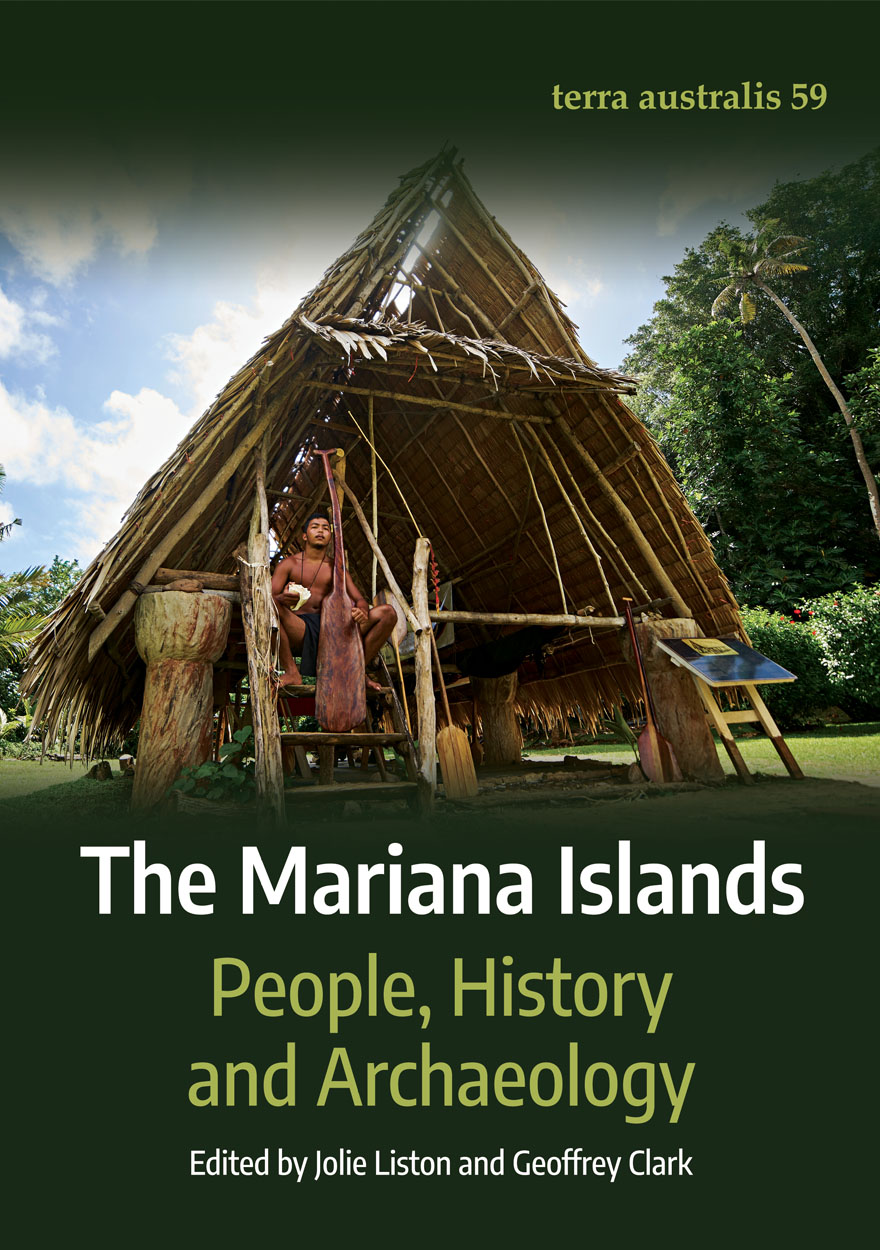
The Mariana Islands »
People, History and Archaeology
Edited by: Jolie Liston, Geoffrey Clark
Publication date: 2026
The Mariana Islands: People, History and Archaeology brings together new research about the history of the Mariana Islands through community perspectives, archaeological investigations, and anthropological and historical studies. The colonisation and growth of societies in the Mariana Islands, and of those elsewhere in Micronesia, are often seen as peripheral compared with those of Melanesia and Polynesia that tend to dominate scholarly and public views of Pacific history. The Marianas were the first remote archipelago to be recorded by Europeans with the arrival of Magellan in 1521, and the islands have a long and complicated history with colonial ‘great powers’, which during World War II involved the establishment of the remote Pacific’s sole concentration camp. Initial colonisation over 3,000 years ago was by migrants from East Asia who were related to, but genetically different from, Lapita groups who extended human occupation as far east as Tonga and Samoa. Later population movements to the Marianas, some involving Papuan people, point to a mobile Pacific that was connected to insular Asia, New Guinea and other parts of Oceania. Migration and local development contributed to the formation of a unique and vibrant CHamoru culture. The volume is dedicated to two pioneer archaeologists, Darlene Moore and Roz Hunter-Anderson, who established modern archaeological practice in the Marianas through projects involving community members and elders in the preservation of cultural heritage sites and the creation of new land use histories.
‘The Mariana Islands: People, History and Archaeology brings archaeology into conversation with CHamoru memory, oral history and cultural practice to reconnect with the lives of i Manaotåomo’na, The People of Before. Through diverse topics and approaches, the book illuminates the complexities of ancestral and recent histories, offering a richer understanding of the Mariana Islands and its people.’
—Kelly Marsh-Taitano, Curator of Archaeological Collections, Guam Cultural Repository
Coming soon
Notify me
Believing on Upside Down Country »
The Changing Faith-scape of Bendigo
Publication date: April 2026
The city of Bendigo and surrounds, in central Victoria, Australia, is described today by its Traditional Owners, the Djaara people, as ‘upside down country’, because since 1851 the sacred earth has been rotated and removed by mining, changing its spiritual ‘faith-scape’. Since the arrival of settlers and sojourners of European and Chinese descent, relations between peoples in this region have been powerfully shaped not only by the quest for gold and subsequent bases of material wealth, but also by developments in this religious and spiritual faith-scape. In this innovative study, the authors examine a range of historically distinctive Bendigo customs, rituals, activities and events, from the famous Easter Fair, saved for posterity by the intervention of a Chinese community figure in the 1870s, and now led each year by Djaara people, to demonstrations associated with the Bendigo mosque controversy of 2014. They find that an understanding of spirituality and belief has often been a strong basis for connecting with and showing humanity towards others. Drawing on both oral sources and the objects and spaces of the material culture of religion and belief, the authors provide a fascinating elucidation of past and present meanings of faith, in and around Bendigo, as a lived dimension of experience.

Australian Journal of Biography and History: No. 11, 2026 »
Special Issue: Writing Tasmanian Lives
Publication date: April 2026
This special issue of the Australian Journal of Biography and History explores what it means to write lives connected to Lutruwita/Tasmania, an island shaped by both isolation and connection. For most of its more than 40 thousand years of human history, Tasmania was a peninsula. Later, it became a node in global networks of Indigenous voyaging, colonial expansion, commerce and incarceration. Writing Tasmanian lives, therefore, requires us to think about islands, archipelagos, and how connections between people and place are rendered in the historical record. This is not only a biographical, but also a geographical, methodological and formal problem.
The articles in this issue challenge conventional biographical methods and invite approaches that foreground mobility, relationality and imaginative reconstruction. The authors examine lives that are often fragmentary or eclipsed by dominant narratives. They employ diverse methodologies, including deep mapping, eco-biography, legal life writing, and creative engagements with art and literature, to illuminate the lived experiences of individuals across time and place. They interrogate archives, re-story familiar figures and experiment with interdisciplinary techniques to ask what counts as evidence and how imagination can coexist with rigour.
Collectively, these contributions demonstrate that writing Tasmanian lives is not an insular project but an archipelagic one, connecting places, people and ideas across multiple scales. They demonstrate how biography can be a dynamic, relational practice, capable of revealing patterns and possibilities that transcend boundaries of nation, empire and discipline.