



Journals
Browse or search a variety of academic journals maintained by ANU Press, or find out more about the journal authors. Download the book for free or buy a print-on-demand copy.

Australian Defence Strategic Guidance, 1976–2020 »
Volume I: Defending Australia without a Threat, 1976–1994
Edited by: Jean Bou, Stephan Frühling
Publication date: 2026
Between 1976 and 2020, Australia’s Department of Defence produced a range of strategic guidance documents. Some were classified, intended to inform and guide the government, while others were created for public release and ultimately became statements of government policy. These documents offer an insight into how successive Australian governments understood the nation’s security and what policy and institutional steps should be taken in response. Each paper aimed to develop or shape strategic concepts, provided the basis for significant budget and capability decisions, and directed reforms and policy change across the Defence organisation.
For the first time, the story of how these documents were developed, and the key ideas and debates that shaped them, can now be told. Based on unique access to archival records, this book is the product of a joint research project undertaken between the Australian Commonwealth’s Department of Defence and The Australian National University.
By the early 1970s, Australia had to develop and communicate a new defence policy at a time when there seemed to be no clear threat to the country. This led the government of Malcolm Fraser to commission Australia’s first Defence White Paper in 1976. As a public expression of government policy, this was a fundamentally new format for strategic guidance. Other White Papers followed in 1987 and 1994. The formerly key Defence Committee, previously responsible for the development of the guidance, faded, and longstanding classified guidance papers had their final iterations. This volume traces the demise of these Strategic Basis papers, as well as the rise of White Papers and other ad-hoc guidance documents. In doing so, it helps to show how Australian defence policy and strategic guidance were forged during the Defence of Australia era.
‘At the heart of resilience is knowledge. We are in fraught times. We need to understand how we have seen our strategic requirements historically to benchmark what we need to do now, comprehending strengths and inadequacies in our thinking. These volumes are essential reading.’
—Kim Beazley, former Minister for Defence and leader of the Labor opposition
‘This history of Australian Defence Strategic Guidance shows the messy reality of policy development. Politics, personality, money and deadlines all make for a combustible mix. This is a white-knuckle ride for anyone who has ever worked in the strategy business. The book makes for compelling reading, explaining the, at times, mystifying policy results. It shows how Australia's strategic approach developed, setting the foundations for today's defence capabilities.’
—Peter Jennings, former Deputy Secretary in the Department of Defence and former Director of the Australian Strategic Policy Institute
‘With unique, unfettered access to the classified files, this meticulous, scholarly, lively study illuminates the processes, the personalities and above all the ideas that have shaped Australia’s big defence decisions over the past 50 years. It is a remarkable resource and an essential foundation for the momentous debates we need to have about our defence in the challenging and very different decades ahead.’
—Hugh White AO, Emeritus Professor of Strategic Studies, ANU
Coming soon
Notify me
Australian Defence Strategic Guidance, 1976–2020 »
Documents: Defending Australia without a Threat, 1976–1994
Edited by: Jean Bou, Stephan Frühling
Publication date: 2026
Between 1976 and 2020, Australia’s Department of Defence produced a range of strategic guidance documents. Some were classified, intended to inform and guide the government, while others were created for public release and ultimately became statements of government policy. These documents offer an insight into how successive Australian governments understood the nation’s security and what policy and institutional steps should be taken in response. Each paper aimed to develop or shape strategic concepts, provided the basis for significant budget and capability decisions, and directed reforms and policy change across the Defence organisation.
For the first time, the story of how these documents were developed, and the key ideas and debates that shaped them, can now be told. Based on unique access to archival records, this book is the product of a joint research project undertaken between the Australian Commonwealth’s Department of Defence and The Australian National University.
This volume is a facsimile of all the strategic guidance papers analysed in Volume I. It includes a full copy of the 1976 Australian Strategic Analysis and Defence Policy Objectives; 1976 Defence White Paper; the 1979 Australian Strategic Analysis and Defence Policy Objectives; the 1983 Strategic Basis of Australian Defence Policy; the 1987 Defence White Paper; the 1989 Australia’s Strategic Planning in the 1990s; the 1991 Force Structure Review; the 1993 Strategic Review; and the 1994 Defence White Paper.
‘At the heart of resilience is knowledge. We are in fraught times. We need to understand how we have seen our strategic requirements historically to benchmark what we need to do now, comprehending strengths and inadequacies in our thinking. These volumes are essential reading.’
—Kim Beazley, former Minister for Defence and leader of the Labor opposition
‘This history of Australian Defence Strategic Guidance shows the messy reality of policy development. Politics, personality, money and deadlines all make for a combustible mix. This is a white-knuckle ride for anyone who has ever worked in the strategy business. The book makes for compelling reading, explaining the, at times, mystifying policy results. It shows how Australia's strategic approach developed, setting the foundations for today's defence capabilities.’
—Peter Jennings, former Deputy Secretary in the Department of Defence and former Director of the Australian Strategic Policy Institute
‘With unique, unfettered access to the classified files, this meticulous, scholarly, lively study illuminates the processes, the personalities and above all the ideas that have shaped Australia’s big defence decisions over the past 50 years. It is a remarkable resource and an essential foundation for the momentous debates we need to have about our defence in the challenging and very different decades ahead.’
—Hugh White AO, Emeritus Professor of Strategic Studies, ANU
Coming soon
Notify me
Australian Defence Strategic Guidance, 1976–2020 »
Volume II: The Era of the Balanced Force, 1997–2020
Edited by: Andrew Carr, Stephan Frühling
Publication date: 2026
Between 1976 and 2020, Australia’s Department of Defence produced a range of strategic guidance documents. Some were classified, intended to inform and guide the government, while others were created for public release and ultimately became statements of government policy. These documents offer an insight into how successive Australian governments understood the nation’s security and what policy and institutional steps should be taken in response. Each paper aimed to develop or shape strategic concepts, provided the basis for significant budget and capability decisions, and directed reforms and policy change across the Defence organisation.
For the first time, the story of how these documents were developed, and the key ideas and debates that shaped them, can now be told. Based on unique access to archival records, this book is the product of a joint research project undertaken between the Australian Commonwealth’s Department of Defence and The Australian National University.
In response to regional instability and the War on Terror, the government developed the Australian Defence Force (ADF) as a ‘Balanced Force’, structured to serve a wider range of national interests. A Defence White Paper in 2000 was followed by three short Defence Updates as the Department and ADF grappled with the pace of overseas operations. Three White Papers followed in 2009, 2013 and 2016, produced through increasingly ambitious and lengthy processes that grappled with the emergence of great power competition in the Indo-Pacific and the need to prepare Australia’s defence forces for an increasingly complex region. By the end of the period, the 2020 Defence Strategic Update signalled a shift away from the White Paper model of strategic guidance, which has been replaced today by the National Defence Strategy.
‘At the heart of resilience is knowledge. We are in fraught times. We need to understand how we have seen our strategic requirements historically to benchmark what we need to do now, comprehending strengths and inadequacies in our thinking. These volumes are essential reading.’
—Kim Beazley, former Minister for Defence and leader of the Labor opposition
‘This history of Australian Defence Strategic Guidance shows the messy reality of policy development. Politics, personality, money and deadlines all make for a combustible mix. This is a white-knuckle ride for anyone who has ever worked in the strategy business. The book makes for compelling reading, explaining the, at times, mystifying policy results. It shows how Australia's strategic approach developed, setting the foundations for today's defence capabilities.’
—Peter Jennings, former Deputy Secretary in the Department of Defence and former Director of the Australian Strategic Policy Institute
‘With unique, unfettered access to the classified files, this meticulous, scholarly, lively study illuminates the processes, the personalities and above all the ideas that have shaped Australia’s big defence decisions over the past 50 years. It is a remarkable resource and an essential foundation for the momentous debates we need to have about our defence in the challenging and very different decades ahead.’
—Hugh White AO, Emeritus Professor of Strategic Studies, ANU
Coming soon
Notify me
Australian Defence Strategic Guidance, 1976–2020 »
Documents: The Era of the Balanced Force, 1997–2020
Edited by: Andrew Carr, Stephan Frühling
Publication date: 2026
Between 1976 and 2020, Australia’s Department of Defence produced a range of strategic guidance documents. Some were classified, intended to inform and guide the government, while others were created for public release and ultimately became statements of government policy. These documents offer an insight into how successive Australian governments understood the nation’s security and what policy and institutional steps should be taken in response. Each paper aimed to develop or shape strategic concepts, provided the basis for significant budget and capability decisions, and directed reforms and policy change across the Defence organisation.
For the first time, the story of how these documents were developed, and the key ideas and debates that shaped them, can now be told. Based on unique access to archival records, this book is the product of a joint research project undertaken between the Australian Commonwealth’s Department of Defence and The Australian National University.
This volume is a facsimile of all the strategic guidance papers analysed in Volume II. It includes a full copy of the 1997 Australian Strategic Policy; 2000 Defence White Paper; 2003 Defence Update; 2005 Defence Update; 2007 Defence Update; 2009 Defence White Paper; 2013 Defence White Paper; 2016 Defence White Paper; and the 2020 Defence Strategic Update.
‘At the heart of resilience is knowledge. We are in fraught times. We need to understand how we have seen our strategic requirements historically to benchmark what we need to do now, comprehending strengths and inadequacies in our thinking. These volumes are essential reading.’
—Kim Beazley, former Minister for Defence and leader of the Labor opposition
‘This history of Australian Defence Strategic Guidance shows the messy reality of policy development. Politics, personality, money and deadlines all make for a combustible mix. This is a white-knuckle ride for anyone who has ever worked in the strategy business. The book makes for compelling reading, explaining the, at times, mystifying policy results. It shows how Australia's strategic approach developed, setting the foundations for today's defence capabilities.’
—Peter Jennings, former Deputy Secretary in the Department of Defence and former Director of the Australian Strategic Policy Institute
‘With unique, unfettered access to the classified files, this meticulous, scholarly, lively study illuminates the processes, the personalities and above all the ideas that have shaped Australia’s big defence decisions over the past 50 years. It is a remarkable resource and an essential foundation for the momentous debates we need to have about our defence in the challenging and very different decades ahead.’
—Hugh White AO, Emeritus Professor of Strategic Studies, ANU
Coming soon
Notify me
The Digital Transformation in China »
Edited by: Ligang Song, Yixiao Zhou
Publication date: 2026
China stands at a pivotal moment in its economic history. Ageing demographics and the erosion of traditional low-cost advantages are necessitating a shift away from factor-driven growth toward innovation and productivity. The digital economy — powered by artificial intelligence, big data, cloud computing and fintech — has emerged as the central force reshaping how China produces, trades and governs.
China Update Book 2026 brings together leading economists and policy analysts to examine this transformation in depth. Drawing on rigorous empirical research, the volume traces how ICT industries have driven output and productivity growth, how digital innovation interacts with China’s broader innovation system, and how AI is modernising China’s industrial structure. It investigates the rapid but uneven expansion of digital finance — from mobile payments that have largely displaced cash in urban everyday life to fintech services reshaping rural credit markets — and asks whether China’s financial system has achieved inclusive depth or merely impressive reach.
The volume also examines data as a distinct factor of production in regional growth, the use of digital technology to transform rural governance, and the policy frameworks governing data-driven economies. Chapters on China’s international balance sheet, its rising current account surplus, and the resilience of its export sector, as intermediate goods push it up global value chains, situate digital transformation within the wider macroeconomic landscape. Further contributions address the impact of US technology export controls, China’s data localisation laws, the digitalisation of production and trade, and the promise of digital agriculture.
Authoritative, timely and wide-ranging, China Update Book 2026 is essential reading for scholars, policymakers and anyone seeking to understand how digital transformation is redefining China’s economic future.
Coming soon
Notify me
Curing Australia’s Childcare Crisis »
Quality, universal early learning
Authored by: Andrew Scott
Publication date: 2026
Australian childcare is in crisis. Revelations in the last two years of the serious harm being done to many of Australia’s youngest citizens, in places meant for their education and care, have shocked the nation. Failings simmering for decades, because governments have again allowed childcare to become dominated by excessive profit seekers, are forcing a policy reckoning. In this book, Professor Andrew Scott outlines expert evidence and international experience to demonstrate how we can best make childcare safe and invest in children’s crucial first 5 years, when 90 per cent of their brain development takes place. Further, Scott demonstrates how the public outlay on policy measures needed will result in a substantial net financial gain for taxpayers. He outlines a future in which traditional Australian community involvement in early learning such as kindergartens, together with innovative new forms of provision, are mobilised to support parents, properly value the work of childcare professionals, boost women’s workforce participation and increase the role played by fathers in the lives of their children. Out of crisis, as Professor Scott powerfully shows, comes the opportunity for far-reaching, beneficial social change.
Coming soon
Notify me
An Adventurous Life »
Johan Koren, polar explorer and naturalist
Authored by: Steinar Wikan, Cathrine Harboe-Ree
Publication date: 2026
Johan Koren commenced a life of exploration at the age of 17, when he attained a position on the RV Belgica, leaving his native Norway in 1897 on an expedition to the Antarctic. Trapped by ice floes closing in around them, Koren and his fellow crew members over-wintered in the Antarctic, the first people ever to do so.
An ardent naturalist by the time he became an orphan at age 11, this far-from-ordinary teenager was to grow into an extraordinary adult, participating in expeditions in the polar north and south and becoming a ship’s captain leading expeditions in northeastern Siberia and Alaska. During a period in which museums and private collectors clamoured for rare flora and fauna specimens, Koren’s personal qualities and professional expertise made him almost uniquely qualified for their pursuit. Enduring shipwrecks in the sub-Antarctic and polar north, destructive storms and the deaths of expedition companions, and surviving for a time in Siberia with assistance from local Chukchi people, Koren would eventually make important ornithological discoveries and have bird and animal species named after him by the Museum of Comparative Zoology at Harvard University.
An Adventurous Life is the first English language translation of Steinar Wikan’s comprehensive biographical study, published in Norwegian in 2000. Cathrine Harboe-Ree’s careful and sensitive translation will make known to the world the remarkable story of this major figure of polar exploration and zoology.
‘A fascinating reflection on the period of scientific exploration when collecting was central to the huge expansion of knowledge of the natural world taking place in the late 19th and early 20th centuries’.
—Michael Pearson
Coming soon
Notify me
Indigenous Songs of Victoria »
Publication date: June 2026
Indigenous Songs of Victoria seeks to do justice to the songsters, the clever men and women of traditional Indigenous societies who made these artistic treasures, as well as to the many people who have valued, written down or otherwise recorded these songs, so that they can be heard, read and delighted in today.
The rich diversity of Indigenous songs collected in this book is a cultural treasure of Victoria and Australia. The authors bring together here well over 100 different song texts with musical transcriptions and analysis, cultural context and, for many, translations.
This volume brings the rich knowledge and artistic skill of the song-makers of Indigenous Victoria to a wider audience and makes the sources of these songs, in manuscripts, old journals and sound recordings, accessible, often for the first time.

Aboriginal History Journal: Volume 49 »
Edited by: Crystal McKinnon, Ben Silverstein
Publication date: May 2026
In this volume, Nicholas Pitt and Heidi Norman trace Wiradjuri, Gomeroi and Wailwan histories of smallpox in the 1830s, emphasising Aboriginal understandings, responses to and treatments for the disease they called either Boulol or Thunna Thunna. This work reveals the networks of knowledge and experience that secured the survival of people in Country. Gary Foley, Clare Land and Shannon Woodcock then document a Community Organisation Course offered at Swinburne College of Technology, 1975–1977. The importance of this course can be seen in the sovereign futures it enabled; participants went on in the following years to organise Aboriginal Community Controlled Organisations and other Black Power movements across the southeast of the continent. The following article, by Will Bracks, takes up this theme in describing the networks involved in organising Rock Against Racism concerts in Adelaide, Melbourne, Canberra, Brisbane and Sydney throughout the 1980s. Organised in a manner characteristic of Black Power, this series of concerts raised political consciousness and generated resources to support Aboriginal communities.
Turning to the West, Sean Winter considers Noongar practices of cultural burning in the mid-nineteenth century, a period of government suppression through legislation that limited the way Noongar people could care for Country; Winter shows us how an insistence on displacing Noongar knowledges has caused cultural and ecological harm. Lastly, Bianka Vidonja Balanzategui brings to the fore the valuable writing of John Naish, a Welsh author based in the Queensland cane fields in the mid-twentieth century. Naish’s realist novels and autobiography, she shows us, offer us insight into the position and resistance of Aboriginal people in tropical north Queensland.

Growing Restorative Regulation »
Publication date: May 2026
Regulation that prioritises punishment over learning often fails to repair harm or build lasting compliance. It can alienate communities, deepen mistrust and do little to prevent future breaches.
Growing Restorative Regulation reveals an alternative approach – one grounded in dialogue, learning from multiple perspectives and ensuring active accountability. Drawing upon a multi-year institutional ethnography of an environmental regulator, the book shows how the principles of restorative justice can be used to address and prevent pollution and environmental harm. In so doing, it also illustrates how restorative approaches are applicable to a wide variety of other regulatory challenges. Throughout, the authors offer a practical framework for inclusive processes and relationship-building, involving local and Indigenous communities, and for transforming regulation into a system that actively repairs.
Essential reading for regulators, policymakers, business leaders, environmental advocates, community groups and regulatory scholars, Growing Restorative Regulation is a critical and constructive guide to seeding sustainable restorative practices into the very heart of regulatory decision-making.
Format: Hardback

East Asia Forum Quarterly: Volume 18, Number 2, 2026 »
Publication date: May 2026
There is renewed focus on cooperation among middle powers following Canadian Prime Minister Mark Carney’s address at the March 2026 World Economic Forum in Davos. But the shift towards more active middle power diplomacy predates Carney’s remarks. This issue of the East Asia Forum Quarterly brings together analyses of how key middle powers across the Asia Pacific are seeking to work in concert—despite the significant constraints to strengthen their strategic position and sustain the regional and international order. The regional landscape is still complicated, but cannot be fully understood through the lens of great power competition alone.
Download for free
Not available for purchase
The Mariana Islands »
People, History and Archaeology
Edited by: Jolie Liston, Geoffrey Clark
Publication date: 2026
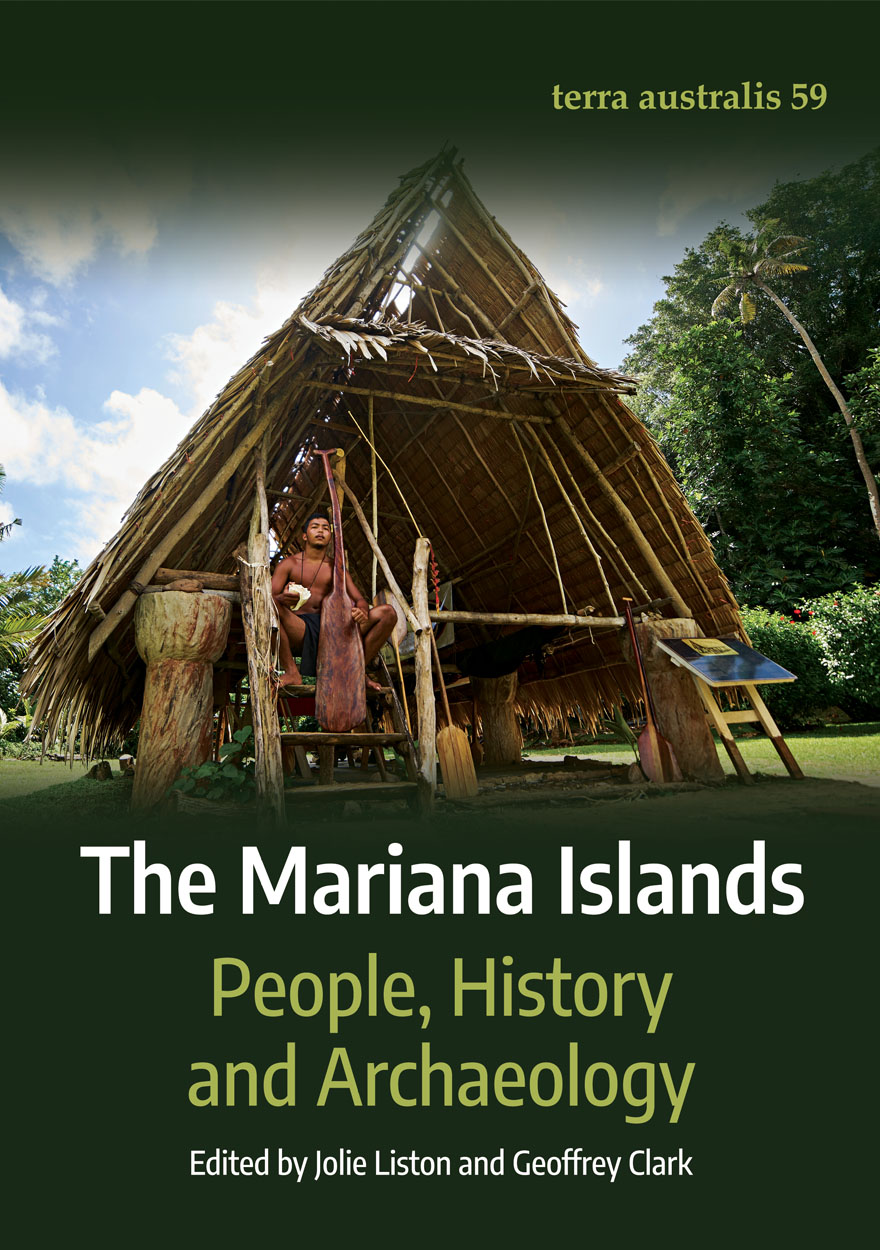
The Mariana Islands: People, History and Archaeology brings together new research about the history of the Mariana Islands through community perspectives, archaeological investigations, and anthropological and historical studies. The colonisation and growth of societies in the Mariana Islands, and of those elsewhere in Micronesia, are often seen as peripheral compared with those of Melanesia and Polynesia that tend to dominate scholarly and public views of Pacific history. The Marianas were the first remote archipelago to be recorded by Europeans with the arrival of Magellan in 1521, and the islands have a long and complicated history with colonial ‘great powers’, which during World War II involved the establishment of the remote Pacific’s sole concentration camp. Initial colonisation over 3,000 years ago was by migrants from East Asia who were related to, but genetically different from, Lapita groups who extended human occupation as far east as Tonga and Samoa. Later population movements to the Marianas, some involving Papuan people, point to a mobile Pacific that was connected to insular Asia, New Guinea and other parts of Oceania. Migration and local development contributed to the formation of a unique and vibrant CHamoru culture. The volume is dedicated to two pioneer archaeologists, Darlene Moore and Roz Hunter-Anderson, who established modern archaeological practice in the Marianas through projects involving community members and elders in the preservation of cultural heritage sites and the creation of new land use histories.
‘The Mariana Islands: People, History and Archaeology brings archaeology into conversation with CHamoru memory, oral history and cultural practice to reconnect with the lives of i Manaotåomo’na, The People of Before. Through diverse topics and approaches, the book illuminates the complexities of ancestral and recent histories, offering a richer understanding of the Mariana Islands and its people.’
—Kelly Marsh-Taitano, Curator of Archaeological Collections, Guam Cultural Repository
Coming soon
Notify me
At the Brink? »
Asia in the Global Economic Order
Edited by: Shiro Armstrong, Yves Tiberghien
Publication date: 2026
The global economic order is undergoing a period of profound transformation. Heightened geopolitical rivalry, rapid technological change and growing concerns about economic security are reshaping trade, investment, supply chains and global governance. These developments raise fundamental questions about the future of openness, cooperation and economic growth for Asia and the Pacific region.
This volume brings together leading scholars and policy experts from across Asia and the Pacific to examine how the region is navigating an increasingly contested international economic environment. The chapters explore the dynamics of great-power competition, the restructuring of global supply chains, the strategic role of technology and the pressures facing the liberal international economic order. They also consider the prospects for regional cooperation and the policy choices that may allow the region to sustain economic integration and prosperity in a more fragmented world. The book offers nine innovative proposals to buttress the global economic order and respond to current challenges.
Based on papers presented at the 41st Pacific Trade and Development (PAFTAD) Conference, At the Brink? offers timely analysis of the evolving global economic landscape and provides insights into how Asia and the wider international community can respond to the challenges of a shifting world economy.
Coming soon
Notify me
Uneven Rewards »
Milestones in Labour Economics
Authored by: Alison L Booth
Publication date: May 2026
Uneven Rewards brings together major studies of workplace relations and behaviour from the distinguished labour economist Alison L Booth. Over more than three decades, Booth has forged a distinctive intellectual path combining a strong interest in the role of gender and culture on labour markets with acute expertise in data collection, and cognate social science fields and methods.
With her co-authors, Booth examines the effects on men and women of evolving industrial relations’ rules and contexts. She studies the changing gendered and culturally specific nature of labour markets, and analyses the findings of a set of data-rich social experiments to reveal insights about women’s and men’s behaviour in labour, educational and wider social settings.
Finally, Booth shares new conclusions arising from this extensive body of research. She shows how culture and nurture associated with the upbringing of boys and girls can have profound implications for educational and labour market performance and relative outcomes by gender:
There is no right or wrong place for young women and men to be. What matters is that they are given the opportunity to go where their talents lead them without being thwarted by cultural pressures.
Format: Hardback

Believing on Upside Down Country »
The Changing Faith-scape of Bendigo
Publication date: April 2026
The city of Bendigo and surrounds, in central Victoria, Australia, is described today by its Traditional Owners, the Djaara people, as ‘upside down country’, because since 1851 the sacred earth has been rotated and removed by mining, changing its spiritual ‘faith-scape’. Since the arrival of settlers and sojourners of European and Chinese descent, relations between peoples in this region have been powerfully shaped not only by the quest for gold and subsequent bases of material wealth, but also by developments in this religious and spiritual faith-scape. In this innovative study, the authors examine a range of historically distinctive Bendigo customs, rituals, activities and events, from the famous Easter Fair, saved for posterity by the intervention of a Chinese community figure in the 1870s, and now led each year by Djaara people, to demonstrations associated with the Bendigo mosque controversy of 2014. They find that an understanding of spirituality and belief has often been a strong basis for connecting with and showing humanity towards others. Drawing on both oral sources and the objects and spaces of the material culture of religion and belief, the authors provide a fascinating elucidation of past and present meanings of faith, in and around Bendigo, as a lived dimension of experience.
Experiencing Indonesia »
30 years of ACICIS
Publication date: 2026
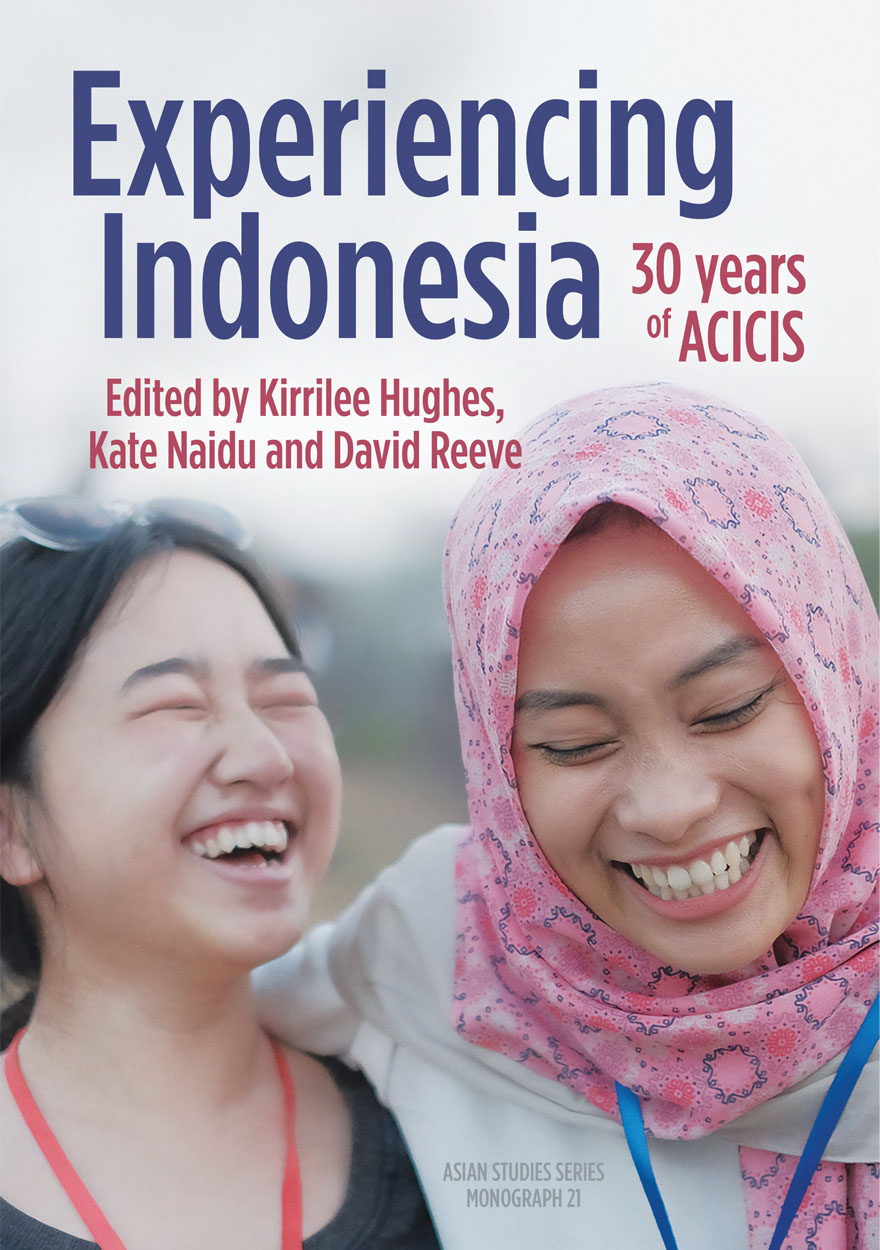
This book examines the many and varied dimensions of the Australian Consortium for ‘In-Country’ Indonesian Studies (ACICIS) and celebrates its 30th anniversary. Charting the institutional history of ACICIS alongside the development, innovation and impact of its programs, this volume captures personal insights from ACICIS alumni as well as staff members and partners from Australia and Indonesia. Contributors bring diverse perspectives and insights to reflect on and analyse the significance of ACICIS programs.
This book highlights the pioneering structures that enabled in‑country, experiential learning for young Australians in Indonesia; the development of highly innovative programs created in collaboration with Indonesian partners; and the impact of ACICIS on participants, staff, partners and host communities as well as on broader Australia–Indonesia bilateral relations. This rich and varied account of ACICIS’ context, operations and impact can inform decision-making and program design for learning abroad programs in Indonesia and beyond.
A central theme of this book is ACICIS’ commitment to experiential learning and its transformative impact on lives and relationships for individuals, institutions and communities. There are indeed many human faces of ACICIS; this volume presents their voices.
Coming soon
Notify me
Fragile Prosperity »
Australia’s gigantic monetary gamble
Authored by: Stuart Kells
Publication date: April 2026
Fragile Prosperity presents a new perspective on the past five decades of economic policy in Australia. This book shows that in important respects the basic pillars of this policy are misconceived, resting on fundamental misunderstandings of money, taxation and fiscal accounting.
Monetary and fiscal policies in Australia are reappraised, along with the nation’s program of financial deregulation: a gigantic experiment in modern money. A new understanding is presented of the causes of inflation in Australia and the drivers of house price growth, along with associated impacts on wealth distribution and inequality.
The implications are stark. While successive federal governments and Australia’s central bank have given up the means to directly control the principal cause of inflation, the current method of inflation control operates like a dead hand on the non-bank economy. Australia now faces a terrible conundrum in public policy and macroeconomic management, one with urgent implications for countries with similar regulatory settings, such as Canada and New Zealand. Further afield, the story of Australia’s experiment with modern money is a cautionary tale for all advanced economies.
‘Many younger Australians no longer feel that hard work brings a better life. In this timely book, Kells reveals the deeper, actual reasons Australia is no longer a land of economic opportunity.’
Thomas Walker, CEO, Think Forward
‘The thrust of this excellent work is that the process and consequences of the generation of money have been widely misunderstood by regulatory and government bodies, leading Australia unwittingly clinging to a “fragile prosperity”. Kells sets about offering practical solutions.’
David Merrett, Professor Emeritus, Faculty of Business and Economics, University of Melbourne
Coming soon
Notify me
Australian Journal of Biography and History: No. 11, 2026 »
Special Issue: Writing Tasmanian Lives
Publication date: April 2026
This special issue of the Australian Journal of Biography and History explores what it means to write lives connected to Lutruwita/Tasmania, an island shaped by both isolation and connection. For most of its more than 40 thousand years of human history, Tasmania was a peninsula. Later, it became a node in global networks of Indigenous voyaging, colonial expansion, commerce and incarceration. Writing Tasmanian lives, therefore, requires us to think about islands, archipelagos, and how connections between people and place are rendered in the historical record. This is not only a biographical, but also a geographical, methodological and formal problem.
The articles in this issue challenge conventional biographical methods and invite approaches that foreground mobility, relationality and imaginative reconstruction. The authors examine lives that are often fragmentary or eclipsed by dominant narratives. They employ diverse methodologies, including deep mapping, eco-biography, legal life writing, and creative engagements with art and literature, to illuminate the lived experiences of individuals across time and place. They interrogate archives, re-story familiar figures and experiment with interdisciplinary techniques to ask what counts as evidence and how imagination can coexist with rigour.
Collectively, these contributions demonstrate that writing Tasmanian lives is not an insular project but an archipelagic one, connecting places, people and ideas across multiple scales. They demonstrate how biography can be a dynamic, relational practice, capable of revealing patterns and possibilities that transcend boundaries of nation, empire and discipline.

Vā Moana »
Space and Relationality in Pacific Thought and Identity
Edited by: Albert L. Refiti, A.-Chr. Engels-Schwarzpaul, Lana Lopesi, Billie Lythberg, Arielle Walker, Emily Parr
Publication date: April 2026
Vā may be a small word, but it carries expansive meaning. Rooted in Indigenous Pacific knowledges—Samoan vā, Tongan tā-vā, Māori and Hawaiian wā—this concept of relational space binds people, ancestors and cosmologies across time and place. Since the late 1990s, vā has become a powerful framework in academic and cultural contexts, energising conversations across Oceania and beyond.
As the world grapples with the rise of hyper-individualism, vā offers an urgent and restorative alternative: one that centres connection, responsibility and collective belonging. This rich collection of individually and collaboratively authored chapters explores how vā, wā, and related Indigenous concepts are lived, theorised and practised today. Drawing from diverse disciplines and grounded in specific cultural contexts, these contributions deepen our understanding of relationality, space and place across the Moana.
The AUT Vā Moana Research Centre is dedicated to exploring spatial concepts through Moananui (Pacific) thought. Established in 2012 by Albert L. Refiti and A.-Chr. Engels-Schwarzpaul at Auckland University of Technology’s School of Art and Design, Vā Moana brings together a vibrant international network of scholars. Their work reimagines how space is understood and experienced, both in contemporary and customary Pacific contexts.
Format: Hardback
Lilith: A Feminist History Journal: Number 31 »
Publication date: March 2026
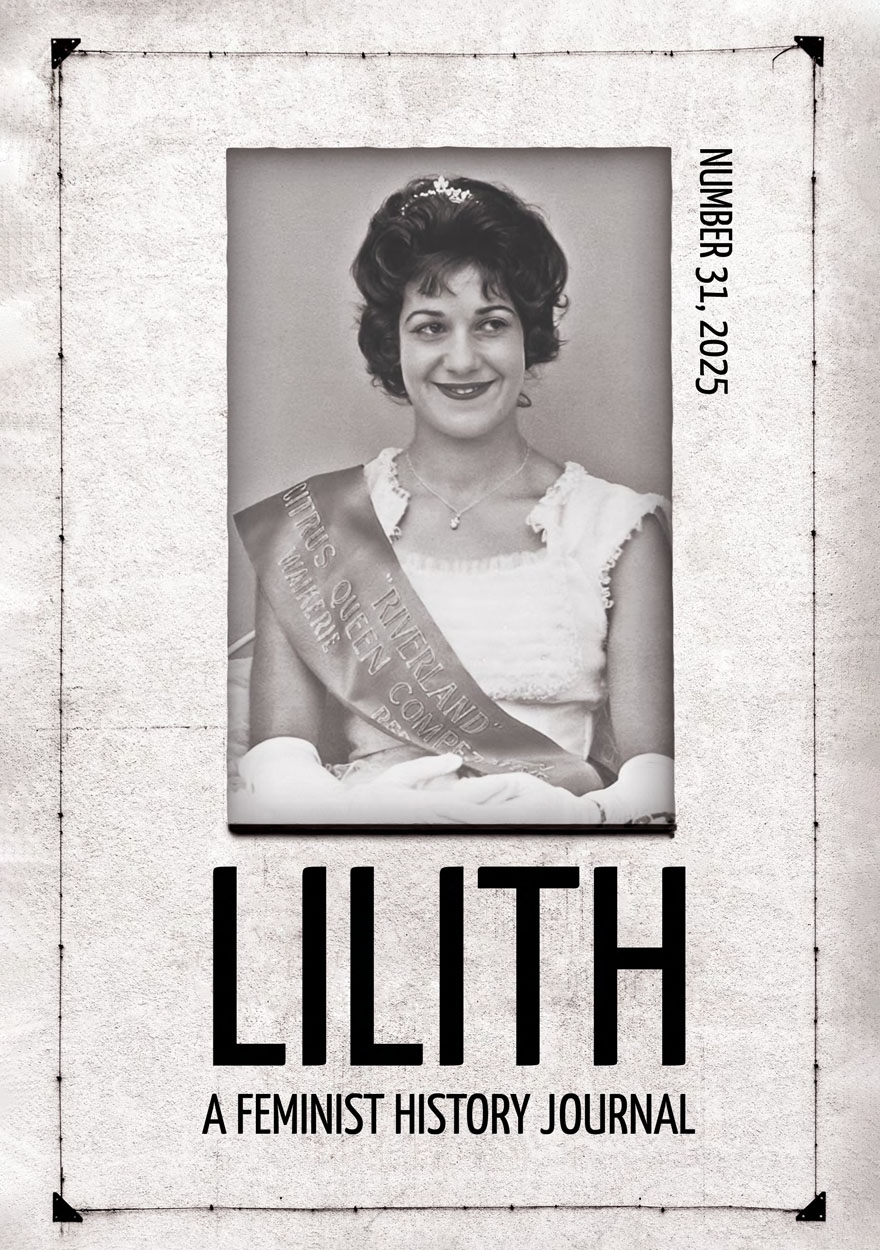
The 2025 Lilith presents four research articles focused on gender-based issues and experiences in twentieth-century Australia and Britain. The Australian-focused articles examine Lillie Beirne’s maternal feminism and related campaigns for social credit in the 1930s and 1940s, and how the ‘Citrus Queen’ beauty pageants of South Australia’s Riverina region articulated ideals of Anglo-Australian womanhood while also creating space for migrant women to participate in civic life and assert regional belonging. The third of these articles offers a mother’s intimate oral history of the tensions between the expectations and realities of motherhood when her child struggles with mental health. Turning to 1960s Britain, one article examines arguments for legalising abortion and identifies that while women’s rights and circumstances were important considerations, arguments for maternal health were most successful in achieving abortion rights.
The issue also features ten book reviews spanning diverse thematic terrain. These include a memoir of the Australian Women's Liberation movement, Shauna Bostock's white and Aboriginal family history, and biographies of the nineteenth-century novelist Madame Dudevant (George Sand) and of Doris Punshon's life as a queer woman. Reviewed books also cover the role of women in the intellectual history of international relations, the Women's Weekly's influence on Australian food culture, sexism and harassment in the Westminster parliamentary system, Geraldine Fela's oral histories of HIV and AIDS nurses, the roles of sexuality and gender in remaking Australian citizenship, and trans-misogyny as a project of colonial violence. At a time when studies of gender and feminism are under siege, this issue testifies to the continuing vitality of feminist historical scholarship.
Download for free
Not available for purchase
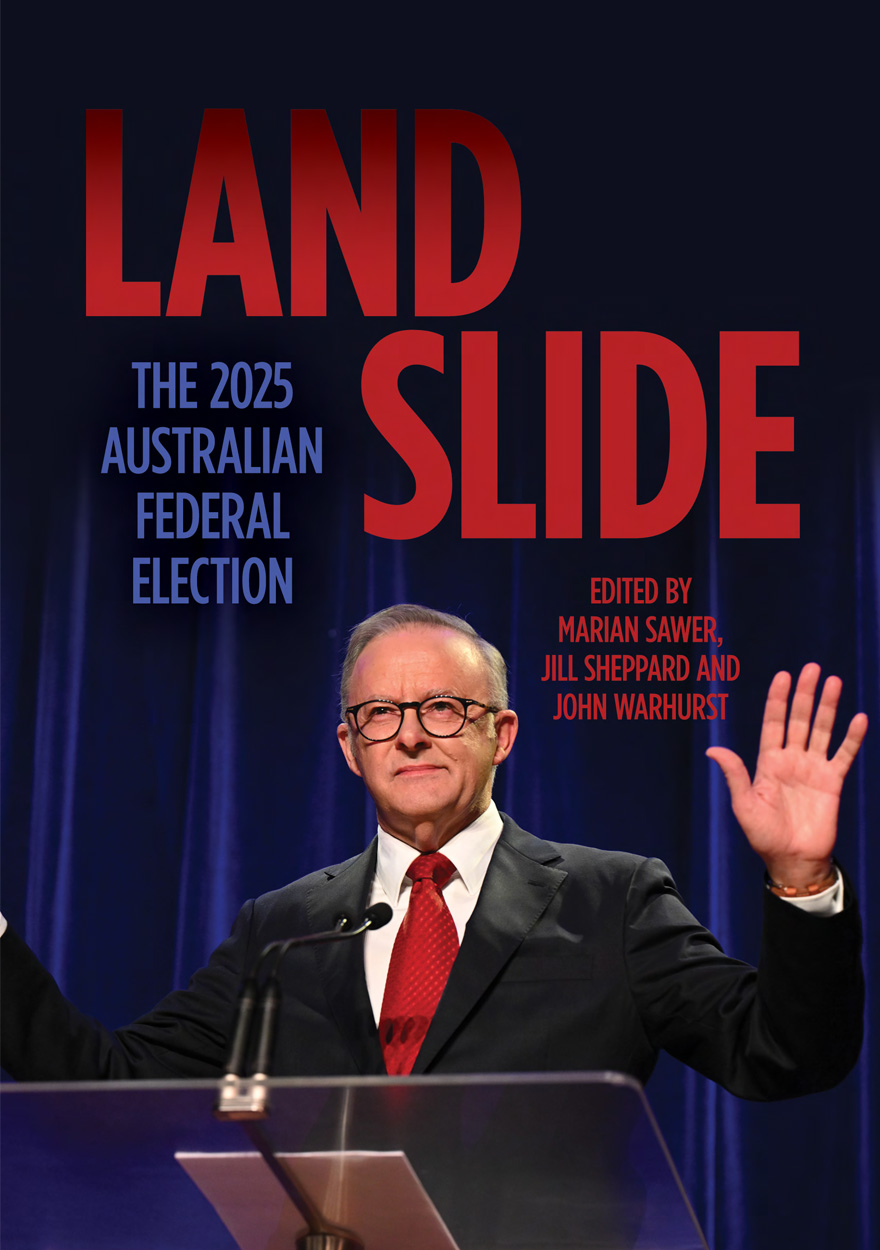
Landslide »
The 2025 Australian Federal Election
Publication date: March 2026
The 2025 Australian federal election saw an unexpected landslide victory for the Labor Party, the Liberal Party’s worst ever result and the continued rise of the non-major-party vote. In this book, Australia’s leading election analysts explore what contributed to this outcome, including the effectiveness of party and third-party campaigns, the changing demography of the electorate and external factors such as the ‘Trump effect’.
Baby boomers were outnumbered in 2025 by Gen Z and Millennials, who related to politics in a different way. Those pursuing their votes needed to do so through social media; influencers and podcasts became central to campaigning, as did humour appropriating popular culture with the help of AI. Increased cultural and linguistic diversity was also important, and there were new efforts to mobilise Muslim voters over the war in Gaza. Overshadowing it all was Trump. While populist themes seemed attractive at first, association with Trump quickly became a liability, and contributors here examine the difficulty of changing discourses mid-campaign.
This authoritative study is indispensable in understanding the new political landscape: polls and voting behaviour, misinformation, gender issues and competing leadership styles. Richly illustrated, the role of visual politics also receives close scrutiny.
Landslide is the nineteenth book in the ANU Press Australian Federal Election series. The series is sponsored by the Academy of the Social Sciences in Australia.

Peter Marralwanga »
Painter of the Djang of western Arnhem Land
Authored by: Luke Taylor, Ivan Namirrkki
Publication date: March 2026
Peter Marralwanga (1916–1987) was a leading figure in one of the great art practices of the world. He grew up in western Arnhem Land surrounded by artists painting in rock shelters and he learned to paint this way himself. The subjects of his paintings were the Djang who made his country and placed the spirits of people within it. Marralwanga’s story highlights the way bark painting became important as a way of evading assimilation policies rife within Northern Territory towns. Marralwanga established an outstation at Marrkolidjban where he could teach his children how to properly care for Ancestral lands, with part of this care involving a knowledge of how to paint. As a senior person who had travelled widely in his youth, and gained extensive ceremonial knowledge, Marralwanga was highly influential among a broad group of painters. Ivan Namirrkki, a painter of note and Peter Marralwanga’s son, has provided here his own account of his father’s life.
This book tracks Marralwanga’s life of learning about country and conveys the religious meaning of numerous major works, offering outsiders a richer understanding and appreciation of Arnhem Land art. It also shows the crucial role of individuals working for the community arts cooperative Maningrida Arts and Culture in facilitating Marralwanga’s rise to recognition as a major Australian and world artist.
Extensively illustrated, Peter Marralwanga: Painter of the Djang of western Arnhem Land is a study of unique knowledge and beauty.
‘There are only a handful of studies that give such brilliant, in-depth, serious analysis of an individual Aboriginal Australian artist’s life and work. The combination of genealogical, cultural and thematic analysis is superb.’
—Dr Henry Skerritt, University of Virginia
‘Australia’s foremost expert on the bark art of West Arnhem Land provides an exceptional biography of the complex cultural life and oeuvre of the late Peter Marralwanga. This is at once highly accessible, superbly illustrated, well researched and highly collaborative. It is an important resource for art historians, anthropologists and most importantly regional audiences of Aboriginal (Bininj) people determined to maintain the bark painting tradition that is so central to their livelihood and identity.’
—Emeritus Professor Jon Altman, The Australian National University
Format: Hardback

Terra in Our Mist »
A Tūhoe Narrative of Indigenous Sovereignty and Settler-State Violence
Authored by: Pounamu Jade William Emery Aikman
Publication date: 2026
Terra in Our Mist examines the persistence of state violence against Ngāi Tūhoe – the illustrious People of the Mist – whose ancestral homeland of Te Urewera stands as one of Aotearoa New Zealand’s most storied and contested landscapes. It focuses on a pattern of police violence: the 2007 anti-terror raids, codenamed Operation Eight, which centred on Ruatoki – one of the principal valleys of Te Urewera – and subsequent operations in 2012, 2014 and 2016. The book asks why such actions continue, and what they reveal about the unfinished nature of colonisation today.
These events are situated within a longer whakapapa (genealogy) of colonial engagement: a history of invasion, confiscation and control stretching back to the nineteenth century. Putting Indigenous scholarship in conversation with Michel Foucault’s ideas on power and the state, the book explores how differing understandings of land – terra, a space claimed through violence, and whenua, a living ground of ancestral belonging – continue to shape the relationship between Tūhoe and the state.
The police raids are shown not as isolated excesses, but as contemporary expressions of a colonial logic that has long sought to discipline Indigenous peoples and their sovereignties. By drawing these connections, Terra in Our Mist argues that the state’s claim to sovereignty depends on periodic re-enactments of force upon Indigenous communities. Blending ethnography, visual narrative and political critique, this book traces how the ground itself becomes a site of contest: over history, authority and the meaning of place in an unsettled world.
Coming soon
Notify me
Reshaping the State »
Chinese Political Institutions under Xi Jinping
Authored by: Wen-Hsuan Tsai
Publication date: February 2026
‘Based on extensive fieldwork and impressive analytic skills, Wen-Hsuan Tsai has produced the most detailed and informative account of the evolving political system in Xi Jinping’s China that I have ever read. It is essential reading for everyone seeking to understand the management and deployment of political power in contemporary China. The book convincingly shows that even though Xi Jinping may have centralized power in his own hands, institutions still matter. Indeed, they are holding China together.’
—Kjeld Erik Brødsgaard, Copenhagen Business School
‘This engaging and thought-provoking academic work reflects the scholar’s dedication to enhancing our understanding of Chinese governance. It blends institutional resonance with leadership dynamics, addressing the knowledge gap in the West about the complexities of the Chinese Communist Party’s resilience and institutions. By examining the idiosyncrasies, risks and challenges of contemporary China—both a major global influence and the world’s second-largest economy—it encourages readers to reflect deeply on its governance and implications.’
—Hon S. Chan, City University of Hong Kong
‘As a leading scholar on China’s elite politics, Dr Wen-Hsuan Tsai reveals how Xi Jinping reshaped the party-state to achieve institutional centralization and made and implemented domestic and foreign policy as the supreme leader of China. This book opens the “black box” of Chinese leadership politics, policymaking and implementation. It is a must-read for anyone who wants to gain deep knowledge about political dynamics in contemporary China.’
—Suisheng Zhao, University of Denver
Format: Hardback

Made in China Journal: Volume 10, Issue 2, 2025 »
Publication date: February 2026
Across the world, questions of gender, sexuality, and intimacy have become central to struggles over belonging, citizenship, and moral order. In China, these questions have acquired a particular urgency as the state seeks to stabilise social life through an increasingly narrow vision of family, reproduction, and normative personhood, even as people continue to forge relationships, identities, and communities that exceed those boundaries. Global LGBTQIA+ discourses, meanwhile, circulate widely but often unevenly, translating local experiences into familiar scripts of rights, visibility, and repression that do not always fit. It is within this dense and contested terrain that this issue of Made in China Journal, ‘Queer China’, intervenes, treating queerness as a critical lens for understanding contemporary Chinese politics, culture, and everyday life.
ANU Press Journals

Aboriginal History Journal »
Since 1977, the journal Aboriginal History has pioneered interdisciplinary historical studies of Australian Aboriginal people’s and Torres Strait Islander’s interactions with non-Indigenous peoples. It has promoted publication of Indigenous oral traditions, biographies, languages, archival and bibliographic guides, previously unpublished manuscript accounts, critiques of current events, and research and reviews in the fields of anthropology, archaeology, sociology, linguistics, demography, law, geography and cultural, political and economic history.
Aboriginal History Inc. is a publishing organisation based in the Australian Centre for Indigenous History, Research School of Social Sciences, The Australian National University, Canberra.
For more information on Aboriginal History Inc. please visit aboriginalhistory.org.au.
Submission details
Please send article submissions to aboriginal.history@anu.edu.au.
Articles of about 7,000 words in length (including footnotes and references) are preferred, but submissions up to 9,000 words will be considered. Please submit an electronic version of the paper (text only without embedded images or scans) in Microsoft Word or RTF format, along with a short abstract and author biography as a separate document.
ANU Historical Journal II »
The ANU Historical Journal II (ANUHJ II) is an open-access, peer-reviewed academic history journal of the ANU College of Arts and Social Sciences and the ANU College of Asia and the Pacific. It is a revival of the ANU Historical Journal, which was published between 1964 and 1987. Contributors to the first journal included academics such as Ken Inglis, Manning Clark, John Ritchie and Oliver MacDonagh along with then-emerging scholars Iain McCalman, Michael McKernan, Margaret George, Coral Bell, John Iremonger, Alastair Davidson, Susan Magarey and Rosemary Auchmuty. As well as upholding the Journal’s commitment to the work of students and early career researchers, the ANUHJ II has expanded its focus to include memoirs, short articles and long-form book reviews.
The ANUHJ II invites submissions from students, graduates and academics of any Australian university.
For more information about the ANUHJ II, please visit anuhj.com.au

Australian Journal of Biography and History »
The Australian Journal of Biography and History is an initiative of the National Centre of Biography (NCB) in the Research School of Social Sciences at The Australian National University. The NCB was established in 2008 to extend the work of the Australian Dictionary of Biography and to serve as a focus for the study of life writing in Australia, supporting innovative research and writing to the highest standards in the field, nationally and internationally. The Australian Journal of Biography and History seeks to promote the study of biography in Australia. Articles that appear in the journal are lively, engaging and provocative, and are intended to appeal to the current popular and scholarly interest in biography, memoir and autobiography. They recount interesting and telling life stories and engage critically with issues and problems in historiography and life writing.
The journal publishes peer-reviewed articles on Australian historical biography, including biographical studies, studies relating to theory and methodology, and the associated genres of autobiography, life writing, memoir, collective biography and prosopography. We are especially interested in articles that explore the way in which biography and its associated genres can illuminate themes in Australian history, including women in Australian society, family history, transnational networks and mobilities, and Indigenous history.
Submission Details
Please send article submissions or abstracts to the Editor, Dr Malcolm Allbrook, National Centre of Biography, The Australian National University. Email: Malcolm.Allbrook@anu.edu.au. Articles should be in the range of 5,000 to 8,000 words (excluding footnotes), although longer submissions may be considered after consultation with the Editor. Style and referencing: please use footnotes in Chicago style, and follow British spelling.

East Asia Forum Quarterly »
East Asia Forum Quarterly grew out of East Asia Forum (EAF) online, which has developed a reputation for providing a platform for the best in Asian analysis, research and policy comment on the Asia Pacific region in world affairs. EAFQ aims to provide a further window onto research in the leading research institutes in Asia and to provide expert comment on current developments within the region. The East Asia Forum Quarterly, like East Asia Forum online, is an initiative of the East Asia Forum (EAF) and its host organisation, the East Asian Bureau of Economic Research (EABER) in the Crawford School of Public Policy in the ANU College of Asia & the Pacific at The Australian National University.
Submission details
Unsolicited submissions to EAF are welcome. An analytic op-ed piece that is accessible to a general audience and written in crisp language is required. The preferred length of submissions is around 800 words. Submissions will be double-blind reviewed and, if accepted for publication, edited for English fluency and house style before returned for clearance by the author. EAFQ does not use footnotes but would be extremely appreciative if hyperlinks to internet sources are included wherever possible. EAFQ reserves the right to determine the title for any piece, but will not publish a piece or a title without permission. A suggested title is appreciated. If you have any further queries, or would like to submit, please contact shiro.armstrong@anu.edu.au.
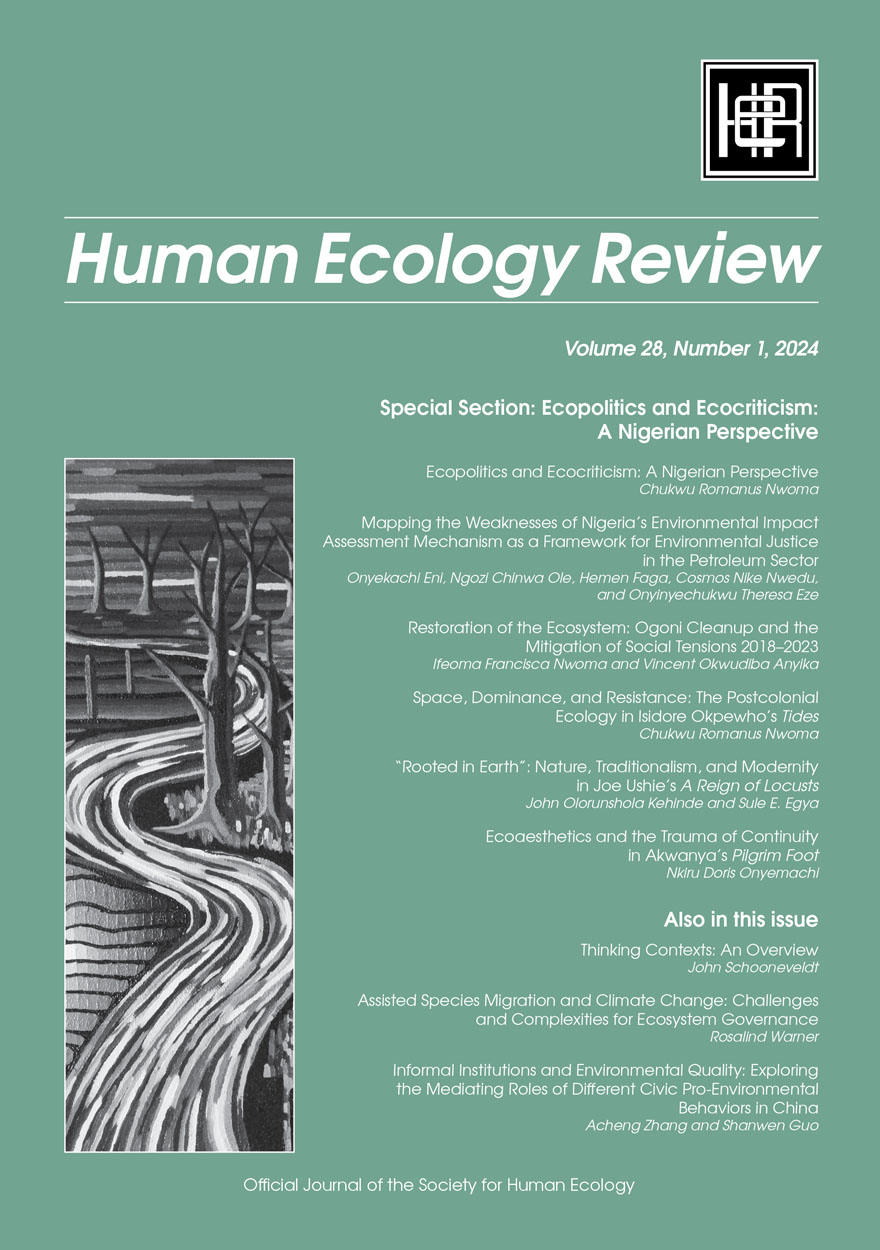
Human Ecology Review »
Human Ecology Review is a semi-annual journal that publishes peer-reviewed interdisciplinary research on all aspects of human–environment interactions (Research in Human Ecology). The journal also publishes essays, discussion papers, dialogue, and commentary on special topics relevant to human ecology (Human Ecology Forum), book reviews (Contemporary Human Ecology), and letters, announcements, and other items of interest (Human Ecology Bulletin). Human Ecology Review also publishes an occasional paper series in the Philosophy of Human Ecology and Social–Environmental Sustainability.
Submission details
For information on preparing your manuscript for submission, please visit www.humanecologyreview.org. To submit a manuscript to Human Ecology Review, please visit mstracker.com/submit1.php?jc=her, or email humanecologyreviewjournal@gmail.com.
Humanities Research »
Humanities Research is a peer-reviewed, open access, annual journal that promotes outstanding innovative, interdisciplinary and multidisciplinary scholarship to advance critical knowledge about the human world and society.
The journal is co-published by the Humanities Research Centre, The Australian National University, Canberra. It was launched in 1997 and went into hiatus in 2013. In 2022, the journal is resuming publication, reflecting the continuing strength of the humanities at The Australian National University, the rapid development of the interdisciplinary, environmental and public humanities over the last decade, and the opportunities for international collaboration reflected in the resumption of international travel in 2022.
Issues are thematic with guest editors and address important and timely topics across all branches of the humanities.

International Review of Environmental History »
International Review of Environmental History takes an interdisciplinary and global approach to environmental history. It encourages scholars to think big and to tackle the challenges of writing environmental histories across different methodologies, nations, and time-scales. The journal embraces interdisciplinary, comparative and transnational methods, while still recognising the importance of locality in understanding these global processes.
The journal’s goal is to be read across disciplines, not just within history. It publishes on all thematic and geographic topics of environmental history, but especially encourage articles with perspectives focused on or developed from the southern hemisphere and the ‘global south’.
Submission details
Please send article submissions or abstracts to the Editor, Associate Professor James Beattie, Science in Society, Victoria University of Wellington, PO Box 600, Wellington 6142, New Zealand. Email: james.beattie@vuw.ac.nz.
Abstracts should be no more than 200 words, and include a list of keywords. Articles should be in the range 5,000 to 8,000 words (including footnotes), although longer submissions may be considered after consultation with the editor. Style and referencing: please use footnotes in Chicago Style, follow British spelling, and use single quotation marks only. Find out more details about Chicago Style.
Lilith: A Feminist History Journal »
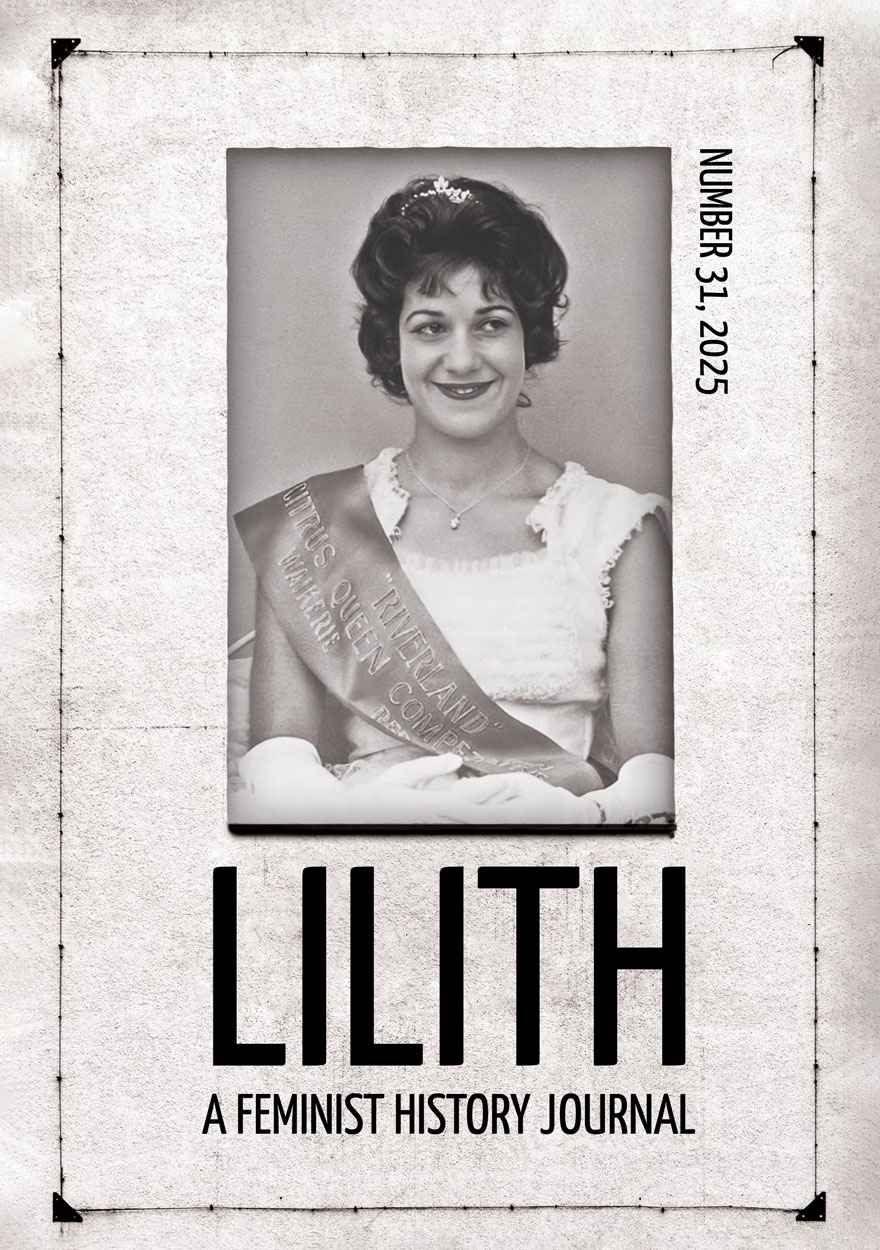
Lilith: A Feminist History Journal is an annual journal that publishes articles, essays and reviews in all areas of feminist and gender history (not limited to any particular region or time period). In addition to publishing research articles on diverse aspects of gender history, Lilith is also interested in publishing feminist historiographical and methodological essays (which may be shorter in length than typical research articles). Submissions from Australian and international early career researchers and postgraduate students are particularly encouraged.
The journal first began publication in Melbourne in 1984. It is the official journal of the Australian Women’s History Network, an organisation dedicated to promoting research and writing in all fields of women’s, feminist and gender history.
For more information about Lilith, please visit www.auswhn.org.au/lilith/.

Made in China Journal »
The Made in China Journal (MIC) is a publication focusing on labour, civil society and human rights in China. It is founded on the belief that spreading awareness of the complexities and nuances underpinning socioeconomic change in contemporary Chinese society is important, especially considering how in today’s globalised world Chinese labour issues have reverberations that go well beyond national borders. MIC rests on two pillars: the conviction that today, more than ever, it is necessary to bridge the gap between the scholarly community and the general public, and the related belief that open-access publishing is necessary to ethically reappropriate academic research from commercial publishers who restrict the free circulation of ideas.
Discontinued ANU Press Journals
Agenda - A Journal of Policy Analysis and Reform »
Please note: This journal ceased publishing in 2021.
Agenda is a refereed, ECONLIT-indexed and RePEc-listed journal of the College of Business and Economics, The Australian National University. Launched in 1994, Agenda provides a forum for debate on public policy, mainly (but not exclusively) in Australia and New Zealand. It deals largely with economic issues but gives space to social and legal policy and also to the moral and philosophical foundations and implications of policy.
Submission details
Authors are invited to submit articles, notes or book reviews, but are encouraged to discuss their ideas with the Editor beforehand. All manuscripts are subject to a refereeing process. Manuscripts and editorial correspondence should be emailed to: william.coleman@anu.edu.au.
Subscribe to the Agenda Alerting service if you wish to be advised on forthcoming or new issues.
Australian Humanities Review »
Please note: This journal ceased publishing with ANU Press in 2012. Current issues are available at australianhumanitiesreview.org.
Australian Humanities Review is a peer-reviewed interdisciplinary journal featuring articles, essays and reviews focusing on a wide array of topics related to literature, culture, history and politics.

craft + design enquiry »
Please note: This journal ceased publishing in 2015.
craft + design enquiry is an open-access, peer-reviewed journal promoting and disseminating research excellence generated by and about the craft and design sector. craft + design enquiry investigates the contribution that contemporary craft and design makes to society, establishing a dialogue between craft and design practice and cultural, social and environmental concerns. It includes submissions from across the field of craft and design from artists and practitioners, curators, historians, art and cultural theorists, educationalists, museum professionals, philosophers, scientists and others with a stake in the future developments of craft and design.
ANU Student Journals

ANU Undergraduate Research Journal »
Please note: This journal is now published via the ANU Student Journals platform; the latest issues can be found here: studentjournals.anu.edu.au/index.php/aurj
The ANU Undergraduate Research Journal presents outstanding essays taken from ANU undergraduate essay submissions. The breadth and depth of the articles chosen for publication by the editorial team and reviewed by leading ANU academics demonstrates the quality and research potential of the undergraduate talent being nurtured at ANU across a diverse range of fields.
Established in 2008, AURJ was designed to give students a unique opportunity to publish their undergraduate work; it is a peer-reviewed journal managed by a team of postgraduate student editors, with guidance from the staff of the Office of the Dean of Students.
Burgmann Journal - Research Debate Opinion »
Please note: This journal is now published via the ANU Student Journals platform; the latest issues can be found here: studentjournals.anu.edu.au/index.php/burgmann
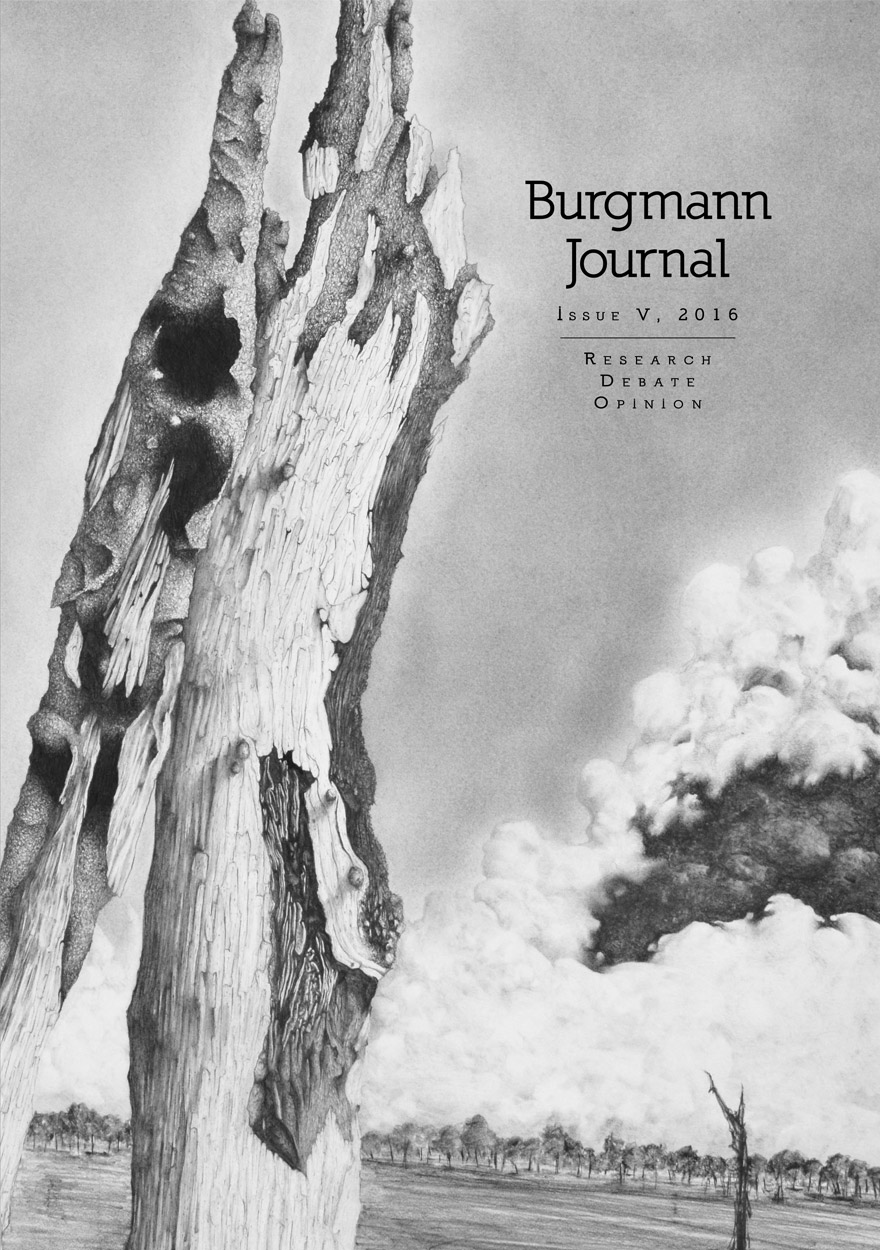
Burgmann Journal is an interdisciplinary, peer-reviewed publication of collected works of research, debate and opinion from residents and alumni of Burgmann College designed to engage and stimulate the wider community.
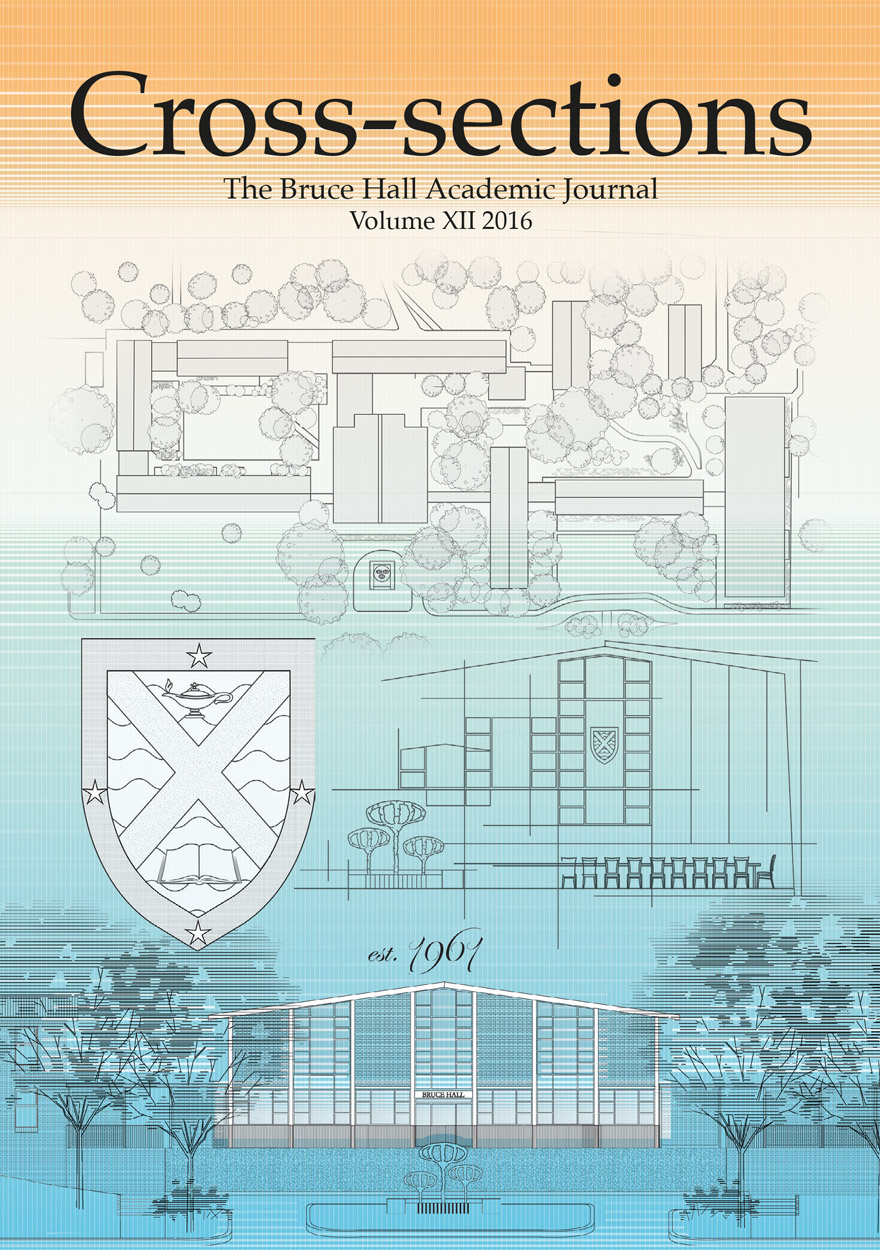
Cross-sections, The Bruce Hall Academic Journal »
Please note: This journal is now published via the ANU Student Journals platform; the latest issues can be found here: studentjournals.anu.edu.au/index.php/cs
Representing the combined energies of a large group of authors, editors, artists and researchers associated with Bruce Hall at the ANU, Cross-sections collects a range of works (from academic articles and essays to photography, digital art and installation artwork) that represents the disciplinary breadth and artistic vitality of the ANU.
Presenting a challenging and absorbing way for students to hone vital research skills, in the process, Cross-sections nurtures a fruitful environment of collaborative interaction between academics and students.
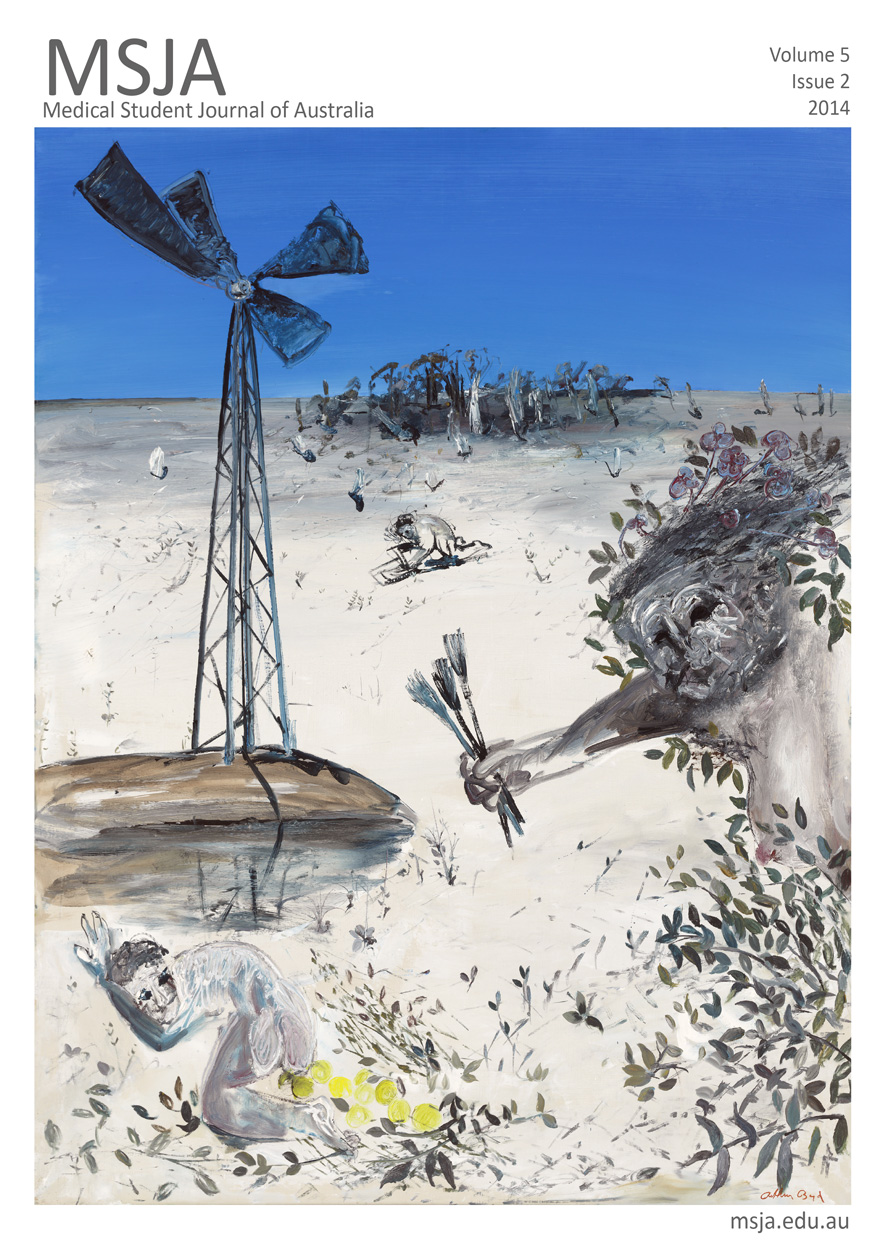
Medical Student Journal of Australia »
Please note: This journal ceased publishing in 2015.
The Medical Student Journal of Australia provides the medical school of The Australian National University with a platform for medical students to publish their work in a peer-reviewed journal, communicating the results of medical and health research information clearly, accurately and with appropriate discussion of any limitations or potential bias.

Merici - Ursula Hall Academic Journal »
Please note: This journal is currently not publishing any new issues.
Merici is the combined works of undergraduate authors at Ursula Hall. Merici contains research and analysis from a range of disciplines and is thoroughly reviewed by ANU academics to ensure the showcasing of the best Ursula Hall has to offer.
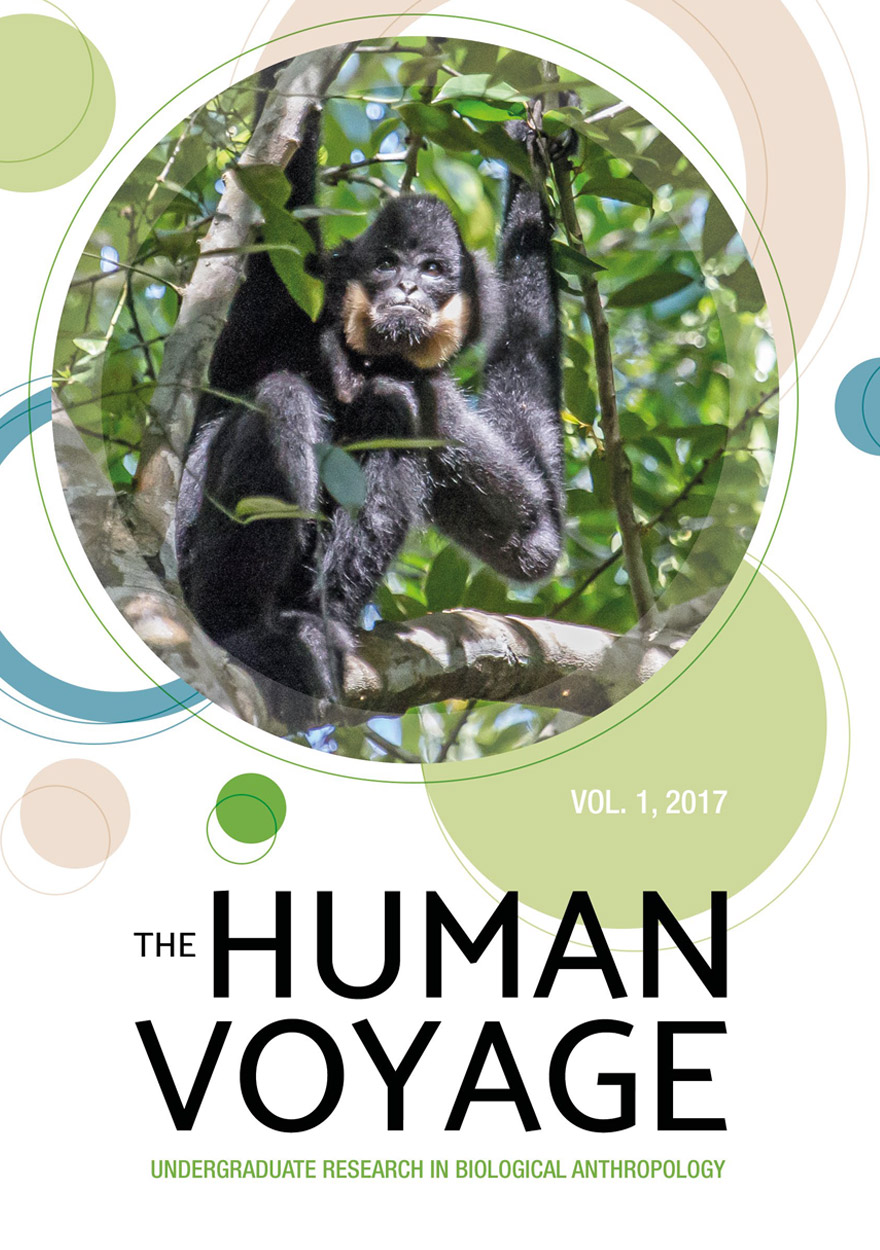
The Human Voyage: Undergraduate Research in Biological Anthropology »
Please note: This journal is now published via the ANU Student Journals platform; the latest issues can be found here: studentjournals.anu.edu.au/index.php/hv
The Human Voyage: Undergraduate Research in Biological Anthropology is a journal that publishes outstanding student articles in all areas of biological anthropology, including primatology, palaeoanthropology, bioarchaeology and human behavioural ecology.
While the primary goal of this journal is to publish work of the highest quality authored by undergraduate students, it will also educate students in regards to publishing in academia. All submissions will be peer-reviewed and edited by ANU academic staff.