



Search titles
Displaying results 591 to 600 of 1182.

Antarctica »
Music, sounds and cultural connections
Publication date: April 2015
This is the first book whose subject is the music, sounds and silences of Antarctica.
From 2011 until 2014, Australia marked its long-standing connection with Antarctica by celebrating the centenary of the Australasian Antarctic Expedition.
The icy continent, with its extremes of climate and environment and unique soundscapes, offers great potential for creative achievements in the world of music and sound. This book demonstrates the intellectual and creative engagement of artists, musicians, scientists and writers. Consciousness of sounds — in particular, musical ones — has not been at the forefront of our aims in polar endeavours, but listening to and appreciating them has been as important there as elsewhere.

East Asia Forum Quarterly: Volume 7, Number 1, 2015 »
Publication date: April 2015
East Asia Forum Quarterly grew out of East Asia Forum (EAF) online, which has developed a reputation for providing a platform for the best in Asian analysis, research and policy comment on the Asia Pacific region in world affairs. EAFQ aims to provide a further window onto research in the leading research institutes in Asia and to provide expert comment on current developments within the region. The East Asia Forum Quarterly, like East Asia Forum online, is an initiative of the East Asia Forum (EAF) and its host organisation, the East Asian Bureau of Economic Research (EABER) in the Crawford School of Economics and Government in the College of Asia & the Pacific at The Australian National University.
Download for free
Not available for purchase

Innamincka Talk: A grammar of the Innamincka dialect of Yandruwandha with notes on other dialects »
Authored by: Gavan Breen
Publication date: April 2015
Innamincka Talk: A grammar of the Innamincka dialect of Yandruwandha with notes on other dialects is one of a pair of companion volumes on Yandruwandha, a dialect of the language formerly spoken on the Cooper and Strzelecki Creeks and the country to the north of the Cooper, in the northeast corner of South Australia and a neighbouring strip of Queensland. The other volume is entitledInnamincka Words.
Innamincka Talk is the more technical work of the two and is intended for specialists and for interested readers who are willing to put some time and effort into studying the language.Innamincka Words is for readers, especially descendants of the original people of the area, who are interested in the language, but not necessarily interested in its more technical aspects. It is also a necessary resource for users of Innamincka Talk.
These volumes document all that could be learnt from the last speakers of the language in the last years of their lives by a linguist who was involved with other languages at the same time. These were people who did not have a full knowledge of the culture of their forebears, but were highly competent, indeed brilliant, in the way they could teach what they knew to the linguist student.

Innamincka Words: Yandruwandha dictionary and stories »
Edited by: Gavan Breen
Publication date: April 2015
Innamincka Words: Yandruwandha dictionary and stories is one of a pair of companion volumes on Yandruwandha, a dialect of the language formerly spoken on the Cooper and Strzelecki Creeks and the country to the north of the Cooper, in the northeast corner of South Australia and a neighbouring strip of Queensland. The other volume is entitled Innamincka Talk: a grammar of the Innamincka dialect of Yandruwandha with notes on other dialects. Innamincka Words is for readers, especially descendants of the
original people of the area, who are interested in the language. It is also a necessary resource for users of the more technical Innamincka Talk.
These volumes document all that could be learnt from the last speakers of the language in the last years of their lives by a linguist who was involved with other languages at the same time. These were people who did not have a full knowledge of the culture of their forebears, but were highly competent, indeed brilliant, in the way they could teach what they knew to the linguist student.

Protected Area Governance and Management »
Publication date: April 2015
PAGM briefing note
Protected Area Governance and Management presents a compendium of original text, case studies and examples from across the world, by drawing on the literature, and on the knowledge and experience of those involved in protected areas. The book synthesises current knowledge and cutting-edge thinking from the diverse branches of practice and learning relevant to protected area governance and management. It is intended as an investment in the skills and competencies of people and consequently, the effective governance and management of protected areas for which they are responsible, now and into the future.
The global success of the protected area concept lies in its shared vision to protect natural and cultural heritage for the long term, and organisations such as International Union for the Conservation of Nature are a unifying force in this regard. Nonetheless, protected areas are a socio-political phenomenon and the ways that nations understand, govern and manage them is always open to contest and debate. The book aims to enlighten, educate and above all to challenge readers to think deeply about protected areas—their future and their past, as well as their present.
The book has been compiled by 169 authors and deals with all aspects of protected area governance and management. It provides information to support capacity development training of protected area field officers, managers in charge and executive level managers.

Settler Colonial Governance in Nineteenth-Century Victoria »
Edited by: Leigh Boucher, Lynette Russell
Publication date: April 2015
This collection represents a serious re-examination of existing work on the Aboriginal history of nineteenth-century Victoria, deploying the insights of postcolonial thought to wrench open the inner workings of territorial expropriation and its historically tenacious variability. Colonial historians have frequently asserted that the management and control of Aboriginal people in colonial Victoria was historically exceptional; by the end of the century, colonies across mainland Australia looked to Victoria as a ‘model’ for how to manage the problem of Aboriginal survival. This collection carefully traces the emergence and enactment of this ‘model’ in the years after colonial separation, the idiosyncrasies of its application and the impact it had on Aboriginal lives.
It is no exaggeration to say that the work on colonial Victoria represented here is in the vanguard of what we might see as a ‘new Australian colonial history’. This is a quite distinctive development shaped by the aftermath of the history wars within Australia and through engagement with the ‘new imperial history’ of Britain and its empire. It is characterised by an awareness of colonial Australia’s positioning within broader imperial circuits through which key personnel, ideas and practices flowed, and also by ‘local’ settler society’s impact upon, and entanglements with, Aboriginal Australia. The volume heralds a new, spatially aware, movement within Australian history writing. – Alan Lester
This is a timely, astutely assembled and well nuanced collection that combines theoretical sophistication with empirical solidity. Theoretically, it engages knowledgeably but not uncritically with a broad range of influences, including postcolonialism, the new imperial history, settler colonial studies and critical Indigenous studies. Empirically, contributors have trawled an impressive array of archival sources, both standard and relatively unknown, bringing a fresh eye to bear on what we thought we knew but would now benefit from reconsidering. Though the collection wears its politics openly, it does so lightly and without jeopardising fidelity to its sources. – Patrick Wolfe
For more information on Aboriginal History Inc. please visit aboriginalhistory.org.au.
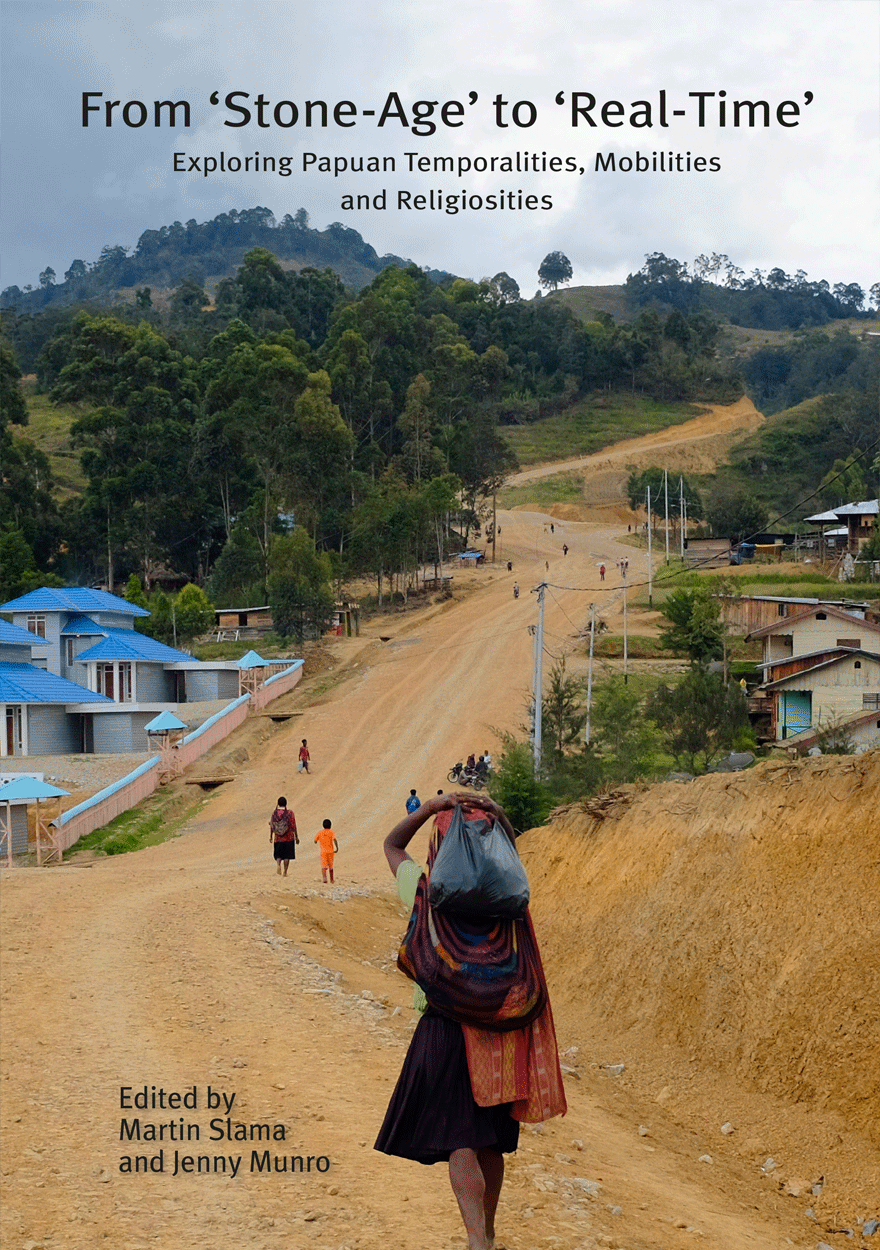
From 'Stone-Age' to 'Real-Time' »
Exploring Papuan Temporalities, Mobilities and Religiosities
Edited by: Martin Slama, Jenny Munro
Publication date: April 2015
There are probably no other people on earth to whom the image of the ‘stone-age’ is so persistently attached than the inhabitants of the island of New Guinea, which is divided into independent Papua New Guinea and the western part of the island, known today as Papua and West Papua. From ‘Stone-Age’ to ‘Real-Time’ examines the forms of agency, frictions and anxieties the current moment generates in West Papua, where the persistent ‘stone-age’ image meets the practices and ideologies of the ‘real-time’ – a popular expression referring to immediate digital communication. The volume is thus essentially occupied with discourses of time and space and how they inform questions of hierarchy and possibilities for equality. Papuans are increasingly mobile, and seeking to rework inherited ideas, institutions and technologies, while also coming up against palpable limits on what can be imagined or achieved, secured or defended. This volume investigates some of these trajectories for the cultural logics and social or political structures that shape them. The chapters are highly ethnographic, based on in-depth research conducted in diverse spaces within and beyond Papua. These contributions explore topics ranging from hip hop to HIV/ AIDS to historicity, filling much-needed conceptual and ethnographic lacunae in the study of West Papua.

New Accountabilities, New Challenges »
Publication date: April 2015
This important and challenging volume of essays draws on insights from leading academics and public servants from Australia, New Zealand, the United Kingdom, Canada and elsewhere. It provides an excellent series of critiques of both the systemic accountabilities and the policy processes of government by drawing on meticulously researched, topical and real-world case studies of governance. Its contribution to the understanding of the applied processes of government in this way is exemplary. Topics covered include: restoring trust in government, parliamentary scrutiny of the APS, administrative law and FOI, budgetary reforms, implementation issues, competition policy, indigenous administration, collaboration with the NGO sector, educational reforms and the changes to the Auditor- General’s mandate.
Human Ecology Review: Volume 21, Number 1 »
Publication date: February 2015
Human Ecology Review is a semi-annual journal that publishes peer-reviewed interdisciplinary research on all aspects of human–environment interactions (Research in Human Ecology). The journal also publishes essays, discussion papers, dialogue, and commentary on special topics relevant to human ecology (Human Ecology Forum), book reviews (Contemporary Human Ecology), and letters, announcements, and other items of interest (Human Ecology Bulletin). Human Ecology Review also publishes an occasional paper series in the Philosophy of Human Ecology and Social–Environmental Sustainability.
Download for free
Not available for purchase
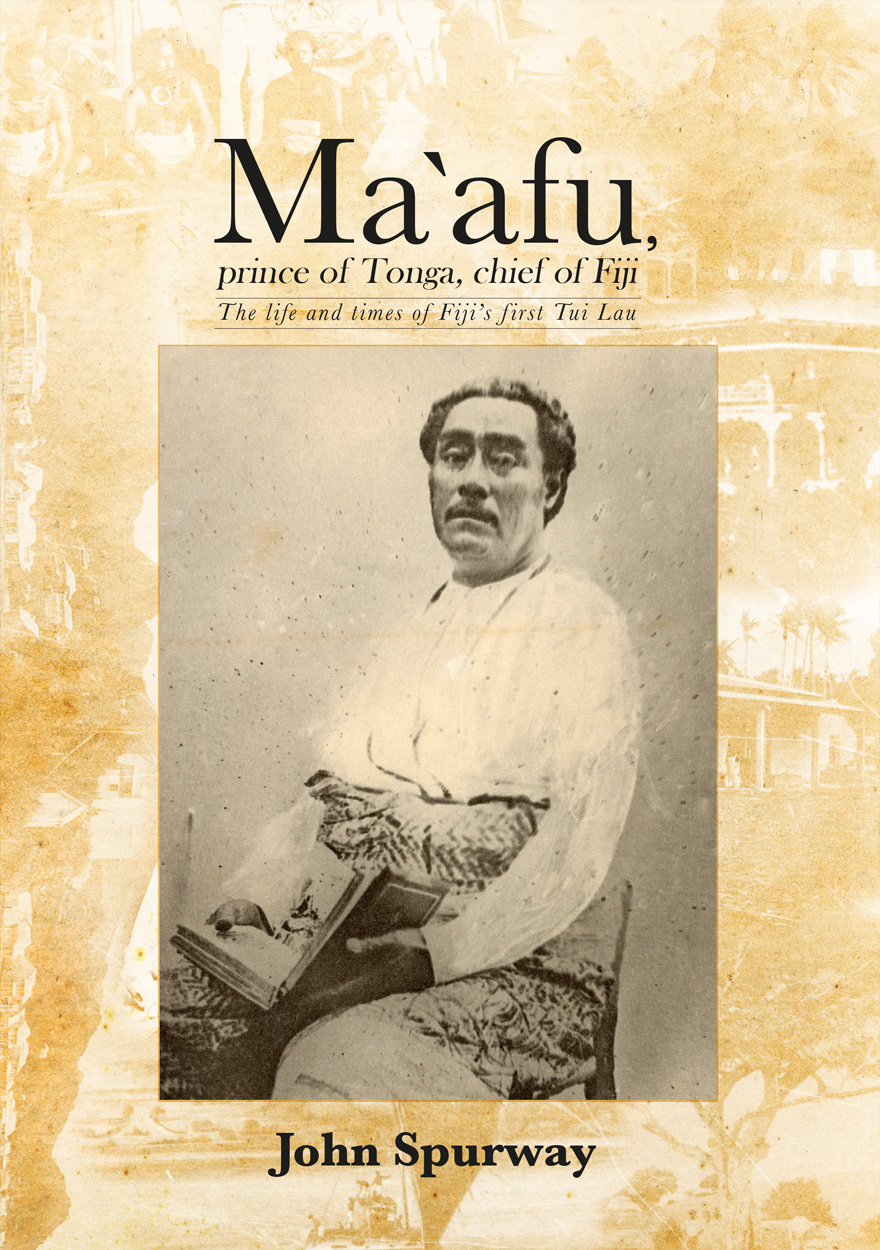
Ma`afu, prince of Tonga, chief of Fiji »
The life and times of Fiji’s first Tui Lau
Authored by: John Spurway
Publication date: February 2015
Enele Ma`afu, son of Aleamotu`a, Tu`i Kanokupolu, grew up during a time of unprecedented social and political change in Tonga following the advent of Christianity. Moving to Lau, Fiji, in 1847 when he was about 21, he skilfully exploited kinship links to establish a power base there and in eastern Cakaudrove. His achievements were recognised in 1853 when his cousin King Tupou I appointed Ma`afu as Governor of the Tongans in Fiji.
Acting as a putative champion of the lotu, Ma`afu undertook successful military campaigns elsewhere in Fiji and, after adding the Yasayasa Moala and the Exploring Isles to the nascent Lauan state, he was able to establish the Tovata ko Lau, a union of Lau, Cakaudrove and Bua, with himself as head. His power was formally recognised in 1869 when the Lauan chiefs appointed him as Tui Lau, a new title in the polity of Fiji. Ma`afu was now able to challenge Cakobau for the mastery of Fiji.
After serving as Viceroy during the farcical planter oligarchy known as the Kingdom of Fiji, Ma`afu underwent a severe humiliation when, in order to maintain his power in Lau, he was forced to accede to the wishes of Fiji’s other great chiefs in offering their islands to Great Britain. He would end his days as Roko Tui Lau, a ‘subordinate administrator’ in the Crown Colony of Fiji, presiding over a province characterised by corruption and maladministration but where the legacy of his earlier innovative land reforms has endured.