



Search titles
Displaying results 1 to 10 of 1184.

Saving the World »
Overcoming the Consumptogenic System and Improving Planetary Health Equity
Publication date: 2027
It can be very easy to succumb to despair. The world today presents us with an almost overwhelming catalogue of suffering. Planetary systems are pushed beyond safe limits, preventable diseases and decline in wellbeing are widespread, and wealth is concentrated in the hands of a few while billions of people scrape by.
And yet despair, however understandable, is not the only story. This book begins from the premise that the harmful consumptogenic system producing these outcomes is not fixed nor universal. It can change. Both history and the present are full of moments when collective imagination conjures a different future, where entrenched power is challenged, and where organised human effort bends the arc of events toward justice. The question is not whether change is possible, but how to make it happen.
This unique collection of writing reaches beyond the usual boundaries — drawing on public health, environmental and social science, non‑Western and Indigenous knowledge systems, and the insight of practitioners working inside governments and communities worldwide.
Scientific, creative, poignant and compelling, the chapters offer new ways of valuing, knowing, being and imagining — ways that point toward planetary health equity: a world where everyone, everywhere, can enjoy good health in a stable Earth system.
From governments daring to lead to economies, businesses and financial systems being reimagined and civil society acting with courage and clarity — this book is proof that a better way of being in the world isn’t just possible, it is underway.
Coming soon
Notify me
The Politics of Traditional Culture under Australian Settler Colonialism 1963–2007 »
Authored by: Anthea Compton
Publication date: 2027
The Politics of Traditional Culture under Australian Settler Colonialism 1963–2007 interrogates the deployment of the term ‘traditional culture’ within Indigenous affairs discourse from the 1963 Bark Petitions to the 2007 Northern Territory Intervention. In so doing, this critically important book establishes how a shifting and malleable discourse on Aboriginality operated as a key method of engagement between the Australian state and First Nations peoples. Over a forty-year period, ‘traditional culture’ was increasingly employed by First Nations and settler actors in diverse and often contradictory ways. Throughout politics, policy, academia and media, ‘traditional culture’ emerged as a foundational political concept, central to the granting or retracting of rights to Aboriginal and Torres Strait Islander people.
Understanding this contested discourse around ‘traditional culture’ helps to reveal the complexities of settler responses to Indigenous peoples’ aspirations around sovereignty, self-government and Country. By exposing this discourse, this book speaks to issues that strike at the heart of modern Australian national identity, revealing the ultimately ambiguous and fickle nature of settler sovereignty.
Coming soon
Notify me
Rivers Have Rights »
What Happens Next?
Edited by: Cameron Holley, Erin O’Donnell
Publication date: 2027
Since 2017, the rights of rivers have increasingly entered mainstream environmental law, prompting a potentially radical transformation of rivers from resources into legal and living entities with whom humans are in relationships. In 2026, there were over 700 rights of nature initiatives in 67 countries, and almost 200 of these relate to freshwater ecosystems.
This is a rapidly growing field, but until now there has been little scholarly examination of how river rights are working in practice. This edited collection brings together scholars and practitioners to reflect on implementation experiences across a diverse array of rights for water bodies from around the globe to consider a range of questions, including:
How is law giving effect to novel notions of personhood and what are the policy, legal, ecological and social opportunities and barriers to implementing rights of nature?
How compatible are rights of nature with existing water governance approaches, including water markets and integrated water resource planning, and how are existing water laws responding to these new legal rights?
What are the implications of rights of nature in practice for water justice and Indigenous rights?
In exploring these questions of how to implement river rights, this book also offers insights on how to transform our relationships with rivers in law and policy, along with new theoretical insights into the nature of legal personhood.
Coming soon
Notify me
Australian Defence Strategic Guidance, 1976–2020 »
Volume I: Defending Australia without a Threat, 1976–1994
Edited by: Jean Bou, Stephan Frühling
Publication date: 2026
Between 1976 and 2020, Australia’s Department of Defence produced a range of strategic guidance documents. Some were classified, intended to inform and guide the government, while others were created for public release and ultimately became statements of government policy. These documents offer an insight into how successive Australian governments understood the nation’s security and what policy and institutional steps should be taken in response. Each paper aimed to develop or shape strategic concepts, provided the basis for significant budget and capability decisions, and directed reforms and policy change across the Defence organisation.
For the first time, the story of how these documents were developed, and the key ideas and debates that shaped them, can now be told. Based on unique access to archival records, this book is the product of a joint research project undertaken between the Australian Commonwealth’s Department of Defence and The Australian National University.
By the early 1970s, Australia had to develop and communicate a new defence policy at a time when there seemed to be no clear threat to the country. This led the government of Malcolm Fraser to commission Australia’s first Defence White Paper in 1976. As a public expression of government policy, this was a fundamentally new format for strategic guidance. Other White Papers followed in 1987 and 1994. The formerly key Defence Committee, previously responsible for the development of the guidance, faded, and longstanding classified guidance papers had their final iterations. This volume traces the demise of these Strategic Basis papers, as well as the rise of White Papers and other ad-hoc guidance documents. In doing so, it helps to show how Australian defence policy and strategic guidance were forged during the Defence of Australia era.
‘At the heart of resilience is knowledge. We are in fraught times. We need to understand how we have seen our strategic requirements historically to benchmark what we need to do now, comprehending strengths and inadequacies in our thinking. These volumes are essential reading.’
—Kim Beazley, former Minister for Defence and leader of the Labor opposition
‘This history of Australian Defence Strategic Guidance shows the messy reality of policy development. Politics, personality, money and deadlines all make for a combustible mix. This is a white-knuckle ride for anyone who has ever worked in the strategy business. The book makes for compelling reading, explaining the, at times, mystifying policy results. It shows how Australia's strategic approach developed, setting the foundations for today's defence capabilities.’
—Peter Jennings, former Deputy Secretary in the Department of Defence and former Director of the Australian Strategic Policy Institute
‘With unique, unfettered access to the classified files, this meticulous, scholarly, lively study illuminates the processes, the personalities and above all the ideas that have shaped Australia’s big defence decisions over the past 50 years. It is a remarkable resource and an essential foundation for the momentous debates we need to have about our defence in the challenging and very different decades ahead.’
—Hugh White AO, Emeritus Professor of Strategic Studies, ANU
Coming soon
Notify me
Australian Defence Strategic Guidance, 1976–2020 »
Documents: Defending Australia without a Threat, 1976–1994
Edited by: Jean Bou, Stephan Frühling
Publication date: 2026
Between 1976 and 2020, Australia’s Department of Defence produced a range of strategic guidance documents. Some were classified, intended to inform and guide the government, while others were created for public release and ultimately became statements of government policy. These documents offer an insight into how successive Australian governments understood the nation’s security and what policy and institutional steps should be taken in response. Each paper aimed to develop or shape strategic concepts, provided the basis for significant budget and capability decisions, and directed reforms and policy change across the Defence organisation.
For the first time, the story of how these documents were developed, and the key ideas and debates that shaped them, can now be told. Based on unique access to archival records, this book is the product of a joint research project undertaken between the Australian Commonwealth’s Department of Defence and The Australian National University.
This volume is a facsimile of all the strategic guidance papers analysed in Volume I. It includes a full copy of the 1976 Australian Strategic Analysis and Defence Policy Objectives; 1976 Defence White Paper; the 1979 Australian Strategic Analysis and Defence Policy Objectives; the 1983 Strategic Basis of Australian Defence Policy; the 1987 Defence White Paper; the 1989 Australia’s Strategic Planning in the 1990s; the 1991 Force Structure Review; the 1993 Strategic Review; and the 1994 Defence White Paper.
‘At the heart of resilience is knowledge. We are in fraught times. We need to understand how we have seen our strategic requirements historically to benchmark what we need to do now, comprehending strengths and inadequacies in our thinking. These volumes are essential reading.’
—Kim Beazley, former Minister for Defence and leader of the Labor opposition
‘This history of Australian Defence Strategic Guidance shows the messy reality of policy development. Politics, personality, money and deadlines all make for a combustible mix. This is a white-knuckle ride for anyone who has ever worked in the strategy business. The book makes for compelling reading, explaining the, at times, mystifying policy results. It shows how Australia's strategic approach developed, setting the foundations for today's defence capabilities.’
—Peter Jennings, former Deputy Secretary in the Department of Defence and former Director of the Australian Strategic Policy Institute
‘With unique, unfettered access to the classified files, this meticulous, scholarly, lively study illuminates the processes, the personalities and above all the ideas that have shaped Australia’s big defence decisions over the past 50 years. It is a remarkable resource and an essential foundation for the momentous debates we need to have about our defence in the challenging and very different decades ahead.’
—Hugh White AO, Emeritus Professor of Strategic Studies, ANU
Coming soon
Notify me
Australian Defence Strategic Guidance, 1976–2020 »
Volume II: The Era of the Balanced Force, 1997–2020
Edited by: Andrew Carr, Stephan Frühling
Publication date: 2026
Between 1976 and 2020, Australia’s Department of Defence produced a range of strategic guidance documents. Some were classified, intended to inform and guide the government, while others were created for public release and ultimately became statements of government policy. These documents offer an insight into how successive Australian governments understood the nation’s security and what policy and institutional steps should be taken in response. Each paper aimed to develop or shape strategic concepts, provided the basis for significant budget and capability decisions, and directed reforms and policy change across the Defence organisation.
For the first time, the story of how these documents were developed, and the key ideas and debates that shaped them, can now be told. Based on unique access to archival records, this book is the product of a joint research project undertaken between the Australian Commonwealth’s Department of Defence and The Australian National University.
In response to regional instability and the War on Terror, the government developed the Australian Defence Force (ADF) as a ‘Balanced Force’, structured to serve a wider range of national interests. A Defence White Paper in 2000 was followed by three short Defence Updates as the Department and ADF grappled with the pace of overseas operations. Three White Papers followed in 2009, 2013 and 2016, produced through increasingly ambitious and lengthy processes that grappled with the emergence of great power competition in the Indo-Pacific and the need to prepare Australia’s defence forces for an increasingly complex region. By the end of the period, the 2020 Defence Strategic Update signalled a shift away from the White Paper model of strategic guidance, which has been replaced today by the National Defence Strategy.
‘At the heart of resilience is knowledge. We are in fraught times. We need to understand how we have seen our strategic requirements historically to benchmark what we need to do now, comprehending strengths and inadequacies in our thinking. These volumes are essential reading.’
—Kim Beazley, former Minister for Defence and leader of the Labor opposition
‘This history of Australian Defence Strategic Guidance shows the messy reality of policy development. Politics, personality, money and deadlines all make for a combustible mix. This is a white-knuckle ride for anyone who has ever worked in the strategy business. The book makes for compelling reading, explaining the, at times, mystifying policy results. It shows how Australia's strategic approach developed, setting the foundations for today's defence capabilities.’
—Peter Jennings, former Deputy Secretary in the Department of Defence and former Director of the Australian Strategic Policy Institute
‘With unique, unfettered access to the classified files, this meticulous, scholarly, lively study illuminates the processes, the personalities and above all the ideas that have shaped Australia’s big defence decisions over the past 50 years. It is a remarkable resource and an essential foundation for the momentous debates we need to have about our defence in the challenging and very different decades ahead.’
—Hugh White AO, Emeritus Professor of Strategic Studies, ANU
Coming soon
Notify me
Australian Defence Strategic Guidance, 1976–2020 »
Documents: The Era of the Balanced Force, 1997–2020
Edited by: Andrew Carr, Stephan Frühling
Publication date: 2026
Between 1976 and 2020, Australia’s Department of Defence produced a range of strategic guidance documents. Some were classified, intended to inform and guide the government, while others were created for public release and ultimately became statements of government policy. These documents offer an insight into how successive Australian governments understood the nation’s security and what policy and institutional steps should be taken in response. Each paper aimed to develop or shape strategic concepts, provided the basis for significant budget and capability decisions, and directed reforms and policy change across the Defence organisation.
For the first time, the story of how these documents were developed, and the key ideas and debates that shaped them, can now be told. Based on unique access to archival records, this book is the product of a joint research project undertaken between the Australian Commonwealth’s Department of Defence and The Australian National University.
This volume is a facsimile of all the strategic guidance papers analysed in Volume II. It includes a full copy of the 1997 Australian Strategic Policy; 2000 Defence White Paper; 2003 Defence Update; 2005 Defence Update; 2007 Defence Update; 2009 Defence White Paper; 2013 Defence White Paper; 2016 Defence White Paper; and the 2020 Defence Strategic Update.
‘At the heart of resilience is knowledge. We are in fraught times. We need to understand how we have seen our strategic requirements historically to benchmark what we need to do now, comprehending strengths and inadequacies in our thinking. These volumes are essential reading.’
—Kim Beazley, former Minister for Defence and leader of the Labor opposition
‘This history of Australian Defence Strategic Guidance shows the messy reality of policy development. Politics, personality, money and deadlines all make for a combustible mix. This is a white-knuckle ride for anyone who has ever worked in the strategy business. The book makes for compelling reading, explaining the, at times, mystifying policy results. It shows how Australia's strategic approach developed, setting the foundations for today's defence capabilities.’
—Peter Jennings, former Deputy Secretary in the Department of Defence and former Director of the Australian Strategic Policy Institute
‘With unique, unfettered access to the classified files, this meticulous, scholarly, lively study illuminates the processes, the personalities and above all the ideas that have shaped Australia’s big defence decisions over the past 50 years. It is a remarkable resource and an essential foundation for the momentous debates we need to have about our defence in the challenging and very different decades ahead.’
—Hugh White AO, Emeritus Professor of Strategic Studies, ANU
Coming soon
Notify me
Dealing with Double Exposure »
Climate Change and Extractive Capitalism in the Pacific
Edited by: Emilia Skrzypek, Nicholas Bainton
Publication date: 2026
The Pacific has become a global symbol of the climate crisis. It is also a place where the global dynamics of extractive capitalism that created the crisis, and shape who bears its burdens, appear in sharp relief.
This volume gathers emerging and established scholars to examine how Pacific peoples confront a double exposure to climate change and extractive capitalism. Drawing on rich ethnographic research, the chapters offer an unflinching account of these compounding forces. They also reveal the ingenuity, care and political authority with which Pacific peoples confront injustice, hold powerful actors to account and imagine alternatives. Challenging familiar tropes of vulnerability and resilience, the volume repositions the Pacific: it is not simply a site of planetary emergency, but a source of intellectual, political and moral resources for more just and liveable futures. It culminates in a decolonial legal manifesto for Pacific climate justice that insists hope, resistance and systemic transformation remain within reach.
Coming soon
Notify me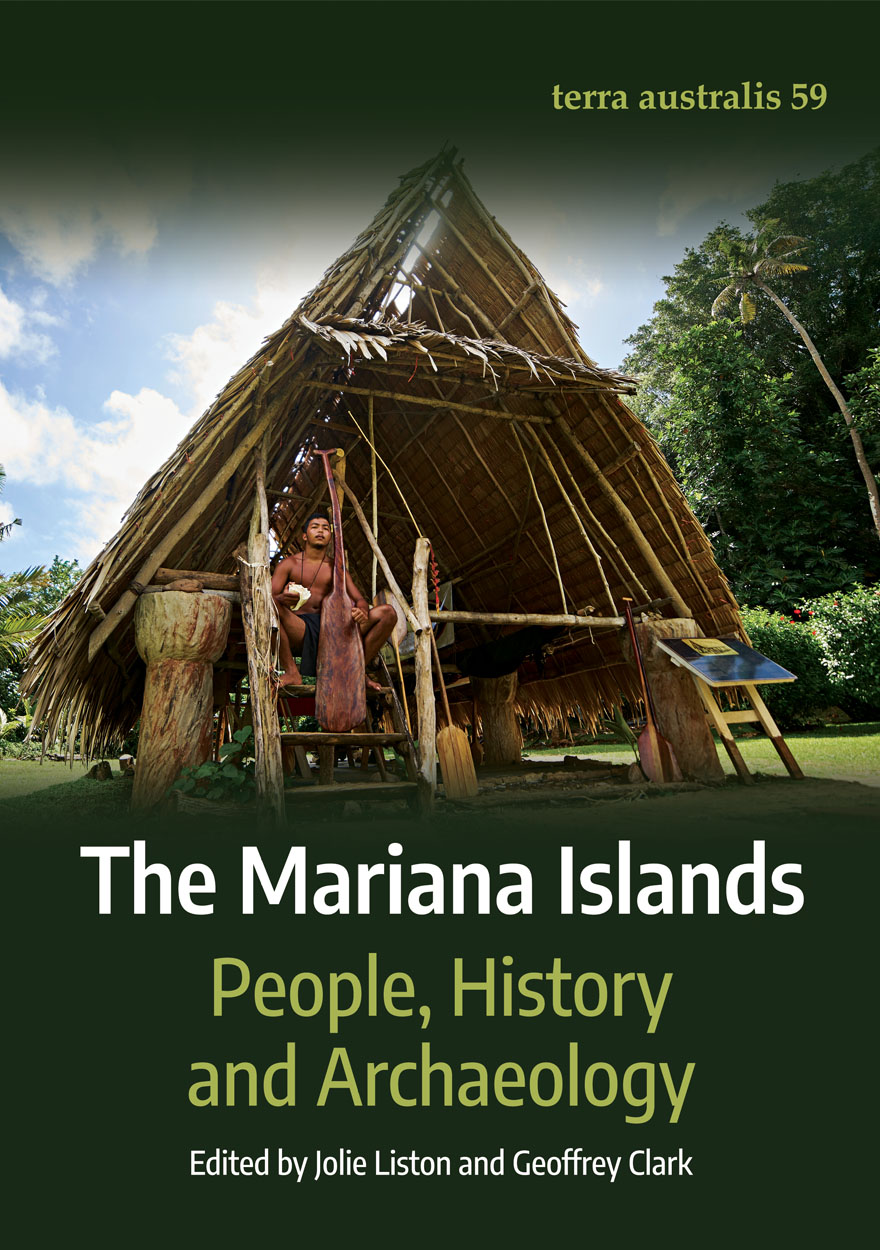
The Mariana Islands »
People, History and Archaeology
Edited by: Jolie Liston, Geoffrey Clark
Publication date: September 2026
The Mariana Islands: People, History and Archaeology brings together new research about the history of the Mariana Islands through community perspectives, archaeological investigations, and anthropological and historical studies. The colonisation and growth of societies in the Mariana Islands, and of those elsewhere in Micronesia, are often seen as peripheral compared with those of Melanesia and Polynesia that tend to dominate scholarly and public views of Pacific history. The Marianas were the first remote archipelago to be recorded by Europeans with the arrival of Magellan in 1521, and the islands have a long and complicated history with colonial ‘great powers’, which during World War II involved the establishment of the remote Pacific’s sole concentration camp. Initial colonisation over 3,000 years ago was by migrants from East Asia who were related to, but genetically different from, Lapita groups who extended human occupation as far east as Tonga and Samoa. Later population movements to the Marianas, some involving Papuan people, point to a mobile Pacific that was connected to insular Asia, New Guinea and other parts of Oceania. Migration and local development contributed to the formation of a unique and vibrant CHamoru culture. The volume is dedicated to two pioneer archaeologists, Darlene Moore and Roz Hunter-Anderson, who established modern archaeological practice in the Marianas through projects involving community members and elders in the preservation of cultural heritage sites and the creation of new land use histories.
‘The Mariana Islands: People, History and Archaeology brings archaeology into conversation with CHamoru memory, oral history and cultural practice to reconnect with the lives of i Manaotåomo’na, The People of Before. Through diverse topics and approaches, the book illuminates the complexities of ancestral and recent histories, offering a richer understanding of the Mariana Islands and its people.’
—Kelly Marsh-Taitano, Curator of Archaeological Collections, Guam Cultural Repository

Australian Journal of Biography and History: No. 12, 2026 »
Special Issue: Intellectual Biography
Publication date: 2026
This special number of the Australian Journal of Biography and History consists of papers presented at a workshop on intellectual biography, held at The Australian National University in December 2024. The guest editor, Melanie Nolan, notes that historians increasingly do not agree on one kind of approach to intellectual biography. She surveys the kinds of postwar intellectual biographies historians have published, together with current debates over whether intellectual biography should entail methodological individualism or collectivism, internalist or externalist approaches, and whether to lump or split lives and intellectual developments. The first group of papers then considers intellectual biography written through the lens of the Cambridge School of intellectual history, which continues to dominate the field. Richard Whatmore and Thomas Ashby examine the historian J.G.A. Pocock’s methodology and his own biography. Kate Fullagar comments on this work, as she did at the workshop. A second group of papers—by Ian Kumekawa on A.C. Pigou, Emile Chabal on Eric Hobsbawm, and Matthew Birchall on Edward Gibbon Wakefield—are part of the push by historians to extend the span of intellectual biography. The authors argue respectively for a more ‘capacious’ approach to the category of economic intellectuals, the wider social influences on intellectual historians, and the need to consider how ideas have been applied as much as their disembodied theories. Finally, a pair of papers consider historians’ push of intellectual biography inwardly. That is, they are participating in what scholars identify as the more general ‘interventional’ or ‘reflexive’ turn in historiography. Jaume Aurell considers historians’ autobiography as intellectual biography, while Alison Bashford considers the intellectual biographies she has written metabiographically, weaving the biographies of intellectuals with her own historical self-reflection on intellectual biography.
Coming soon
Notify me