



Search titles
Displaying results 61 to 70 of 163.

An Archaeology of Early Christianity in Vanuatu »
Kastom and Religious Change on Tanna and Erromango, 1839–1920
Authored by: James Flexner
Publication date: December 2016
Religious change is at its core a material as much as a spiritual process. Beliefs related to intangible spirits, ghosts, or gods were enacted through material relationships between people, places, and objects. The archaeology of mission sites from Tanna and Erromango islands, southern Vanuatu (formerly the New Hebrides), offer an informative case study for understanding the material dimensions of religious change. One of the primary ways that cultural difference was thrown into relief in the Presbyterian New Hebrides missions was in the realm of objects. Christian Protestant missionaries believed that religious conversion had to be accompanied by changes in the material conditions of everyday life. Results of field archaeology and museum research on Tanna and Erromango, southern Vanuatu, show that the process of material transformation was not unidirectional. Just as Melanesian people changed religious beliefs and integrated some imported objects into everyday life, missionaries integrated local elements into their daily lives. Attempts to produce ‘civilised Christian natives’, or to change some elements of native life relating purely to ‘religion’ but not others, resulted instead in a proliferation of ‘hybrid’ forms. This is visible in the continuity of a variety of traditional practices subsumed under the umbrella term ‘kastom’ through to the present alongside Christianity. Melanesians didn’t become Christian, Christianity became Melanesian. The material basis of religious change was integral to this process.

Imaging Identity »
Media, memory and portraiture in the digital age
Edited by: Melinda Hinkson
Publication date: August 2016
Imaging Identity presents potent reflections on the human condition through the prism of portraiture. Taking digital imaging technologies and the dynamic and precarious dimensions of contemporary identity as critical reference points, these essays consider why portraits continue to have such galvanising appeal and perform fundamental work across so many social settings. This multidisciplinary enquiry brings together artists, art historians, art theorists and anthropologists working with a variety of media. Authors look beyond conventional ideas of the portrait to the wider cultural contexts, governmental practices and intimate experiences that shape relationships between persons and pictures. Their shared purpose centres on a commitment to understanding the power of images to draw people into their worlds. Imaging Identity tracks a fundamental symbiosis — to grapple with the workings of images is to understand something vital of what it is to be human.
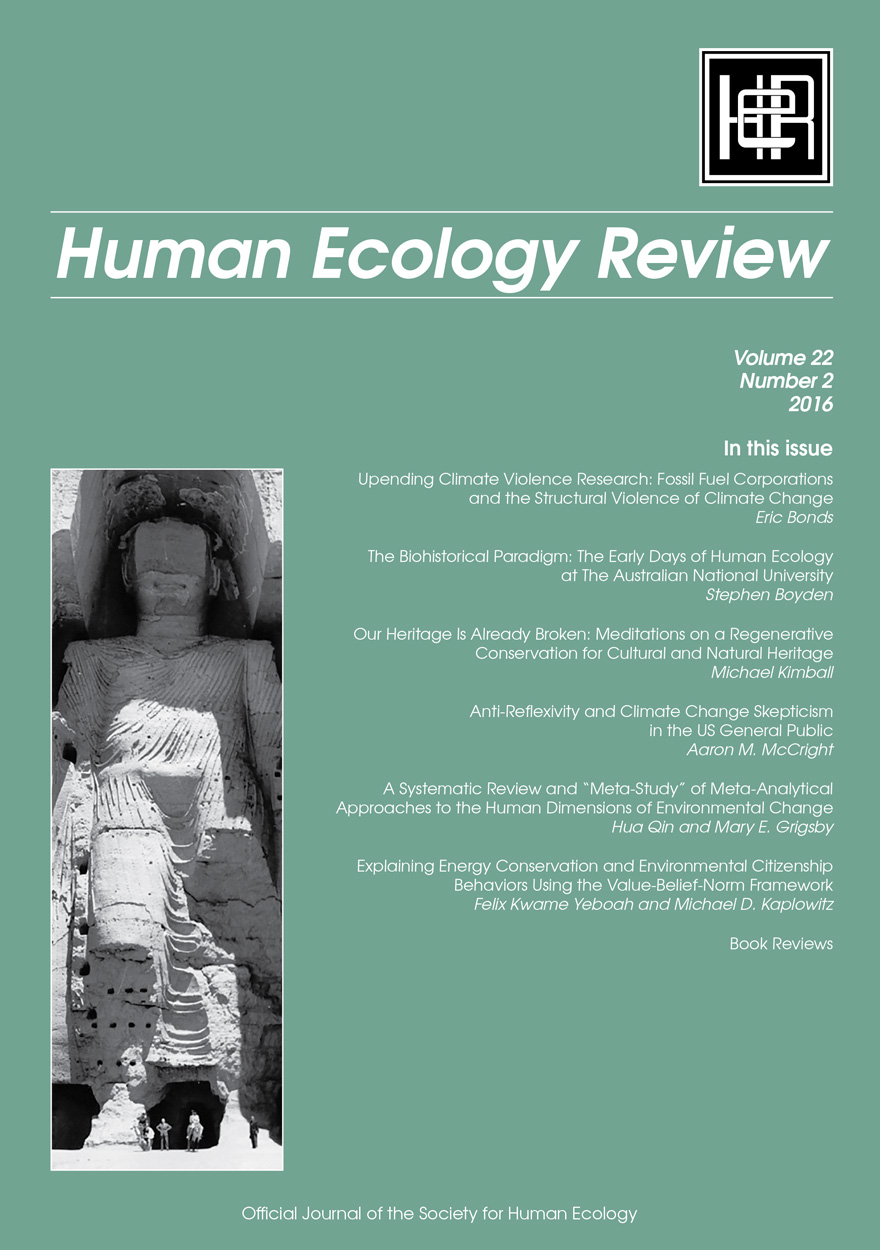
Human Ecology Review: Volume 22, Number 2 »
Publication date: July 2016
Human Ecology Review is a semi-annual journal that publishes peer-reviewed interdisciplinary research on all aspects of human–environment interactions (Research in Human Ecology). The journal also publishes essays, discussion papers, dialogue, and commentary on special topics relevant to human ecology (Human Ecology Forum), book reviews (Contemporary Human Ecology), and letters, announcements, and other items of interest (Human Ecology Bulletin). Human Ecology Review also publishes an occasional paper series in the Philosophy of Human Ecology and Social–Environmental Sustainability.
Download for free
Not available for purchase
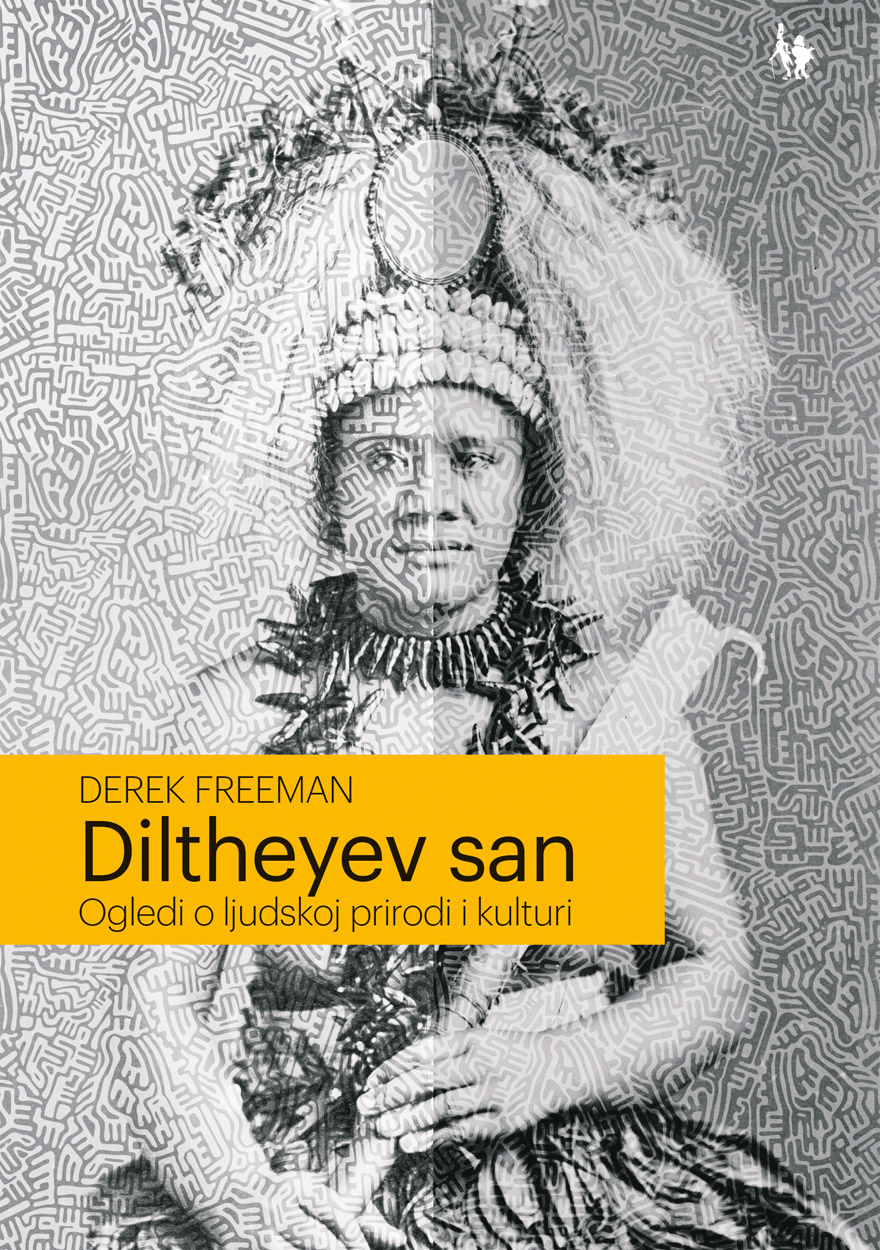
Dilthey’s Dream (Croatian version) »
Essays on human nature and culture
Authored by: Derek Freeman
Publication date: July 2016
With great eloquence, Derek Freeman takes the reader on an intellectual journey through the complexities of philosophical anthropology. Even while the controversial Nature–Nurture debate raged, Freeman contended that the crucial fact that humans had the capacity to make choices was 'both intrinsic to our biology and basic to the very formation of cultures'. Thus the scene was set for his widely publicised criticism of Margaret Mead's book Coming of Age in Samoa. Publishing her research in 1926, Mead concluded that all human behaviour was the result of social conditioning. Freeman refuted this assumption in 1983, urging closer interactions between the biological sciences and cultural studies to bridge the ever-widening chasm threatening all studies of humankind.
Dilthey's Dream is an engagingly powerful set of essays depicting the depth of one man's thinking on issues, which consumed a lifetime.

Pacific Islanders Under German Rule »
A Study in the Meaning of Colonial Resistance
Authored by: Peter J. Hempenstall
Publication date: June 2016
This is an important book. It is a reprint of the first detailed study of how Pacific Islanders responded politically and economically to their rulers across the German empire of the Pacific. Under one cover, it captures the variety of interactions between the various German colonial administrations, with their separate approaches, and the leaders and people of Samoa in Polynesia, the major island centre of Pohnpei in Micronesia and the indigenes of New Guinea. Drawing on anthropology, new Pacific history insights and a range of theoretical works on African and Asian resistance from the 1960s and 1970s, it reveals the complexities of Islander reactions and the nature of protests against German imperial rule. It casts aside old assumptions that colonised peoples always resisted European colonisers. Instead, this book argues convincingly that Islander responses were often intelligent and subtle manipulations of their rulers’ agendas, their societies dynamic enough to make their own adjustments to the demands of empire. It does not shy away from major blunders by German colonial administrators, nor from the strategic and tactical mistakes of Islander leaders. At the same time, it raises the profile of several large personalities on both sides of the colonial frontier, including Lauaki Namulau’ulu Mamoe and Wilhelm Solf in Samoa; Henry Nanpei, Georg Fritz and Karl Boeder in Pohnpei; or Governor Albert Hahl and Po Minis from Manus Island in New Guinea.

Master poets, ritual masters »
The art of oral composition among the Rotenese of Eastern Indonesia
Authored by: James J. Fox
Publication date: April 2016
This is a study in oral poetic composition. It examines how oral poets compose their recitations. Specifically, it is a study of the recitations of 17 separate master poets from the Island of Rote recorded over a period of 50 years. Each of these poets offers his version of what is culturally considered to be the ‘same’ ritual chant. These compositions are examined in detail and their oral formulae are carefully compared to one another.
Professor James J. Fox is an anthropologist who carried out his doctoral field research on the Island of Rote in eastern Indonesia in 1965–66. In 1965, he began recording the oral traditions of the island and developed a close association with numerous oral poets on the island. After many subsequent visits, in 2006, he began a nine-year project that brought groups of oral poets to Bali for week-long recording sessions. Recitations gathered over a period of 50 years are the basis for this book.

New Mana »
Transformations of a Classic Concept in Pacific Languages and Cultures
Edited by: Matt Tomlinson, Ty P. Kāwika Tengan
Publication date: April 2016
‘Mana’, a term denoting spiritual power, is found in many Pacific Islands languages. In recent decades, the term has been taken up in New Age movements and online fantasy gaming. In this book, 16 contributors examine mana through ethnographic, linguistic, and historical lenses to understand its transformations in past and present. The authors consider a range of contexts including Indigenous sovereignty movements, Christian missions and Bible translations, the commodification of cultural heritage, and the dynamics of diaspora. Their investigations move across diverse island groups—Papua New Guinea, Solomon Islands, Vanuatu, Fiji, Tonga, Samoa, Hawai‘i, and French Polynesia—and into Australia, North America and even cyberspace. A key insight that the volume develops is that mana can be analysed most productively by paying close attention to its ethical and aesthetic dimensions.
Since the late nineteenth century, mana has been an object of intense scholarly interest. Writers in many fields including anthropology, linguistics, history, religion, philosophy, and missiology have long debated how the term should best be understood. The authors in this volume review mana’s complex intellectual history but also describe the remarkable transformations going on in the present day as scholars, activists, church leaders, artists, and entrepreneurs take up mana in new ways.

Engaging Indigenous Economy »
Debating diverse approaches
Edited by: Will Sanders
Publication date: April 2016
The engagement of Indigenous Australians in economic activity is a matter of long-standing public concern and debate. Jon Altman has been intellectually engaged with Indigenous economic activity for almost 40 years, most prominently through his elaboration of the concept of the hybrid economy, and most recently through his sustained and trenchant critique of policy. He has inspired others also to engage with these important issues, both through his writing and through his position as the foundation Director of The Australian National University’s Centre for Aboriginal Economic Policy research from 1990 to 2010.
The year 2014 saw both Jon’s 60th birthday and his retirement from CAEPR. This collection of essays marks those events. Contributors include long‑standing colleagues from the disciplines of economics, anthropology and political science, and younger scholars who have been inspired by Jon’s approach in developing their own research projects. All point to the complexity as well as the importance of engaging with Indigenous economic activity — conceptually, empirically and as a strategic concern for public policy.
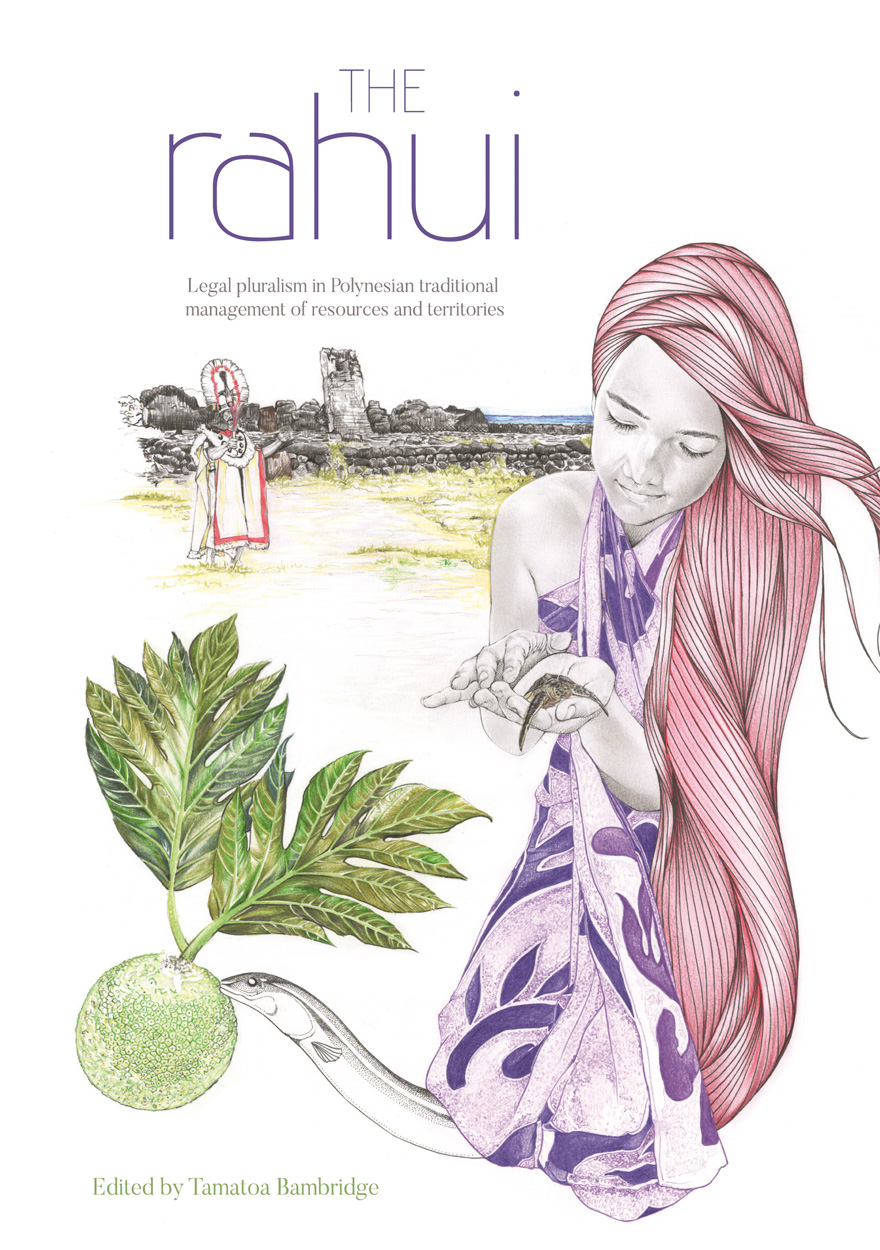
The Rahui »
Legal pluralism in Polynesian traditional management of resources and territories
Edited by: Tamatoa Bambridge
Publication date: March 2016
This collection deals with an ancient institution in Eastern Polynesia called the rahui, a form of restricting access to resources and/or territories.
While tapu had been extensively discussed in the scientific literature on Oceanian anthropology, the rahui is quite absent from secondary modern literature. This situation is all the more problematic because individual actors, societies, and states in the Pacific are readapting such concepts to their current needs, such as environment regulation or cultural legitimacy. This book assembles a comprehensive collection of current works on the rahui from a legal pluralism perspective. This study as a whole underlines the new assertion of identity that has flowed from the cultural dimension of the rahui. Today, rahui have become a means for indigenous communities to be fully recognised on a political level. Some indigenous communities choose to restore the rahui in order to preserve political control of their territory or, in some cases, to get it back. For the state, better control of the rahui represents a way of asserting its legitimacy and its sovereignty, in the face of this reassertion by indigenous communities.
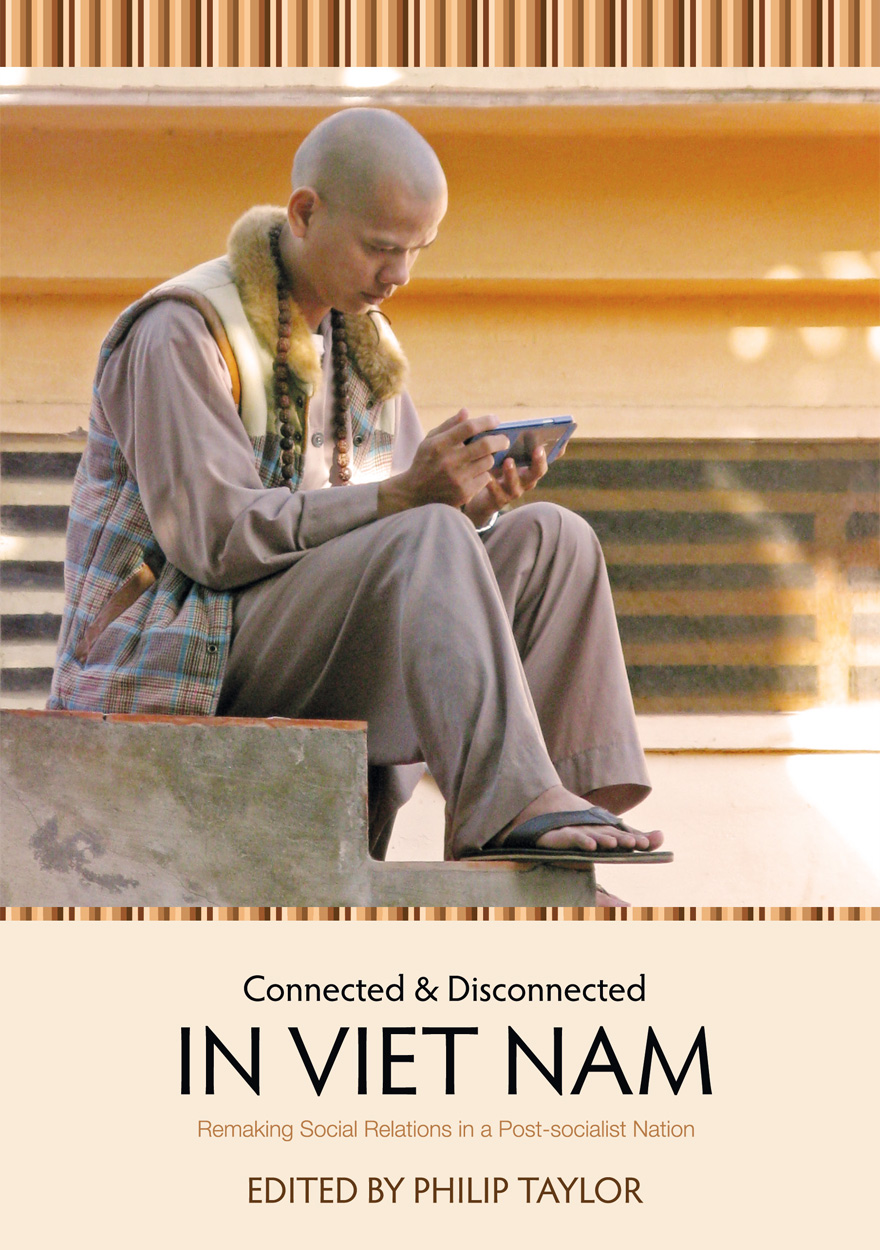
Connected and Disconnected in Viet Nam »
Remaking Social Relations in a Post-socialist Nation
Edited by: Philip Taylor
Publication date: March 2016
Vietnam’s shift to a market-based society has brought about profound realignments in its people’s relations with each other. As the nation continues its retreat from the legacies of war and socialism, significant social rifts have emerged that divide citizens by class, region and ethnicity. By drawing on social connections as a traditional resource, Vietnamese are able to accumulate wealth, overcome marginalisation and achieve social mobility. However, such relationship-building strategies are also fraught with peril for they have the potential to entrench pre-existing social divisions and lead to new forms of disconnectedness.
This book examines the dynamics of connection and disconnection in the lives of contemporary Vietnamese. It features 11 chapters by anthropologists who draw upon research in both highland and lowland contexts to shed light on social capital disparities, migration inequalities and the benefits and perils of gift exchange. The authors investigate ethnic minority networks, the politics of poverty, patriotic citizenship, and the ‘heritagisation’ of culture. Tracing shifts in how Vietnamese people relate to their consociates and others, the chapters elucidate the social legacies of socialism, nation-building and the transition to a globalised market-based economy. With compelling case studies and including many previously unheard perspectives, this book offers original insights into social ties and divisions among the modern Vietnamese.