



Search titles
Displaying results 161 to 163 of 163.

The Poetic Power of Place »
Comparative Perspectives on Austronesian Ideas of Locality
Edited by: James J. Fox
Publication date: September 2006
This collection of papers is the fourth in a series of volumes on the work of the Comparative Austronesian Project. Each paper describes a specific Austronesian locality and offers an ethnographic account of the way in which social knowledge is vested, maintained and transformed in a particular landscape. The intention of the volume is to consider common patterns in the representation of place among Austronesian-speaking populations.
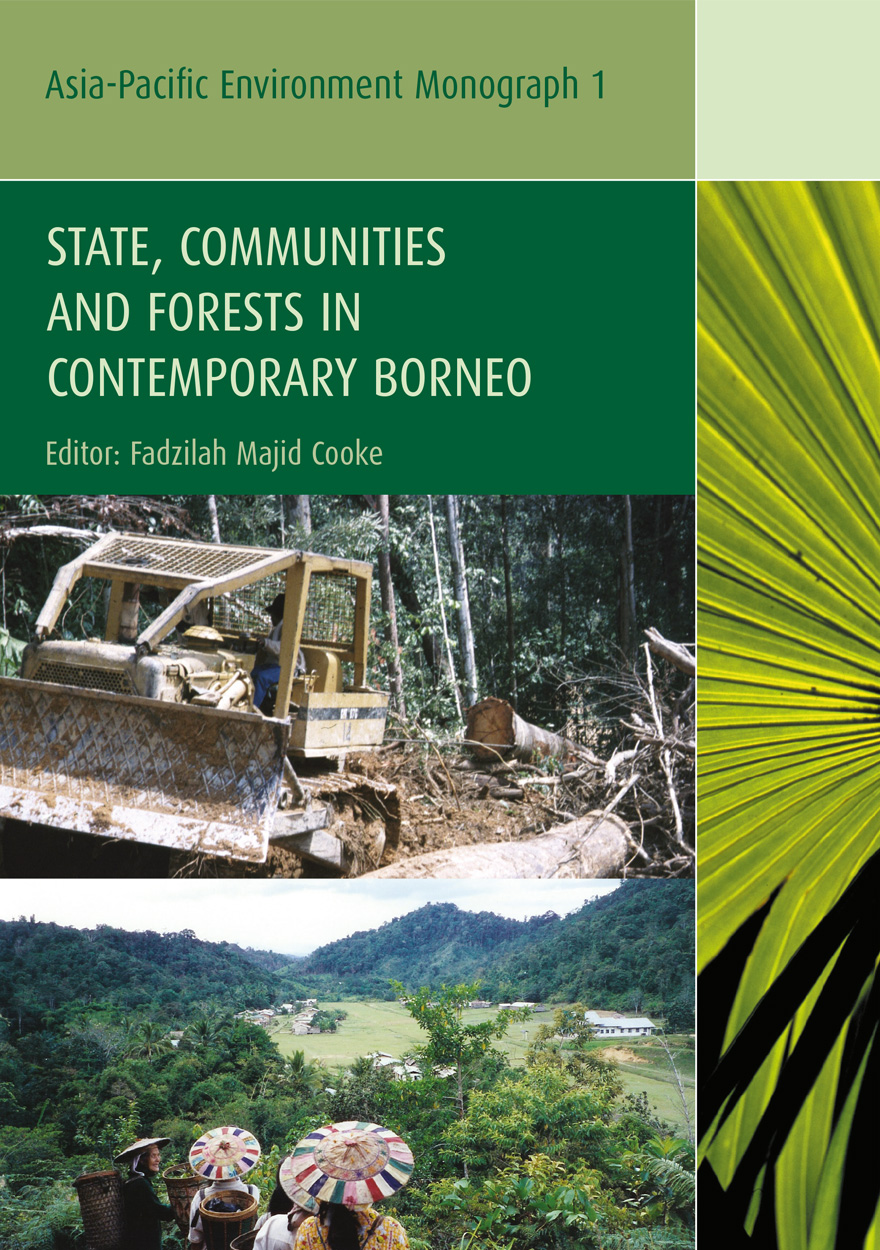
State, Communities and Forests In Contemporary Borneo »
Edited by: Fadzilah Majid Cooke
Publication date: July 2006
The name ‘Borneo’ evokes visions of constantly changing landscapes, but with important island-wide continuities. One of the continuities has been the forests, which have for generations been created and modified by the indigenous population, but over the past three decades have been partially replaced by tree crops, grass or scrub. This book, the first in the series of Asia-Pacific Environmental Monographs, looks at the political complexities of forest management across the whole island of Borneo, tackling issues of tenure, land use change and resource competition, ‘tradition’ versus ‘modernity’, disputes within and between communities, between communities and private firms, or between communities and governments. While it focuses on the changes taking place in local political economies and conservation practices, it also makes visible the larger changes taking place in both Indonesia and Malaysia. The common theme of the volume is the need to situate local complexities in the larger institutional context, and the possible gains to be made from such an approach in the search for alternative models of conservation and development.

Culture and Sustainable Development in the Pacific »
Edited by: Antony Hooper
Publication date: April 2005
Throughout the South Pacific, notions of ‘culture’ and ‘development’ are very much alive—in political debate, the media, sermons, and endless discussions amongst villagers and the urban élites, even in policy reports.
Often the terms are counterposed, and development along with ‘economic rationality’, ‘good governance’ and ‘progress’ is set against culture or ‘custom’, ‘tradition’ and ‘identity’. The decay of custom and impoverishment of culture are often seen as wrought by development, while failures of development are haunted by the notion that they are due, somehow, to the darker, irrational influences of culture.
The problem is to resolve the contradictions between them so as to achieve the greater good—access to material goods, welfare and amenities, ‘modern life’—without the sacrifice of the ‘traditional’ values and institutions that provide material security and sustain diverse social identities.
Resolution is sought in this book by a number of leading writers from the South Pacific including Langi Kavaliku, Epeli Hau’ofa, Marshall Sahlins, Malama Meleisea, Joeli Veitayaki, and Tarcisius Tara Kabutaulaka. The volume is brought together for UNESCO by Antony Hooper, Professor Emeritus at the University of Auckland. UNESCO experts include Richard Engelhardt, Langi Kavaliku, Russell Marshall, Malama Meleisea, Edna Tait and Mali Voi.