



Search titles
Displaying results 41 to 50 of 156.
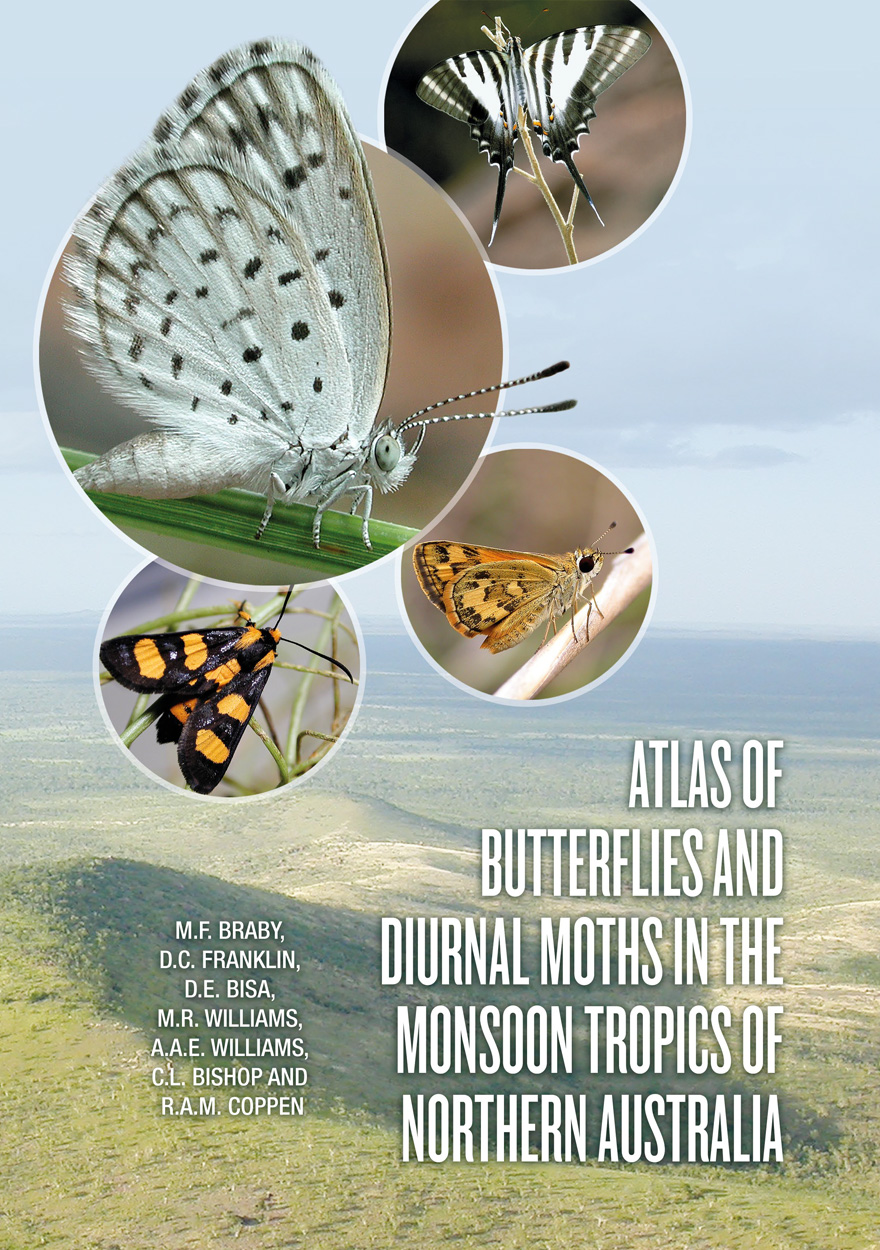
Atlas of Butterflies and Diurnal Moths in the Monsoon Tropics of Northern Australia »
Authored by: M.F. Braby, D.C. Franklin, D.E. Bisa, M.R. Williams, A.A.E. Williams, C.L. Bishop, R.A.M. Coppen
Publication date: December 2018
Northern Australia is one of few tropical places left on Earth in which biodiversity—and the ecological processes underpinning that biodiversity—is still relatively intact. However, scientific knowledge of that biodiversity is still in its infancy and the region remains a frontier for biological discovery. The butterfly and diurnal moth assemblages of the area, and their intimate associations with vascular plants (and sometimes ants), exemplify these points.
However, the opportunity to fill knowledge gaps is quickly closing: proposals for substantial development and exploitation of Australia’s north will inevitably repeat the ecological devastation that has occurred in temperate southern Australia—loss of species, loss of ecological communities, fragmentation of populations, disruption of healthy ecosystem function and so on—all of which will diminish the value of the natural heritage of the region before it is fully understood and appreciated. Written by several experts in the field, the main purpose of this atlas is to compile a comprehensive inventory of the butterflies and diurnal moths of northern Australia to form the scientific baseline against which the extent and direction of change can be assessed in the future. Such information will also assist in identifying the region’s biological assets, to inform policy and management agencies and to set priorities for biodiversity conservation.
In the media
Read the IFL Science article: Incredible Butterfly And Moth Diversity Hotspot Discovered In Northern Australia.
Read the Fairfax article: Butterfly 'detective' solves 120-year-old north Australian mystery.

Landlock »
Paralysing Dispute over Minerals on Adivasi Land in India
Authored by: Patrik Oskarsson
Publication date: September 2018
Landlock: Paralysing Dispute over Minerals on Adivasi Land in India explores the ways in which political controversy over a bauxite mining and refining project on constitutionally protected tribal lands in Andhra Pradesh descended into a state of paralysis where no productive outcome was possible. Long-running support for Adivasi (or tribal) land rights motivated a wide range of actors to block the project’s implementation by recourse to India’s dispersed institutional landscape, while project proponents proved adept in proposing workarounds to prevent its outright cancellation. In the ensuing deadlock, the project was unable to move towards completion, while marginalised Adivasi groups were equally unable to repossess their land. Such a ‘landlock’ is argued to be characteristic of India’s wider inability to deal with conflicts over land matters, despite the crucial importance of land for smallholder livelihoods and various economic processes in an intensely growth-focused country. The result has been frequent yet grindingly slow processes of contestation in which powerful business and state interests are, at times, halted in their tracks, but mostly seem able to slowly exhaust local resistance in their pursuit of large-scale projects that produce no benefits for the rural poor.
Human Ecology Review: Volume 24, Number 1 »
Publication date: September 2018
Human Ecology Review is a semi-annual journal that publishes peer-reviewed interdisciplinary research on all aspects of human–environment interactions (Research in Human Ecology). The journal also publishes essays, discussion papers, dialogue, and commentary on special topics relevant to human ecology (Human Ecology Forum), book reviews (Contemporary Human Ecology), and letters, announcements, and other items of interest (Human Ecology Bulletin). Human Ecology Review also publishes an occasional paper series in the Philosophy of Human Ecology and Social–Environmental Sustainability.
Download for free
Not available for purchase

International Review of Environmental History: Volume 4, Issue 2, 2018 »
Edited by: James Beattie
Publication date: September 2018
International Review of Environmental History takes an interdisciplinary and global approach to environmental history. It encourages scholars to think big and to tackle the challenges of writing environmental histories across different methodologies, nations, and time-scales. The journal embraces interdisciplinary, comparative and transnational methods, while still recognising the importance of locality in understanding these global processes.
The journal's goal is to be read across disciplines, not just within history. It publishes on all thematic and geographic topics of environmental history, but especially encourage articles with perspectives focused on or developed from the southern hemisphere and the ‘global south’.
Download for free
Not available for purchase

The Australian Continent »
A Geophysical Synthesis
Publication date: August 2018
The Australian Continent: A Geophysical Synthesis is designed to provide a summary of the character of the Australian continent through the extensive information available at the continental scale, as a contribution to the understanding of Australia's lithospheric architecture and its evolution.
The results build on the extensive databases assembled at Geoscience Australia, particularly for potential fields, supplemented by the full range of seismological information, mostly from The Australian National University. To aid in cross comparison of results from different disciplines, information is presented with a common projection and scales.
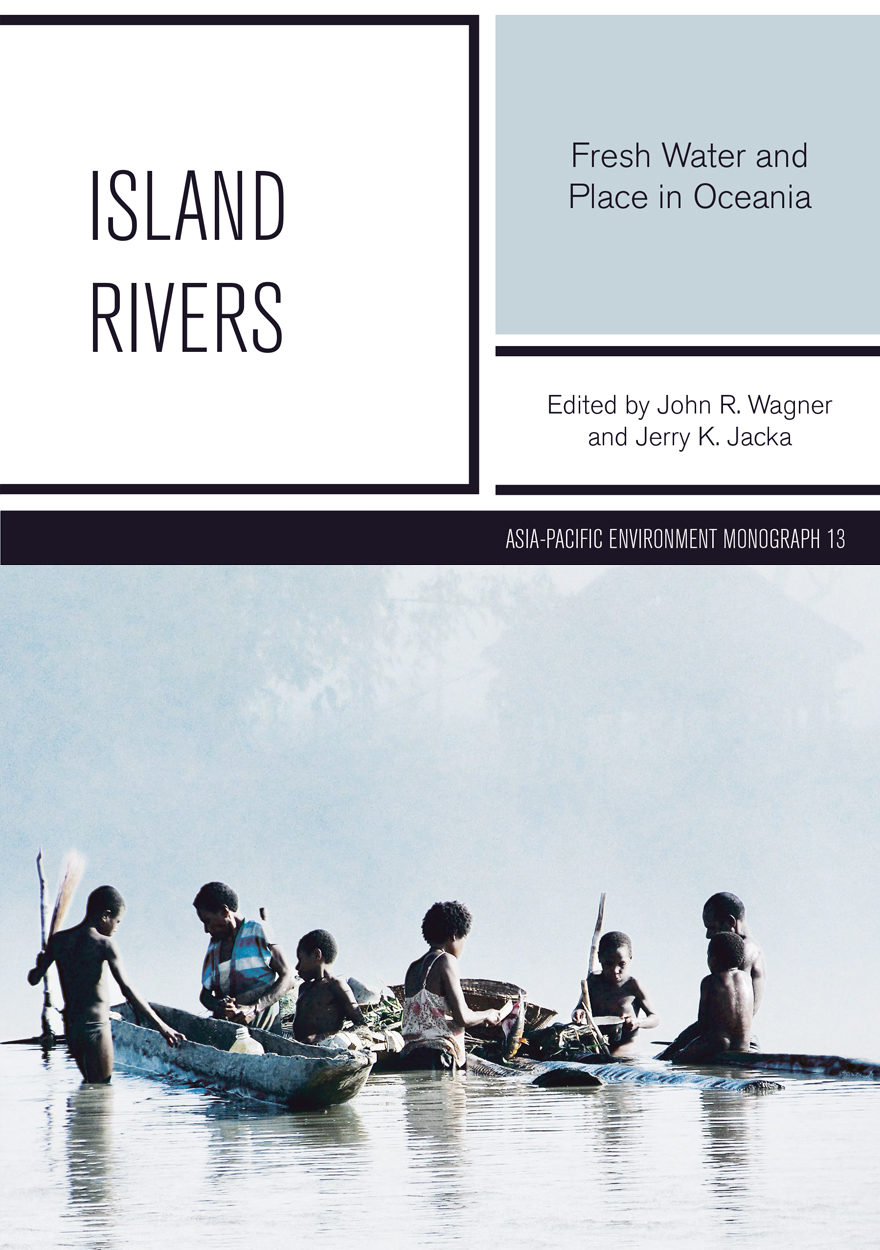
Island Rivers »
Fresh Water and Place in Oceania
Edited by: John R. Wagner, Jerry K. Jacka
Publication date: June 2018
Anthropologists have written a great deal about the coastal adaptations and seafaring traditions of Pacific Islanders, but have had much less to say about the significance of rivers for Pacific island culture, livelihood and identity. The authors of this collection seek to fill that gap in the ethnographic record by drawing attention to the deep historical attachments of island communities to rivers, and the ways in which those attachments are changing in response to various forms of economic development and social change. In addition to making a unique contribution to Pacific island ethnography, the authors of this volume speak to a global set of issues of immense importance to a world in which water scarcity, conflict, pollution and the degradation of riparian environments afflict growing numbers of people. Several authors take a political ecology approach to their topic, but the emphasis here is less on hydro-politics than on the cultural meaning of rivers to the communities we describe. How has the cultural significance of rivers shifted as a result of colonisation, development and nation-building? How do people whose identities are fundamentally rooted in their relationship to a particular river renegotiate that relationship when the river is dammed to generate hydro-power or polluted by mining activities? How do blockages in the flow of rivers and underground springs interrupt the intergenerational transmission of local ecological knowledge and hence the ability of local communities to construct collective identities rooted in a sense of place?

International Review of Environmental History: Volume 4, Issue 1, 2018 »
Edited by: James Beattie
Publication date: May 2018
International Review of Environmental History takes an interdisciplinary and global approach to environmental history. It encourages scholars to think big and to tackle the challenges of writing environmental histories across different methodologies, nations, and time-scales. The journal embraces interdisciplinary, comparative and transnational methods, while still recognising the importance of locality in understanding these global processes.
The journal’s goal is to be read across disciplines, not just within history. It publishes on all thematic and geographic topics of environmental history, but especially encourage articles with perspectives focused on or developed from the southern hemisphere and the ‘global south’.
Download for free
Not available for purchase

The Quest for the Good Life in Precarious Times »
Ethnographic Perspectives on the Domestic Moral Economy
Edited by: Chris Gregory, Jon Altman
Publication date: April 2018
The study of the quest for the good life and the morality and value it presupposes is not new. To the contrary, this is an ancient issue; its intellectual history can be traced back to Aristotle. In anthropology, the study of morality and value has always been a central concern, despite the claim of some scholars that the recent upsurge of interest in these issues is new. What is novel is how scholars in many disciplines are posing the value question in new ways. The global economic alignments of the present pose many political, moral and theoretical questions, but the central issue the essays in this collection address is: how do relatively poor people of the Australia–Pacific region survive in current precarious times? In looking to answer this question, contributors directly engage the values and concepts of their interlocutors. At a time when understanding local implications of global processes is taking on new urgency, these essays bring finely honed anthropological perspectives to matters of universal human concern—they offer radical empirical critique based on intensive fieldwork that will be of great interest to those seeking to comprehend the bigger picture.

Vietnam’s Post-1975 Agrarian Reforms »
How local politics derailed socialist agriculture in southern Vietnam
Authored by: Trung Dang
Publication date: April 2018
This book investigates why collectivised farming failed in south Vietnam after 1975. Despite the strong will of the new regime to implement collectivisation, the effort was uneven, misapplied and subverted. After only 10 years of trying, the regime annulled the policy. Focusing on two case studies—Quảng Nam province in the Central Coast region and An Giang province in the Mekong Delta—and based on extensive evidence, this study argues that the reasons for variations in implementation and the failure and reversal of the policy were twofold: regional differences and local politics.

Made in China Journal: Volume 3, Issue 1, 2018 »
Publication date: March 2018
On 12 May 2008, a 7.9 magnitude earthquake hit Wenchuan county, Sichuan province. Felt as far as Beijing, the tremors caused horrific damage: 69,229 people died and 17,923 went missing. Yet, the aftermath of the seism was also a time of hope—with Chinese citizens from all over the country outdoing each other to show solidarity with the victims. As local governments began to recognise the importance of NGOs in providing disaster relief and social services, 2008 was widely seen as a ‘Year Zero’ for Chinese civil society. At that time, hardly anybody could have foreseen the wave of repression against civil society that was to come and that is today the norm. This issue looks back at the legacy of this disaster, and the ways in which state and civil society actors renegotiate their positions during ‘states of emergency’.
Download for free
Not available for purchase