



Search titles
Displaying results 61 to 70 of 75.

Echoes of the Tambaran »
Masculinity, history and the subject in the work of Donald F. Tuzin
Edited by: David Lipset, Paul Roscoe
Publication date: October 2011
In the Sepik Basin of Papua New Guinea, ritual culture was dominated by the Tambaran —a male tutelary spirit that acted as a social and intellectual guardian or patron to those under its aegis as they made their way through life. To Melanesian scholarship, the cultural and psychological anthropologist, Donald F. Tuzin, was something of a Tambaran, a figure whose brilliant and fine-grained ethnographic project in the Arapesh village of Ilahita was immensely influential within and beyond New Guinea anthropology. Tuzin died in 2007, at the age of 61. In his memory, the editors of this collection commissioned a set of original and thought provoking essays from eminent and accomplished anthropologists who knew and were influenced by his work. They are echoes of the Tambaran.
The anthology begins with a biographical sketch of Tuzin’s life and scholarship. It is divided into four sections, each of which focuses loosely around one of his preoccupations. The first concerns warfare history, the male cult and changing masculinity, all in Melanesia. The second addresses the relationship between actor and structure. Here, the ethnographic focus momentarily shifts to the Caribbean before turning back to Papua New Guinea in essays that examine uncanny phenomena, narratives about childhood and messianic promises. The third part goes on to offer comparative and psychoanalytic perspectives on the subject in Fiji, Bali, the Amazon as well as Melanesia. Appropriately, the last section concludes with essays on Tuzin’s fieldwork style and his distinctive authorial voice.

Michi's Memories »
The Story of a Japanese War Bride
Authored by: Keiko Tamura
Publication date: September 2011
This book tells the story of Michi, one of 650 Japanese war brides who arrived in Australia in the early 1950s. The women met Australian servicemen in post-war Japan and decided to migrate to Australia as wives and fiancées to start a new life. In 1953, when Michi reached Sydney Harbour by boat with her two Japanese-born children, she knew only one person in Australia: her husband. She did not know any English so she quickly learned her first English phrase, “I like Australia”, in the car on the way from the harbour to meet her Australian family. In the last fifty years, she brought up seven children while the family moved from one part of Australia to another. Now, in her eighties, she leads a peaceful life in Adelaide, but remains active in many ways. Her voice is full of life and she looks and sounds much younger than her age.
Dance of the Nomad »
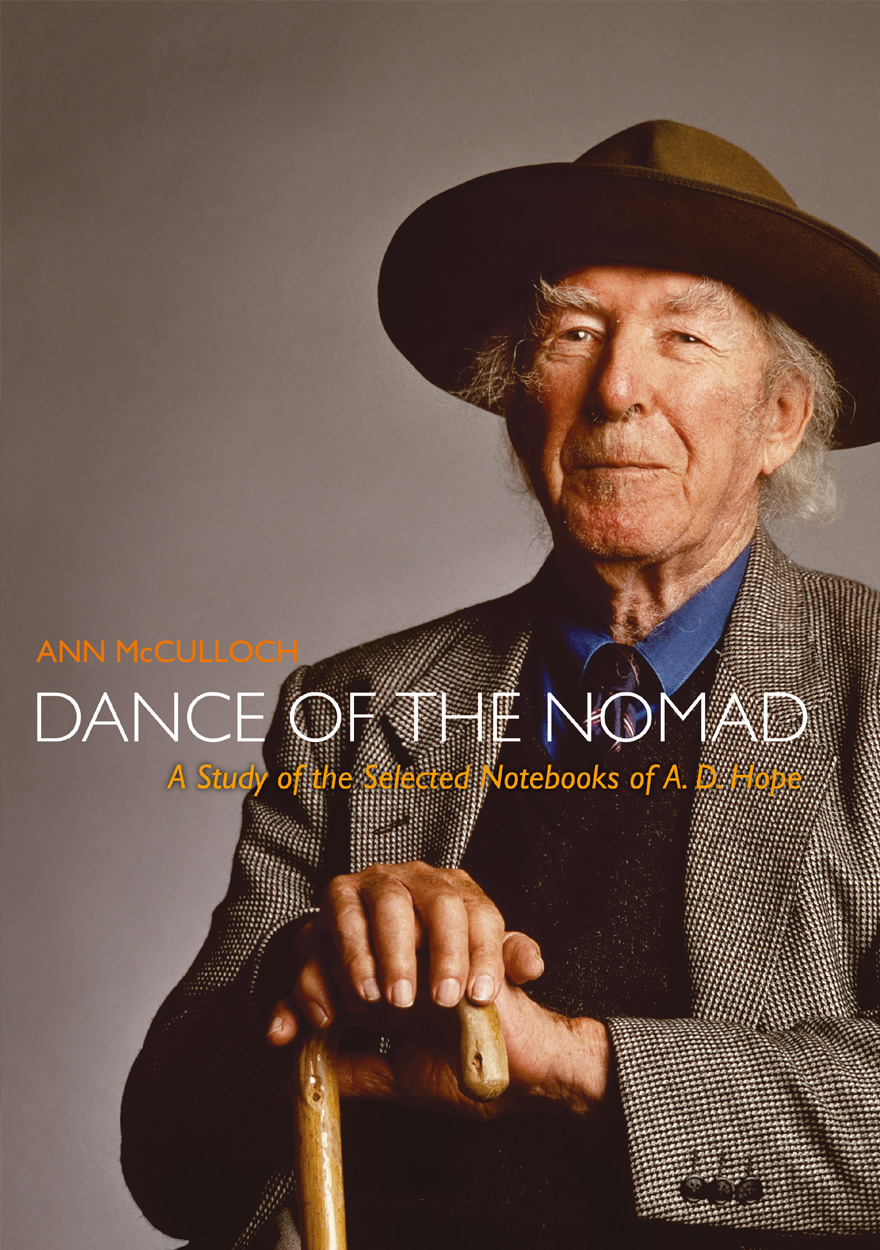
A Study of the Selected Notebooks of A.D.Hope
Authored by: Ann McCulloch
Publication date: November 2010
The notebooks of A. D. Hope are a portrait of the contradictory essence of the poet’s intellect and character. Shot through with threads of self-awareness and revelation, Hope imbued his notebooks with irony and humour, forming them as a celebration of the joy and terror of human existence. Stripped of intimate revelation, the entries give witness to Hope’s view that art is a superior force in the creation of new being and values, and a guide for the conduct of our lives.
Seeking to find pathways through the maze of an intellectual life, this is a profound and timely contribution to Australia’s literary scholarship. Ann McCulloch’s analysis of this thematic selection of Hope’s notebooks reveals him to be relentless in his experimentation with ideas. Revealing the originality of his thinking and the astonishing range of his reading and interests, this edition is a testament to the intellect of one of Australia’s towering literary figures.

Racial Folly »
A Twentieth-Century Aboriginal Family
Authored by: Gordon Briscoe
Publication date: February 2010
Briscoe’s grandmother remembered stories about the first white men coming to the Northern Territory. This extraordinary memoir shows us the history of an Aboriginal family who lived under the race laws, practices and policies of Australia in the twentieth century. It tells the story of a people trapped in ideological folly spawned to solve ‘the half-caste problem’. It gives life to those generations of Aboriginal people assumed to have no history and whose past labels them only as shadowy figures.
Briscoe’s enthralling narrative combines his, and his contemporaries, institutional and family life with a high-level career at the heart of the Aboriginal political movement at its most dynamic time. It also documents the road he travelled as a seventeen year old fireman on the South Australia Railways to becoming the first Aboriginal person to achieve a PhD in history.
For more information on Aboriginal History Inc. please visit aboriginalhistory.org.au.

Gunnar Landtman in Papua »
1910 to 1912
Authored by: David Lawrence, Pirjo Varjola
Publication date: January 2010
Despite poverty and neglect the coastal Kiwai of the northern Torres Strait and Fly estuary are a strong and vibrant people with a long tradition of work in the marine industries of the Torres Strait. Regrettably their current social, economic and political problems are marginal to both Papua New Guinea and Australia. Gunnar Landtman’s research, undertaken between 1910 and 1912, is still a foundation stone for understanding the position of the Kiwai today. In those two years in Papua, Landtman managed to record a large collection of valuable legends and stories, many of which are still told today. He travelled widely throughout the Torres Strait, the southwest coast of Papua and the Fly estuary and even to the Gulf District. He made a comprehensive collection of Kiwai material culture now housed in the Museum of Cultures in Helsinki and a second, duplicate set for the Cambridge Museum. He also collected some of the earliest examples of Gogodala material culture available for research. In 1913, he published, Nya Guinea färden [New Guinea expedition], a detailed travelogue of his work and life among the Kiwai and, while he wrote a substantial corpus of work on the Kiwai in English, Swedish and Finnish over the next twenty years, this personal account in Swedish has not been translated into English before. It forms a crucial link between Landtman’s serious academic works and his intimate personal journey of discovery. The aim of this book is to bring the personal face of the serious anthropologist to greater attention.
David Lawrence began studying the Gunnar Landtman collections held by the National Museum of Finland when he was researching customary exchange across the Torres Strait for his doctorate at James Cook University. He was also fortunate to be able to spend two years of fieldwork in the Fly estuary region and visited nearly all the communities described by Landtman. He is a Visiting Fellow at the Resource Management in Asia/Pacific program of The Australian National University and has published works on Kakadu National Park and the Great Barrier Reef Marine Park.

Indigenous Biography and Autobiography »
Publication date: December 2008
In this absorbing collection of papers Aboriginal, Maori, Dalit and western scholars discuss and analyse the difficulties they have faced in writing Indigenous biographies and autobiographies. The issues range from balancing the demands of western and non-western scholarship, through writing about a family that refuses to acknowledge its identity, to considering a community demand not to write anything at all.
The collection also presents some state-of-the-art issues in teaching Indigenous Studies based on auto/biography in Austria, Spain and Italy.
For more information on Aboriginal History Inc. please visit aboriginalhistory.org.au.
Transnational Ties »
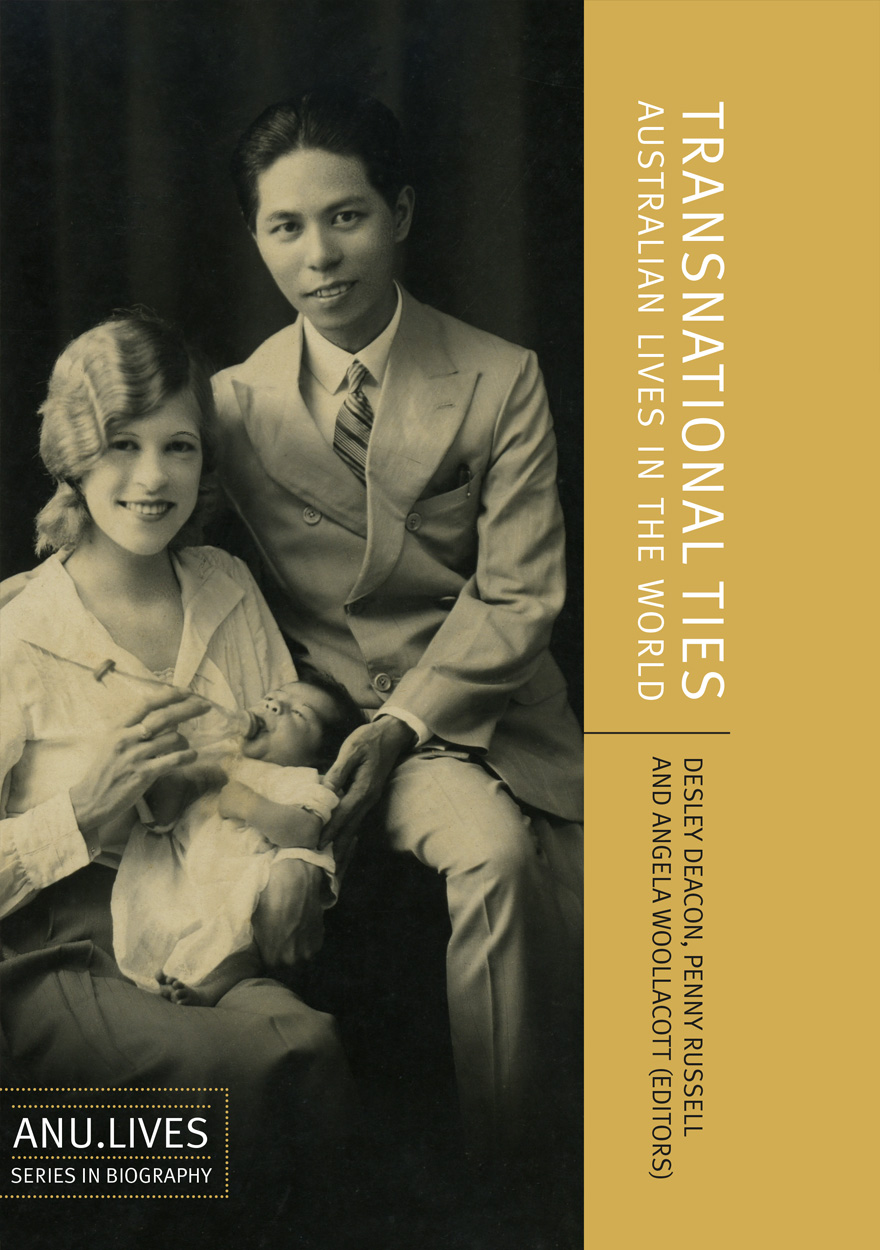
Australian Lives in the World
Edited by: Desley Deacon, Penny Russell, Angela Woollacott
Publication date: December 2008
Australian lives are intricately enmeshed with the world, bound by ties of allegiance and affinity, intellect and imagination. In Transnational Ties: Australian Lives in the World, an eclectic mix of scholars—historians, literary critics, and museologists—trace the flow of people that helped shape Australia’s distinctive character and the flow of ideas that connected Australians to a global community of thought. It shows how biography, and the study of life stories, can contribute greatly to our understanding of such patterns of connection and explores how transnationalism can test biography’s limits as an intellectual, professional and commercial practice.

Remembering Hedley »
Edited by: Coral Bell, Meredith Thatcher
Publication date: August 2008
Remembering Hedley commemorates the life of Hedley Bull (1932–85), a pivotal figure in the fields of international relations and strategic studies. Its publication coincides with the official opening on 6 August 2008 of the Hedley Bull Centre at The Australian National University in Canberra.

Defence Policy-Making »
A Close-Up View, 1950-1980- A Personal Memoir
Edited by: Peter Edwards
Authored by: Sir Arthur Tange
Publication date: July 2008
Sir Arthur Tange was perhaps the most powerful Secretary of the Australian Defence Department and one of the most powerful of the great ‘mandarins’ who dominated the Commonwealth Public Service between the 1940s and the 1970s. His strong, and often decisive, influence on both administration and policy was exerted by virtue of his intellectual capacity, his administrative ability and the sheer force of his personality.
Controversies from his time in Defence, including those associated with ‘the Tange report’ and ‘the Tange reforms’, echo to this day, and it is still easy to identify both staunch admirers and vitriolic critics in defence and public service circles. Tange wrote this account in his last years. It is a memoir – based largely on memory supplemented by limited reference to documentary material – that focuses upon his career after he came to Defence in 1970. It records his own account of his part in those administrative reforms and policy shifts, as well as his involvement-or non-involvement or alleged involvement-in several of the political crises of the 1970s, including the downfall of John Gorton as Prime Minister and the dismissal of the Whitlam Government.

Telling Pacific Lives »
Prisms of Process
Edited by: Brij V. Lal, Vicki Luker
Publication date: June 2008
How are Pacific lives imagined, written and read? How are they refracted through prisms of process? From legends about culture heroes to biographies of national leaders, from tales of ancestors to stories of contemporary men and women, from lives told of both the famous and the nameless, this collection of essays — by historians and anthropologists, Islanders and Island scholars — probes questions of personhood, identity, memory, and time across the sweep of the Pacific, as well as practical issues of research and writing.