



Search titles
Displaying results 31 to 40 of 75.

The Lives of Stories »
Three Aboriginal-Settler Friendships
Authored by: Emma Dortins
Publication date: December 2018
The Lives of Stories traces three stories of Aboriginal–settler friendships that intersect with the ways in which Australians remember founding national stories, build narratives for cultural revival, and work on reconciliation and self-determination. These three stories, which are still being told with creativity and commitment by storytellers today, are the story of James Morrill’s adoption by Birri-Gubba people and re-adoption 17 years later into the new colony of Queensland, the story of Bennelong and his relationship with Governor Phillip and the Sydney colonists, and the story of friendship between Wiradjuri leader Windradyne and the Suttor family. Each is an intimate story about people involved in relationships of goodwill, care, adoptive kinship and mutual learning across cultures, and the strains of maintaining or relinquishing these bonds as they took part in the larger events that signified the colonisation of Aboriginal lands by the British. Each is a story in which cross-cultural understanding and misunderstanding are deeply embedded, and in which the act of storytelling itself has always been an engagement in cross-cultural relations. The Lives of Stories reflects on the nature of story as part of our cultural inheritance, and seeks to engage the reader in becoming more conscious of our own effect as history-makers as we retell old stories with new meanings in the present, and pass them on to new generations.

Carl Strehlow’s 1909 Comparative Heritage Dictionary »
An Aranda, German, Loritja and Dieri to English Dictionary with Introductory Essays
Edited by: Anna Kenny
Publication date: August 2018
Carl Strehlow’s comparative dictionary manuscript is a unique item of Australian cultural heritage; it is a large collection of circa 7,600 Aranda, 6,800 Loritja (Luritja) and 1,200 Dieri to German entries compiled at the beginning of the twentieth century at the Hermannsburg Mission in central Australia. It is an integral part of Strehlow’s ethnographic work on Aboriginal cultures that his German editor Baron Moritz von Leonhardi published as Die Aranda- und Loritja-Stämme in Zentral-Australien (Strehlow 1907–1920) in Frankfurt. Strehlow and his editor had planned to publish a language study that included this comparative dictionary, but it remained unpublished until now due to a number of complicated historical and personal circumstances of the main characters involved with the dictionary.
Strehlow’s linguistic work is historically and anthropologically significant because it probably represents the largest and most comprehensive wordlist of Indigenous languages compiled in Australia during the early stages of contact. It is an important primary source for Luritja and Aranda speakers. Both languages are spoken in homes and taught in schools in central Australia.
The reasons for presenting this work as a heritage dictionary—that is, as an exact transcription of the original form of the handwritten manuscript—are to follow the Western Aranda people’s wishes and to maintain its historical authenticity, which will prove to be of great use to both Indigenous people and scholars interested in language.
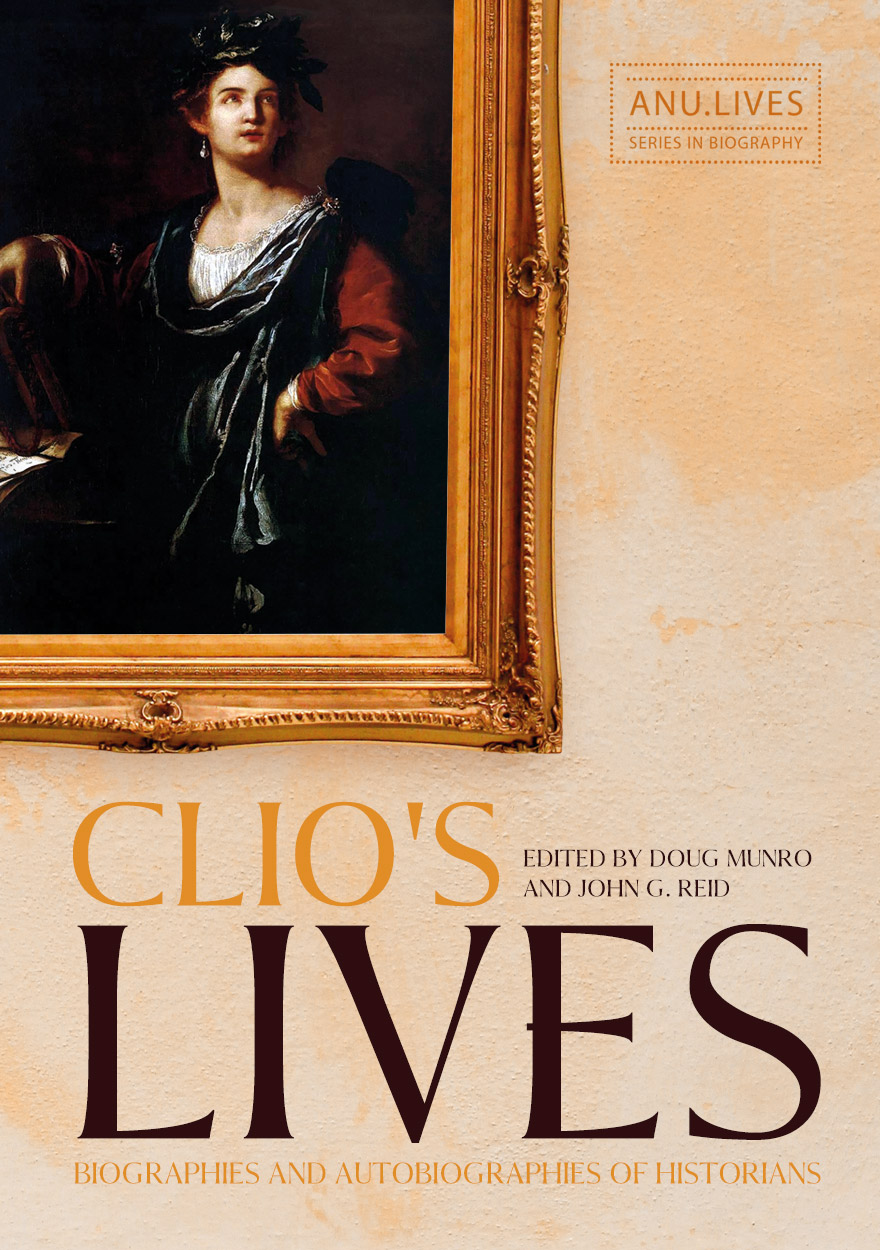
Clio’s Lives »
Biographies and Autobiographies of Historians
Edited by: Doug Munro, John G. Reid
Publication date: October 2017
Including contributions from leading scholars in the field from both Australia and North America, this collection explores diverse approaches to writing the lives of historians and ways of assessing the importance of doing so. Beginning with the writing of autobiographies by historians, the volume then turns to biographical studies, both of historians whose writings were in some sense nation-defining and those who may be regarded as having had a major influence on defining the discipline of history. The final section explores elements of collective biography, linking these to the formation of historical networks. A concluding essay by Barbara Caine offers a critical appraisal of the study of historians’ biographies and autobiographies to date, and maps out likely new directions for future work.
Clio’s Lives is a very good scholarly collection that advances the study of autobiography and biography within the writing of history itself, taking theoretical questions in significant new directions. The contributors are well known and highly respected in the history profession and write with an insight and intellectual energy that will ensure the book has considerable impact. They examine cutting-edge issues about the writing of history at the personal level through autobiography and biography in diverse and innovative ways. Together the writers have provided reflective chapters that will be widely read for their impressive theoretical advances as well as being inspirational for new entrants to the disciplinary area.
— Patricia Grimshaw, University of Melbourne
Clio’s Lives brings together a most interesting and varied cast of contributors. Its chapters contain sophisticated and well-penned ruminations on the uses of biography and autobiography among historians. These are clearly connected with the general themes of the volume. This delightfully mixed bag makes very good reading and, as well, will serve as a substantial contribution to the study of the biography and autobiography.
— Eric Richards, Flinders University

German Ethnography in Australia »
Edited by: Nicolas Peterson, Anna Kenny
Publication date: September 2017
The contribution of German ethnography to Australian anthropological scholarship on Aboriginal societies and cultures has been limited, primarily because few people working in the field read German. But it has also been neglected because its humanistic concerns with language, religion and mythology contrasted with the mainstream British social anthropological tradition that prevailed in Australia until the late 1960s. The advent of native title claims, which require drawing on the earliest ethnography for any area, together with an increase in research on rock art of the Kimberley region, has stimulated interest in this German ethnography, as have some recent book translations. Even so, several major bodies of ethnography, such as the 13 volumes on the cultures of northeastern South Australia and the seven volumes on the Aranda of the Alice Springs region, remain inaccessible, along with many ethnographically rich articles and reports in mission archives. In 18 chapters, this book introduces and reviews the significance of this neglected work, much of it by missionaries who first wrote on Australian Aboriginal cultures in the 1840s. Almost all of these German speakers, in particular the missionaries, learnt an Aboriginal language in order to be able to document religious beliefs, mythology and songs as a first step to conversion. As a result, they produced an enormously valuable body of work that will greatly enrich regional ethnographies.
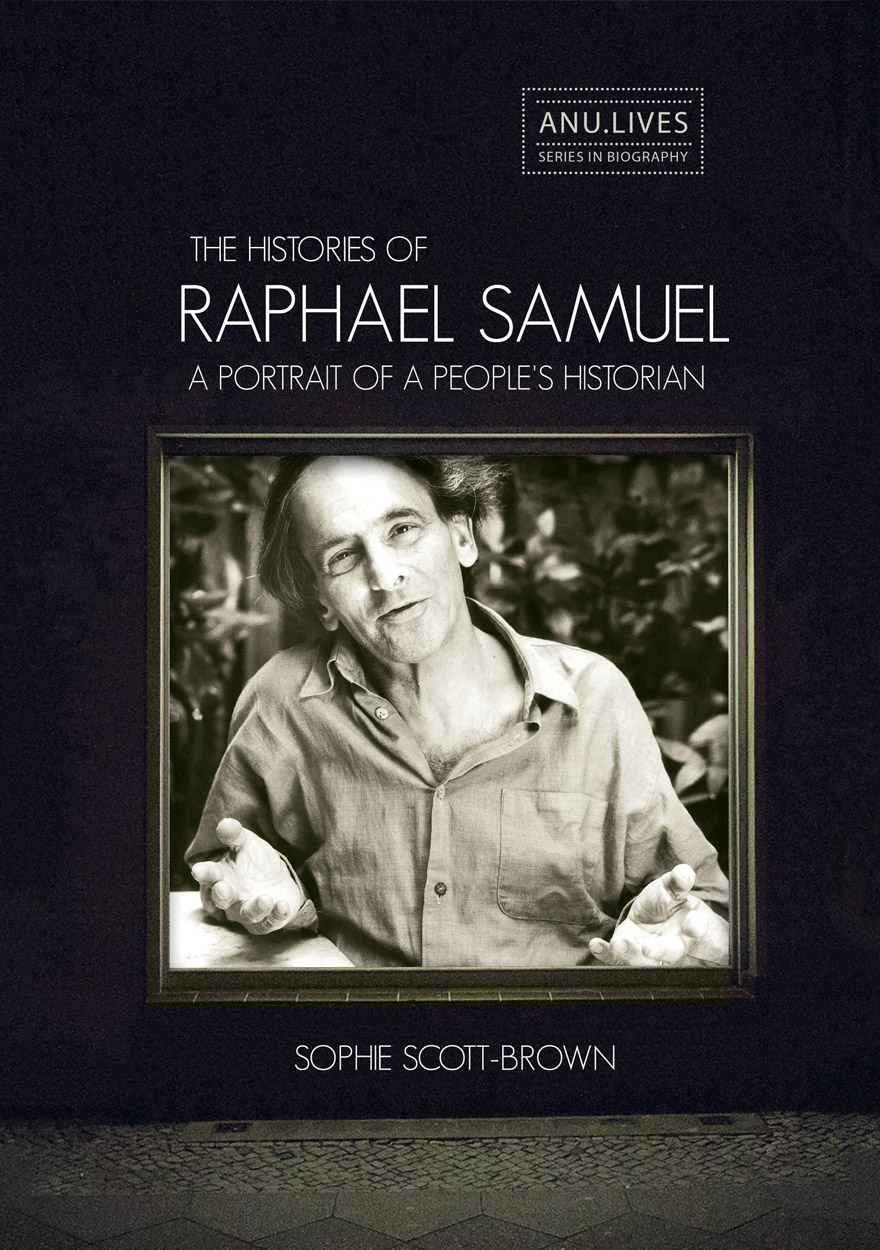
The Histories of Raphael Samuel »
A portrait of a people's historian
Authored by: Sophie Scott-Brown
Publication date: May 2017
In the first integrated biographical study of his work, this book situates British historian Raphael Samuel (1934–1996) in relation to his distinctive form of activist politics as they developed from youthful Cold War communism to the first British New Left, 1960s radicalism to the 1980s history wars.
As the catalyst behind the History Workshop movement, Samuel championed the democratisation of history-making and practised an eclectic form of people’s history in his own work. His unique approach was controversial, drawing impassioned responses from across the ideological spectrum, the most sustained critique often coming from his left-wing contemporaries. It is argued here that this compelling figure has been unjustly neglected and that he continues to offer important insights into the politics of history-making in a post-Marxist world.
Family Experiments »
Middle-class, professional families in Australia and New Zealand c. 1880–1920
Authored by: Shelley Richardson
Publication date: November 2016
Family Experiments explores the forms and undertakings of ‘family’ that prevailed among British professionals who migrated to Australia and New Zealand in the late nineteenth century. Their attempts to establish and define ‘family’ in Australasian, suburban environments reveal how the Victorian theory of ‘separate spheres’ could take a variety of forms in the new world setting.
The attitudes and assumptions that shaped these family experiments may be placed on a continuum that extends from John Ruskin’s concept of evangelical motherhood to John Stuart Mill’s rational secularism. Central to their thinking was a belief in the power of education to produce civilised and humane individuals who, as useful citizens, would individually and in concert nurture a better society.
Such ideas pushed them to the forefront of colonial liberalism. The pursuit of higher education for their daughters merged with and, in some respects, influenced first-wave colonial feminism. They became the first generation of colonial, middle-class parents to grapple not only with the problem of shaping careers for their sons but also, and more frustratingly, what graduate daughters might do next.

Geography, Power, Strategy and Defence Policy »
Essays in Honour of Paul Dibb
Edited by: Desmond Ball, Sheryn Lee
Publication date: May 2016
Paul Dibb AM has had an extraordinary career. He enjoys an international scholarly reputation of the highest order, while at the same time he has done much distinguished public service. He was a pioneer in moving back and forth between posts in government departments, notably the Department of Defence, and academia. He began as a student of Soviet economic geography, and then spent nearly two decades in Australian Defence intelligence, including service as Head of the National Assessments Staff (NAS) in the Joint Intelligence Organisation (JIO) from 1974 to 1978, Deputy Director of JIO in 1978–80, Director of JIO in 1986–88, and Deputy Secretary of Defence (Strategy and Intelligence) in 1988–91, before becoming a Professor in the Strategic and Defence Studies Centre (SDSC) at The Australian National University (where he is now an Emeritus Professor). He has been quite happy to engage in vigorous public debate about important and controversial strategic and defence issues, giving him a high public profile.
The contributors include two former Chancellors of ANU, one a former Minister of Defence, and the other a former Secretary of the Department of Defence, a former Chief of the Defence Force (CDF), and other former senior officials, as well as academic specialists in geography, international relations, and strategic and defence studies.
‘This would be a high-quality set of essays for any edited volume, but for a festschrift – a genre that sometimes generates uneven collections – this is an exceptional assembly. The individual pieces are very good; together, they have coherence and power.’
– Professor Ian Hall, Professor of International Relations, Griffith University

Brokers and boundaries »
Colonial exploration in Indigenous territory
Publication date: April 2016
Colonial exploration continues, all too often, to be rendered as heroic narratives of solitary, intrepid explorers and adventurers. This edited collection contributes to scholarship that is challenging that persistent mythology. With a focus on Indigenous brokers, such as guides, assistants and mediators, it highlights the ways in which nineteenth-century exploration in Australia and New Guinea was a collective and socially complex enterprise. Many of the authors provide biographically rich studies that carefully examine and speculate about Indigenous brokers’ motivations, commitments and desires. All of the chapters in the collection are attentive to the specific local circumstances as well as broader colonial contexts in which exploration and encounters occurred.
'This collection breaks new ground in its emphasis on Indigenous agency and Indigenous–explorer interactions. It will be of value to historians and others for a very long time.'
— Professor Ann Curthoys, University of Sydney
'In bringing together this group of authors, the editors have brought to histories of colonialism the individuality of these intermediaries, whose lives intersected colonial exploration in Australia and New Guinea.'
— Dr Jude Philp, Macleay Museum

Indigenous Intermediaries »
New perspectives on exploration archives
Publication date: September 2015
This edited collection understands exploration as a collective effort and experience involving a variety of people in diverse kinds of relationships. It engages with the recent resurgence of interest in the history of exploration by focusing on the various indigenous intermediaries – Jacky Jacky, Bungaree, Moowattin, Tupaia, Mai, Cheealthluc and lesser-known individuals – who were the guides, translators, and hosts that assisted and facilitated European travellers in exploring different parts of the world.
These intermediaries are rarely the authors of exploration narratives, or the main focus within exploration archives. Nonetheless the archives of exploration contain imprints of their presence, experience and contributions. The chapters present a range of ways of reading archives to bring them to the fore. The contributors ask new questions of existing materials, suggest new interpretive approaches, and present innovative ways to enhance sources so as to generate new stories.
‘This is a very fine collection of essays. It offers a deep and richly textured assessment of the crucial work of indigenous intermediaries in imperial and colonial exploration.’
— Professor Tony Ballantyne, University of Otago, New Zealand
Political Life Writing in the Pacific »
Reflections on Practice
Edited by: Jack Corbett, Brij V. Lal
Publication date: July 2015
This book aims to reflect on the experiential side of writing political lives in the Pacific region. The collection touches on aspects of the life writing art that are particularly pertinent to political figures: public perception and ideology; identifying important political successes and policy initiatives; grappling with issues like corruption and age-old political science questions about leadership and ‘dirty hands’. These are general themes but they take on a particular significance in the Pacific context and so the contributions explore these themes in relation to patterns of colonisation and the memory of independence; issues elliptically captured by terms like ‘culture’ and ‘tradition’; the nature of ‘self’ presented in Pacific life writing; and the tendency for many of these texts to be written by ‘outsiders’, or at least the increasingly contested nature of what that term means.