



Search titles
Displaying results 601 to 610 of 647.
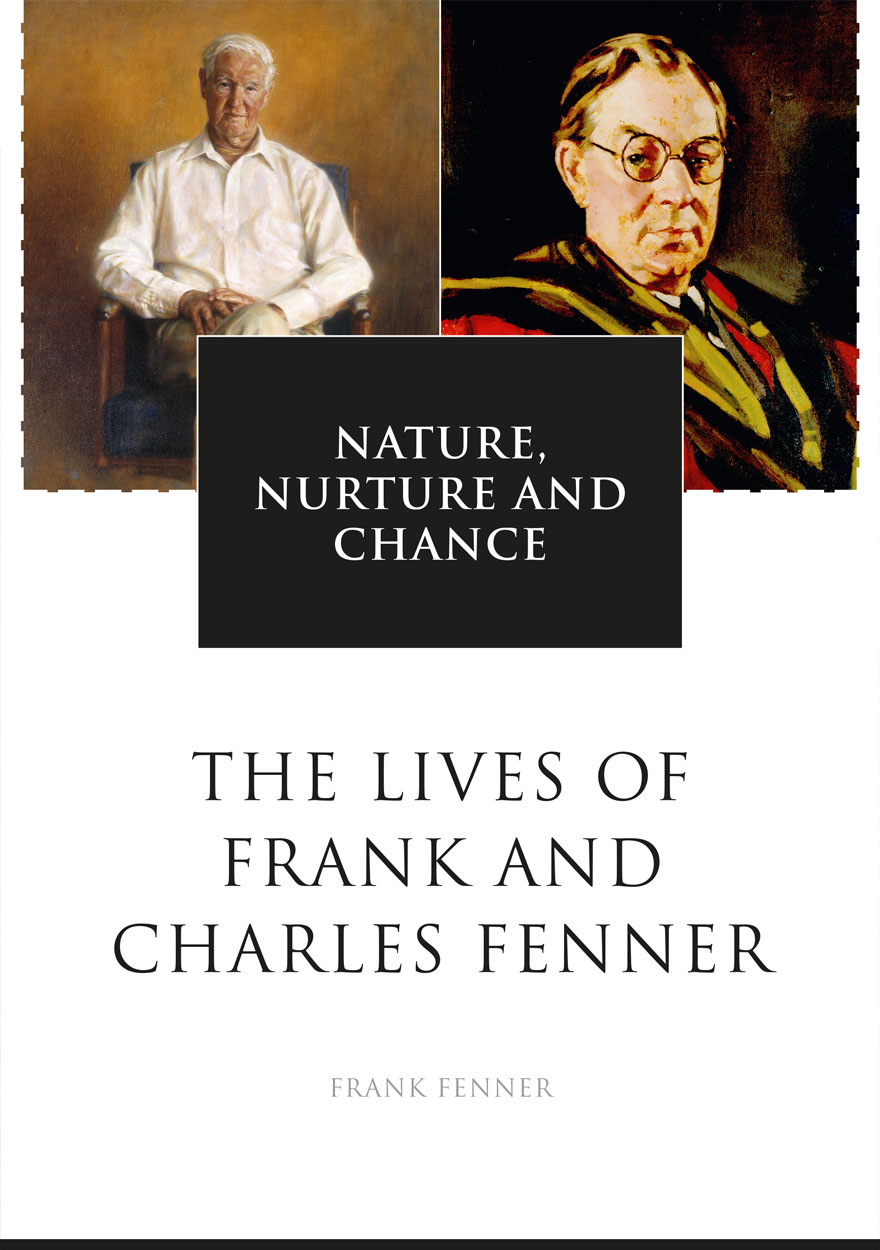
Nature, Nurture and Chance »
The Lives of Frank and Charles Fenner
Authored by: Frank Fenner
Publication date: July 2006
Judging by the numbers of newspaper reviews, biographies (including autobiographies) are amongst the most common literary works published these days. However, it is uncommon to find one book that combines a biography and an autobiography, as this book, Nature, Nurture and Chance: The Lives of Frank and Charles Fenner, does. As the author, Frank Fenner, sees it, ‘nature’ means the combination of genes that we inherit from our parents; ‘nurture’ means the way that our physical and social environment, especially during childhood, influence our mental and emotional characteristics; and chance is defined as ‘the way things fall out’. These three elements define the careers of all human beings. The author uses them to compare his father’s life and his own.

Negotiating the Sacred »
Blasphemy and Sacrilege in a Multicultural Society
Edited by: Elizabeth Burns Coleman, Kevin White
Publication date: June 2006
This cross-disciplinary exploration of the role of the sacred, blasphemy and sacrilege in a multicultural society brings together philosophers, theologians, lawyers, historians, curators, anthropologists and sociologists, as well as Christian, Jewish and Islamic and secular perspectives. In bringing together different disciplinary and cultural approaches, the book provides a way of broadening our conceptions of what might count as sacred, sacrilegious and blasphemous, in moral and political terms. In addition, it provides original research data on blasphemy, sacrilege and religious tolerance from a range of disciplines.
The book is presented in four sections:
Section I: Religion Sacrilege and Blasphemy in Australia.
Section II: Sacrilege and the Sacred
Section III: The State, Religion and Tolerance
Section IV: The Future: Openness and Dogmatism.
The book will appeal to both those actively involved in religious negotiation and to scholars and students of religion in history, philosophy, anthropology, sociology and political science.
Humanities Research: Volume XII. No. 1. 2005 »
Bigotry and Religion in Australia 1865- 1950
Edited by: Benjamin Penny
Publication date: May 2006
Humanities Research is an internationally peer-reviewed journal published by the Research School of Humanities at The Australian National University. The Research School of Humanities came into existence in January 2007 and consists of the Humanities Research Centre, Centre for Cross-Cultural Research, National Europe Centre and Australian National Dictionary Centre. Launched in 1997, issues are thematic with guest editors and address important and timely topics across all branches of the humanities.
This collection of essays examines manifestations of bigotry on the basis of religion in the period from the latter part of the nineteenth century until the aftermath of the second world war. It includes articles concerning both prejudice directed against one religious group as in the case of anti-semitism, as well as inter-religious bigotry, particularly conflict between Protestant and Catholic Christians. Some papers address specific incidents that took place under very particular local conditions while others analyse patterns of discrimination over the broad sweep of time; some examine prejudice in face-to-face situations and others in academic discourse. In other words, we have attempted to include as many different manifestations of the many tentacled beast that is religious bigotry as we have been able. In this way we hope to bring into clearer focus the situation in present-day Australian society, to trace important social changes, to provide historical contexts for current manifestations of religious prejudice, and to examine specific incidents or practices, or patterns of discrimination and prejudice, in our past.
This issue of Humanities Research is sponsored by the Herbert and Valmae Freilich Foundation, a part of the Humanities Research Centre of ANU devoted to research into all forms of prejudice and discrimination.
Download for free
Not available for purchase
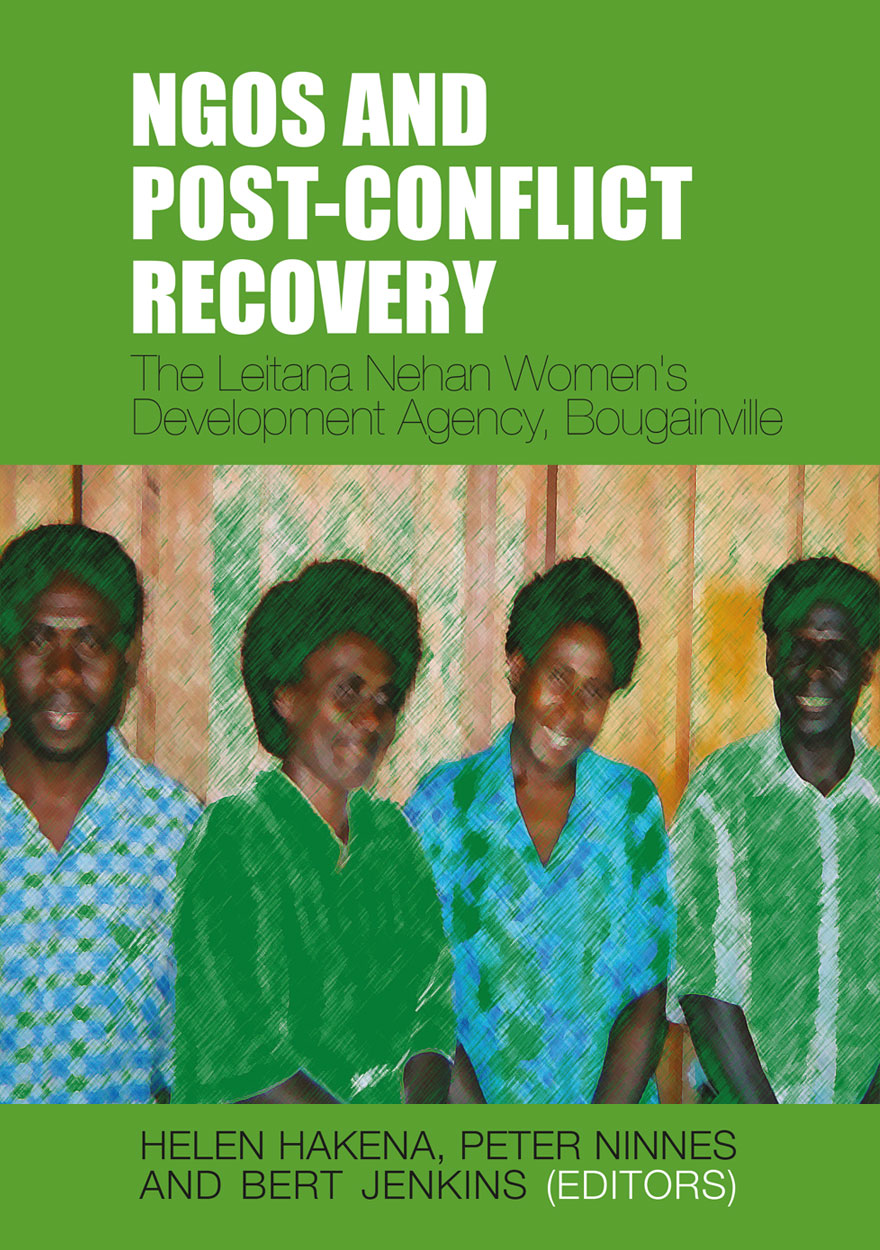
NGOs and Post-Conflict Recovery »
The Leitana Nehan Women’s Development Agency, Bougainville
Edited by: Helen Hakena, Peter Ninnes, Bert Jenkins
Publication date: April 2006
When government services have broken down or when international nongovernment organisations are uninterested or unable to help, grassroots non-government organisations provide important humanitarian, educational and advocacy services. Yet, too often the story of the crucial role played by these organisations in conflict and post-conflict recovery goes unheard.
The Leitana Nehan Women’s Development Agency provides many salutary lessons for grassroots non-government organisations undertaking peacemaking and peace-building work. In the thirteen years of its existence, it has contributed humanitarian assistance, provided education programs on peace, gender issues and community development, and has become a powerful advocate for women’s and children’s rights at all levels of society. Its work has been recognised through the award of a United Nations’ Millennium Peace Price in 2000 and a Pacific Peace Prize in 2004.
This book makes a unique contribution to understanding the role of nongovernment organisations in promoting peace and development and gender issues in the South West Pacific.

El Lago Español »
Authored by: O.H.K. Spate
Publication date: April 2006
En sentido estricto, “el Pacífico” no existió como tal hasta que en 1520-21 Fernao de Magalhãis, más conocido como Magallanes, atravesó la enorme extensión de aguas que entonces recibieron su nombre». Con estas palabras, el historiador y geógrafo de origen británico Oskar Spate presenta su versión del proceso en el que ese inmenso vacío se transforma en centro de las relaciones globales. El lago español describe el éxito esencialmente europeo y americano en convertir ese espacio en el nexo del poder económico y militar.
Este trabajo es una historia del Pacífico, el océano que se convirtió en el escenario del poder y el conflicto conformado por la política de Europa y el contexto económico de la América española. Sólo podía haber un concepto de «el Pacífico» una vez establecido el límite y el contorno del océano y esto era, indudablemente, trabajo de europeos. Cincuenta años después de la Conquista, Nueva España y Perú fueron la base desde donde el océano conformó virtualmente un lago español.
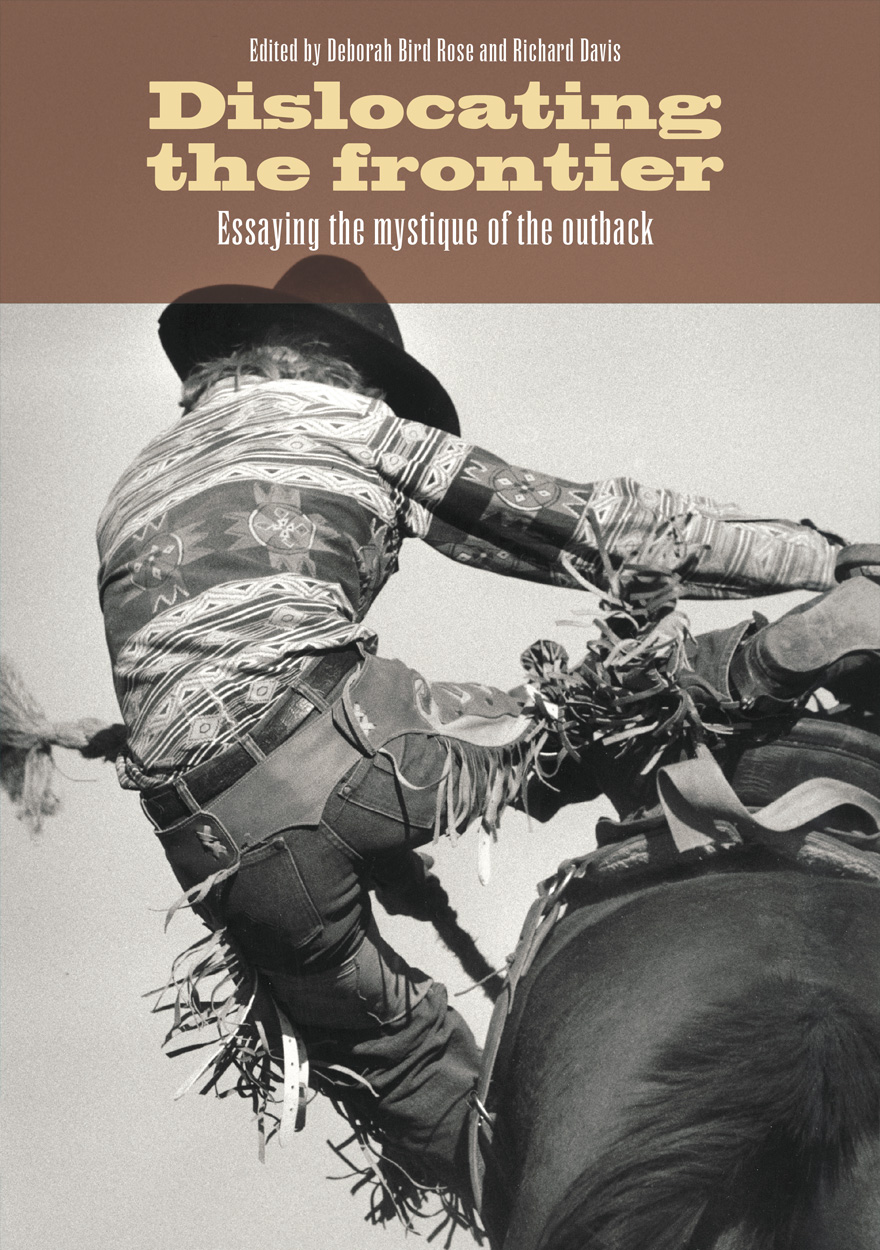
Dislocating the Frontier »
Essaying the Mystique of the Outback
Edited by: Deborah Bird Rose, Richard Davis
Publication date: March 2006
The frontier is one of the most pervasive concepts underlying the production of national identity in Australia. Recently it has become a highly contested domain in which visions of nationhood are argued out through analysis of frontier conflict.
Dislocating the Frontier departs from this contestation and takes a critical approach to the frontier imagination in Australia. The authors of this book work with frontier theory in comparative and unsettling modes. The essays reveal diverse aspects of frontier images and dreams – as manifested in performance, decolonising domains, language, and cross-cultural encounters.
Dislocating the Frontier takes readers beyond the notion of a progressive or disastrous frontier to a more radical rethinking of the frontier imagination itself.

Connected Worlds »
History in Transnational Perspective
Edited by: Ann Curthoys, Marilyn Lake
Publication date: March 2006
This volume brings together historians of imperialism and race, travel and modernity, Islam and India, the Pacific and the Atlantic to show how a ‘transnational’ approach to history offers fresh insights into the past. Transnational history is a form of scholarship that has been revolutionising our understanding of history in the last decade. With a focus on interconnectedness across national borders of ideas, events, technologies and individual lives, it moves beyond the national frames of analysis that so often blinker and restrict our understanding of the past. Many of the essays also show how expertise in ‘Australian history’ can contribute to and benefit from new transnational approaches to history. Through an examination of such diverse subjects as film, modernity, immigration, politics and romance, Connected Worlds weaves an historical matrix which transports the reader beyond the local into a realm which re-defines the meaning of humanity in all its complexity. Contributors include Tony Ballantyne, Desley Deacon, John Fitzgerald, Patrick Wolfe and Angela Woollacott.
At the XIII Biennial Conference of The Film and History Association of Australia and New Zealand, Jill Julius Matthews was presented with an award for Best Book Chapter: ‘Modern nomads and national film history: the multi-continental career of J. D. Williams’ in Ann Curthoys and Marilyn Lake (eds), Connected Worlds: History in Transnational Perspective, Canberra: ANU E Press, 2006, pp. 157-169

Aboriginal History Journal: Volume 30 »
Publication date: 2006
Since 1977, the journal Aboriginal History has pioneered interdisciplinary historical studies of Australian Aboriginal people’s and Torres Strait Islander’s interactions with non-Indigenous peoples. It has promoted publication of Indigenous oral traditions, biographies, languages, archival and bibliographic guides, previously unpublished manuscript accounts, critiques of current events, and research and reviews in the fields of anthropology, archaeology, sociology, linguistics, demography, law, geography and cultural, political and economic history.
Aboriginal History Inc. is a publishing organisation based in the Australian Centre for Indigenous History, Research School of Social Sciences, The Australian National University, Canberra.
For more information on Aboriginal History Inc. please visit aboriginalhistory.org.au.
Download for free
Not available for purchase

Rule of Law, Legitimate Governance & Development in the Pacific »
Authored by: Iutisone Salevao
Publication date: December 2005
The notion that the rule of law embodies or guarantees all the essential requirements for a perfectly just society is extravagant and naïve. Nonetheless, the rule of law remains an essential human virtue whose usefulness the world has yet to outgrow. Using the rule of law as a mobilising theme, this book recasts Western theories of law, good governance and development in a Pacific perspective. While Iutisone Salevao works primarily within a legal analytical framework, he employs a multifaceted approach to address the challenge of making Western theories relevant to the concrete and normative contexts of the Pacific peoples, and to accommodate Pacific values, ideologies, structures and practices within the modern discourse on law.

In the Service of the Company- Vol 1 »
Letters of Sir Edward Parry, Commissioner to the Australian Agricultural Company
Publication date: November 2005
Sir Edward Parry’s correspondence and record keeping as Commissioner to the Australian Agricultural Company were voluminous. His letterbooks, reproduced as In the Service of the Company Vol. I and Vol. II, form part of his lengthy despatches to the Directors in England.
The extensive archives of the Australian Agricultural Company, including the records of both the London and Australian head offices, have since 1955 been deposited with the Noel Butlin Archives Centre at The Australian National University.