



Books
Browse or search ANU Press' range of books or find out more about the publications' authors and co-publishers. Download the book for free or buy a print-on-demand copy.
Displaying results 621 to 630 of 803.

Fiducial Governance »
An Australian republic for the new millennium
Authored by: John Power
Publication date: July 2010
Fiducial Governance: An Australian republic for the new millennium represents an attempt to grapple with the challenges of designing governance regimes suited to the new millennium. Power’s monograph asserts the need for the reform of Australian governance and charts Australia’s fitful progress towards a republican future. Along the way he sketches a framework for constitutional reform, mindful of the strengths and weaknesses of the current system of government and the contest of ideas about the role and configuration of Australian Heads of State. Long a frustrated Australian republican, Power contends that the republican log jam is due in significant part to a lack of respect shown by the republican policy community to the contribution long made to good governance by monarchical heads of state. This monograph seeks to draw lessons from this experience, so as to make the republican venture one of substance for the Australian public. In so doing, Power draws on a range of republican, indigenous and feminist writings in order to develop a new framework of ‘fiducial governance’ aimed at enhancing the trustworthiness and integrity of our institutions of governance, thereby paving the way for the replacement of the monarch by a directly elected head of state. This is an erudite and thoughtful book that will be of interest to those with an interest in systems of governance and to constitutional scholars, whether they be republicans or monarchists.

China: The Next Twenty Years of Reform and Development »
Publication date: July 2010
China has made some remarkable achievements during the first three decades of economic reform and opening up, rising to become one of the world’s most dynamic and globally-integrated market economies. Yet there remains much unfinished business on the reform and development agenda, coupled with newly emerging challenges. China: The Next Twenty Years of Reform and Development highlights how the deepening of reforms in critical areas such as domestic factor markets, the exchange rate regime and the health system, combined with the strengthening of channels for effective policy implementation, will enable China to cope with the challenges that lie ahead. These include responding to the pending exhaustion of the unlimited supply of labour; playing a constructive role in reducing global trade imbalances; enhancing firms’ ability to innovate; coping with migration, urbanisation and rising inequalities on scales unknown in world history; and dealing with rising energy and metal demand in an era in which low-carbon growth has become a necessity rather than a choice.
Chinese translation

Crisis Policymaking »
Australia and the East Timor Crisis of 1999
Authored by: David Connery
Publication date: July 2010
East Timor’s violent transition to independence, which began early in 1999, presented the Australian Government with a significant foreign policy crisis. This crisis was not sudden, totally unexpected or ultimately threatening to Australia’s survival. But the crisis consumed the attention of Australian leaders, saw significant national and international resources employed, and led to the largest operational deployment for the Australian Defence Force since the Vietnam War. This crisis also created a significant rupture in the hitherto carefully-managed relationships between Australia and its important neighbor, Indonesia. The events of September 1999 ultimately led to the birth of a new nation and the deaths of many people who might have otherwise expected to enjoy that independence.
In this major study, David Connery examines how the Australian Government—at the political and bureaucratic levels—developed and managed national security policy in the face of this crisis. The events, and the policymaking processes that both led and followed, are reconstructed using sixty interviews with key participants. This study identifies certain characteristics of crisis policymaking in Australia that include a dominant executive, secrecy, external actors and complexity.

Education and Ethics in the Life Sciences »
Strengthening the Prohibition of Biological Weapons
Edited by: Brian Rappert
Publication date: June 2010
At the start of the twenty-first century, warnings have been raised in some quarters about how – by intent or by mishap – advances in biotechnology and related fields could aid the spread of disease. Science academics, medical organisations, governments, security analysts, and others are among those that have sought to raise concern.
Education and Ethics in the Life Sciences examines a variety of attempts to bring greater awareness to security concerns associated with the life sciences. It identifies lessons from practical initiatives across a wide range of national contexts as well as more general reflections about education and ethics. The eighteen contributors bring together perspectives from a diverse range of fields – including politics, virology, sociology, ethics, security studies, microbiology, and medicine – as well as their experiences in universities, think tanks and government.
In offering their assessment about what must be done and by whom, each chapter addresses a host of challenging practical and conceptual questions. Education and Ethics in the Life Sciences will be of interest to those planning and undertaking training activities in other areas. In asking how education and ethics are being made to matter in an emerging area of social unease, it will also be of interest to those with more general concerns about professional conduct.

China's New Place in a World in Crisis (Chinese version) »
全球金融危机下的中国:经济、地缘政治和环境的视角
Edited by: Ross Garnaut, Ligang Song, Wing Thye Woo
Publication date: June 2010
2008年的金融危机,使全球状况和中国的世界地位都发生了改变。这场危机加速了中国作为一个有影响力的大国的崛起。本书将对下列问题进行深入探讨:此次全球危机会对中国的增长前景长造成怎样的影响?这场危机的演化和中国的应对举措,会对中国的工业化、城市化进程以及国有企业改革等问题施加何种影响?国际社会将如何应对迅速出现的国际新秩序?中国和其他主要发展中国家将在国际社会中担当怎样的新角色?中国和世界能否打破经济增长和破坏环境的宿命,尤其是如 何解决气候变化问题?
Chinese print version of this book is available from Social Science and Academic Press

Dealing with Uncertainties in Policing Serious Crime »
Edited by: Gabriele Bammer
Publication date: May 2010
Grappling with uncertainties is at the heart of investigating serious crime. At a time when such crime is becoming more complex and resources are increasingly stretched, this book draws together research and practice perspectives to review fruitful approaches to uncertainties and to chart the way forward. Scene setting chapters describe the consequences of globalisation and the spread of sophisticated information technologies (Sue Wilkinson), as well as advances in understanding and managing uncertainty (Michael Smithson). Ways of enhancing responses from statistics (Robyn Attewell), risk analysis (Richard Jarrett and Mark Westcott) and the psychology of decision making (Mark Kebbell, Damon Muller and Kirsty Martin) follow. These are complemented by insights from law (the Hon. Tim Carmody SC), politics (the Hon. Carmen Lawrence) and business (Neil Fargher), which all have significant intersections with policing. Synthesis is provided by the four final chapters which present the outlooks of the investigating officer and investigation manager (Peter Martin), the provider of policing higher education (Tracey Green and Greg Linsdell), the capacity-building consultant (Steve Longford), and the leader of a law enforcement agency (Alastair Milroy).

The Power of Economic Ideas »
The origins of Keynesian macroeconomic management in interwar Australia 1929–39
Authored by: Alex Millmow
Publication date: May 2010
Economics, Keynes once wrote, can be a ‘very dangerous science’. Sometimes, though, it can be moulded to further the common good though it might need a leap in mental outlook, a whole new zeitgeist to be able do do. This book is about a transformation in Australian economists’ thought and ideas during the interwar period. It focuses upon the interplay between economic ideas, players and policy sometimes in the public arena. In a decade marked by depression, recovery and international political turbulence Australian economists moved from a classical orthodox economic position to that of a cautious Keynesianism by 1939.
We look at how a small collective of economists tried to influence policy-making in the nineteen-thirties. Economists felt obliged to seek changes to the parameters as economic conditions altered but, more importantly, as their insights about economic management changed. There are three related themes that underscore this book. Firstly, the professionalisation of Australian economics took a gigantic leap in this period, aided in part, by the adverse circumstances confronting the economy but also by the aspirations economists held for their discipline. A second theme relates to the rather unflattering reputation foisted upon interwar economists after 1945.
That transition underlies a third theme of this book, namely, how Australian economists were emboldened by Keynes’s General Theory to confidently push for greater management of economic activity. By 1939 Australian economists conceptualized from a new theoretic framework and from one which they advanced comment and policy advice. This book therefore will rehabilitate the works of Australian interwar economists, arguing that they not only had an enviable international reputation but also facilitated the acceptance of Keynes’s General Theory among policymakers before most of their counterparts elsewhere.

Anomie and Violence »
Non-truth and Reconciliation in Indonesian Peacebuilding
Authored by: John Braithwaite, Valerie Braithwaite, Michael Cookson, Leah Dunn
Publication date: March 2010
Indonesia suffered an explosion of religious violence, ethnic violence, separatist violence, terrorism, and violence by criminal gangs, the security forces and militias in the late 1990s and early 2000s. By 2002 Indonesia had the worst terrorism problem of any nation. All these forms of violence have now fallen dramatically. How was this accomplished? What drove the rise and the fall of violence? Anomie theory is deployed to explain these developments. Sudden institutional change at the time of the Asian financial crisis and the fall of President Suharto meant the rules of the game were up for grabs. Valerie Braithwaite’s motivational postures theory is used to explain the gaming of the rules and the disengagement from authority that occurred in that era. Ultimately resistance to Suharto laid a foundation for commitment to a revised, more democratic, institutional order. The peacebuilding that occurred was not based on the high-integrity truth-seeking and reconciliation that was the normative preference of these authors. Rather it was based on non-truth, sometimes lies, and yet substantial reconciliation. This poses a challenge to restorative justice theories of peacebuilding.
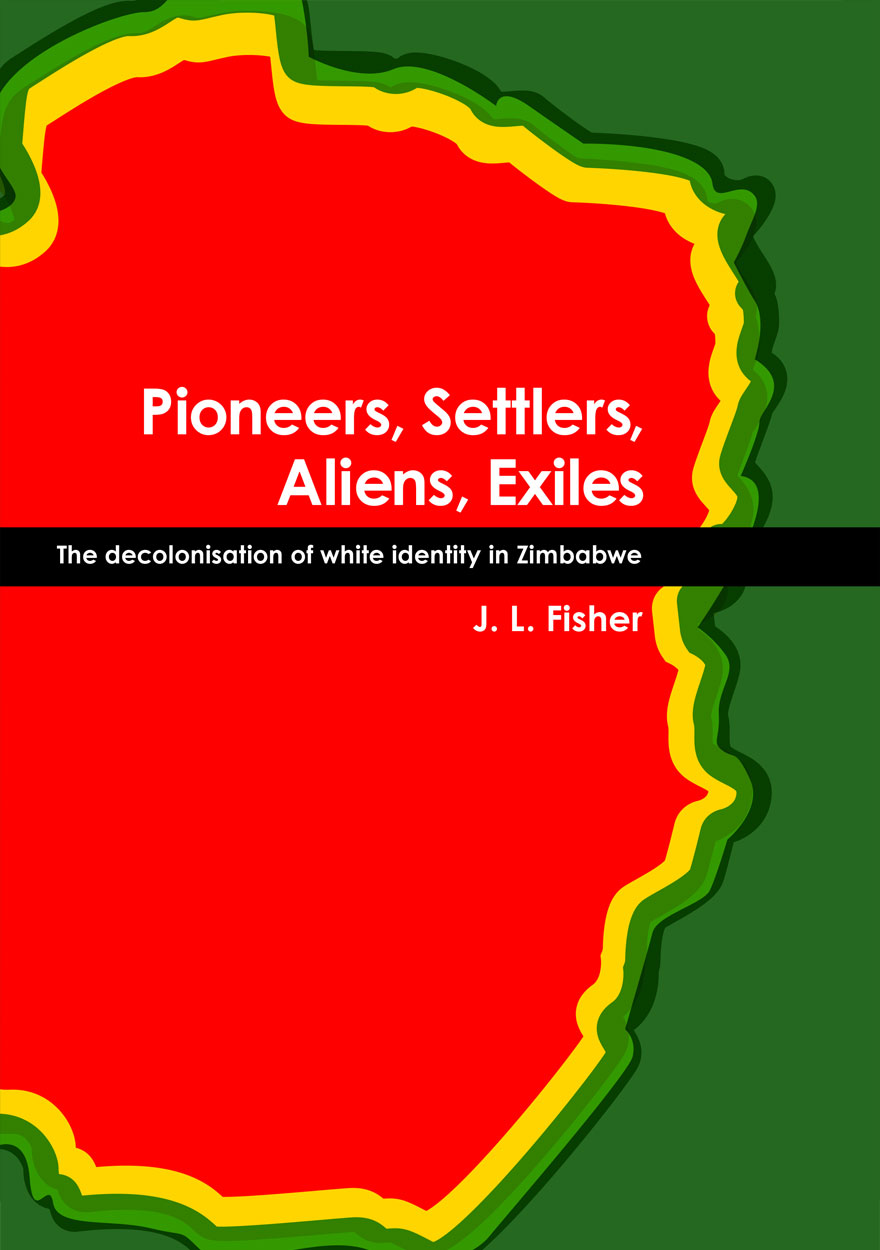
Pioneers, Settlers, Aliens, Exiles »
The decolonisation of white identity in Zimbabwe
Authored by: J. L. Fisher
Publication date: March 2010
What did the future hold for Rhodesia’s white population at the end of a bloody armed conflict fought against settler colonialism? Would there be a place for them in newly independent Zimbabwe? Pioneers, Settlers, Aliens, Exiles sets out the terms offered by Robert Mugabe in 1980 to whites who opted to stay in the country they thought of as their home. The book traces over the next two decades their changing relationship with the country when the post-colonial government revised its symbolic and geographical landscape and reworked codes of membership. Particular attention is paid to colonial memories and white interpellation in the official account of the nation’s rebirth and indigene discourses, in view of which their attachment to the place shifted and weakened. As the book describes the whites’ trajectory from privileged citizens to persons of disputed membership and contested belonging, it provides valuable background information with regard to the land and governance crises that engulfed Zimbabwe at the start of the twenty-first century.

Racial Folly »
A Twentieth-Century Aboriginal Family
Authored by: Gordon Briscoe
Publication date: February 2010
Briscoe’s grandmother remembered stories about the first white men coming to the Northern Territory. This extraordinary memoir shows us the history of an Aboriginal family who lived under the race laws, practices and policies of Australia in the twentieth century. It tells the story of a people trapped in ideological folly spawned to solve ‘the half-caste problem’. It gives life to those generations of Aboriginal people assumed to have no history and whose past labels them only as shadowy figures.
Briscoe’s enthralling narrative combines his, and his contemporaries, institutional and family life with a high-level career at the heart of the Aboriginal political movement at its most dynamic time. It also documents the road he travelled as a seventeen year old fireman on the South Australia Railways to becoming the first Aboriginal person to achieve a PhD in history.
For more information on Aboriginal History Inc. please visit aboriginalhistory.org.au.