



Search titles
Displaying results 51 to 60 of 114.

Yagara Dictionary and Salvage Grammar »
Authored by: Karen Sullivan, Glenda Harward-Nalder
Publication date: March 2024
Most English speakers in Australia know a few words of Yagara, the Pama-Nyungan language traditionally spoken in the area that now includes Brisbane and Ipswich. For example, Australian English yakka ‘work’ comes from the Yagara verb yaga ‘to work’. However, no fluent native speakers of Yagara remain. The current volume compares the written records of Yagara to facilitate revitalisation of the spoken language.
Part 1: Grammar introduces the Yagara sources, which are then compared to extract a picture of Yagara’s structure – its sounds, its words, and its grammar. Attention is also given to the system of kinship terms, moieties, and totems.
Part 2: Dictionary contains the most complete Yagara-English dictionary to date, with over 2,200 entries, the original source spellings for each word, standardised spellings, and anthropological notes. Entries include traditional place names, fun insults, and everyday expressions such as the greeting wi balga ‘Hey, come’. The dictionary is followed by an English word finder list.
Part 3: Texts consist of full versions of all known texts in Yagara, including sentences, songs, and three Bible stories. Standardised versions are accompanied by English translations and the original unedited renditions.
Format: Hardback
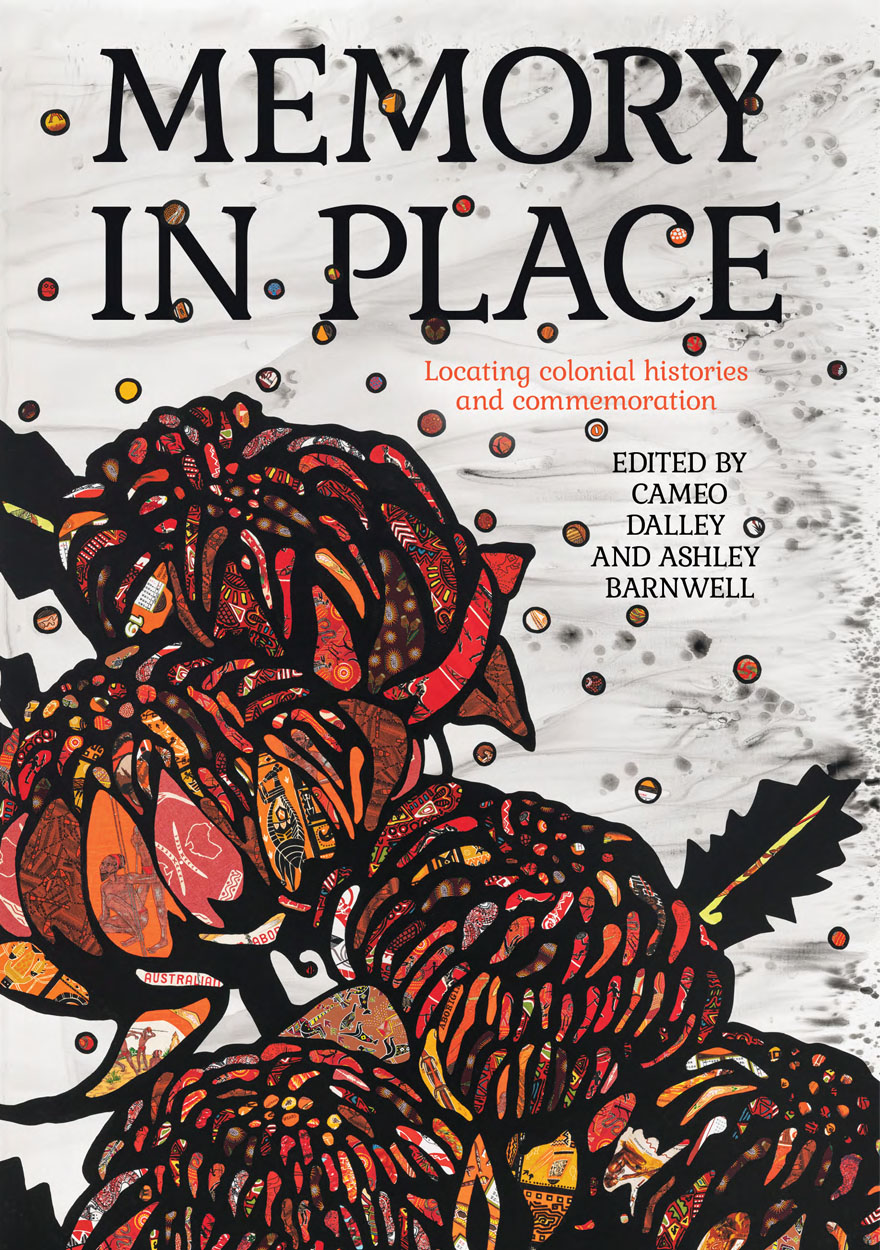
Memory in Place »
Locating colonial histories and commemoration
Edited by: Cameo Dalley, Ashley Barnwell
Publication date: November 2023
Memory in Place brings together Indigenous and non-Indigenous scholars and practitioners grappling with the continued potency of memories and experiences of colonialism. While many of these conversations have taken place on a national stage, this collection returns to the rich intimacy of the local. From Queensland’s sweeping Gulf Country, along the shelly beaches of south Sydney, Melbourne’s city gardens and the rugged hills of South Australia, through Central Australia’s dusty heart and up to the majestic Kimberley, the collection charts how interactions between Indigenous people, settlers and their descendants are both remembered and forgotten in social, political, and cultural spaces. It offers uniquely diverse perspectives from a range of disciplines including history, anthropology, memory studies, archaeology, and linguistics from both established and emerging scholars; from Indigenous and non-Indigenous contributors; and from academics as well as museum and cultural heritage practitioners. The collection locates some of the nation’s most pressing political issues with attention to the local, and the ethics of commemoration and relationships needed at this scale. It will be of interest to those who see the past as intimately connected to the future.

Finding the Enemy Within »
Blasphemy Accusations and Subsequent Violence in Pakistan
Authored by: Sana Ashraf
Publication date: September 2021
In the past decade, Pakistan has witnessed incidents such as the public lynching of a student on a university campus, a Christian couple being torched alive, attacks on entire neighbourhoods by angry mobs and the assassination of a provincial governor by his own security guard over allegations of blasphemy. Finding the Enemy Within unpacks the meanings and motivations behind accusations of blasphemy and subsequent violence in Pakistan.
This is the first ethnographic study of its kind analysing the perspectives of a range of different actors including accusers, religious scholars and lawyers involved in blasphemy-related incidents in Pakistan. Bringing together anthropological perspectives on religion, violence and law, this book reworks prevalent analytical dichotomies of reason/emotion, culture/religion, traditional/Western, state/nonstate and legal/extralegal to extend our understanding of the upsurge of blasphemy-related violence in Pakistan.
Through the case study of blasphemy accusations in Pakistan, this book addresses broader questions of difference, individual and collective identities, social and symbolic boundaries, and conflict and violence in modern nation-states.

Australian Journal of Biography and History: No. 3, 2020 »
Publication date: April 2020
The articles in this issue of the Australian Journal of Biography and History consider subjects who have lived across and between national and internal Australian boundaries, and the authors have thus been compelled to address the methodological and theoretical problems of mobility. Kate Bagnall addresses the seemingly insurmountable problem of writing about Chinese women who settled in Australia in the second half of the twentieth century. Contrasting with the dearth of information on Chinese women immigrants to colonial New South Wales, Jackie Dickenson’s chapter on Hong Kong–based merchant and trader Melbourne-born Elma Kelly (1895–1974) benefits from an abundance of documentation, both in the realm of the personal and official. In her article on the Corney family in the aftermath of World War I, Alexandra McKinnon considers the record of loss and sorrow preserved in the archives of the Australian War Memorial. Very different methodological questions are explored by Suzanne Robinson in her reflections on writing a biography of the Australian composer Peggy Glanville-Hicks (1912–90). As a feminist biographer, Robinson had to face a most ‘troublesome question’ of whether her subject’s considerable imperfections, which became evident during research, risked undermining her status as a composer, particularly one whose reputation was yet to be fully established.
A different form of methodological question is posed by Pat Buckridge in his article on three generations of Macdougall men, each of whom became journalists—Dugald (1833–79), who also excelled in business and politics, Dugald the younger (1872–1947), and James (1903–95). The question Buckridge considers is whether his subjects can ‘usefully be considered as a grouped biographical entity signifying more than the sum of its parts, which is to say more than the three separate lives’. By contrast, Peter Crabb’s article on the colonial goldfields reporter John Augustus Hux (1826–64) relates the story of a single figure who, having made connections in his English homeland that would serve him well in Australia, provided eyewitness accounts of a number of significant goldfields in New South Wales, which were widely read in the colony and thus helped to form popular images of the industry. Finally, in a departure from the theme of mobility characterising the other contributions, Nichola Garvey documents her experiences of working with the Western Australian iron ore magnate Andrew Forrest to research and write his biography. In what was conceived by both the author and the subject as an ‘authorised biography’, Garvey’s article raises some fundamental questions about biographical writing of living persons, including the utility and pitfalls of what she calls ‘expressivist anthropology’, as well as the scope of authorisation in biographical writing.
Download for free
Not available for purchase

Debating Lapita »
Distribution, Chronology, Society and Subsistence
Edited by: Stuart Bedford, Matthew Spriggs
Publication date: December 2019
‘This volume is the most comprehensive review of Lapita research to date, tackling many of the lingering questions regarding origin and dispersal. Multidisciplinary in nature with a focus on summarising new findings, but also identifying important gaps that can help direct future research.’
— Professor Scott Fitzpatrick, Department of Anthropology, University of Oregon
‘This substantial volume offers a welcome update on the definition of the Lapita culture. It significantly refreshes the knowledge on this foundational archaeological culture of the Pacific Islands in providing new data on sites and assemblages, and new discussions of hypotheses previously proposed.’
— Dr Frédérique Valentin, Centre national de la recherche scientifique (CNRS), Paris
This volume comprises 23 chapters that focus on the archaeology of Lapita, a cultural horizon associated with the founding populations who first colonised much of the south west Pacific some 3000 years ago. The Lapita culture has been most clearly defined by its distinctive dentate-stamped decorated pottery and the design system represented on it and on further incised pots. Modern research now encompasses a whole range of aspects associated with Lapita and this is reflected in this volume. The broad overlapping themes of the volume—Lapita distribution and chronology, society and subsistence—relate to research questions that have long been debated in relation to Lapita.

Archaeologies of Island Melanesia »
Current approaches to landscapes, exchange and practice
Edited by: Mathieu Leclerc, James Flexner
Publication date: August 2019
‘The island world of Melanesia—ranging from New Guinea and the Bismarcks through the Solomons, Vanuatu, and New Caledonia—is characterised more than anything by its boundless diversity in geography, language and culture. The deep historical roots of this diversity are only beginning to be uncovered by archaeological investigations, but as the contributions to this volume demonstrate, the exciting discoveries being made across this region are opening windows to our understanding of the historical processes that contributed to such remarkably varied cultures. Archaeologies of Island Melanesia offers a sampling of some of the recent and ongoing research that spans such topics as landscape, exchange systems, culture contact and archaeological practice, authored by some of the leading scholars in Oceanic archaeology.’
— Professor Patrick Vinton Kirch Professor of Anthropology, University of Hawai‘i
Island Melanesia is a remarkable region in many respects, from its great ecological and linguistic diversity, to the complex histories of settlement and interaction spanning from the Pleistocene to the present. Archaeological research in Island Melanesia is currently going through a vibrant phase of exciting new discoveries and challenging debates about questions that apply far beyond the region. This volume draws together a variety of current perspectives in regional archaeology for Island Melanesia, focusing on Vanuatu, the Solomon Islands, New Caledonia and Papua New Guinea. It features both high-level theoretical approaches and rigorous data-driven case studies covering recent research in landscape archaeology, exchange and material culture, and cultural practices.

Global Debates, Local Dilemmas »
Sex-selective Abortion in Contemporary Viet Nam
Authored by: Tran Minh Hang
Publication date: December 2018
The practice of sex-selective abortion is on the rise globally, stirring debates about gender inequality, medical ethics and reproductive autonomy. This book is the first ethnography to document practices of sex selection in Viet Nam. It shows how and why abortions are used to select the sex of children and how Vietnamese individuals and health professionals are implicated in this illicit and controversial practice. Telling the stories of women who have undergone sex-selective abortions, it traces their passage through sex determination and abortion decision-making phases, and investigates their experiences during and after their sex-selective abortions. It describes the turmoil experienced by individuals who undergo such abortions and explores their interactions with the spectrum of social actors and health institutions that facilitate practices of sex selection.
As the first ethnographic study on sex-selective abortions in Viet Nam, this book delves into socially sensitive terrain and sheds light on personally fraught individual experiences of reproductive agency. It documents societal responses to sex-selective abortions in Viet Nam and identifies gaps in the state’s capacity to regulate reproductive desire in a marketised economy. A resource for researchers, it contributes to ongoing debates on sex selection and provides a framework for developing relevant social policies, interventions and support services.
‘This pioneering study offers a nuanced and sensitive account of sex-selective abortion as human experience. Through thought provoking case studies, the book provides rare ethnographic documentation of the complex quandaries that arise as selective reproductive technologies are routinised across the globe.’
— Tine M. Gammeltoft, Department of Anthropology, University of Copenhagen
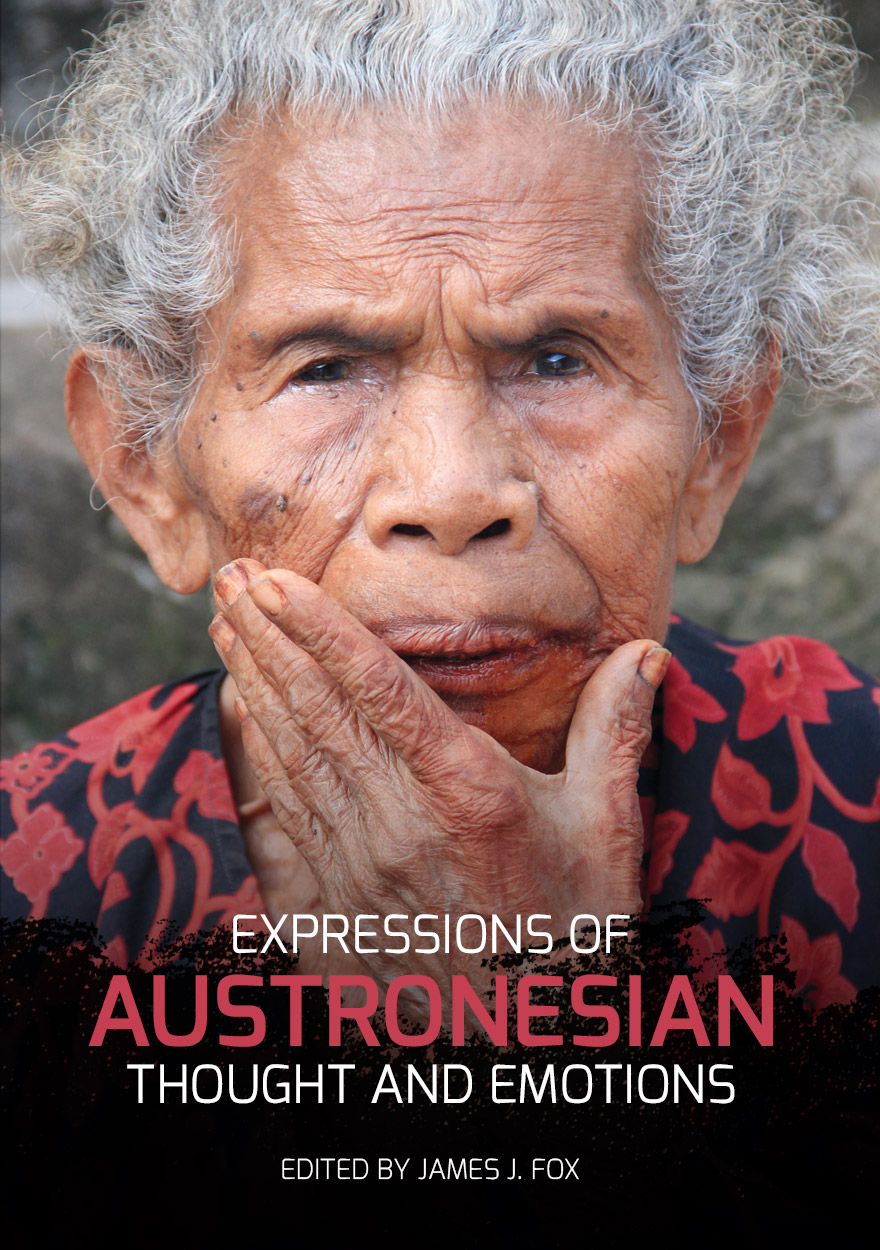
Expressions of Austronesian Thought and Emotions »
Edited by: James J. Fox
Publication date: April 2018
This collection of papers is the seventh volume in the Comparative Austronesian series. The papers in this volume focus on societies from Sumatra to Melanesia and examine the expression and patterning of Austronesian thought and emotions.
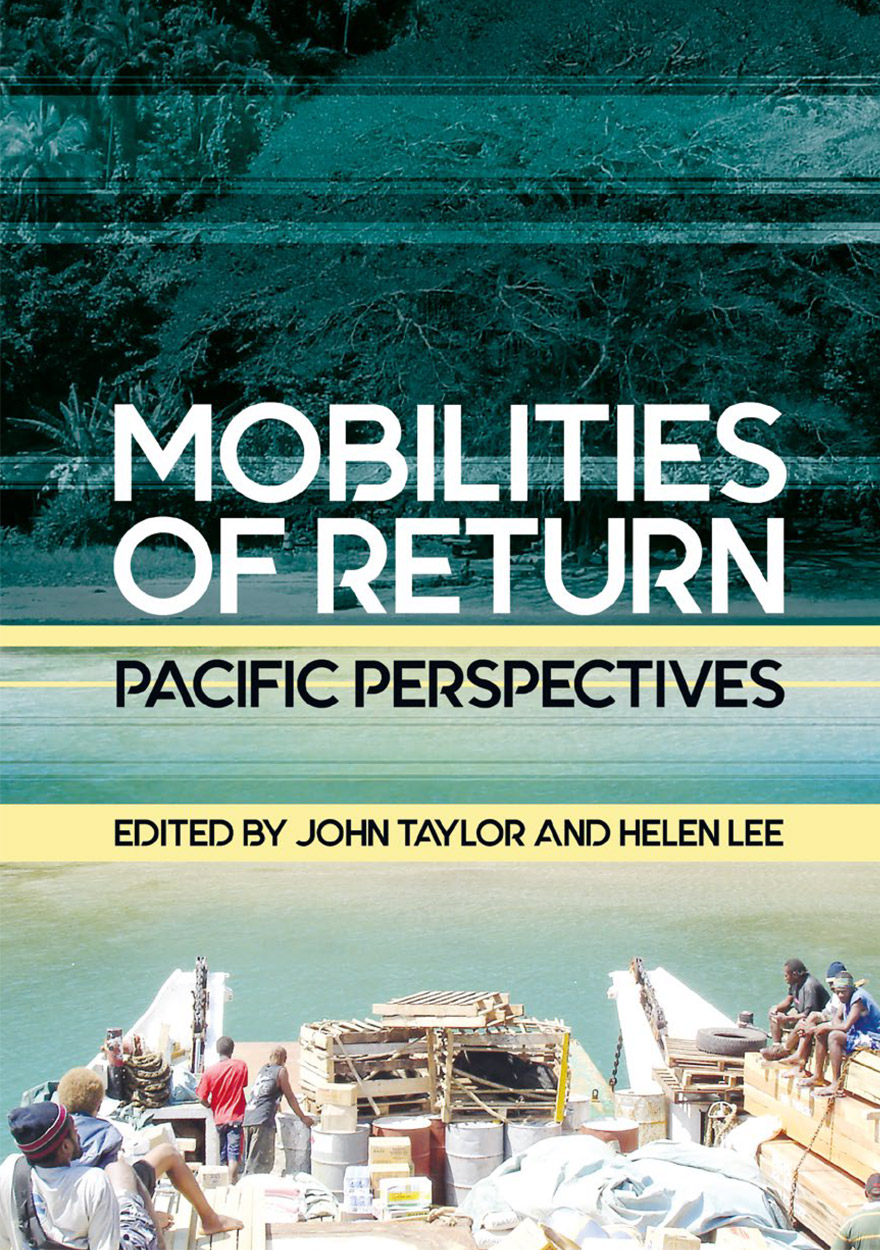
Mobilities of Return »
Pacific Perspectives
Edited by: John Taylor, Helen Lee
Publication date: December 2017
In recent decades, the term ‘mobility’ has emerged as a defining paradigm within the humanities. For scholars engaged in the multidisciplinary topics and perspectives now often embraced by the term Pacific Studies, it has been a much more longstanding and persistent concern. Even so, specific questions regarding ‘mobilities of return’—that is, the movement of people ‘back’ to places that are designated, however ambiguously or ambivalently, as ‘home’—have tended to take a back seat within more recent discussions of mobility, transnationalism and migration.
This volume situates return mobility as a starting point for understanding the broader context and experience of human mobility, community and identity in the Pacific region and beyond. Through diverse case studies spanning the Pacific region, it demonstrates the extent to which the prospect and practice of returning home, or of navigating returns between multiple homes, is a central rather than peripheral component of contemporary Pacific Islander mobilities and identities everywhere.

Dilthey’s Dream »
Essays on human nature and culture
Authored by: Derek Freeman
Publication date: April 2017
With great eloquence, Derek Freeman takes the reader on an intellectual journey through the complexities of philosophical anthropology. Even while the controversial Nature–Nurture debate raged, Freeman contended that the crucial fact that humans had the capacity to make choices was ‘both intrinsic to our biology and basic to the very formation of cultures’. Thus the scene was set for his widely publicised criticism of Margaret Mead’s book Coming of Age in Samoa. Publishing her research in 1926, Mead concluded that all human behaviour was the result of social conditioning. Freeman refuted this assumption in 1983, urging closer interactions between the biological sciences and cultural studies to bridge the ever-widening chasm threatening all studies of humankind.
Dilthey’s Dream is an engagingly powerful set of essays depicting the depth of one man’s thinking on issues, which consumed a lifetime.