



Search titles
Displaying results 141 to 150 of 362.

A New Era? »
Timor-Leste after the UN
Edited by: Sue Ingram, Lia Kent, Andrew McWilliam
Publication date: September 2015
Timor-Leste has made impressive progress since its historic achievement of independence in 2002. From the instability that blighted its early years, the fledgling democratic country has achieved strong economic growth and a gradual reinstatement of essential social services. A decade on in 2012, Presidential and Parliamentary elections produced smooth political transitions and the extended UN peacekeeping presence in the country came to an end. But significant challenges remain. This book, a product of the inaugural Timor-Leste Update held at The Australian National University in 2013 to mark the end of Timor-Leste’s first decade as a new nation, brings together a vibrant collection of papers from leading and emerging scholars and policy analysts.
Collectively, the chapters provide a set of critical reflections on recent political, economic and social developments in Timor-Leste. The volume also looks to the future, highlighting a range of transitions, prospects and undoubted challenges facing the nation over the next 5–10 years. Key themes that inform the collection include nation-building in the shadow of history, trends in economic development, stability and social cohesion, and citizenship, democracy and social inclusion. The book is an indispensable guide to contemporary Timor-Leste.

NGOs and Political Change »
A History of the Australian Council for International Development
Authored by: Patrick Kilby
Publication date: August 2015
The Australian Council for International Development is the peak body of Australian international development NGOs. This book explores ACFID’s history since its founding in 1965, drawing on current and contemporary literature as well as extensive archival material. The trends and challenges in international development are seen through the lens of an NGO peak body: from the heady optimism of the first Development Decade of the 1960s, through the growth in government support of NGOs in the 1980s, to the challenges of the 2010s. The major themes of ACFID are presented: human rights; gender justice; humanitarianism; NGO codes of conduct; and influencing government policy both broadly and as it relates to NGOs. Each of these themes is placed in a global context and in relation to what other NGO networks are doing internationally.

Change! »
Combining Analytic Approaches with Street Wisdom
Edited by: Gabriele Bammer
Publication date: July 2015
Change happens all the time, so why is driving particular change generally so hard? Why are the outcomes often unpredictable? Are some types of change easier to achieve than others? Are some techniques for achieving change more effective than others? How can change that is already in train be stopped or deflected?
Knowledge about change is fragmented and there is nowhere in the academic or practice worlds that provides comprehensive answers to these and other questions. Every discipline and practice area has only a partial view and there is not even a map of those different perspectives. The purpose of this book is to begin the task of developing a comprehensive approach to change by gathering a variety of viewpoints from the academic and practice worlds.

The Seven Dwarfs and the Age of the Mandarins »
Australian Government Administration in the Post-War Reconstruction Era
Edited by: Samuel Furphy
Publication date: July 2015
In the history and folklore of Australia’s Commonwealth Public Service, the idea of the ‘Seven Dwarfs’ has been remarkably persistent. Originally a witty epithet applied to a powerful group of senior public servants, the term has come to represent the professionalisation of Australian government administration during the Second World War and post-war reconstruction era, and into the following two decades of expansion. This was a period when, for the first time, talented university graduates entered the public service, rose to senior levels, and exerted great influence over the affairs of the Commonwealth. With the secure tenure of being permanent heads of departments, they defined the age of the public service mandarin.
This book explores the lives and influence of the Seven Dwarfs and their colleagues, bringing together the leading researchers on post-war Australian administration. Featuring four thematic chapters and ten biographical portraits, it offers a fascinating insight into the workings of the Commonwealth Public Service during a critical period in its history.

Administrative Decision-Making in Australian Migration Law »
Authored by: Alan Freckelton
Publication date: May 2015
The ANU College of Law, Migration Law Program is pleased to introduce a text in administrative decision-making in Australian migration law. Over the past eight years we have assembled a team of some of Australia’s most highly qualified migration agents and migration law specialists to deliver the Graduate Certificate in Australian Migration Law & Practice, and the Master of Laws in Migration Law.
Alan Freckelton has worked with the Migration Law Program since 2008. Through personal recollections and a comprehensive analysis of administrative decision-making, he brings his professional expertise and experience in this complex field of law to the fore. The examination of High Court decisions, parliamentary speeches and public opinion bring a contentious area of law and policy to life, enabling the reader to consider the impact that legislation and decision-making has upon the individual and society as a whole.

Timor-Leste's Bill of Rights »
A Preliminary History
Authored by: Annemarie Devereux
Publication date: May 2015
The Constitution of the Democratic Republic of Timor-Leste of 2002 contains over 40 human rights provisions in its Bill of Rights. In addition to providing an overview of the process leading up to the adoption of the Constitution, this book brings together information relating to each section of the Bill of Rights, presenting:
progressive texts produced during the process of the Constituent Assembly;
highlights of the arguments put forward within the Constituent Assembly concerning the draft provisions, including alternative proposals advanced;
submissions made by Timorese officials, civil society and international bodies; and
the results of consultation with the broader community before and during the constitutional process.
It is designed to be useful in particular to judges and legal practitioners called upon to interpret the Constitution, government officials and civil society actors involved in human rights work, as well as students of history and constitutional law in Timor-Leste and internationally.

New Accountabilities, New Challenges »
Publication date: April 2015
This important and challenging volume of essays draws on insights from leading academics and public servants from Australia, New Zealand, the United Kingdom, Canada and elsewhere. It provides an excellent series of critiques of both the systemic accountabilities and the policy processes of government by drawing on meticulously researched, topical and real-world case studies of governance. Its contribution to the understanding of the applied processes of government in this way is exemplary. Topics covered include: restoring trust in government, parliamentary scrutiny of the APS, administrative law and FOI, budgetary reforms, implementation issues, competition policy, indigenous administration, collaboration with the NGO sector, educational reforms and the changes to the Auditor- General’s mandate.

East Asia Forum Quarterly: Volume 7, Number 1, 2015 »
Publication date: April 2015
East Asia Forum Quarterly grew out of East Asia Forum (EAF) online, which has developed a reputation for providing a platform for the best in Asian analysis, research and policy comment on the Asia Pacific region in world affairs. EAFQ aims to provide a further window onto research in the leading research institutes in Asia and to provide expert comment on current developments within the region. The East Asia Forum Quarterly, like East Asia Forum online, is an initiative of the East Asia Forum (EAF) and its host organisation, the East Asian Bureau of Economic Research (EABER) in the Crawford School of Economics and Government in the College of Asia & the Pacific at The Australian National University.
Download for free
Not available for purchase
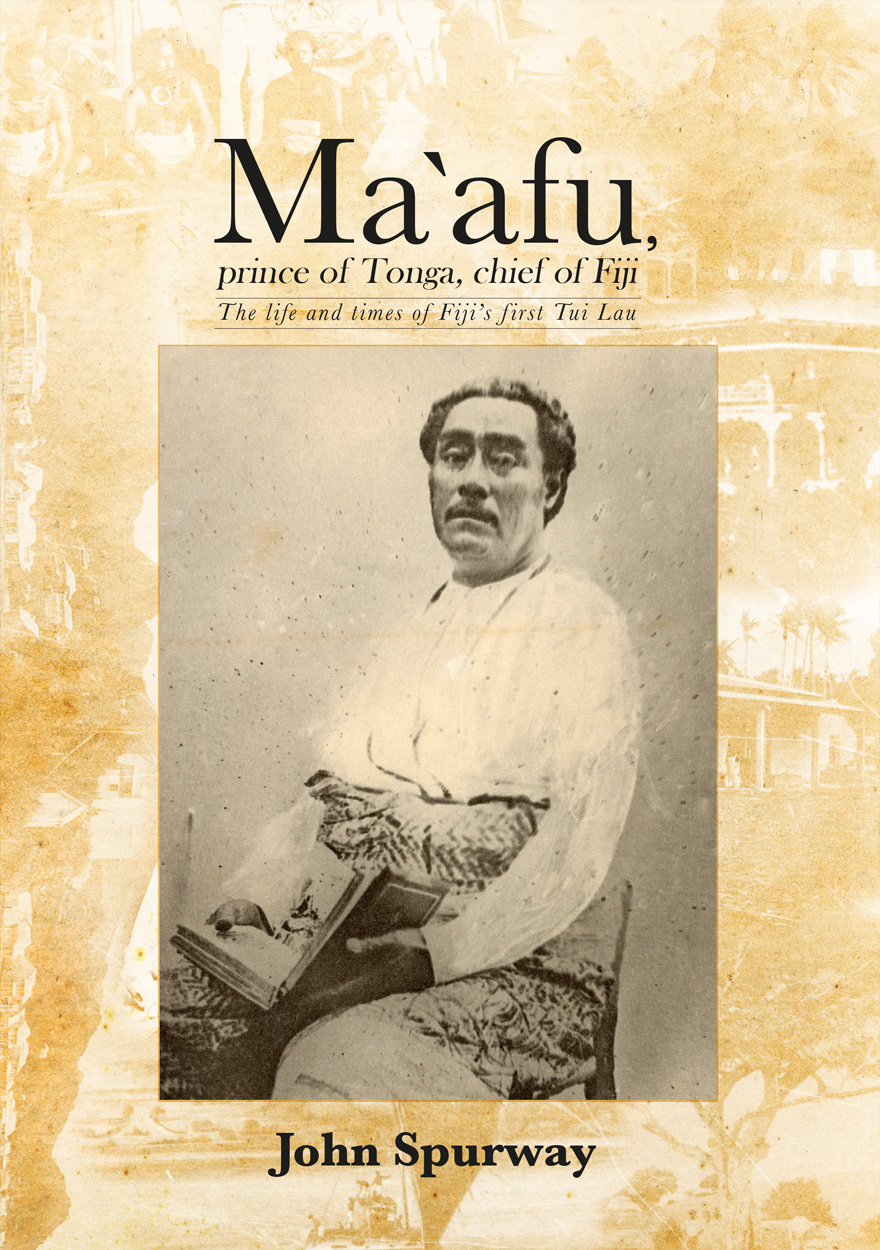
Ma`afu, prince of Tonga, chief of Fiji »
The life and times of Fiji’s first Tui Lau
Authored by: John Spurway
Publication date: February 2015
Enele Ma`afu, son of Aleamotu`a, Tu`i Kanokupolu, grew up during a time of unprecedented social and political change in Tonga following the advent of Christianity. Moving to Lau, Fiji, in 1847 when he was about 21, he skilfully exploited kinship links to establish a power base there and in eastern Cakaudrove. His achievements were recognised in 1853 when his cousin King Tupou I appointed Ma`afu as Governor of the Tongans in Fiji.
Acting as a putative champion of the lotu, Ma`afu undertook successful military campaigns elsewhere in Fiji and, after adding the Yasayasa Moala and the Exploring Isles to the nascent Lauan state, he was able to establish the Tovata ko Lau, a union of Lau, Cakaudrove and Bua, with himself as head. His power was formally recognised in 1869 when the Lauan chiefs appointed him as Tui Lau, a new title in the polity of Fiji. Ma`afu was now able to challenge Cakobau for the mastery of Fiji.
After serving as Viceroy during the farcical planter oligarchy known as the Kingdom of Fiji, Ma`afu underwent a severe humiliation when, in order to maintain his power in Lau, he was forced to accede to the wishes of Fiji’s other great chiefs in offering their islands to Great Britain. He would end his days as Roko Tui Lau, a ‘subordinate administrator’ in the Crown Colony of Fiji, presiding over a province characterised by corruption and maladministration but where the legacy of his earlier innovative land reforms has endured.

Abbott's Gambit »
The 2013 Australian Federal Election
Publication date: January 2015
This book provides a truly comprehensive analysis of the 2013 federal election in Australia, which brought the conservative Abbott government to power, consigned the fractious Labor Party to the Opposition benches and ended the ‘hung parliament’ experiment of 2010–13 in which the Greens and three independents lent their support to form a minority Labor government. It charts the dynamics of this significant election and the twists and turns of the campaign itself against a backdrop of a very tumultuous period in Australian politics. Like the earlier federal election of 2010, the election of 2013 was an exercise in bipolar adversarial politics and was bitterly fought by the main protagonists. It was also characterised (again) by leadership changes on Labor’s side as well as the entry of new political parties anxious to deny the major parties a clear mandate. Moreover, the 2013 election continued the trend whereby an increasing proportion of the electorate chose not to vote for one of the main two political parties.
While the 2013 election delivered a clear victory to the Coalition in the Lower House, it simultaneously produced a much more mixed outcome in the Senate, where the Greens managed to record their largest ever representation and a new party, the Palmer United Party, initially secured three Senate positions at its first attempt (together with the election of Clive Palmer to a Queensland seat in the House of Representatives). With minor and micro parties also winning Senate seats amounting to a total of 18 Senators on the cross-benches, the Abbott government’s ability to govern and pass legislation was placed in some doubt. The 2013 election result suggested that far from ending the preceding tumultuous period of Australian politics, it merely served to prolong this era indefinitely.
The 2013 campaign was one of the longest on record, arguably commencing when the besieged Prime Minister Julia Gillard announced the date for the election in late January 2013 – then over seven months away. This unconventional tactic overshadowed the election from that date onwards – providing a definite timeline for Labor infighting, influencing the largely negative tactics of the Opposition, and encouraging new parties to proliferate to contest the election. This volume traces these formative influences on the campaign dynamics and explains the electoral outcome that occurred (including the 2014 re-election for the Western Australian Senate seats ordered by the High Court). Abbott’s Gambit includes insightful contributions from academic experts, campaign directors and electoral watchers, political advisers and professional psephologists. Contributors utilise a wide range of sources and approaches, including the Australian Election Survey, to provide a detailed analysis of this important federal election.