



Search titles
Displaying results 61 to 70 of 104.
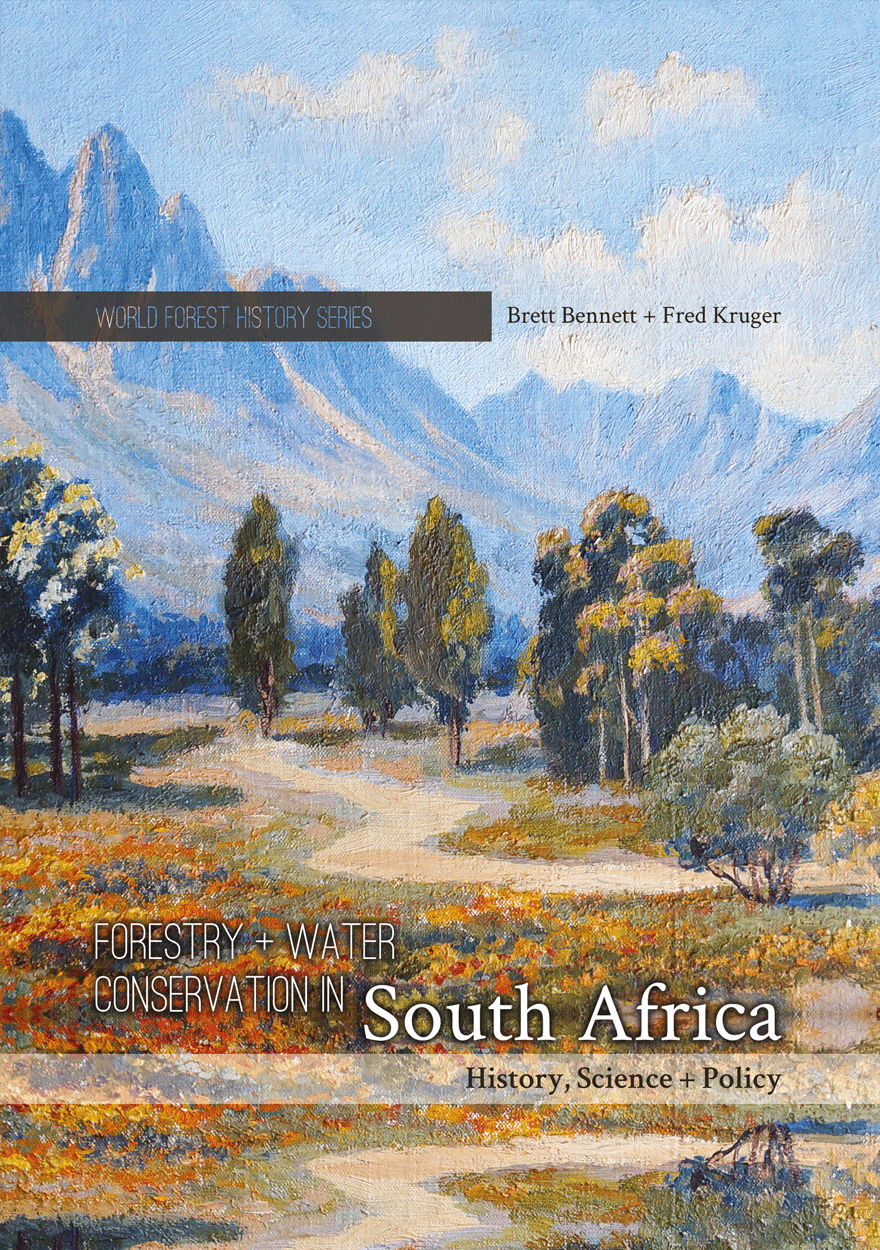
Forestry and Water Conservation in South Africa »
History, Science and Policy
Authored by: Brett Bennett, Fred Kruger
Publication date: November 2015
This innovative interdisciplinary study focuses on the history, science, and policy of tree planting and water conservation in South Africa. South Africa’s forestry sector has sat—often controversially—at the crossroads of policy and scientific debates regarding water conservation, economic development, and biodiversity protection. Bennett and Kruger show how debates about the hydrological impact of exotic tree planting in South Africa shaped the development of modern scientific ideas and state policies relating to timber plantations, water conservation, invasive species control, and biodiversity management within South Africa as well as elsewhere in the world. Forestry and Water Conservation in South Africa shows how scientific research on the impact of exotic and native vegetation led to the development of a comprehensive national policy for conserving water, producing timber, and protecting indigenous species from invasive alien plants. Policies and laws relating to forests and water began to change in the late 1980s and early 1990s as a result of political and administrative changes within South Africa. This book suggests that the country’s contemporary policies towards timber plantations, guided by the National Water Act of 1998, need to be reconsidered in light of the authors’ findings. Bennett and Kruger also call for more interdisciplinary research and greater emphasis on integrated policies and management plans for forestry, invasive alien plants, water conservation, and biodiversity preservation.

East Asia Forum Quarterly: Volume 7, Number 4, 2015 »
Publication date: November 2015
East Asia Forum Quarterly grew out of East Asia Forum (EAF) online, which has developed a reputation for providing a platform for the best in Asian analysis, research and policy comment on the Asia Pacific region in world affairs. EAFQ aims to provide a further window onto research in the leading research institutes in Asia and to provide expert comment on current developments within the region. The East Asia Forum Quarterly, like East Asia Forum online, is an initiative of the East Asia Forum (EAF) and its host organisation, the East Asian Bureau of Economic Research (EABER) in the Crawford School of Economics and Government in the College of Asia & the Pacific at The Australian National University.
Download for free
Not available for purchase
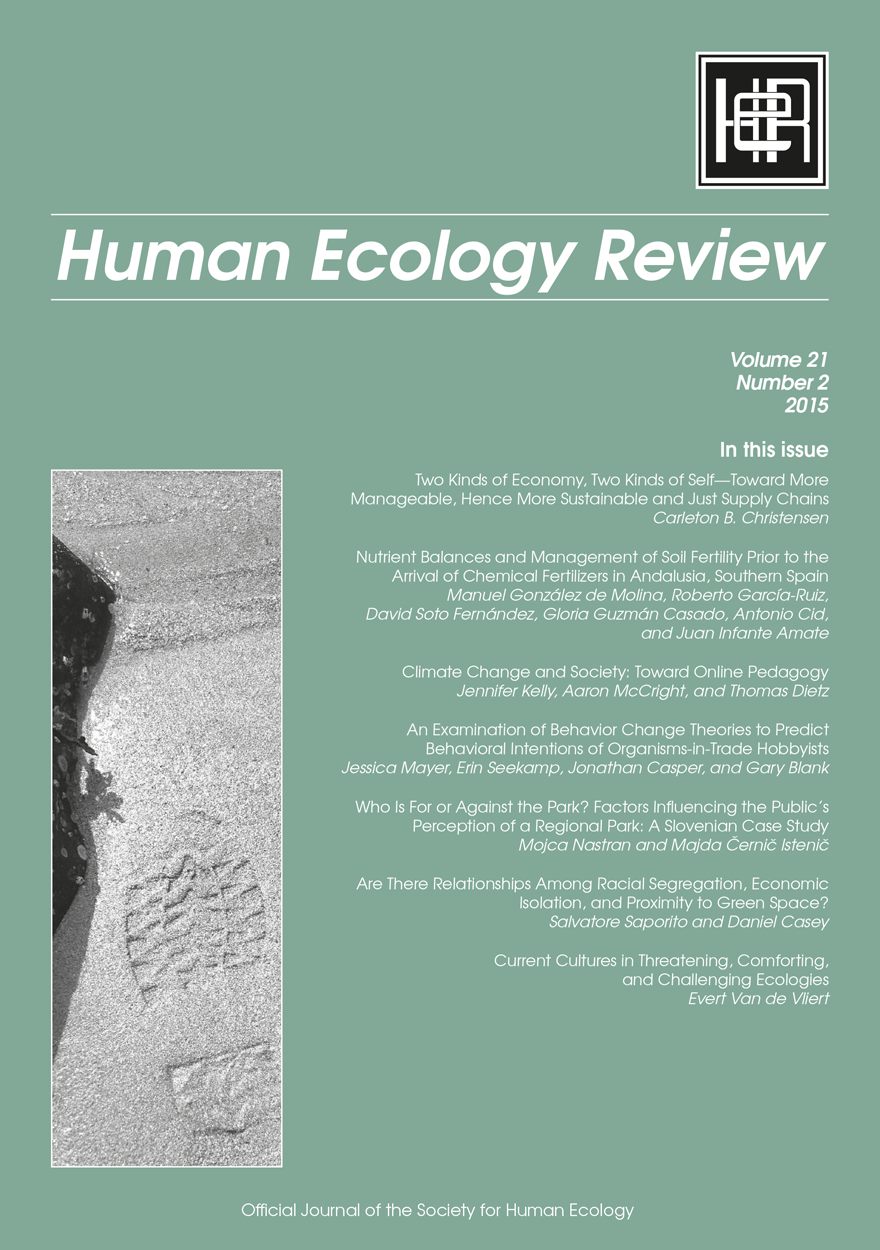
Human Ecology Review: Volume 21, Number 2 »
Publication date: September 2015
Human Ecology Review is a semi-annual journal that publishes peer-reviewed interdisciplinary research on all aspects of human–environment interactions (Research in Human Ecology). The journal also publishes essays, discussion papers, dialogue, and commentary on special topics relevant to human ecology (Human Ecology Forum), book reviews (Contemporary Human Ecology), and letters, announcements, and other items of interest (Human Ecology Bulletin). Human Ecology Review also publishes an occasional paper series in the Philosophy of Human Ecology and Social–Environmental Sustainability.
Download for free
Not available for purchase

International Review of Environmental History: Volume 1, 2015 »
Edited by: James Beattie
Publication date: August 2015
International Review of Environmental History takes an interdisciplinary and global approach to environmental history. It encourages scholars to think big and to tackle the challenges of writing environmental histories across different methodologies, nations, and time-scales. The journal embraces interdisciplinary, comparative and transnational methods, while still recognising the importance of locality in understanding these global processes.
The journal’s goal is to be read across disciplines, not just within history. It publishes on all thematic and geographic topics of environmental history, but especially encourage articles with perspectives focused on or developed from the southern hemisphere and the ‘global south’.
Download for free
Not available for purchase
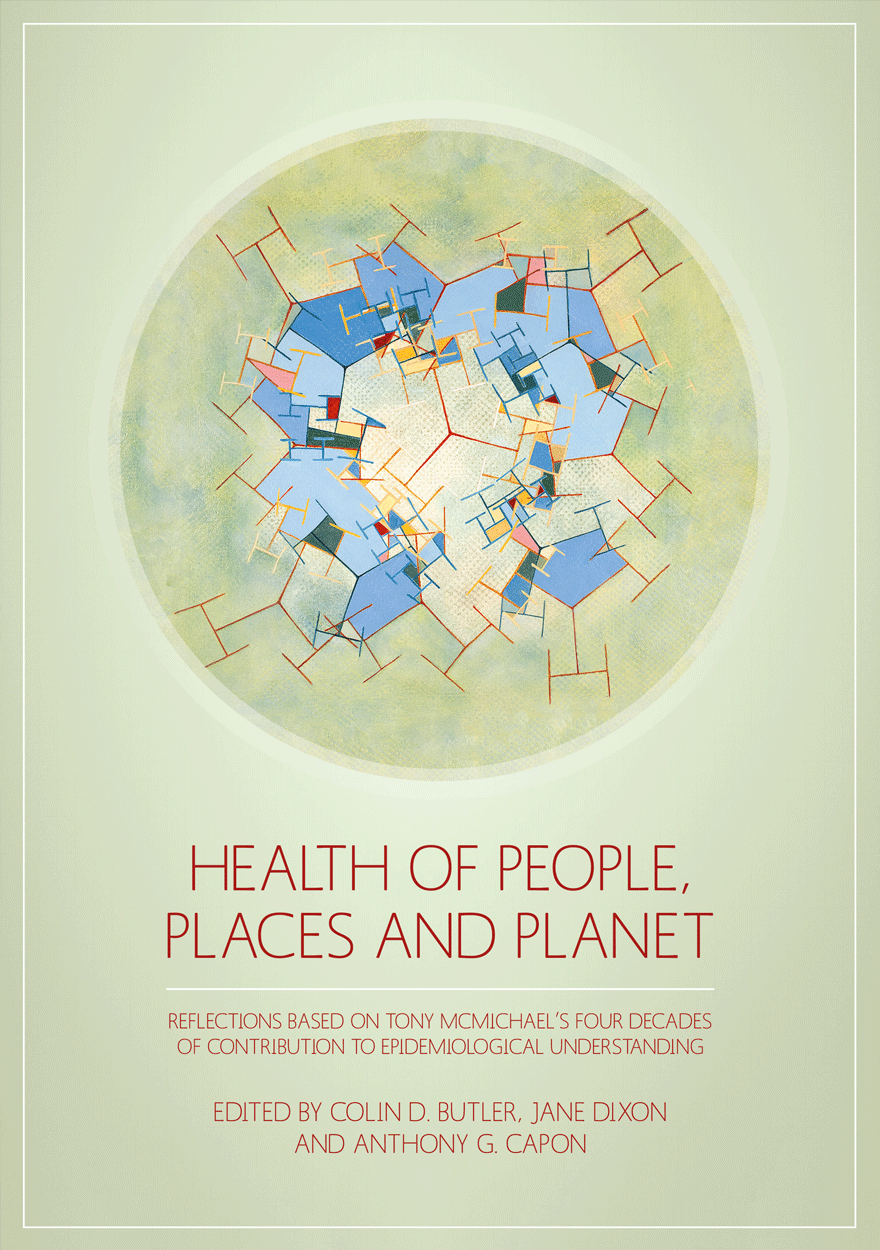
Health of People, Places and Planet »
Reflections based on Tony McMichael’s four decades of contribution to epidemiological understanding
Publication date: July 2015
This book has three main goals. The first is to celebrate the work of a great public health figure, the late A.J. (Tony) McMichael (1942–2014). The second is to position contemporary public health issues in an interdisciplinary context and in ways that highlight the interdependency between the environment, human institutions and behaviours; a broad approach championed by Tony. The third is to encourage emerging and future public health leaders to advocate for policies and cultural change to sustain and improve human health, from a foundation of objective scholarship.
The book’s foreword and 38 chapters were written by people who were inspired by Tony; many of whom worked with him at some point in the last 40 years. Its structure reflects five major public health domains, each of which Tony made major contributions to in an extremely productive academic life: occupational health and safety; environmental and social epidemiology; nutrition and food systems; climate change and health; and ecosystem change and infectious disease. The final section, ‘Transformation’, is dedicated to Tony’s desire for public health scientists to propose adaptive and mitigating solutions to the problems they were observing.
Each section contains at least one key publication involving Tony. There is also a selection of artworks from an exhibition which formed part of the conference held to honour Tony at The Australian National University in 2012. This conference formed the first part of Tony’s festschrift, completed by this book.

Medical Student Journal of Australia: Volume Five, Issue 2 »
Publication date: July 2015
The Medical Student Journal of Australia provides the medical school of The Australian National University with a platform for medical students to publish their work in a peer-reviewed journal, communicating the results of medical and health research information clearly, accurately and with appropriate discussion of any limitations or potential bias.
Download for free
Not available for purchase

Protected Area Governance and Management »
Publication date: April 2015
PAGM briefing note
Protected Area Governance and Management presents a compendium of original text, case studies and examples from across the world, by drawing on the literature, and on the knowledge and experience of those involved in protected areas. The book synthesises current knowledge and cutting-edge thinking from the diverse branches of practice and learning relevant to protected area governance and management. It is intended as an investment in the skills and competencies of people and consequently, the effective governance and management of protected areas for which they are responsible, now and into the future.
The global success of the protected area concept lies in its shared vision to protect natural and cultural heritage for the long term, and organisations such as International Union for the Conservation of Nature are a unifying force in this regard. Nonetheless, protected areas are a socio-political phenomenon and the ways that nations understand, govern and manage them is always open to contest and debate. The book aims to enlighten, educate and above all to challenge readers to think deeply about protected areas—their future and their past, as well as their present.
The book has been compiled by 169 authors and deals with all aspects of protected area governance and management. It provides information to support capacity development training of protected area field officers, managers in charge and executive level managers.
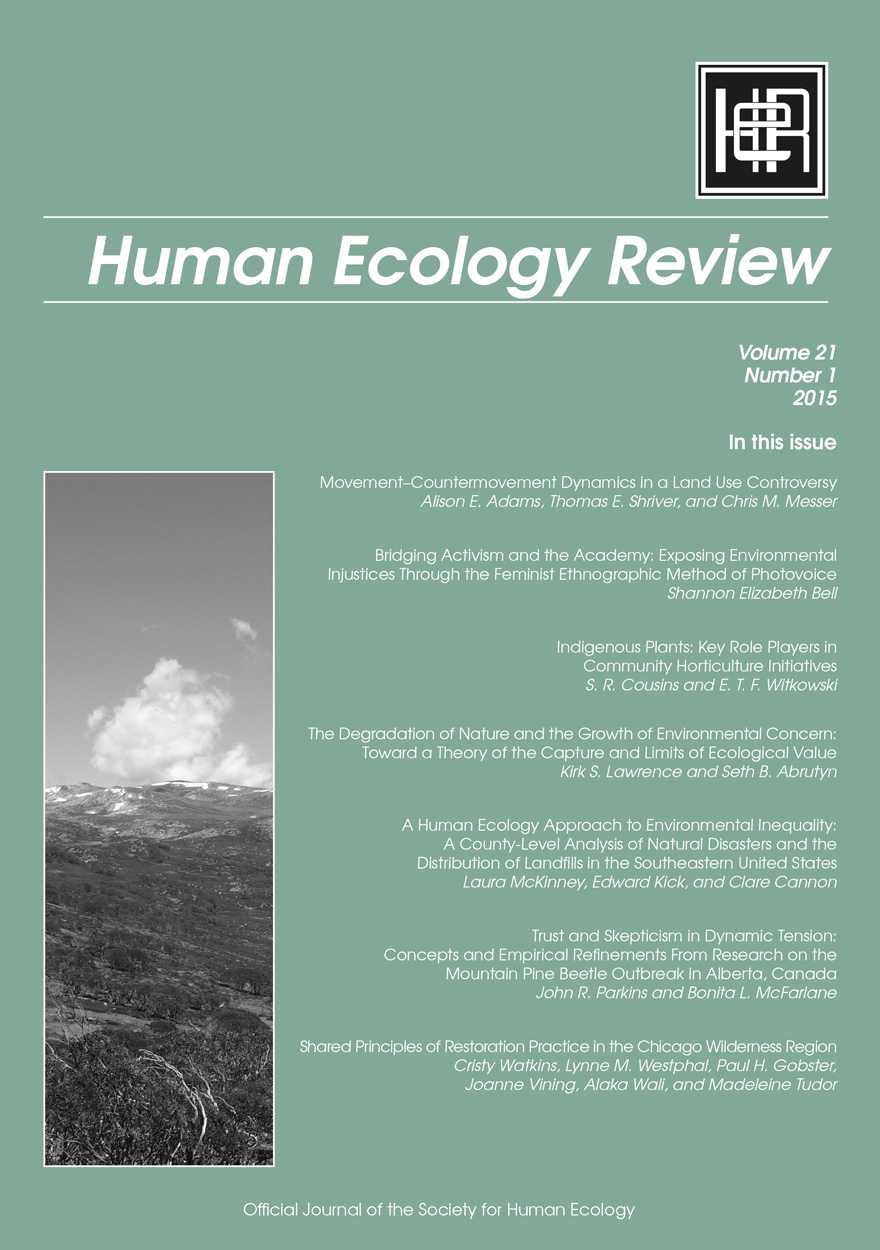
Human Ecology Review: Volume 21, Number 1 »
Publication date: February 2015
Human Ecology Review is a semi-annual journal that publishes peer-reviewed interdisciplinary research on all aspects of human–environment interactions (Research in Human Ecology). The journal also publishes essays, discussion papers, dialogue, and commentary on special topics relevant to human ecology (Human Ecology Forum), book reviews (Contemporary Human Ecology), and letters, announcements, and other items of interest (Human Ecology Bulletin). Human Ecology Review also publishes an occasional paper series in the Philosophy of Human Ecology and Social–Environmental Sustainability.
Download for free
Not available for purchase

Global Warming and Climate Change »
What Australia knew and buried...then framed a new reality for the public
Authored by: Maria Taylor
Publication date: December 2014
1988: coming to grips with a terrifying global experiment
The Toronto conference statement made it clear that climate change would affect everyone. It called greenhouse gas atmospheric pollution an ‘uncontrolled, globally pervasive experiment whose ultimate consequences could be second only to nuclear war’. World governments were urged to swiftly develop emission reduction targets (The changing atmosphere: implications for global security, 1988).
Relevant to both Australian and overseas audiences, here is the untold story of how Australia buried its knowledge on climate change science and response options during the 1990s — going from clarity to confusion and doubt after arguably leading the world in citizen understanding and a political will to act in the late 1980s. ‘What happened and why’ is a fascinating exploration drawing on the public record of how a society revised its good understanding on a critical issue affecting every citizen. It happened through political and media communication, regardless of international scientific assessments that have remained consistent in ascribing causes and risks since 1990. How could this happen? The author examines the major influences, with lessons for the present, on how the story was reframed. Key have been values and beliefs, including economic beliefs, that trumped the science, the ability of changing political leaders and the mass media to set the story for the public, as well as the role of scientists’ own communication over time and the use and misuse of uncertainty.
For more information on this publication, plus book reviews, please see Maria Taylor’s author website.

Medical Student Journal of Australia: Volume Five, Issue 1 »
Publication date: December 2014
The Medical Student Journal of Australia provides the medical school of The Australian National University with a platform for medical students to publish their work in a peer-reviewed journal, communicating the results of medical and health research information clearly, accurately and with appropriate discussion of any limitations or potential bias.
Download for free
Not available for purchase