



Search titles
Displaying results 41 to 50 of 52.

Steep Slopes »
Music and change in the Highlands of Papua New Guinea
Authored by: Kirsty Gillespie
Publication date: December 2010
The Duna live in a physical environment of steep slopes that are sometimes difficult to traverse. A stick of bamboo used as a prop goes a long way in assisting a struggling traveller. Similarly, the Duna live in a social and cultural environment of steep slopes, where the path on which they walk can be precarious and unpredictable. Songs, like the stick of bamboo, assist the Duna in picking their way over this terrain by providing a forum for them to process change as it is experienced, in relation to what is already known.
This book is a musical ethnography of the Duna people of Papua New Guinea. A people who have experienced extraordinary social change in recent history, their musical traditions have also radically changed during this time. New forms of music have been introduced, while ancestral traditions have been altered or even abandoned. This study shows how, through musical creativity, Duna people maintain a connection with their past, and their identity, whilst simultaneously embracing the challenges of the present.

The Australian National University School of Art: A history of the first 65 years »
Authored by: Michael Agostino
Publication date: October 2010
The ANU School of Art has built an international reputation as a leader in visual arts, attracting staff and students from around Australia and the world. it has an active exhibition program; regular visits from distinguished national and international artists; overseas student exchange; open art access classes and co-operative arrangements with many other areas of ANU research and teaching. This volume presents the history of the ANU School of Art, from its humble beginnings as part of the Canberra Technical College in Kingston, to its evolution to stand on the world stage as part of one of Australia's top ranked universities playing an important role in the teaching of research of Australian visual arts, crafts and design.
Hard copies of this book are available through the ANU School of Art.
Download for free
Not available for purchase
Sounds in Translation »
Intersections of music, technology and society
Edited by: Amy Chan, Alistair Noble
Publication date: September 2009
Sounds in Translation: Intersections of music, technology and society joins a growing number of publications taking up R. Murray Schafer’s challenge to examine and to re-focus attention on the sound dimensions of our human environment. This book takes up his challenge to contemporary audiologists, musicologists and sound artists working within areas of music, cultural studies, media studies and social science to explore the idea of the ‘soundscape’ and to investigate the acoustic environment that we inhabit. It seeks to raise questions regarding the translative process of sound: 1) what happens to sound during the process of transfer and transformation; and 2) what transpires in the process of sound production/expression/performance. Sounds in Translation was conceived to take advantage of new technology and a development in book publishing, the electronic book. Much of what is written in the book is best illustrated by the sound itself, and in that sense, permits sound to ‘speak for itself’.

Negotiating the Sacred II »
Blasphemy and Sacrilege in the Arts
Edited by: Elizabeth Burns Coleman, Maria Suzette Fernandes-Dias
Publication date: December 2008
Blasphemy and other forms of blatant disrespect to religious beliefs have the capacity to create significant civil and even international unrest. Consequently, the sacrosanctity of religious dogmas and beliefs, stringent laws of repression and codes of moral and ethical propriety have compelled artists to live and create with occupational hazards like uncertain audience response, self-censorship and accusations of deliberate misinterpretation of cultural production looming over their heads. Yet, in recent years, issues surrounding the rights of minority cultures to recognition and respect have raised new questions about the contemporariness of the construct of blasphemy and sacrilege. Controversies over the aesthetic representation of the sacred, the exhibition of the sacred as art, and the public display of sacrilegious or blasphemous works have given rise to heated debates and have invited us to reflect on binaries like artistic and religious sensibilities, tolerance and philistinism, the sacred and the profane, deification and vilification.
Endeavouring to move beyond ‘simplistic’ points about the rights to freedom of expression and sacrosanctity, this collection explores how differences between conceptions of the sacred can be negotiated. It recognises that blasphemy may be justified as a form of political criticism, as well as a sincere expression of spirituality. But it also recognises that within a pluralistic society, blasphemy in the arts can do an enormous amount of harm, as it may also impair relations within and between societies.
This collection evolved out a two-day conference called ‘Negotiating the Sacred: Blasphemy and Sacrilege in the Arts’ held at the Centre for Cross Cultural Research at The Australian National University in November 2005. This is the second volume in a series of five conferences and edited collections on the theme ‘Negotiating the Sacred’. The first conference, ‘Negotiating the Sacred: Blasphemy and Sacrilege in a Multicultural Society’ was held at The Australian National University’s Centre for Cross-Cultural Research in 2004, and published as an edited collection by ANU Press in 2006. Other conferences in the series have included Religion, Medicine and the Body (ANU, 2006), Tolerance, Education and the Curriculum (ANU, 2007), and Governing the Family (Monash University, 2008). Together, the series represents a major contribution to ongoing debates on the political demands arising from religious pluralism in multicultural societies.

Permissive Residents »
West Papuan refugees living in Papua New Guinea
Authored by: Diana Glazebrook
Publication date: September 2008
This book offers another frame through which to view the event of the outrigger landing of 43 West Papuans in Australia in 2006. West Papuans have crossed boundaries to seek asylum since 1962, usually eastward into Papua New Guinea (PNG), and occasionally southward to Australia. Between 1984–86, around 11,000 people crossed into PNG seeking asylum. After the Government of PNG acceded to the United Nations Convention and Protocol Relating to the Status of Refugees, West Papuans were relocated from informal camps on the international border to a single inland location called East Awin. This volume provides an ethnography of that settlement based on the author’s fieldwork carried out in 1998–99.

Dreamtime Superhighway »
Sydney Basin Rock Art and Prehistoric Information Exchange
Authored by: Jo McDonald
Publication date: August 2008
Dreamtime Superhighway presents a thorough and original contextualization of the rock art and archaeology of the Sydney Basin. By combining excavation results with rock art analysis it demonstrates that a true archaeology of rock art can provide insights into rock art image-making in people’s social and cultural lives. Based on a PhD dissertation, this monograph is a significantly revised and updated study which draws forcefully on rich and new data from extensive recent research—much of it by McDonald herself. McDonald has developed a model that suggests that visual culture—such as rock artmaking and its images and forms—could be understood as a system of communication, as a way of signaling group identifying behaviour. For the archaeologist of art, the anthropologist of art and those of us who try to think about past worlds… this monograph is a must read.
Margaret W. Conkey
University of California, Berkeley
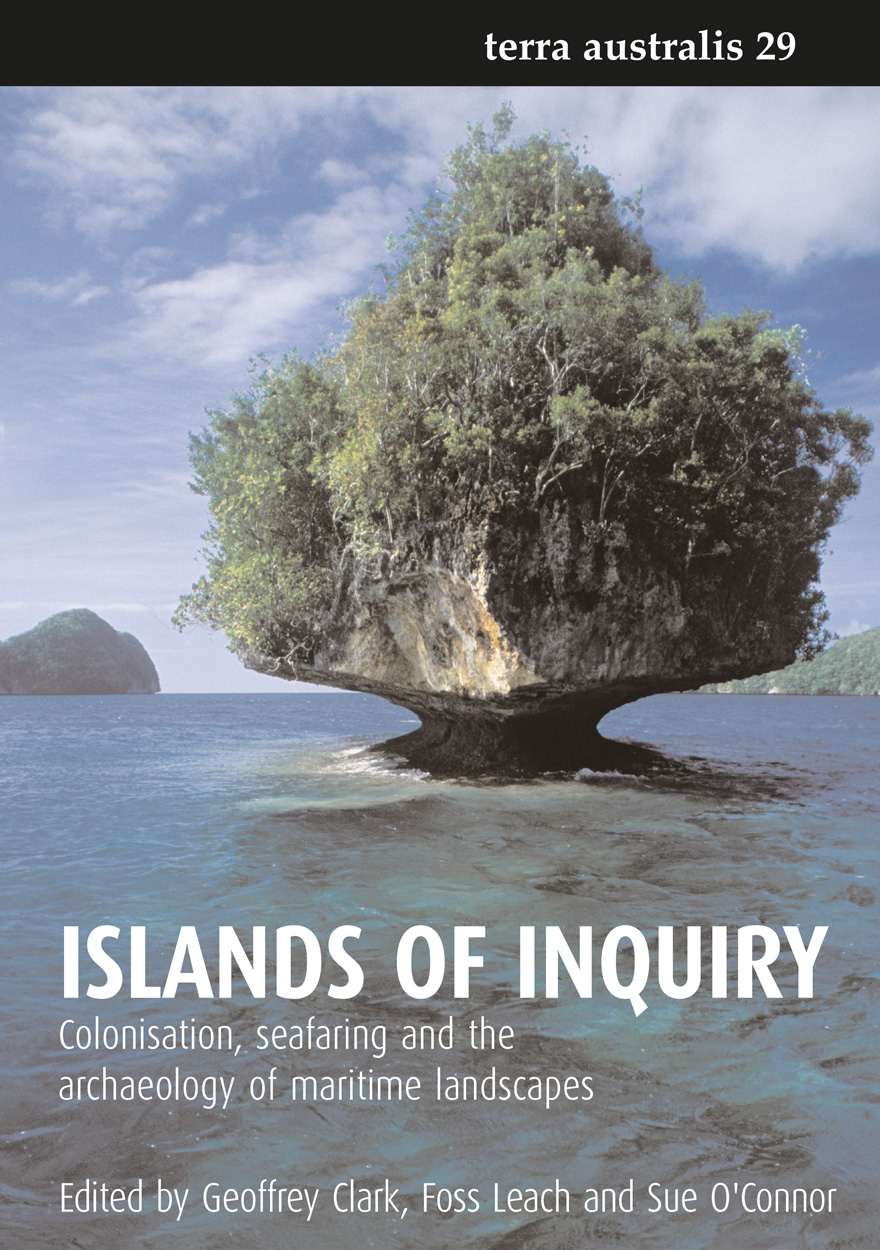
Islands of Inquiry »
Colonisation, seafaring and the archaeology of maritime landscapes
Edited by: Geoffrey Clark, Foss Leach, Sue O'Connor
Publication date: June 2008
This collection makes a substantial contribution to several highly topical areas of archaeological inquiry. Many of the papers present new and innovative research into the processes of maritime colonisation, processes that affect archaeological contexts from islands to continents. Others shift focus from process to the archaeology of maritime places from the Bering to the Torres Straits, providing highly detailed discussions of how living by and with the sea is woven into all elements of human life from subsistence to trade and to ritual. Of equal importance are more abstract discussions of islands as natural places refashioned by human occupation, either through the introduction of new organisms or new systems of production and consumption. These transformation stories gain further texture (and variety) through close examinations of some of the more significant consequences of colonisation and migration, particularly the creation of new cultural identities. A final set of papers explores the ways in which the techniques of archaeological science have provided insights into the fauna of islands and the human history of such places. Islands of Inquiry highlights the importance of an archaeologically informed history of landmasses in the oceans and seas of the world.

Pedigree and Panache »
A History of the Art Auction in Australia
Authored by: Shireen Huda
Publication date: April 2008
Art auctions have long captured the public imagination. They regularly make news headlines and have become synonymous with glamour, money and social distinction. The marketing of auction houses and the works they sell has resulted in firms attaining authoritative positions and the ability both to influence and reflect collecting tastes. Pedigree and Panache is the first comprehensive history of the art auction in Australia. In this fascinating work, Shireen Huda investigates the construction of the glamorous reputation of art auctions and art auction houses. Featuring absorbing case studies of key art auctions and major art auction houses in Australia (including Christie’s, Sotheby’s and Deutscher-Menzies) the work provides an overview of the origin and international development of art auctions. The development of the Australian marketplace is then explored, detailing colonial inception and continuing until Christie’s withdrawal of its saleroom presence in 2006.
This book is an engaging read for those involved in the art industry, as well as historians, artists, collectors and anyone interested in the art market, art investment, social history and art history.
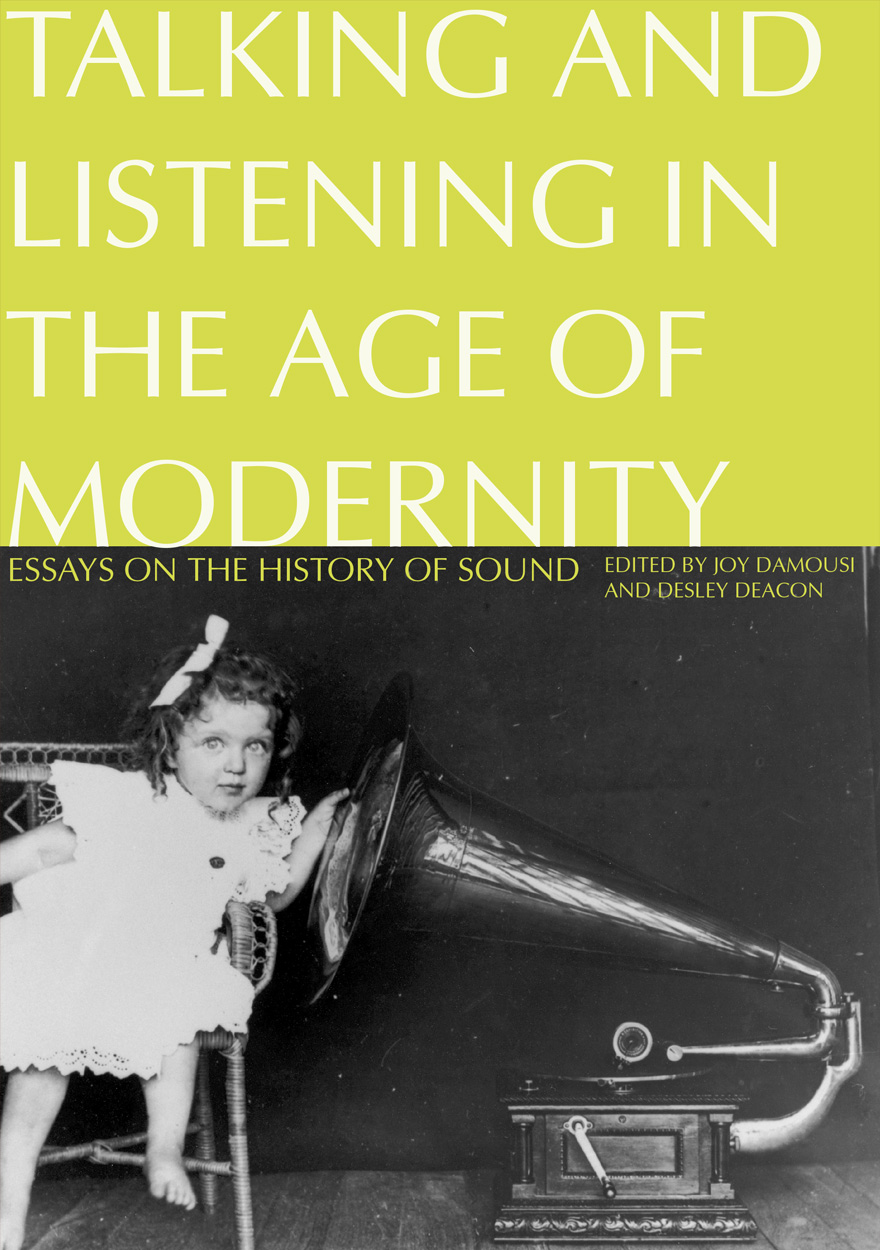
Talking and Listening in the Age of Modernity »
Essays on the history of sound
Edited by: Joy Damousi, Desley Deacon
Publication date: November 2007
Historians have, until recently, been silent about sound. This collection of essays on talking and listening in the age of modernity brings together major Australian scholars who have followed Alain Corbin’s injunction that historians ‘can no longer afford to neglect materials pertaining to auditory perception’.
Ranging from the sound of gunfire on the Australian gold-fields to Alfred Deakin’s virile oratory, these essays argue for the influence of the auditory in forming individual and collective subjectivities; the place of speech in understanding individual and collective endeavours; the centrality of speech in marking and negating difference and in struggles for power; and the significance of the technologies of radio and film in forming modern cultural identities.
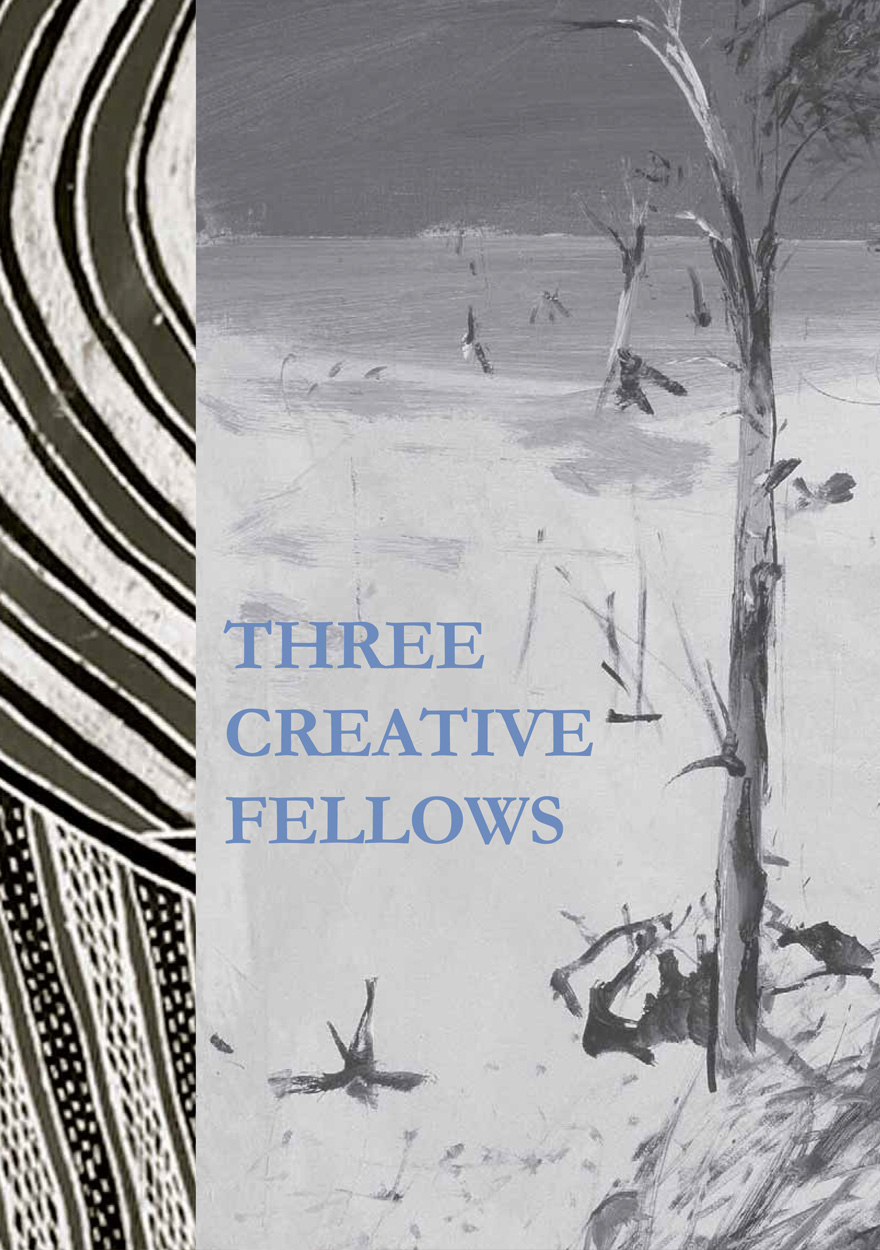
Three Creative Fellows »
Sidney Nolan, Arthur Boyd and Narritjin Maymuru
Authored by: Mary Eagle
Publication date: September 2007
This catalogue presents works by three prominent Australian artists – Sidney Nolan, Arthur Boyd and Narritjin Maymuru – featured in the exhibition Three Creative Fellows, at the Drill Hall Gallery from 9 August – 16 September 2007.
All three artists were recipients of ANU Creative Arts Fellowships, and the authors of the essays presented in this volume are prominent ANU scholars. Dr Mary Eagle writes about Sidney Nolan’s and Arthur Boyd’s reflections on creativity, while Professor Howard Morphy contributes a moving essay about the creation stories painted by Narritjin Maymuru.