



Search titles
Displaying results 81 to 90 of 381.

At Home in Exile »
A Memoir
Authored by: Helga M Griffin
Publication date: February 2021
This is a story of a girl’s construction of her identity, and of her family’s search for a place in the world, for the Heimat that is so resonant for those of German background. We follow Helga through an adventurous childhood in Iran, whose vast open spaces her mother called ‘my spiritual home’. Her engineer father worked on a grand scale, designing and laying roads and railways, and tunnelling through mountain ranges. Then came the invasions of World War II, and the family, half-German, half-Austrian, found themselves on a long voyage to Australia, designated enemy aliens. They were interned for nearly five years in the dusty Victorian countryside. On their release at the end of the War, stranded in Melbourne, they sought another home. The children were dispatched to convents, and at the Academy of Mary Immaculate, Helga found a temporary homeland, in faith.
Everyday life in the Australia of the late 1940s and early 1950s is freshly seen by this feisty, loving migrant family. Through their eyes, we encounter a strange place, Australia, as if for the first time. Helga’s development from a thoughtful, sensitive child to a self-possessed young woman, wrestling with her faith and with how to live a decent life, is vividly recounted.

Australian Travellers in the South Seas »
Authored by: Nicholas Halter
Publication date: February 2021
This book offers a wide-ranging survey of Australian engagement with the Pacific Islands in the late 19th and early 20th centuries. Through over 100 hitherto largely unexplored accounts of travel, the author explores how representations of the Pacific Islands in letters, diaries, reminiscences, books, newspapers and magazines contributed to popular ideas of the Pacific Islands in Australia. It offers a range of valuable insights into continuities and changes in Australian regional perspectives, showing that ordinary Australians were more closely connected to the Pacific Islands than has previously been acknowledged. Addressing the theme of travel as a historical, literary and imaginative process, this cultural history probes issues of nation and empire, race and science, commerce and tourism by focusing on significant episodes and encounters in history. This is a foundational text for future studies of Australia’s relations with the Pacific, and histories of travel generally.
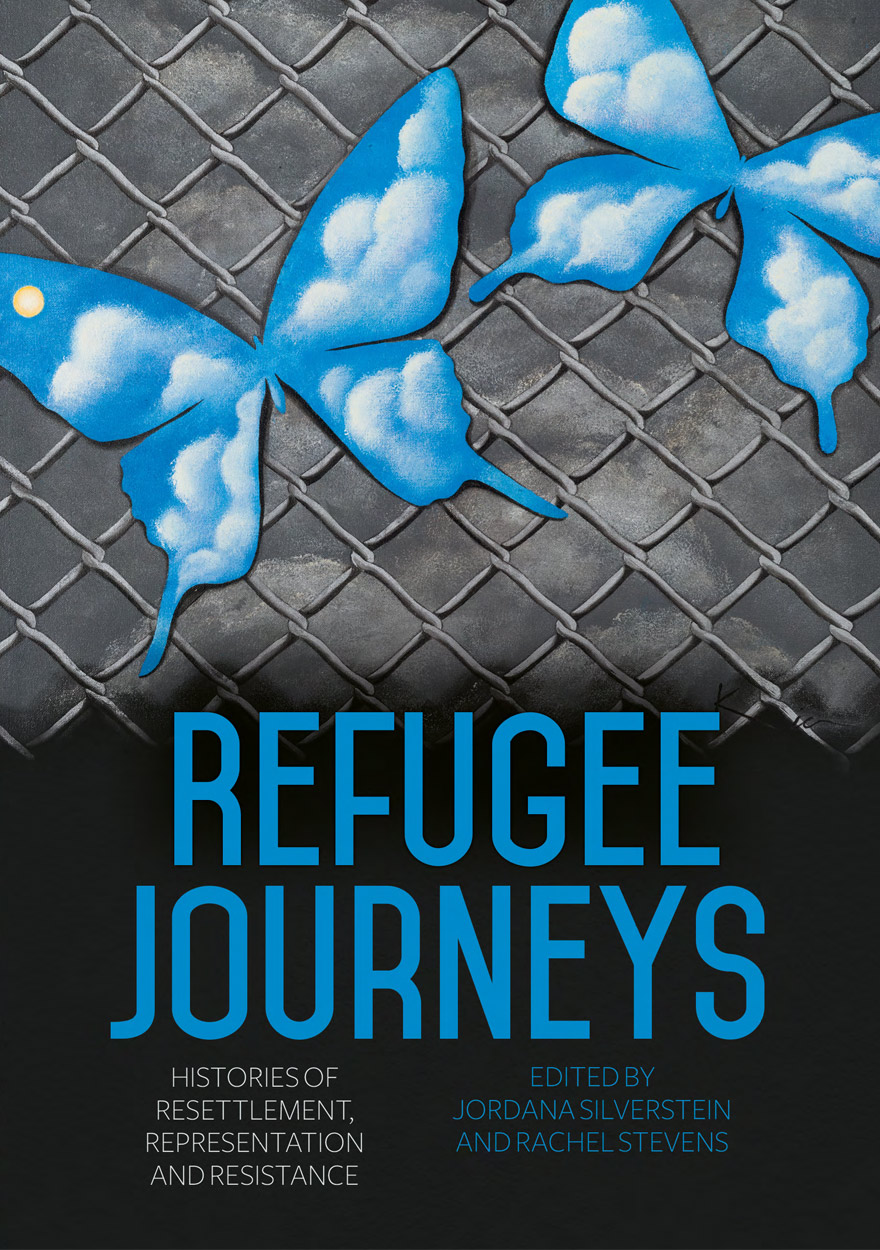
Refugee Journeys »
Histories of Resettlement, Representation and Resistance
Edited by: Jordana Silverstein, Rachel Stevens
Publication date: February 2021
Refugee Journeys presents stories of how governments, the public and the media have responded to the arrival of people seeking asylum, and how these responses have impacted refugees and their lives. Mostly covering the period from 1970 to the present, the chapters provide readers with an understanding of the political, social and historical contexts that have brought us to the current day. This engaging collection of essays also considers possible ways to break existing policy deadlocks, encouraging readers to imagine a future where we carry vastly different ideas about refugees, government policies and national identities.

Britain’s Second Embassy to China »
Lord Amherst's 'Special Mission' to the Jiaqing Emperor in 1816
Authored by: Caroline Stevenson
Publication date: February 2021
Lord Amherst’s diplomatic mission to the Qing Court in 1816 was the second British embassy to China. The first led by Lord Macartney in 1793 had failed to achieve its goals. It was thought that Amherst had better prospects of success, but the intense diplomatic encounter that greeted his arrival ended badly. Amherst never appeared before the Jiaqing emperor and his embassy was expelled from Peking on the day it arrived.
Historians have blamed Amherst for this outcome, citing his over-reliance on the advice of his Second Commissioner, Sir George Thomas Staunton, not to kowtow before the emperor. Detailed analysis of British sources reveal that Amherst was well informed on the kowtow issue and made his own decision for which he took full responsibility. Success was always unlikely because of irreconcilable differences in approach. China’s conduct of foreign relations based on the tributary system required submission to the emperor, thus relegating all foreign emissaries and the rulers they represented to vassal status, whereas British diplomatic practice was centred on negotiation and Westphalian principles of equality between nations.
The Amherst embassy’s failure revised British assessments of China and led some observers to believe that force, rather than diplomacy, might be required in future to achieve British goals. The Opium War of 1840 that followed set a precedent for foreign interference in China, resulting in a century of ‘humiliation’. This resonates today in President Xi Jinping’s call for ‘National Rejuvenation’ to restore China’s historic place at the centre of a new Sino-centric global order.
Aboriginal History Journal: Volume 43 »
Edited by: Ingereth Macfarlane
Publication date: December 2020
Volume 43 opens with an unexpectedly timely essay. Tom Gara’s study of the influenza epidemic that reached Australia in 1919 expands consideration of its global effects to include the poorly documented impacts on Aboriginal people in South Australia. The study was written and finalised to mark the centenary, prior to the advent of the 2020 Coronavirus pandemic. In this dramatically altered context, Gara’s evidence becomes significantly comparative as well as an account of an under-researched aspect of past infectious disease spread.
Annemarie McLaren’s article poses questions about the differing assumptions Aboriginal men and colonists made about their earliest travels together in country around Sydney Cove in 1791. McLaren interrogates Watkin Tench’s and John Hunter’s accounts of their joint travels with Colebee and Balloderry to explore how ‘guiding’ relationships first developed between Aboriginal people and expeditionary parties in New South Wales.
Grace Karskens’ conversation with Mark McKenna about her engagement with the story of Nah Doong, a nineteenth-century Aboriginal woman living in colonial Penrith, NSW, offers ‘a masterclass in how to write history’. Careful reading against the grain brings Nah Doong’s experience alive in a rare, fleshed-out biographical picture of an individual woman.
‘Big John Dodo’ (c. 1910–2003) is respected as a ceremonial and cultural leader for Karajarri country, south of Broome, WA. Darren Jorgensen draws on family and personal interviews to re-position John Dodo Nangkiriny’s ‘transitional’ art forms, which do not emulate pre-colonial or contemporary forms and are produced with new materials.
Beth Marsden provides a close reading of the campaign to resist construction of a ‘transit village’ in Morwell, Victoria, in the 1960s, illuminating various strands of assimilationist policy as well as multilayered political and grassroots resistance.
Tim Rowse and Barry Leithhead re-examine the underlying assumptions held by Dr Cecil Cook in his career as a Northern Territory administrator and commentator (1925–69). Demonstrating the relationship between racial thought and liberalism in Cook’s policies and advocacy, they argue that Cook’s common function as a shorthand for ‘ideologies, policies and practices of government that seem at best misguided and at worst cruel and racist’ needs re-evaluation.
In addition to a wide range of book reviews, this volume also has a review of the important Songlines: Tracking the Seven Sisters exhibition.
Download for free
Not available for purchase

On Taungurung Land »
Sharing History and Culture
Authored by: Roy Henry Patterson, Jennifer Jones
Publication date: December 2020
On Taungurung Land: Sharing History and Culture is the first monograph to examine how the Taungurung Nation of central Victoria negotiated with protectors and pastoralists to retain possession of their own country for as long as possible. Historic accounts, to date, have treated the histories of Acheron and Mohican Aboriginal stations as preliminary to the establishment of the more famous Coranderrk on Wurundjeri land. Instead of ‘rushing down the hill’ to Coranderrk, this book concentrates upon the two foundational Aboriginal stations on Taungurung Country. A collaboration between Elder Uncle Roy Patterson and Jennifer Jones, the book draws upon Taungurung oral knowledge and an unusually rich historical record. This fine-grained local history and cultural memoir shows that adaptation to white settlement and the preservation of culture were not mutually exclusive. Uncle Roy shares generational knowledge in this book in order to revitalise relationships to place and establish respect and mutual practices of care for Country.

Australian Journal of Biography and History: No. 4, 2020 »
Publication date: December 2020
This issue of the Australian Journal of Biography and History includes eight peer-reviewed articles, and 12 book reviews. Each of the articles uses biography to illustrate historical themes and to add texture to historical episodes. Patricia Clarke examines the role of four women journalists who were recruited by the Australian Government to tour operational bases in eastern Australia during a critical phase in the Pacific War. In the field of journalism, women faced systemic barriers to employment; the women described in Clarke’s article went to great efforts to attain equality in the workplace, yet they were often restricted to weekly publications while the dailies remained the province of men. Lyndon and Lyne Megarrity, in their article on the two wives of the Queensland businessman and later premier Robert Philp (1899–1903, 1907–08), use the biographies of Jessie (née Bannister; 1856–90), and Mina (née Munro; 1867–1940) to illustrate the changes in the role of elite Queensland women over the relatively short period of a decade.
The next two articles consider the problems of constructing biographies of those who are essentially invisible in the historical record. Melanie Nolan, Christine Fernon and Rebecca Kippen discuss the ’first-fleeter’ Sarah Bellamy’s seemingly ‘insignificant life’ to illustrate various aspects of the British colonisation of the continent. The biography of the Boonwurrung man Kurrburra (1797–1849) forms the subject of the contribution by Ian Clark, Rolf Schlagloth, Fred Cahir and Gabrielle McGinnis. By setting out to consider the whole of Kurrburra’s life rather than only the moments of contact (or conflict) with colonial society, he can be re-presented as one who was respected and important in his Aboriginal community, and who managed, negotiated and sought to control his interactions with the colonising forces.
Sophie Scott-Brown, in her article on the British Marxist historian Raphael Samuel, considers the utility of biography in relation to intellectual history, and the relationship between what she terms ‘cultural persona’ and the empirical personality. By contrast, Michael Davis’s biographical portrait of the anthropologist Leonhard Adam reveals a figure who some viewed as an outsider, but whose works on Aboriginal art were highly successful. In his study of the Australian delegation to the 1919 Paris Peace Conference, David Lee looks at the men who between them forcefully asserted Australia’s position, and thus contributed to the country’s consolidation as an independent nation-state during the inter-war period. In the final article, Stephen Wilks argues that biography is founded on human agency, and that political history is ‘rich in interpersonal interaction’. He concludes that biography provides scholars with ‘a platform for exploring the tortuous chains of decision, chance and error that characterise the political past and the legacies it imparts’.
Download for free
Not available for purchase

International Review of Environmental History: Volume 6, Issue 2, 2020 »
Edited by: James Beattie
Publication date: November 2020
International Review of Environmental History takes an interdisciplinary and global approach to environmental history. It encourages scholars to think big and to tackle the challenges of writing environmental histories across different methodologies, nations, and time-scales. The journal embraces interdisciplinary, comparative and transnational methods, while still recognising the importance of locality in understanding these global processes.
The journal's goal is to be read across disciplines, not just within history. It publishes on all thematic and geographic topics of environmental history, but especially encourage articles with perspectives focused on or developed from the southern hemisphere and the ‘global south’.
Download for free
Not available for purchase
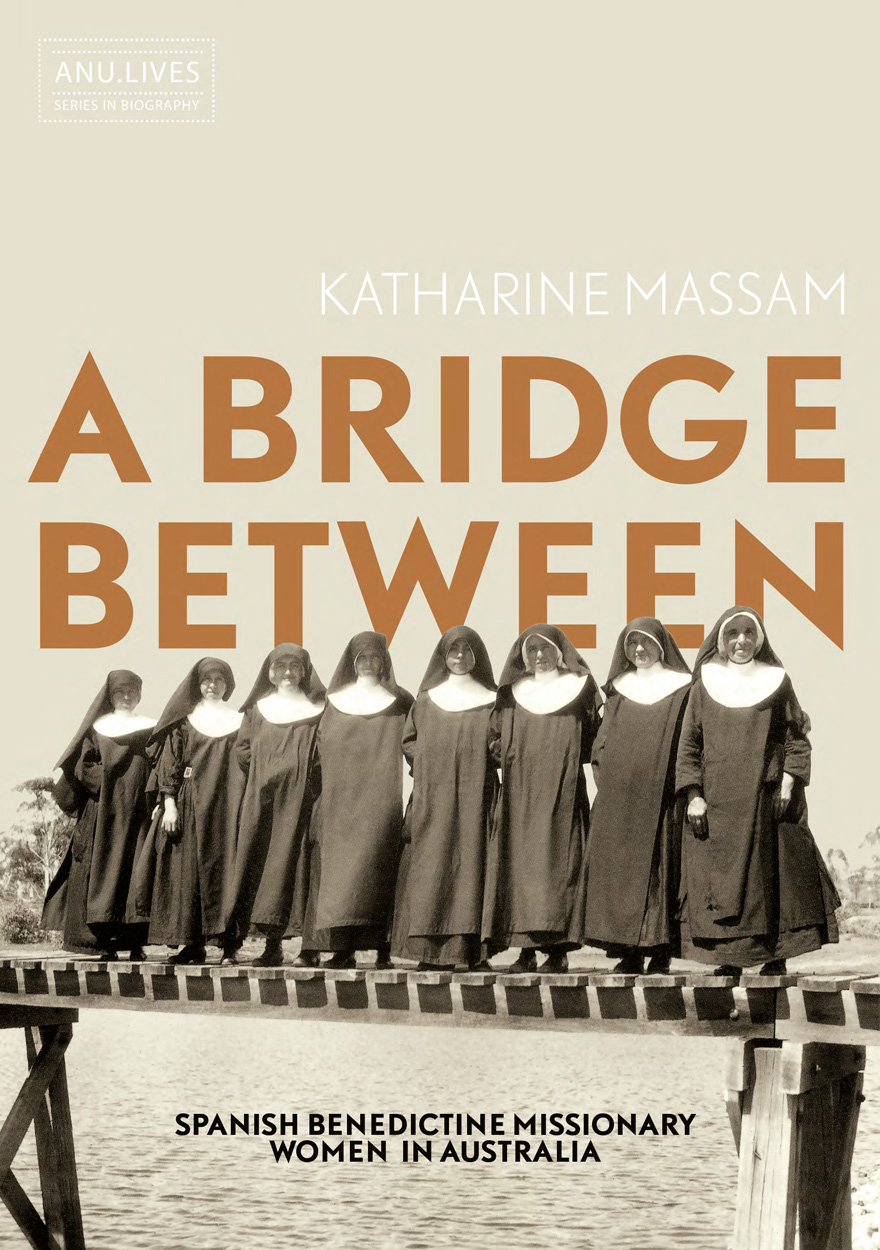
A Bridge Between »
Spanish Benedictine Missionary Women in Australia
Authored by: Katharine Massam
Publication date: October 2020
This sensitive account of Spanish Benedictine women at an Aboriginal mission in Western Australia is poignant and disturbing. Notable for its ecumenical spirit, depth of research and deep engagement with the subject, A Bridge Between is a model of how religious history, in its broader bearings, can be written.
— Graeme Davison, Monash University
With great insight and care, A Bridge Between presents a sympathetic but not uncritical history of the lives of individuals who have often been invisible. The story of the nuns at New Norcia is a timely contribution to Australia’s religious history. Given the findings of the Royal Commission, it will be widely read both within and beyond the academy. History is, here, a spiritual discipline, and an exercise in hope and reconciliation.
— Laura Rademaker, The Australian National University
A Bridge Between is the first account of the Benedictine women who worked at New Norcia and the first book-length exploration of twentieth-century life in the Western Australian mission town. From the founding of a grand school intended for ‘nativas’, through links to Mexico and Paraguay then Ireland, India and Belgium, as well as to their house in the Kimberley, and a network of villages near Burgos in the north of Spain, this is a complex international history. A Bridge Between gathers a powerful, fragmented story from the margins of the archive, recalling the Aboriginal women who joined the community in the 1950s and the compelling reunion of missionaries and former students in 2001. By tracing the all-but-forgotten story of the community of Benedictine women who were central to the experience of the mission for many Aboriginal families in the twentieth century, this book lays a foundation for further work.

Lilith: A Feminist History Journal: Number 26 »
Publication date: October 2020
The 2020 issue of Lilith features research on a range of feminist history topics, including an exploration of the performativity of temperance activist Bessie Harrison Lee; a critique of how colonial women are represented in Australian museums; a discussion of representations of motherhood in digital archives; a reconceptualisation of the radical nature of women’s political history; an investigation of the role that dress played in encouraging community acceptance of early women preachers in Australia; an inquiry into how fat bodies became a site of resistance of gender norms among rural women in interwar Western Australia; a study of women’s presence on plantations in colonial north Queensland; a survey of ‘moral treatment’ of puerperal insanity among female patients at Fremantle Lunatic Asylum; and an analysis of the coercion of women into domestic service in interwar Britain.
Download for free
Not available for purchase