



Search titles
Displaying results 121 to 130 of 378.

The Lives of Stories »
Three Aboriginal-Settler Friendships
Authored by: Emma Dortins
Publication date: December 2018
The Lives of Stories traces three stories of Aboriginal–settler friendships that intersect with the ways in which Australians remember founding national stories, build narratives for cultural revival, and work on reconciliation and self-determination. These three stories, which are still being told with creativity and commitment by storytellers today, are the story of James Morrill’s adoption by Birri-Gubba people and re-adoption 17 years later into the new colony of Queensland, the story of Bennelong and his relationship with Governor Phillip and the Sydney colonists, and the story of friendship between Wiradjuri leader Windradyne and the Suttor family. Each is an intimate story about people involved in relationships of goodwill, care, adoptive kinship and mutual learning across cultures, and the strains of maintaining or relinquishing these bonds as they took part in the larger events that signified the colonisation of Aboriginal lands by the British. Each is a story in which cross-cultural understanding and misunderstanding are deeply embedded, and in which the act of storytelling itself has always been an engagement in cross-cultural relations. The Lives of Stories reflects on the nature of story as part of our cultural inheritance, and seeks to engage the reader in becoming more conscious of our own effect as history-makers as we retell old stories with new meanings in the present, and pass them on to new generations.

The Archaeology of Sulawesi »
Current Research on the Pleistocene to the Historic Period
Publication date: November 2018
The central Indonesian island of Sulawesi has recently been hitting headlines with respect to its archaeology. It contains some of the oldest directly dated rock art in the world, and some of the oldest evidence for a hominin presence beyond the southeastern limits of the Ice Age Asian continent. In this volume, scholars from Indonesia and Australia come together to present their research findings and views on a broad range of topics. From early periods, these include observations on Ice Age climate, life in caves and open sites, rock art, and the animals that humans exploited and lived alongside. The archaeology presented from later periods covers the rise of the Bugis kingdom, Chinese trade ceramics, and a range of site-based and regional topics from the Neolithic through to the arrival of Islam. This carefully edited volume is the first to be devoted entirely to the archaeology of the island of Sulawesi, and it lays down a baseline for significant future research.
Peter Bellwood
Emeritus Professor
The Australian National University
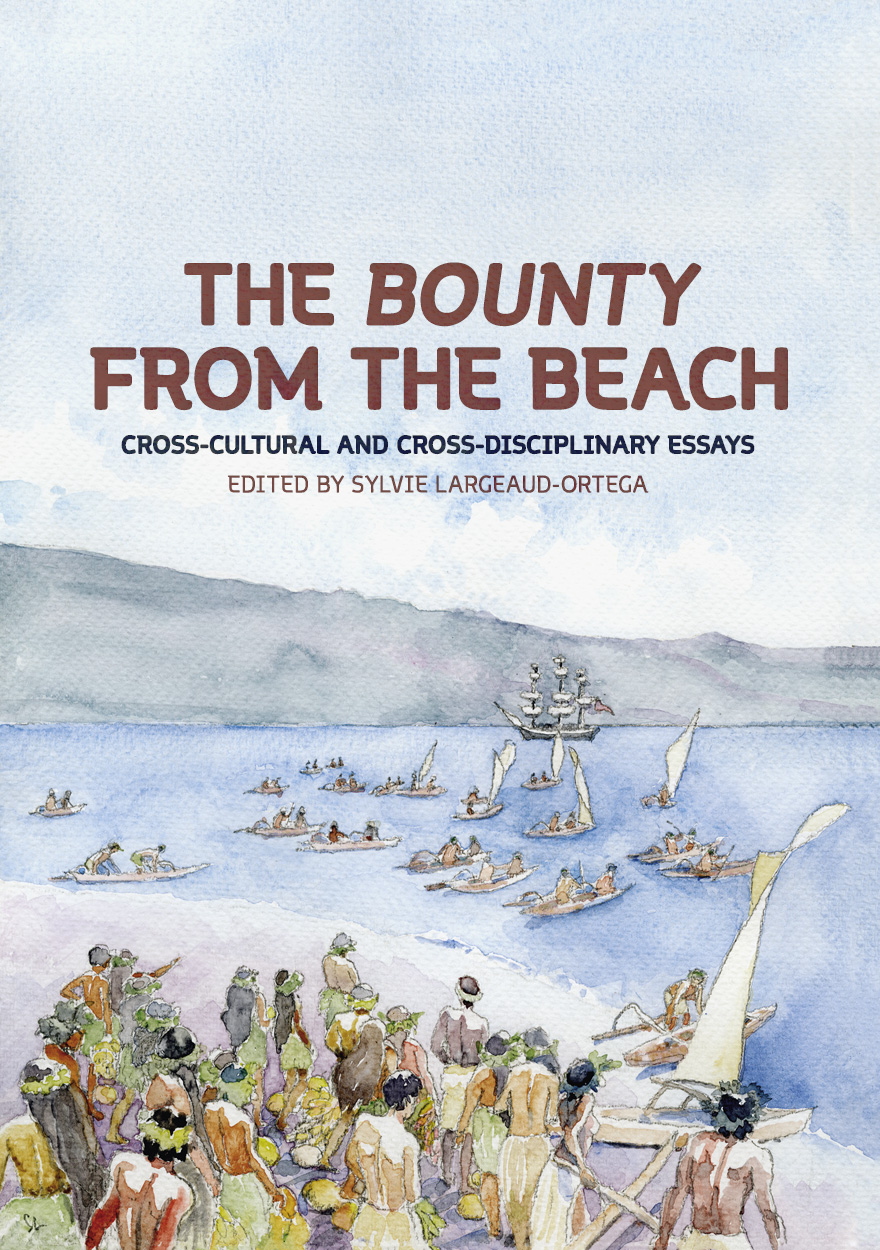
The Bounty from the Beach »
Cross-Cultural and Cross-Disciplinary Essays
Edited by: Sylvie Largeaud-Ortega
Publication date: October 2018
The Bounty from the Beach is a collection of cross-disciplinary essays, capitalising on a widely shared fascination for the Bounty story in order to draw scholarly attention to Oceania. It aims to reorient the Bounty focus away from the West, where most Bounty narratives and studies have emerged, to the Pacific, where most of the original events unfolded. It investigates the Bounty heritage from the standpoint of the beach, Greg Dening’s metaphor for culture contact and conflict in the Pacific Islands: this liminal place that transforms Islanders and voyagers, islands and ships, each time it is crossed. It analyses the way newcomers create new islands, and how these changes may occasionally impact the world. This volume examines the ‘little people’, to use another of Dening’s expressions, who stand ‘on both sides of the beach’: they are Polynesian or European or, as beaches are crossed and remade, no longer one without the other, but bound together in processes of change. Among these people are Bounty sailors, beachcombers, Pitcairners and indigenous Pacific Islanders of the past and the present.
This collection also explores the works of some renowned Western writers and actors who, turning mutineers after their own fashion and in their own times, themselves crossed the beach and attempted to illuminate the ‘little people’ involved in the Bounty narratives. These prominent writers and actors put the spotlight on characters who were silenced on account of race, class or geographical distance from the dominant centres of power. Inspired by Dening’s empowering voice, our purpose is to fill that silence.
Just as it criss-crosses the ocean, progressing with the ship through time and space, The Bounty from the Beach ranges far and wide across disciplines, methodologies and scholarly styles. Its multidisciplinary course contributes to illuminate the multiple ways in which the Bounty heritage embraces diverse horizons. It throws light on the colonial discourse that undertook to stifle Pacific Islander agency, and the neocolonial policies that have been applied to Oceania, and still are: hegemonic moves that have led to global environmental, nuclear and ecological hazards. As a whole, the collection contends that what unfolds in this vast ocean matters: the stakes are high for the whole human community.

A New Rival State? »
Australia in Tsarist Diplomatic Communications
Publication date: October 2018
A New Rival State? is a unique collection of dispatches written in 1857–1917 by the Russian consuls in Melbourne to the Imperial Russian Embassy in London and the Russian Foreign Ministry in St Petersburg. Written by eight consuls, they offer a Russian view of the development of the settler colonies in the late nineteenth century and the first years of the federated Commonwealth of Australia. They cover the federalist movement, the changing domestic political situation, labour politics, the treatment of the Indigenous population, the ‘White Australia’ policy, Australia’s defensive capacity and foreign policy as part of the British Empire.
The bulk of the material is drawn from the Russian-language collection The Russian Consular Service in Australia 1857–1917, edited by Alexander Massov and Marina Pollard (2014), using documents from the archive of the Russian Foreign Ministry.

Landlock »
Paralysing Dispute over Minerals on Adivasi Land in India
Authored by: Patrik Oskarsson
Publication date: September 2018
Landlock: Paralysing Dispute over Minerals on Adivasi Land in India explores the ways in which political controversy over a bauxite mining and refining project on constitutionally protected tribal lands in Andhra Pradesh descended into a state of paralysis where no productive outcome was possible. Long-running support for Adivasi (or tribal) land rights motivated a wide range of actors to block the project’s implementation by recourse to India’s dispersed institutional landscape, while project proponents proved adept in proposing workarounds to prevent its outright cancellation. In the ensuing deadlock, the project was unable to move towards completion, while marginalised Adivasi groups were equally unable to repossess their land. Such a ‘landlock’ is argued to be characteristic of India’s wider inability to deal with conflicts over land matters, despite the crucial importance of land for smallholder livelihoods and various economic processes in an intensely growth-focused country. The result has been frequent yet grindingly slow processes of contestation in which powerful business and state interests are, at times, halted in their tracks, but mostly seem able to slowly exhaust local resistance in their pursuit of large-scale projects that produce no benefits for the rural poor.

International Review of Environmental History: Volume 4, Issue 2, 2018 »
Edited by: James Beattie
Publication date: September 2018
International Review of Environmental History takes an interdisciplinary and global approach to environmental history. It encourages scholars to think big and to tackle the challenges of writing environmental histories across different methodologies, nations, and time-scales. The journal embraces interdisciplinary, comparative and transnational methods, while still recognising the importance of locality in understanding these global processes.
The journal's goal is to be read across disciplines, not just within history. It publishes on all thematic and geographic topics of environmental history, but especially encourage articles with perspectives focused on or developed from the southern hemisphere and the ‘global south’.
Download for free
Not available for purchase

Divided Loyalties »
Displacement, belonging and citizenship among East Timorese in West Timor
Authored by: Andrey Damaledo
Publication date: September 2018
Drawing on extensive ethnographic fieldwork, this study explores the ideas of belonging and citizenship among former pro-autonomy East Timorese who have elected to settle indefinitely in West Timor. The study follows different East Timorese groups and examines various ways they construct and negotiate their socio-political identities following the violent and destructive separation from their homeland. The East Timorese might have had Indonesia as their destination when they left the eastern half of the island in the aftermath of the referendum, but they have not relinquished their cultural identities as East Timorese. The study highlights the significance of the notions of origin, ancestry and alliance in our understanding of East Timorese place-making and belonging to a particular locality. Another feature of belonging that informs East Timorese identity is their narrative of sacrifice to maintain connections with their homeland and move on with their lives in Indonesia. These sacrificial narratives elaborate an East Timorese spirit of struggle and resilience, a feature further exemplified in the transformation of their political activities within the Indonesian political system.
Read till it shatters »
Nationalism and identity in modern Thai literature
Authored by: Thak Chaloemtiarana
Publication date: August 2018
This book introduces readers to modern Thai literature through the themes of modernity, nationalism, identity and gender. In the cultural, political and social transformations that occurred in Thailand during the first half of the twentieth century, Thai literature was one of the vehicles that moved the changes. Taking seriously ‘read till it shatters’, a Thai phrase that instructs readers to take apart the text, to break it down, to deconstruct it, Thak Chaloemtiarana challenges the Thai literary canon from the margins and suggests ways of expanding and enriching it.
Thai literature is scarce in translation and requires the skills of a scholar fluent in Thai to comprehend it. Thak is a political scientist turned literary scholar who is bilingual in Thai and English and an avid reader of Thai fiction by authors up and down the social scale. Here he offers lively insights into his favourite literary genres with fresh readings of early Thai novels, Sino-Thai biographies and memoirs of the rich and famous.
‘Thak Chaloemtiarana is an inquisitive man. Late in his career he switched from politics to literature. In these chapters, he draws on a lifetime of reading about writers and writing in Thailand over the past century. He nods towards the usual big names—King Vajiravudh, Luang Wichit, Kulap Saipradit, Kukrit Pramoj—but spends more time on those found in the lesser visited stacks of the libraries, the secondhand bookstalls, and the shelf by the supermarket checkout. His themes are familiar—Thailand and the West, Thai nationalism, the Thai-Chinese, and women under patriarchy—but the angles of vision are original. With a cast ranging from motor-racing princes through sexy Egyptian mummies and a feminist serial murderer to starlets touting breast-enhancement techniques, this book educates, enlightens, and entertains.’
— Dr Chris Baker, Bangkok-based author with Pasuk Phongpaichit, A History of Ayutthaya (Cambridge 2017)
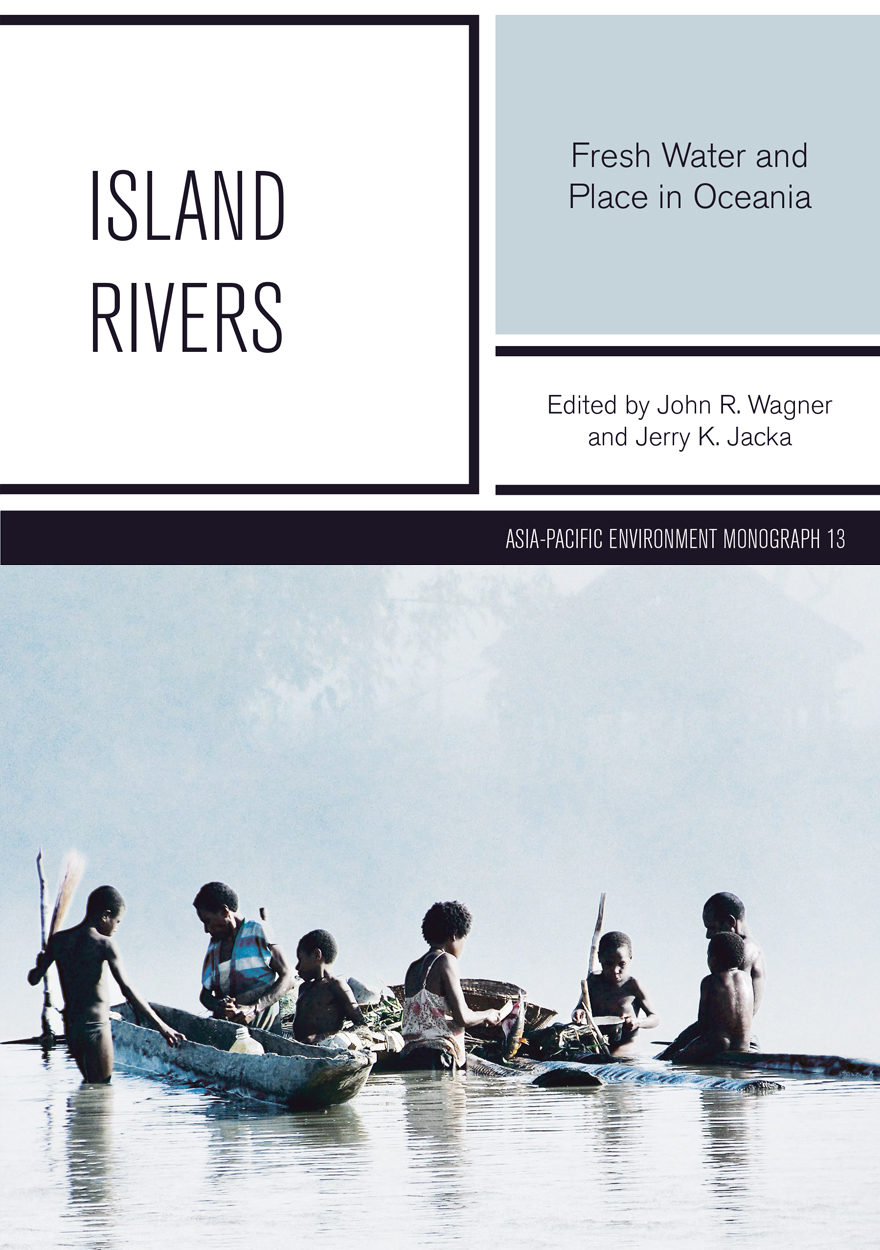
Island Rivers »
Fresh Water and Place in Oceania
Edited by: John R. Wagner, Jerry K. Jacka
Publication date: June 2018
Anthropologists have written a great deal about the coastal adaptations and seafaring traditions of Pacific Islanders, but have had much less to say about the significance of rivers for Pacific island culture, livelihood and identity. The authors of this collection seek to fill that gap in the ethnographic record by drawing attention to the deep historical attachments of island communities to rivers, and the ways in which those attachments are changing in response to various forms of economic development and social change. In addition to making a unique contribution to Pacific island ethnography, the authors of this volume speak to a global set of issues of immense importance to a world in which water scarcity, conflict, pollution and the degradation of riparian environments afflict growing numbers of people. Several authors take a political ecology approach to their topic, but the emphasis here is less on hydro-politics than on the cultural meaning of rivers to the communities we describe. How has the cultural significance of rivers shifted as a result of colonisation, development and nation-building? How do people whose identities are fundamentally rooted in their relationship to a particular river renegotiate that relationship when the river is dammed to generate hydro-power or polluted by mining activities? How do blockages in the flow of rivers and underground springs interrupt the intergenerational transmission of local ecological knowledge and hence the ability of local communities to construct collective identities rooted in a sense of place?

Indigenous Mobilities »
Across and Beyond the Antipodes
Edited by: Rachel Standfield
Publication date: June 2018
This edited collection focuses on Aboriginal and Māori travel in colonial contexts. Authors in this collection examine the ways that Indigenous people moved and their motivations for doing so. Chapters consider the cultural aspects of travel for Indigenous communities on both sides of the Tasman. Contributors examine Indigenous purposes for mobility, including for community and individual economic wellbeing, to meet other Indigenous or non-Indigenous peoples and experience different cultures, and to gather knowledge or experience, or to escape from colonial intrusion.
‘This volume is the first to take up three challenges in histories of Indigenous mobilities. First, it analyses both mobility and emplacement. Challenging stereotypes of Indigenous people as either fixed or mobile, chapters deconstruct issues with ramifications for contemporary politics and analyses of Indigenous society and of rural and national histories. As such, it is a welcome intervention in a wide range of urgent issues. Second, by examining Indigenous peoples in both Australia and New Zealand, this volume is an innovative step in removing the artificial divisions that have arisen from “national” histories. Third, the collection connects the experiences of colonised Indigenous peoples with those of their colonisers, shifting the long-held stereotypes of Indigenous powerlessness. Chapters then convincingly demonstrate the agency of colonised peoples in shaping the actions and the mobility itself of the colonisers.
While the volume overall is aimed at opening up new research questions, and so invites later and even more innovative work, this volume will stand as an important guide to the directions such future work might take.’
— Heather Goodall, Professor Emerita, UTS