



Search titles
Displaying results 51 to 60 of 381.
Living Art »
Indonesian Artists Engage Politics, Society and History
Publication date: November 2022
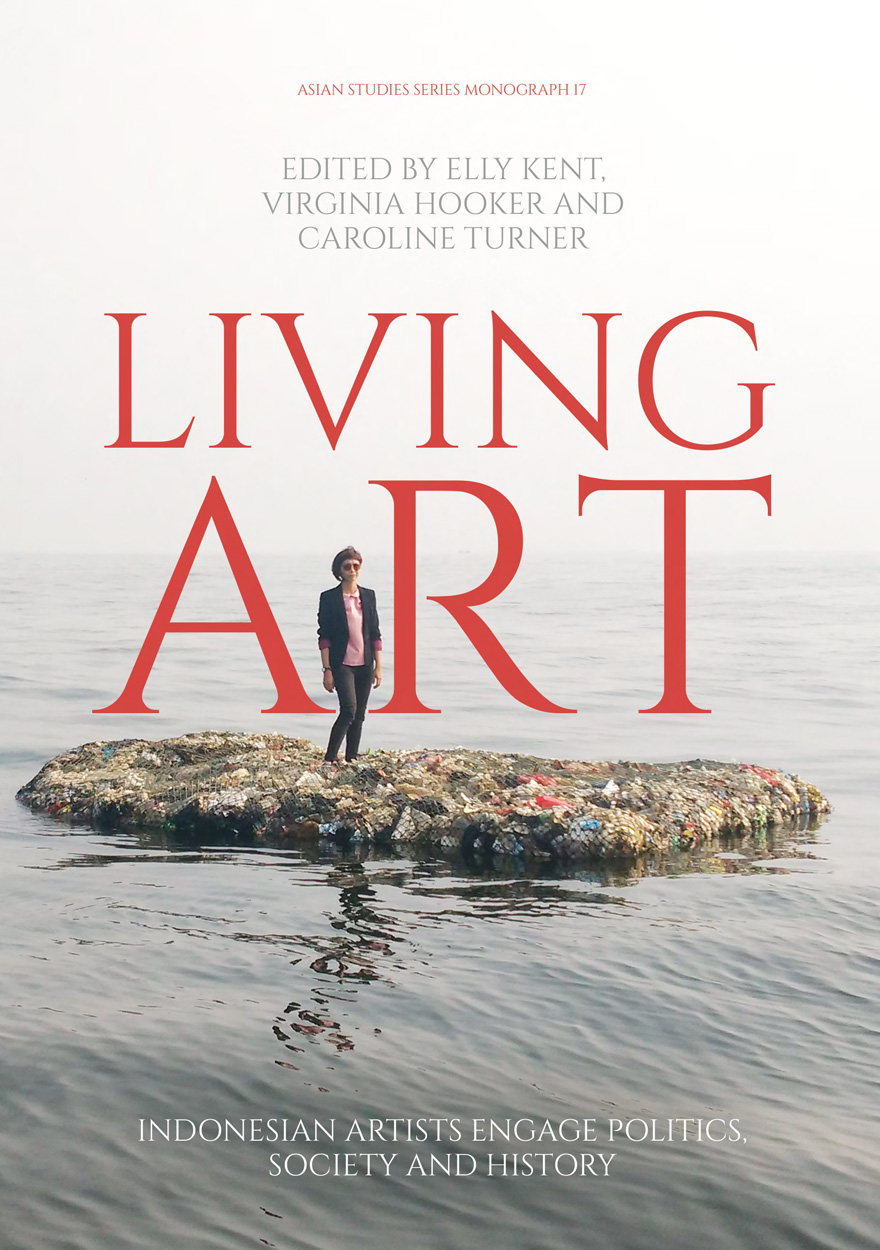
Living Art: Indonesian Artists Engage Politics, Society and History is inspired by the conviction of so many of Indonesia’s Independence-era artists that there is continuing interaction between art and everyday life. In the 1970s, Sanento Yuliman, Indonesia’s foremost art historian of the late twentieth century, further developed that concept, stating: ‘New Indonesian Art cannot wholly be understood without locating it in the context of the larger framework of Indonesian society and culture’ and the ‘whole force of history’. The essays in this book accept Yuliman’s challenge to analyse the intellectual, sociopolitical and historical landscape that Indonesia’s artists inhabited from the 1930s into the first decades of the new millennium, including their responses to the COVID-19 pandemic.
The inclusion of one of Yuliman’s most influential essays, translated into English for the first time, offers those outside Indonesia an insight into a formative period in the generation of new art knowledge in Indonesia. The volume also features essays by T. K. Sabapathy, Jim Supangkat, Alia Swastika, Wulan Dirgantoro and FX Harsono, as well as the three editors (Elly Kent, Virginia Hooker and Caroline Turner). The book’s contributors present recent research on issues rarely addressed in English-language texts on Indonesian art, including the inspirations and achievements of women artists despite social and political barriers; Islam- inspired art; artistic ideologies; the intergenerational effects of trauma; and the impacts of geopolitical change and global art worlds that emerged in the 1990s. The Epilogue introduces speculations from contemporary practitioners on what the future might hold for artists in Indonesia.
Extensively illustrated, Living Art contributes to the acknowledgement and analysis of the diversity of Indonesia’s contemporary art and offers new insights into Indonesian art history, as well as the contemporary art histories of Southeast Asia and Asia more generally.

Experiments with Marxism-Leninism in Cold War Southeast Asia »
Edited by: Matthew Galway, Marc H. Opper
Publication date: September 2022
One of the most contentious theatres of the global conflict between capitalism and communism was Southeast Asia. From the 1920s until the end of the Cold War, the region was racked by international and internal wars that claimed the lives of millions and fundamentally altered societies in the region for generations. Most of the 11 countries that compose Southeast Asia were host to the development of sizable communist parties that actively (and sometimes violently) contested for political power. These parties were the object of fierce repression by European colonial powers, post-independence governments and the United States. Southeast Asia communist parties were also the object of a great deal of analysis both during and after these conflicts.
This book brings together a host of expert scholars, many of whom are either Southeast Asia–based or from the countries under analysis, to present the most expansive and comprehensive study to date on ideological and practical experiments with Marxism-Leninism in Southeast Asia. The bulk of this edited volume presents the contents of these revolutionary ideologies on their own terms and their transformations in praxis by using primary source materials that are free of the preconceptions and distortions of counterinsurgent narratives. A unifying strength of this work is its focus on using primary sources in the original languages of the insurgents themselves.
Rising Power and Changing People »
The Australian High Commission in India
Edited by: David Lowe, Eric Meadows
Publication date: September 2022
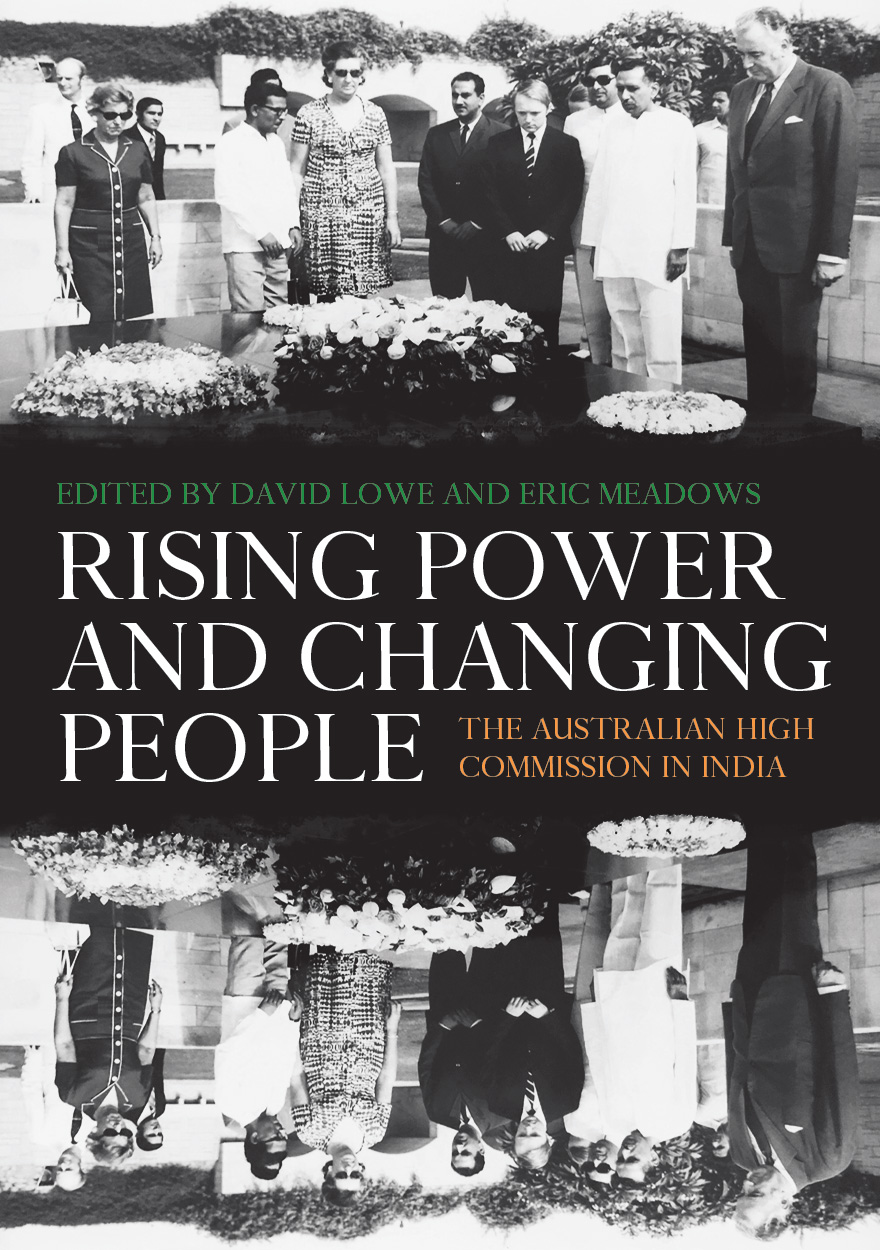
Beginning in 1943–44, Australia’s relationship with India is its oldest continuous formal diplomatic relationship with any Asian country. The early diplomatic exchanges between Australia and India have teased for their suggestions of potential unrealised, for opportunities missed, especially when compared with the very recent excitement about the future of Australia–India relations. How did Australia’s representatives and their staff in New Delhi negotiate the many dimensions of Australia–India relations? This book brings together expert analyses of the work of the Australian High Commission, its key people and the challenges they faced in New Delhi.
The important India Economic Strategy to 2035 report handed to the Australian Government in mid-2018 begins with the comment: ‘Timing has always been a challenge in Australia’s relationship with India.’ As the Australian Government works to implement some of the ambitious recommendations in the report, this book adds to our understanding of why timing has been a challenge, and how those at the coalface of the relationship have grappled with it.

Suva Stories »
A History of the Capital of Fiji
Edited by: Nicholas Halter
Publication date: September 2022
Suva Stories explores a fascinating tapestry of histories in one of the Pacific’s oldest and most culturally diverse urban centres, the capital of Fiji. Charting the trajectory of Suva from indigenous village to colonial hub to contemporary Pacific metropolis, it draws on a rich colonial archive and moving personal memoirs that bear witness to their time. The diverse contributions in this volume form a complex mosaic of urban lives and histories that contribute fresh insights into historical and ongoing debates about race, place and belonging. Suva Stories is a valuable companion to those seeking to engage with the city’s pasts and present, and will prompt new conversations about history and memory in Fiji.

Histories of Australian Rock Art Research »
Publication date: September 2022
Australia has one of the largest inventories of rock art in the world with pictographs and petroglyphs found almost anywhere that has suitable rock surfaces – in rock shelters and caves, on boulders and rock platforms. First Nations people have been marking these places with figurative imagery, abstract designs, stencils and prints for tens of thousands of years, often engaging with earlier rock markings. The art reflects and expresses changing experiences within landscapes over time, spirituality, history, law and lore, as well as relationships between individuals and groups of people, plants, animals, land and Ancestral Beings that are said to have created the world, including some rock art. Since the late 1700s, people arriving in Australia have been fascinated with the rock art they encountered, with detailed studies commencing in the late 1800s. Through the 1900s an impressive body of research on Australian rock art was undertaken, with dedicated academic study using archaeological methods employed since the late 1940s. Since then, Australian rock art has been researched from various perspectives, including that of Traditional Owners, custodians and other community members. Through the 1900s, there was also growing interest in Australian rock art from researchers across the globe, leading many to visit or migrate to Australia to undertake rock art research. In this volume, the varied histories of Australian rock art research from different parts of the country are explored not only in terms of key researchers, developments and changes over time, but also the crucial role of First Nations people themselves in investigations of this key component of their living heritage.
Uncovering Pacific Pasts »
Histories of Archaeology in Oceania
Publication date: June 2022
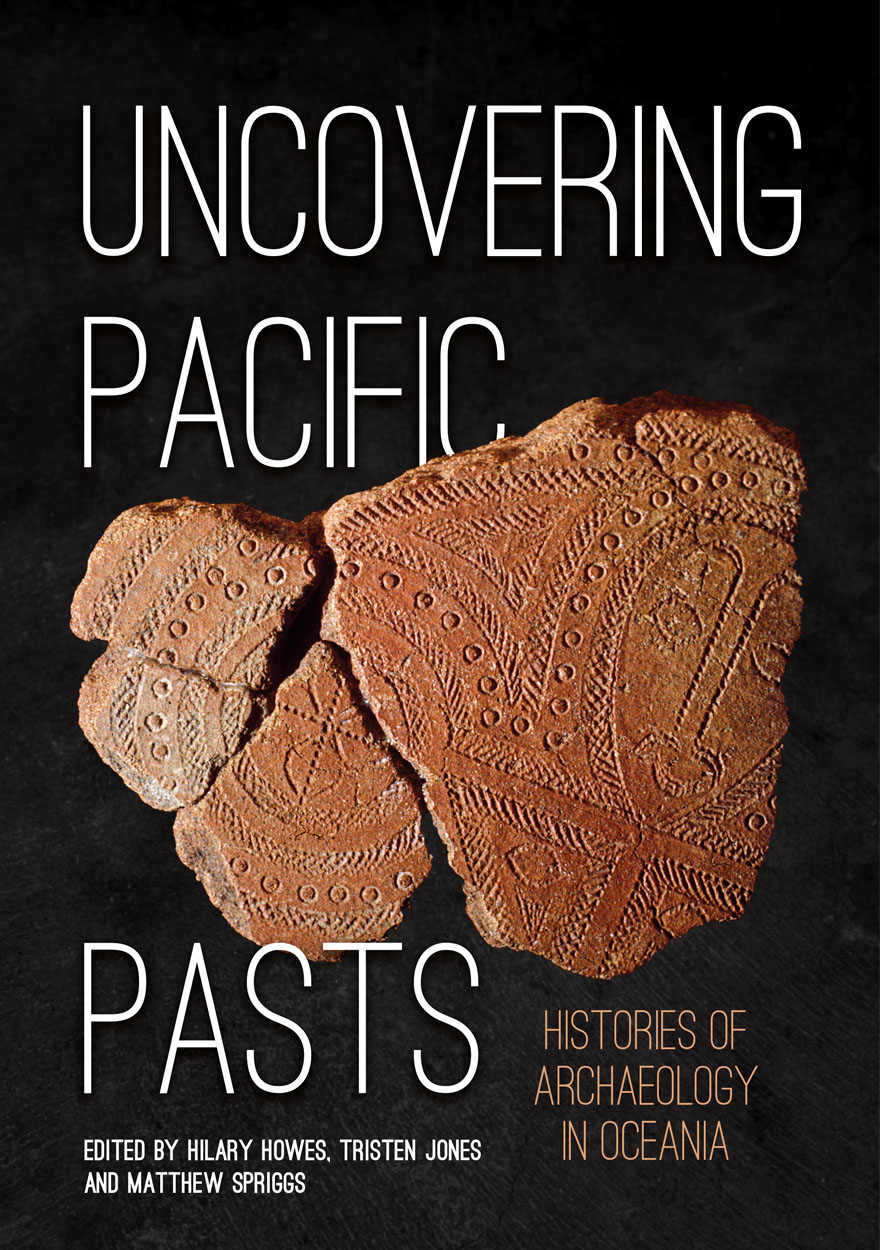
Objects have many stories to tell. The stories of their makers and their uses. Stories of exchange, acquisition, display and interpretation. This book is a collection of essays highlighting some of the collections, and their object biographies, that were displayed in the Uncovering Pacific Pasts: Histories of Archaeology in Oceania (UPP) exhibition. The exhibition, which opened on 1 March 2020, sought to bring together both notable and relatively unknown Pacific material culture and archival collections from around the globe, displaying them simultaneously in their home institutions and linked online at www.uncoveringpacificpasts.org. Thirty‑eight collecting institutions participated in UPP, including major collecting institutions in the United Kingdom, continental Europe and the Americas, as well as collecting institutions from across the Pacific.

Australian Economic History »
Transformations of an Interdisciplinary Field
Authored by: Claire E. F. Wright
Publication date: June 2022
In a time of pandemics, war and climate change, fostering knowledge that transcends disciplinary boundaries is more important than ever. Economic history is one of the world’s oldest interdisciplinary fields, with its prosperity dependent on connection and relevance to disciplinary behemoths economics and history. Australian Economic History is the first history of an interdisciplinary field in Australia, and the first to set the field’s progress within the structures of Australian universities. It highlights the lived experience of doing interdisciplinary research, and how scholars have navigated the opportunities and challenges of this form of knowledge. These lessons are vital for those seeking to develop robust interdisciplinary conversations now and in the future.
‘This previously untold story of economic history in Australia exposes the centrality of economic thought and scholarship to Australian intellectual and political life. Deftly positioning economic history in an innovative institutional, place-based and person-focused narrative, Claire Wright entangles economics with the history of education to produce a tale of university interdisciplinarity, influence and impact. Written with vitality and bursting with both data and anecdote, this book makes an exceptional contribution to the intersecting fields of history, economics and higher education studies.’
– Hannah Forsyth, author of A History of the Modern Australian University.
‘Few readers would expect to find a classical tragedy in the story of an academic field. Yet that is what Claire Wright shows us in this study of Economic History, as it has been practiced in Australia. She traces the field from legendary beginnings to triumphant growth to organisational collapse - and renaissance on other terms. Carefully researched and vigorously written, this book raises questions about disciplines and interdisciplinary fields, universities and markets, and social bases of intellectual work, that are relevant to all fields today.’
– Raewyn Connell, author of The Good University
‘Australia proved a pioneer in the study of economic history, nurturing a discipline with innovative data and understanding of material trends. Yet by the 1990s economic history departments closed as senior scholars retired and the field was subsumed by conventional economics. In this absorbing study, Dr Claire Wright challenges the conventional account. She is tough-minded about financial and institutional pressures on the field, but cautiously optimistic about the future. It is a mistake, she argues, to see institutional representation as the benchmark of influence. Instead, the interdisciplinary nature of economic history has encouraged new research and teaching across the humanities and social sciences. With close attention to individual scholars and their university departments, and a deep sense of the trajectory of the field, Australian Economic History: Transformations of an Interdisciplinary Field is an original and important contribution to Australian intellectual history.’
– Glyn Davis, Distinguished Professor of Political Science in the Crawford School of Public Policy, The Australian National University

Australian Journal of Biography and History: No. 6, 2022 »
Publication date: May 2022
This special issue of Australian Journal of Biography and History, ‘Writing Slavery into Biography: Australian Legacies of British Slavery’, uses biographical approaches to explore how British slavery shaped the Australian colonies. It is the first stand-alone journal issue to feature an emerging body of historical work tracing the movement of people, investment and ideas from the Caribbean to Australia. Seven refereed articles and a roundtable discussion show how investment, imperial aspiration and migration turned towards Britain's ‘Second Empire’ in the aftermath of the Slavery Abolition Act 1833.
A substantive introduction reviews this emerging field of research and outlines preliminary findings. In her article, Jane Lydon examines the movement of two interconnected families (the Ridleys and Walcotts) from Demerara to Britain to the Swan River, where they acquired large land grants, participated in exploration and resource exploitation, and led the search for labour sources. Georgina Arnott investigates Western Australia’s first governor James Stirling’s biographical links to American and Caribbean slavery in light of ideas about race and labour that he promoted in Western Australia. And together Zoë Laidlaw and Georgina Arnott show how dictionaries of biography can be used alongside the Legacies of British Slavery database (hosted by University College London) to identify Australasian settlers with connections to slavery. They note the ways in which collective approaches to biography can reveal otherwise invisible patterns in global transfers of wealth, people and ideas.
With an eye to regionally specific processes of subjugation and enslavement in the northern Western Australian pearling and pastoralist industries, Malcolm Allbrook considers biography’s potential to illustrate the shadowy world of ‘blackbirding’ in relation to the perpetrators, the officials and the Aboriginal enslaved. Emma Christopher brings to life the colonial legacies of slavery in her account of Albert Messiah, Ishmael Williamson and John Henderson, sailors of African origin who worked on Pacific labour ships during the late nineteenth century, and whose lives illuminate the complex racial hierarchies of the Queensland frontier. Beth Robertson tells the layered story of her own great-great-grandfather, Edward Stirling, the illegitimate son of a British slave-owner and a woman of Ghanaian descent, whose material benefit from slavery helped him become a successful pastoralist and miner in South Australia, despite remaining the subject of racial prejudice.
Paul Arthur and Isabel Smith note the ‘biographical turn’ in museum exhibitions featuring stories of enslavement over the last two decades. They argue that this has enabled exhibitors to show stories of resistance, contingency and agency, albeit while navigating the ethical complexities of telling other people’s traumatic life stories. The feature section of this issue concludes with a roundtable discussion between Catherine Hall, Keith McClelland, Zoë Laidlaw, Jeremy Martens and Georgina Arnott on the topic of linking the legacies of British slave ownership to Australian colonisation. Here, Hall observes that biography, when used in combination with prosopography, reveals how the lives and family trajectories of slave owners were distinguished amongst imperial capitalists at large. This issue builds understanding of the precise ways that slavery shaped the Australian colonies.
Download for free
Not available for purchase

Honiara »
Village-City of Solomon Islands
Authored by: Clive Moore
Publication date: May 2022
Nahona`ara—means ‘facing the `ara’, the place where the southeast winds meet the land just west of Point Cruz. Nahona`ara became Honiara, the capital city of Solomon Islands with a population of 160,000, the only significant urban centre in a nation of 721,000 people.
Honiara: Village-City of Solomon Islands views Honiara in several ways: first as Tandai traditional land; then as coconut plantations between the 1880s and 1930s; within the British protectorate (1893–1978) and its Guadalcanal District; in the 1942–45 war years, which created the first urban settlement; in the directly post-war period until 1952 as the new capital of the protectorate, replacing Tulagi; and then as the headquarters of the Western Pacific High Commission (WPHC) between 1953 and 1974. Finally, in 1978, Honiara became the capital of the independent nation of Solomon Islands and the headquarters of Guadalcanal Province.
The book argues that over decades there have been four and sometimes five changing and intersecting Honiara ‘worlds’ operating at one time, each of different social, economic and political significance. The importance of each group—British, Solomon Islanders, other Pacific Islanders, Asians, and more recently the 2003–17 presence of the Regional Assistance Mission to Solomon Islands (RAMSI)—has changed over time.

Persons of Interest »
An Intimate Account of Cecily and John Burton
Authored by: Pamela Burton, Meredith Edwards
Publication date: April 2022
A world in upheaval; two lives lived under stress … This story is set in the social and political landscape of pre– and post–World War II. It tells two vastly different tales of Cecily and John’s lives in Australia and overseas, as nations clashed, and governments and international organisations tried to remake the world.
Cecily Nixon knew that marrying John Burton would be bad for her. But she loved him and, impressed with this handsome, sullen young man and his belief that he could change the world for the better, saw her role in life as to serve the world through John.
Cecily’s story is a deeply personal and psychological one of love, duty and betrayal that explores the complexities of relationships. In a world that overwhelmed her, Cecily searched for ‘wholeness’ and delved deep into her psyche to find herself and emerge from John’s shadow.
John has been known as an influential and controversial young head of Australia’s Department of External Affairs – and as a would-be politician. It is less known that he was also an innovative farmer, bookseller, entrepreneur, arts patron and writer. He received international acclaim for his later work in conflict analysis and resolution.
These combined stories of courage and achievement unfold amid political intrigue and psychological trauma. ASIO surveillance, love triangles, loyalty, infidelity and tragedy all play their part in the Burtons’ lives.
'A remarkable memoir of a remarkable couple, exploring the fraught dynamic between the personal and political facets of their lives, the perspective lying at the core of modern feminism. Pamela Burton’s own insights are those of their youngest child, on whom the disruptions of the 1960s and 1970s had a heavy impact, but also that of her maturity, bringing her sharp forensic skills to the project. Assisted by Meredith Edwards, her eldest sister, Burton has given us an unflinchingly honest and utterly gripping record of our lives and times.'
— Sara Dowse, author of West Block and Sapphires