



Search titles
Displaying results 301 to 310 of 378.
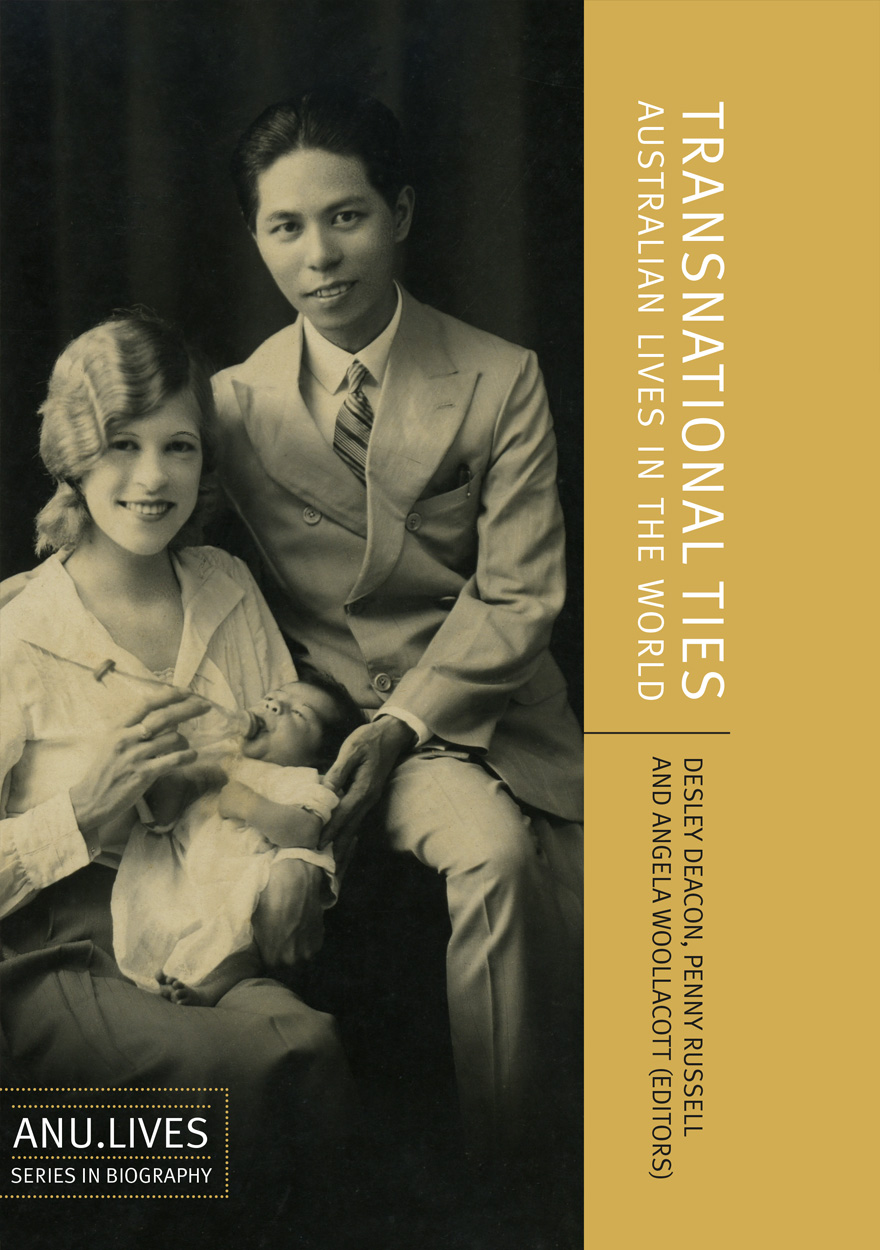
Transnational Ties »
Australian Lives in the World
Edited by: Desley Deacon, Penny Russell, Angela Woollacott
Publication date: December 2008
Australian lives are intricately enmeshed with the world, bound by ties of allegiance and affinity, intellect and imagination. In Transnational Ties: Australian Lives in the World, an eclectic mix of scholars—historians, literary critics, and museologists—trace the flow of people that helped shape Australia’s distinctive character and the flow of ideas that connected Australians to a global community of thought. It shows how biography, and the study of life stories, can contribute greatly to our understanding of such patterns of connection and explores how transnationalism can test biography’s limits as an intellectual, professional and commercial practice.

Islamising Indonesia »
The Rise of Jemaah Tarbiyah and the Prosperous Justice Party (PKS)
Authored by: Yon Machmudi
Publication date: November 2008
The Prosperous Justice Party (PKS) is the most interesting phenomenon in contemporary Indonesian politics. Not only is it growing rapidly in membership and electoral support, it is also bringing a new and markedly different approach to Islamic politics, one which has no precedent in Indonesian history.
Understanding PKS and analysing its political behaviour presents challenges to scholars and observers. This is partly due to the fact that the party represents a new trend within Indonesian Islam which has few parallels with preceding movements.
Yon Machmudi has rendered us a valuable service. In this book, he provides a thoughtful and authoritative context for viewing PKS. He critiques the existing categorisations for Indonesian Islam and points to their inadequacy when describing the PKS and the campus-based Tarbiyah movement from which it sprang. He reworks the santri typology, dividing it into convergent, radical and global substreams. This offers new possibilities for explaining the PKS phenomenon and assists in differentiating between various types of Islamic revivalism in contemporary Indonesia. It also allows a more understanding of the accommodatory stance which PKS has towards the state and other political forces.
Yon’s text provides a good overview of the development of PKS from its Tarbiyah movement origins to its impressive success at the 2004 general elections. It considers the party’s attitude towards the issues of sharia implementation and community welfare and closes by examining the future challenges facing PKS.
It is a well written and authoritative account from a scholar who has done wideranging research on the party.

Public Leadership »
Perspectives and practices
Edited by: Paul `t Hart, John Uhr
Publication date: November 2008
‘Leadership’ is routinely admired, vilified, ridiculed, invoked, trivialised, explained and speculated about in the media and in everyday conversation. Despite all this talk, there is surprisingly little consensus about how to answer basic questions about the nature, place, role and impact of leadership in contemporary society. This book brings together academics from a broad array of social science disciplines who are interested in contemporary understandings of leadership in the public domain. Their work on political, administrative and civil society leadership represents a stock-take of what we need to know and offers original examples of what we do know about public leadership. Although this volume connects scholars living in, and mostly working on, public leadership in Australia and New Zealand, their contributions have a much broader scope and relevance.

Remaining Karen »
A Study of Cultural Reproduction and the Maintenance of Identity
Authored by: Ananda Rajah
Publication date: November 2008
This publication of Remaining Karen is intended as a tribute to Ananda Rajah and his consummate skills as an ethnographer. It is also a tribute to his long-term engagement in the study of the Karen. Remaining Karen was Ananda Rajah’s first focused study of the Sgaw Karen of Palokhi in northern Thailand, which he submitted in 1986 for this PhD in the Department of Anthropology in the Research School of Pacific and Asian Studies at The Australian National University. It is a work of superlative ethnography set in an historical and regional context and as such retains its value to the present.
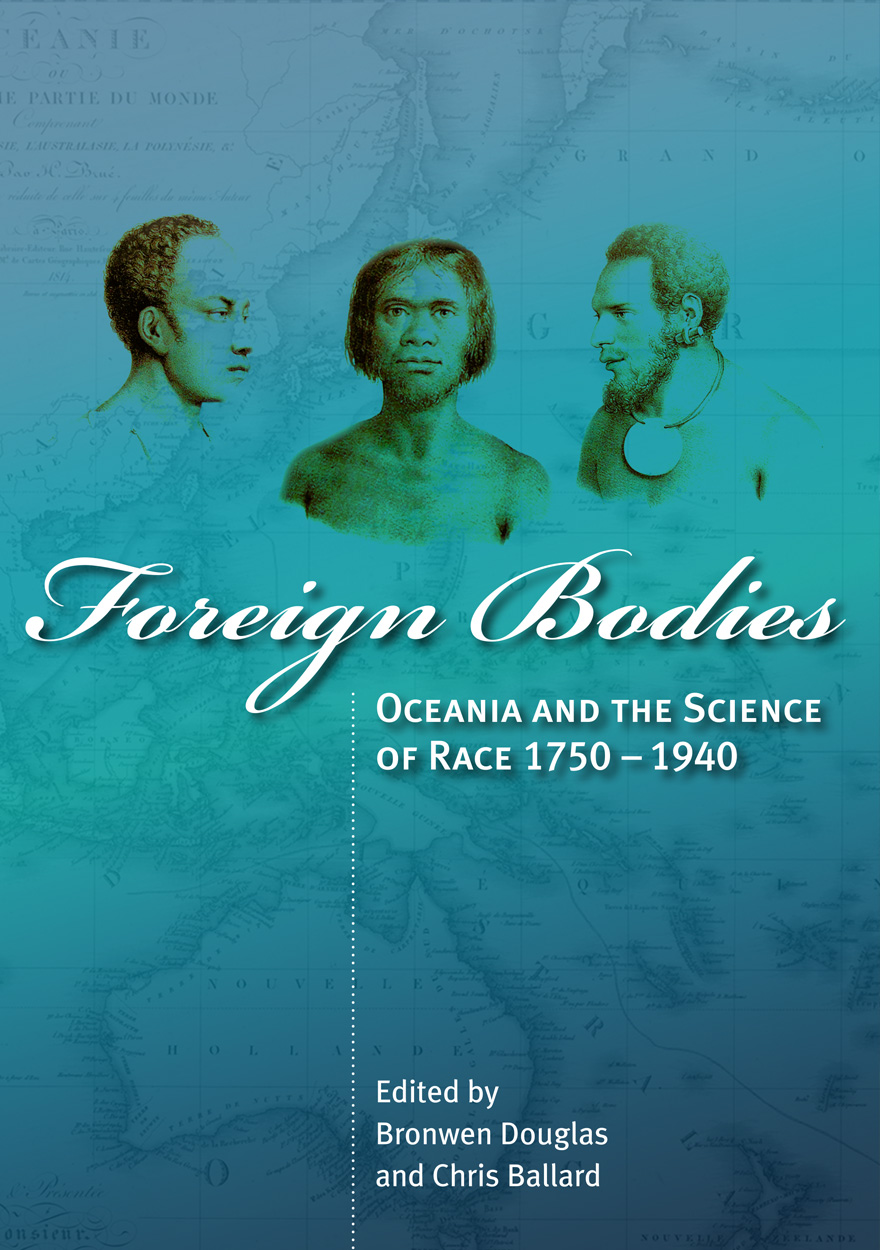
Foreign Bodies »
Oceania and the Science of Race 1750–1940
Edited by: Bronwen Douglas, Chris Ballard
Publication date: October 2008
From the 18th century, Oceania became the principal laboratory of raciology for scholars, voyagers, and colonisers alike. By juxtaposing encounters and theory, this magisterial book explores the semantics of human difference in all its emotional, intellectual, religious, and practical dimensions. The argument developed is subtle, engrossing, and gives the paradigm of ‘race’ its full use value. Foreign Bodies is a model of analysis and erudition from which historians of science and everyone interested in intercultural relations will greatly profit.
— Claude Blanckaert, CNRS (Centre Alexandre Koyré), Paris, and Honorary President, French Society for the History of the Science of Man

Permissive Residents »
West Papuan refugees living in Papua New Guinea
Authored by: Diana Glazebrook
Publication date: September 2008
This book offers another frame through which to view the event of the outrigger landing of 43 West Papuans in Australia in 2006. West Papuans have crossed boundaries to seek asylum since 1962, usually eastward into Papua New Guinea (PNG), and occasionally southward to Australia. Between 1984–86, around 11,000 people crossed into PNG seeking asylum. After the Government of PNG acceded to the United Nations Convention and Protocol Relating to the Status of Refugees, West Papuans were relocated from informal camps on the international border to a single inland location called East Awin. This volume provides an ethnography of that settlement based on the author’s fieldwork carried out in 1998–99.

Whistleblowing in the Australian Public Sector »
Enhancing the theory and practice of internal witness management in public sector organisations
Edited by: A. J. Brown
Publication date: September 2008
Of the many challenges in public sector management, few are as complex as the management of whistleblowing. Because it can lead to the discovery and rectification of wrongdoing, public interest whistleblowing is widely acknowledged as being positive for organisations and for society at large. However, the conflicts and reprisal risks often associated with whistleblowing also support a widespread belief that every whistleblower is destined to suffer, and nothing can be done to protect them from reprisals. Even if they did it once, sensible employees are often seen as unlikely to ever blow the whistle a second time around.
The extensive research in this book reveals a more complex and, fortunately, more positive picture. The product of one of the world’s most comprehensive research projects on whistleblowing, evidence from over 8,000 public servants in over 100 federal, state and local government agencies shows that whistleblowers can and do survive, and that often their role is highly valued. Public sector managers face significant challenges in better managing and protecting whistleblowers. There is great variation between the many public agencies making the effort, and the many agencies where the outcomes — for managers and whistleblowers alike — are still likely to be grim. This book is compulsory reading for all public sector managers who wish to turn this negative trend around, and for anyone interested in public accountability generally.

First Contacts in Polynesia »
The Samoan Case (1722–1848) Western Misunderstandings about Sexuality and Divinity
Authored by: Serge Tcherkézoff
Publication date: August 2008
This book explores the first encounters between Samoans and Europeans up to the arrival of the missionaries, using all available sources for the years 1722 to the 1830s, paying special attention to the first encounter on land with the Lapérouse expedition. Many of the sources used are French, and some of difficult accessibility, and thus they have not previously been thoroughly examined by historians. Adding some Polynesian comparisons from beyond Samoa, and reconsidering the so-called ‘Sahlins-Obeyesekere debate’ about the fate of Captain Cook, ‘First Contacts’ in Polynesia advances a hypothesis about the contemporary interpretations made by the Polynesians of the nature of the Europeans, and about the actions that the Polynesians devised for this encounter: wrapping Europeans up in ‘cloth’ and presenting ‘young girls’ for ‘sexual contact’. It also discusses how we can go back two centuries and attempt to reconstitute, even if only partially, the point of view of those who had to discover for themselves these Europeans whom they call ‘Papalagi’. The book also contributes an additional dimension to the much-touted ‘Mead-Freeman debate’ which bears on the rules and values regulating adolescent sexuality in ‘Samoan culture’. Scholars have long considered the pre-missionary times as a period in which freedom in sexuality for adolescents predominated. It appears now that this erroneous view emerged from a deep misinterpretation of Lapérouse’s and Dumont d’Urville’s narratives.

Our Unswerving Loyalty »
A documentary survey of relations between the Communist Party of Australia and Moscow, 1920–1940
Edited by: David W. Lovell, Kevin Windle
Publication date: August 2008
The story of the Communist Party of Australia has been told in various ways. Until now, however, archival collections that have borne on this story have been relatively inaccessible to the ordinary, interested reader. This book begins to redress that deficiency by bringing together 85 key documents from the Russian State Archives of Social and Political History (RGASPI), selected from a collection of thousands of documents concerning the relations between the Communist International and the Communist Party of Australia. The selection focuses on the relationship between the CPA and the Comintern because the activities of the CPA are essentially incomprehensible without understanding the international communist context within which the CPA operated. That context was dominated by the newly-created Soviet state and its decision to authorize and utilize a network of communist parties throughout the world.
The documents in this work suggest three major propositions about the relationship between the CPA and the Comintern. First, that the Comintern was crucial in the formation of the CPA, via its emissaries, instructions and authority. Second, that the Comintern played a major role in directing the policies of the CPA in domestic matters (not to mention in international matters, where the Comintern’s decisions were supreme). And third, that the leadership of the CPA was, from 1929 onwards, shaped, trained and authorized by the Comintern. With access to the documents, readers now have a chance not just to hear the voices of the times, but to make their own judgements about the relationship between the CPA and Moscow.
The book also includes two extended introductory essays that outline the development of the Comintern and its relations with the CPA, as well as supporting materials that provide information on individuals, organizations and tactics mentioned within the documents themselves.

Steady Hands Needed »
Reflections on the role of the Secretary of Foreign Affairs and Trade in Australia 1979-1999
Edited by: Trevor Wilson, Graham Cooke
Publication date: August 2008
In this monograph, five former secretaries of the Department of Foreign Affairs and Trade (DFAT) reflect on their experiences and the challenges of their times. A far cry from the pukka fantasies of ‘Yes Minister’, their recollections reveal the realpolitik of the policy front line where the secretary must stay ahead of emerging themes and issues in Australia’s international relations while simultaneously exercising governance oversight and providing leadership to a large, professional, diverse and dispersed organisation. From the Cold War to the War on Terror; from the floating of the dollar to GATT and the WTO; managing relations big and small, within our region and without; through relentless administrative reforms, technological change and changes of government; steering DFAT requires ‘steady hands’. This collection of public lectures presented in 2006 to the Australian Institute of International Affairs (AIIA) offers an invaluable resource for those with an interest in recent Australian history, foreign policy and public sector administration.