



Search titles
Displaying results 281 to 290 of 378.

The Power of Economic Ideas »
The origins of Keynesian macroeconomic management in interwar Australia 1929–39
Authored by: Alex Millmow
Publication date: May 2010
Economics, Keynes once wrote, can be a ‘very dangerous science’. Sometimes, though, it can be moulded to further the common good though it might need a leap in mental outlook, a whole new zeitgeist to be able do do. This book is about a transformation in Australian economists’ thought and ideas during the interwar period. It focuses upon the interplay between economic ideas, players and policy sometimes in the public arena. In a decade marked by depression, recovery and international political turbulence Australian economists moved from a classical orthodox economic position to that of a cautious Keynesianism by 1939.
We look at how a small collective of economists tried to influence policy-making in the nineteen-thirties. Economists felt obliged to seek changes to the parameters as economic conditions altered but, more importantly, as their insights about economic management changed. There are three related themes that underscore this book. Firstly, the professionalisation of Australian economics took a gigantic leap in this period, aided in part, by the adverse circumstances confronting the economy but also by the aspirations economists held for their discipline. A second theme relates to the rather unflattering reputation foisted upon interwar economists after 1945.
That transition underlies a third theme of this book, namely, how Australian economists were emboldened by Keynes’s General Theory to confidently push for greater management of economic activity. By 1939 Australian economists conceptualized from a new theoretic framework and from one which they advanced comment and policy advice. This book therefore will rehabilitate the works of Australian interwar economists, arguing that they not only had an enviable international reputation but also facilitated the acceptance of Keynes’s General Theory among policymakers before most of their counterparts elsewhere.
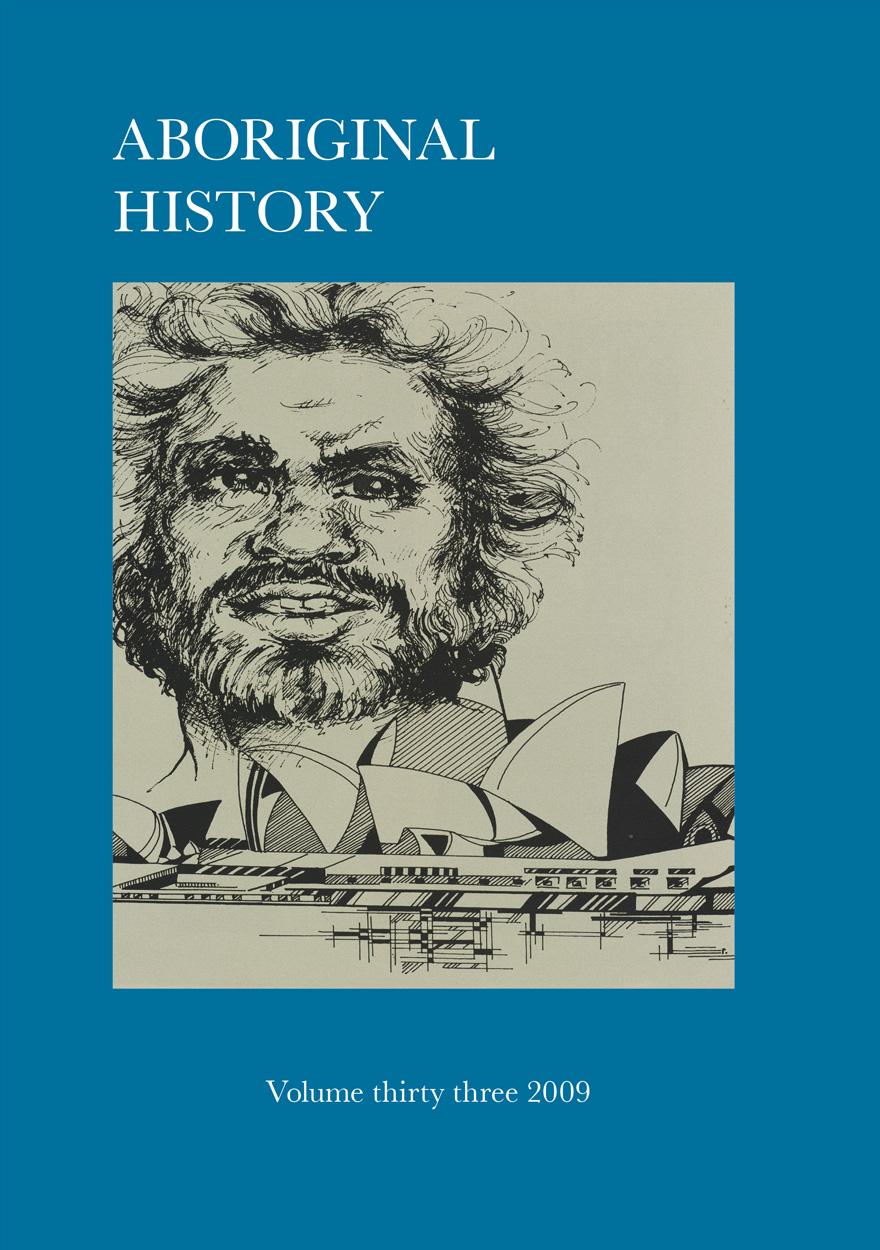
Aboriginal History Journal: Volume 33 »
Edited by: Peter Read
Publication date: April 2010
In her recent magisterial history of early Sydney, Grace Karskens mused on a critical distinction in emphasis between settler history and Aboriginal history: ‘in settler history we seem to be searching constantly for beginnings’, she notes, ‘but in Aboriginal history in the colonial period so often the search is for endings’. This preoccupation with endings especially haunts the ‘storywork’ surrounding Woollarawarre Bennelong, one of the best known but least understood Aboriginal men of the early colonial era. Most of this storywork has figured Bennelong as a tragic soul – caught between two worlds, reconciled to neither, the victim of an addiction that was his only means of enduring the fall. Despite some variations in the telling of his life with the British colonists, the tragedy of his end usually dominates the overall tone.
A reconsideration of one of the most significant Aboriginal figures in colonial history invites us to move away from the search for endings. It suggests a fresh start for the life of Bennelong. It also suggests a fresh start for the meaning of Bennelong in Australia’s modern imagination. If Bennelong’s life stands for any greater truth, it is that indigenous people begin new relations when history demands them as frequently and as variously as any other folk.
Aboriginal History Inc. is a publishing organisation based in the Australian Centre for Indigenous History, Research School of Social Sciences, The Australian National University, Canberra.
For more information on Aboriginal History Inc. please visit aboriginalhistory.org.au.
Download for free
Not available for purchase

East Asia Forum Quarterly: Volume 2, Number 1, 2010 »
Publication date: February 2010
East Asia Forum Quarterly grew out of East Asia Forum (EAF) online, which has developed a reputation for providing a platform for the best in Asian analysis, research and policy comment on the Asia Pacific region in world affairs. EAFQ aims to provide a further window onto research in the leading research institutes in Asia and to provide expert comment on current developments within the region. The East Asia Forum Quarterly, like East Asia Forum online, is an initiative of the East Asia Forum (EAF) and its host organisation, the East Asian Bureau of Economic Research (EABER) in the Crawford School of Economics and Government in the College of Asia & the Pacific at The Australian National University.
Download for free
Not available for purchase
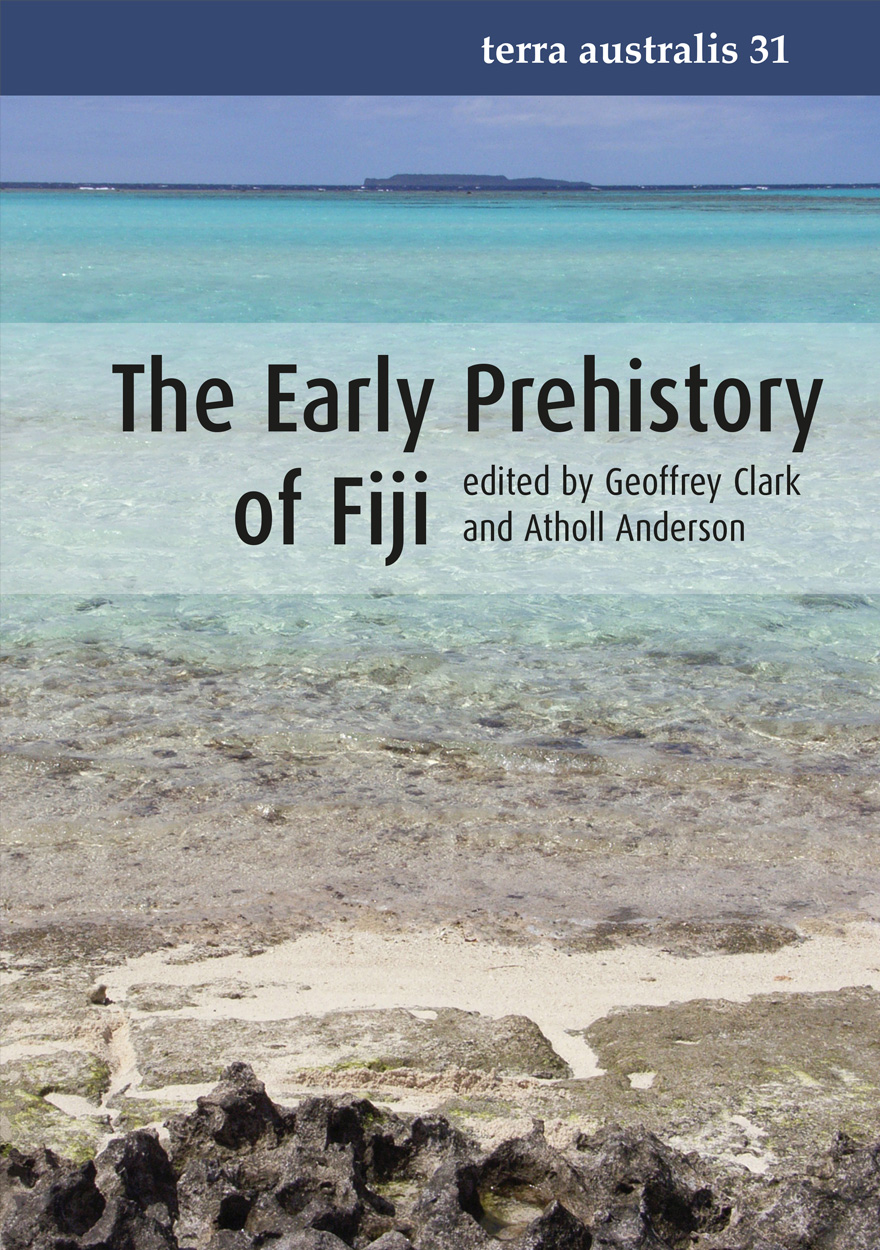
The Early Prehistory of Fiji »
Edited by: Geoffrey Clark, Atholl Anderson
Publication date: December 2009
I enjoyed reading this volume. It is rare to see such a comprehensive report on hard data published these days, especially one so insightfully contextualised by the editors’ introductory and concluding chapters. These scholars and the others involved in the work really know their stuff, and it shows. The editors connect the preoccupations of Pacific archaeologists with those of their colleagues working in other island regions and on “big questions” of colonisation, migration, interaction and patterns and processes of cultural change in hitherto-uninhabited environments. These sorts of outward-looking, big-picture contextual studies are invaluable, but all too often are missing from locally- and regionally-oriented writing, very much to its detriment. In sum, the work strongly advances our understanding of the early prehistory of Fiji through its well-integrated combination of original research and the reinterpretation of existing knowledge in the context of wider theoretical and historical concerns. In doing so The Early Prehistory of Fiji makes a truly substantial contribution to Pacific and archaeological scholarship.
Professor Ian Lilley, The University of Queensland
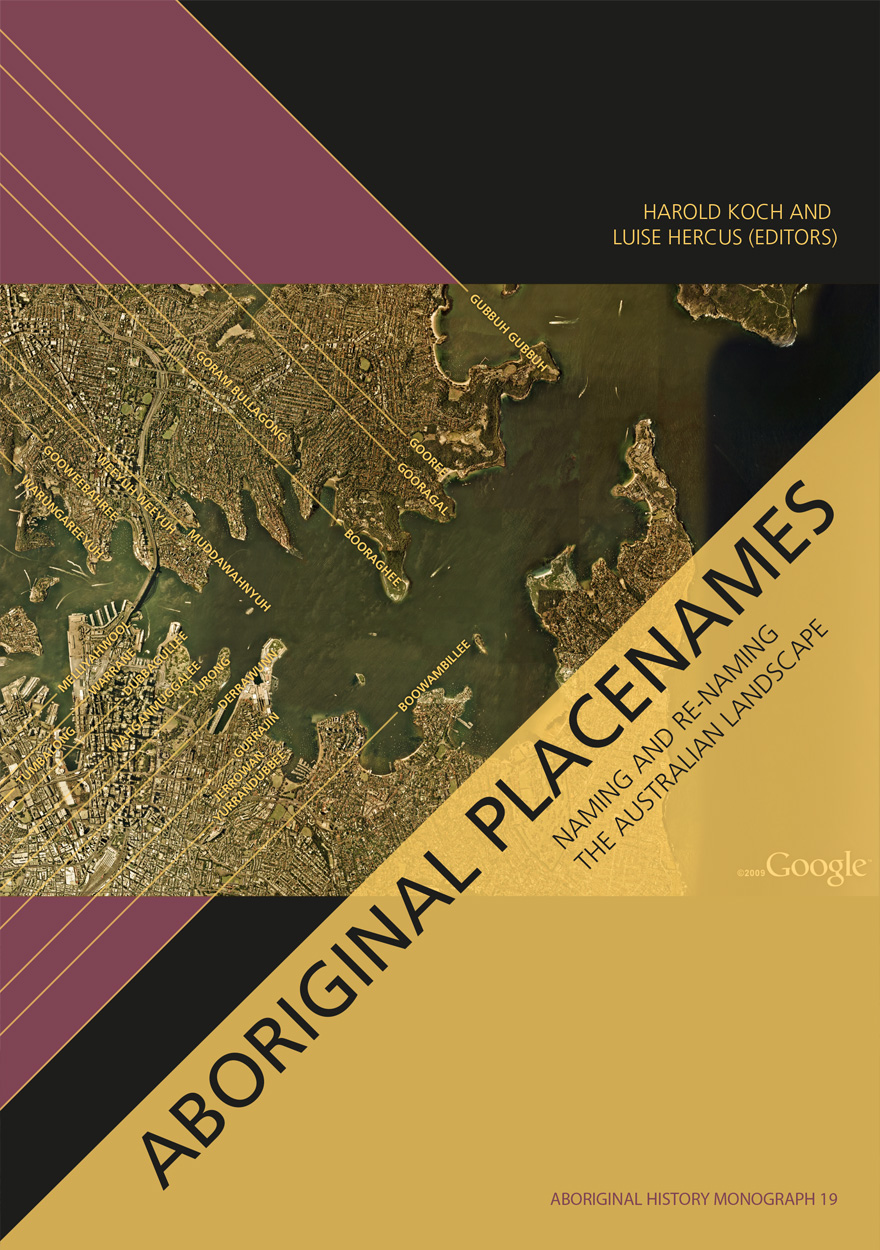
Aboriginal Placenames »
Naming and re-naming the Australian landscape
Edited by: Harold Koch, Luise Hercus
Publication date: October 2009
Aboriginal approaches to the naming of places across Australia differ radically from the official introduced Anglo-Australian system. However, many of these earlier names have been incorporated into contemporary nomenclature, with considerable reinterpretations of their function and form. Recently, state jurisdictions have encouraged the adoption of a greater number of Indigenous names, sometimes alongside the accepted Anglo-Australian terms, around Sydney Harbour, for example. In some cases, the use of an introduced name, such as Gove, has been contested by local Indigenous people.
The 19 studies brought together in this book present an overview of current issues involving Indigenous placenames across the whole of Australia, drawing on the disciplines of geography, linguistics, history, and anthropology. They include meticulous studies of historical records, and perspectives stemming from contemporary Indigenous communities. The book includes a wealth of documentary information on some 400 specific placenames, including those of Sydney Harbour, the Blue Mountains, Canberra, western Victoria, the Lake Eyre district, the Victoria River District, and southwestern Cape York Peninsula.
For more information on Aboriginal History Inc. please visit aboriginalhistory.org.au.

Does History Matter? »
Making and debating citizenship, immigration and refugee policy in Australia and New Zealand
Edited by: Klaus Neumann, Gwenda Tavan
Publication date: September 2009
This volume of essays represents the first systematic attempt to explore the use of the past in the making of citizenship and immigration policy in Australia and New Zealand. Focussing on immigration and citizenship policy in Australia and New Zealand, the contributions to this volume explore how history and memory are implicated in policy making and political debate, and what processes of remembering and forgetting are utilised by political leaders when formulating and defending policy decisions. They remind us that a nuanced understanding of the past is fundamental to managing the politics and practicalities of immigration and citizenship in the early 21st century.
Policy Making and Implementation »
Studies from Papua New Guinea
Edited by: R.J. May
Publication date: September 2009
There is a vast literature on the principles of public administration and good governance, and no shortage of theoreticians, practitioners and donors eager to push for public sector reform, especially in less-developed countries. Papua New Guinea has had its share of public sector reforms, frequently under the influence of multinational agencies and aid donors. Yet there seems to be a general consensus, both within and outside Papua New Guinea, that policy making and implementation have fallen short of expectations, that there has been a failure to achieve ‘good governance’.
This volume, which brings together a number of Papua New Guinean and Australian-based scholars and practitioners with deep familiarity of policy making in Papua New Guinea, examines the record of policy making and implementation in Papua New Guinea since independence. It reviews the history of public sector reform in Papua New Guinea, and provides case studies of policy making and implementation in a number of areas, including the economy, agriculture, mineral development, health, education, lands, environment, forestry, decentralization, law and order, defence, women and foreign affairs, privatization, and AIDS.
Policy is continuously evolving, but this study documents the processes of policy making and implementation over a number of years, with the hope that a better understanding of past successes and failures will contribute to improved governance in the future.

The Two Rainbow Serpents Travelling »
Mura track narratives from the ‘Corner Country’
Authored by: Jeremy Beckett, Luise Hercus
Publication date: September 2009
The ‘Corner Country’, where Queensland, South Australia and New South Wales now converge, was in Aboriginal tradition crisscrossed by the tracks of the mura, ancestral beings, who named the country as they travelled, linking place to language. Reproduced here is the story of the two Ngatyi, Rainbow Serpents, who travelled from the Paroo to the Flinders Ranges and back as far as Yancannia Creek, where their deep underground channels linked them back to the Paroo. Jeremy Beckett recorded these stories from George Dutton and Alf Barlow in 1957. Luise Hercus, who has worked on the languages in the area for many years, has collaborated with Jeremy Beckett to analyse the names and identify the places.
For more information on Aboriginal History Inc. please visit aboriginalhistory.org.au.

Food and Agriculture in Papua New Guinea »
Edited by: R. Michael Bourke, Tracy Harwood
Publication date: August 2009
Agriculture dominates the rural economy of Papua New Guinea (PNG). More than five million rural dwellers (80% of the population) earn a living from subsistence agriculture and selling crops in domestic and international markets.
Many aspects of agriculture in PNG are described in this data-rich book. Topics include agricultural environments in which crops are grown; production of food crops, cash crops and animals; land use; soils; demography; migration; the macro-economic environment; gender issues; governance of agricultural institutions; and transport. The history of agriculture over the 50 000 years that PNG has been occupied by humans is summarised. Much of the information presented is not readily available within PNG. The book contains results of many new analyses, including a food budget for the entire nation. The text is supported by 165 tables and 215 maps and figures.

The Making of The Australian National University »
1946-1996
Authored by: Stephen Foster, Margaret Varghese
Publication date: August 2009
The Australian National University has always been a university with a difference. Conceived in the mid–1940s to serve Australia’s post-war needs for advanced research and postgraduate training, it quickly embraced the ideals and traditions of Oxford and Cambridge. Undergraduate teaching was introduced in 1960, following amalgamation with Canberra University College. The University continued to adapt to changes in Australian society, while retaining much of its unique structure and objectives.
Stephen Foster and Margaret Varghese trace the history of ANU from its wartime origins to its fiftieth anniversary in 1996, featuring many of the prominent Australians who contributed to its making: ‘Nugget’ Coombs, Howard Florey, Mark Oliphant, W.K. Hancock, Douglas Copland, John Crawford, Peter Karmel; and others who stood out in particular fields, such as J.C.Eccles, Arthur Birch, Manning Clark, Russell Mathews, Ernest Titterton, Beryl Rawson, John Mulvaney, John Passmore and Frank Fenner.
The Making of The Australian National University explores many themes in higher education during the last half century, including academic freedom, relations between universities and politicians, recruitment practices, the ‘two cultures’ of science and the humanities, collegial versus managerial structures, equality of opportunity, student politics, academics and architecture and universities in the marketplace.
This is an affectionate and critical account of a remarkable Australian institution; and, more broadly, a fascinating study of how institutions work.