



Search titles
Displaying results 121 to 130 of 642.

Island Encounters »
Timor-Leste from the outside in
Authored by: Lisa Palmer
Publication date: July 2021
Island Encounters is a narrative of Timor shaped by a journey from the outside in. Incorporating the author’s experiences from more than two decades of involvement with Timor-Leste and, more particularly, the months she spent travelling with her family from west to east in 2018, Palmer traces paths redolent in longing and learning, belonging and bewilderment, courage and conviction to tell of an island divided by colonialism and conflict.
The book’s themes shuttle back and forth across the island, weaving together the past, present and future in deeply felt histories and personal stories that create the shared fabric of Timorese people’s lives. Offering a counterpoint to modernising development narratives, Island Encounters tells of people’s quiet determination to maintain their relationships between their lands, waters, traditions and each other.
By foregrounding the ways in which ancestral pathways and cultural politics inform and course through everyday life on island Timor, Palmer reveals the richness of the rituals and customary practices that underpin Timorese lives and the lives of those entwined with them. And, all along the way, Island Encounters shows how Timor and its diverse peoples are working with, and re-working, confounding and being confounded by, the ever-desirous heart of development.
‘A poignant, at times heart-wrenching, honest account of life in Timor-Leste.’
— José Ramos-Horta
‘Island Encounters is a shimmery blend of anthropology, memoir and reportage. Palmer journeys her way across the island of Timor and uncovers human stories of pasts not yet passed and of an uncertain present. Island Encounters will be the definitive contemporary explainer of why things work the way they do on both sides of the border, in West Timor and Timor-Leste. Not only is Palmer a deeply knowledgeable scholar, she is an absolute dream of a writer.’
— Gordon Peake, author of Beloved Land: Stories, Struggles, and Secrets from Timor-Leste
‘Palmer is the best kind of insider-outsider to translate a culture from the inside so outsiders can understand. Living with Timorese family, Palmer has had access to levels of cultural knowledge not usually shared with outsiders and she takes readers on a journey into the Timorese psyche. Island Encounters is a great intellectual gift to everyone wanting to better understand the complex new nation of Timor-Leste.’
— Sara Niner, author of Xanana: Leader of the Struggle for Independent Timor-Leste
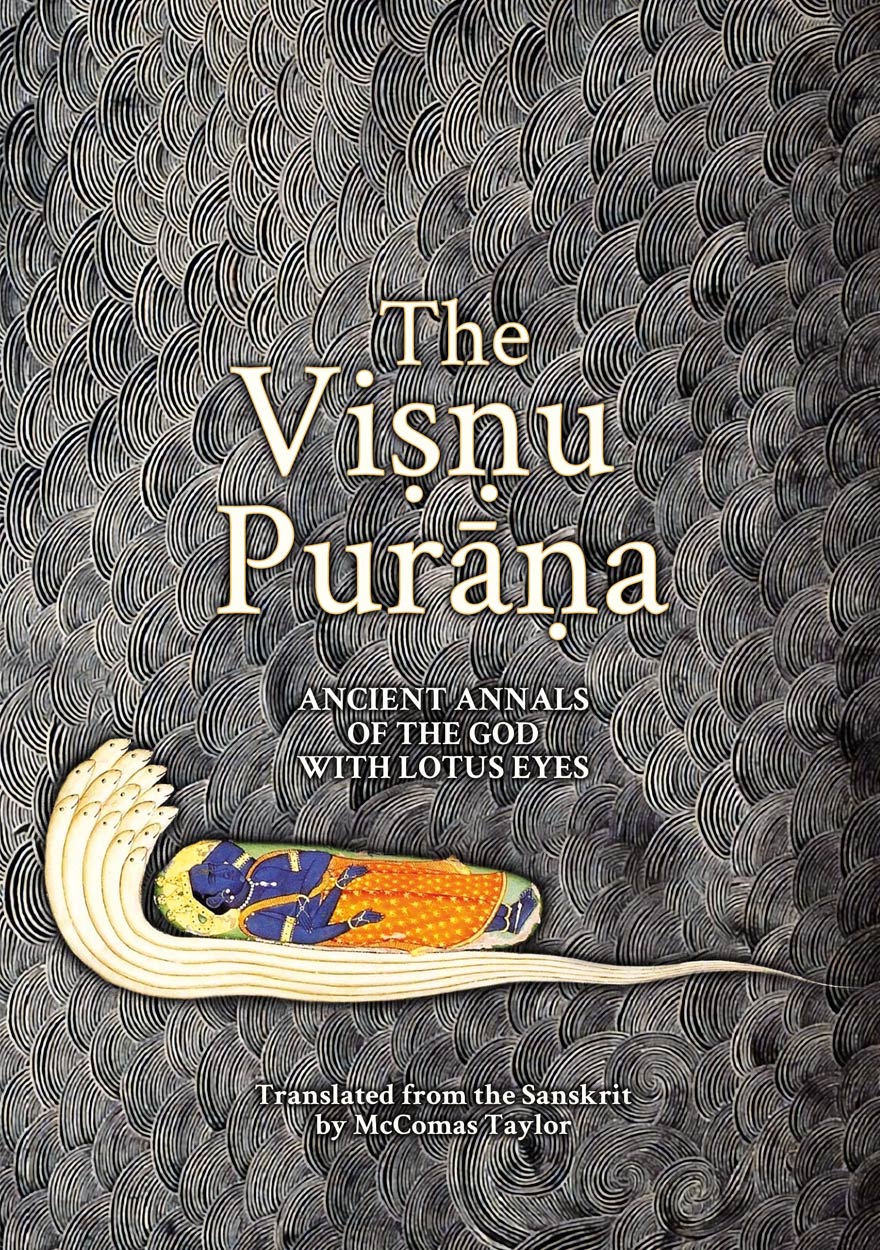
The Viṣṇu Purāṇa »
Ancient Annals of the God with Lotus Eyes
Authored by: McComas Taylor
Publication date: June 2021
This translation of The Viṣṇu Purāṇa is also available as a free audiobook (see the 'Additional Resources' tab).
Viṣṇu is a central deity in the Hindu pantheon, especially in his manifestation as the seductive cattle-herding youth, Kṛṣṇa. The purāṇas are sacred texts, which, as the Sanskrit name implies, are collections of narratives from ‘long ago’. The Viṣṇu Purāṇa is thus an ancient account of the universe and guide to life, which places Viṣṇu-Kṛṣṇa at the centre of creation, theology and reality itself.
This text, composed about 1,500 years ago, provides a comprehensive and accessible introduction to the most important themes and narratives that constitute the Hindu imagination: the creation and destruction of the universe, the origin of gods and mortals, the peopling of the world, and the structure and conduct of ideal brahminical society.
The Viṣṇu Purāṇa describes the trials of exemplary devotees, the existential struggles between gods and demons, and the exploits of legendary cultural heroes. It also contains many ecstatic songs of praise for the deity. The ever-popular accounts of Kṛṣṇa’s love games with the cattle-herding girls of Vṛṇdāvana, which have proliferated in literature, dance, song and visual arts over the millennia, are found here in authoritative form.
This faithful yet fluent blank-verse rendering of this great Hindu classic is the first new English translation in nearly 200 years. It will be welcomed by the scholarly community, while remaining readily accessible to a general readership.

International Review of Environmental History: Volume 7, Issue 1, 2021 »
Edited by: James Beattie, Ruth Morgan, Margaret Cook
Publication date: June 2021
Arising from the ‘Placing Gender’ workshop held in Melbourne in 2018, this collection brings together contributions that demonstrate different approaches to undertaking gender analysis in environmental history. Focusing on non-Indigenous women and men in the Anglo-world from the mid-nineteenth century, some adopt new tools to excavate familiar terrain, while others listen closely to voices that have rarely been heard in the field. This issue argues that recasting the making of settler places in terms of their gendered production and experience not only enriches their own environmental history, but also broadens the historian’s enquiry to encompass the other lands implicated in the production of settler places.
Download for free
Not available for purchase

Sound Citizens »
Australian Women Broadcasters Claim their Voice, 1923–1956
Authored by: Catherine Fisher
Publication date: June 2021
In 1954 Dame Enid Lyons, the first woman elected to the Australian House of Representatives, argued that radio had ‘created a bigger revolution in the life of a woman than anything that has happened any time’ as it brought the public sphere into the home and women into the public sphere. Taking this claim as its starting point, Sound Citizens examines how a cohort of professional women broadcasters, activists and politicians used radio to contribute to the public sphere and improve women’s status in Australia from the introduction of radio in 1923 until the introduction of television in 1956. This book reveals a much broader and more complex history of women’s contributions to Australian broadcasting than has been previously acknowledged.
Using a rich archive of radio magazines, station archives, scripts, personal papers and surviving recordings, Sound Citizens traces how women broadcasters used radio as a tool for their advocacy; radio’s significance to the history of women’s advancement; and how broadcasting was used in the development of women’s citizenship in Australia. It argues that women broadcasters saw radio as a medium that had the potential to transform women’s lives and status in society, and that they worked to both claim their own voices in the public sphere and to encourage other women to become active citizens. Radio provided a platform for women to contribute to public discourse and normalised the presence of women’s voices in the public sphere, both literally and figuratively.
Aboriginal History Journal: Volume 44 »
Edited by: Crystal McKinnon, Ben Silverstein
Publication date: May 2021
In this volume, Charlotte Ward’s narration of re-enactments of the Endeavour’s landing in Cooktown traces local processes of engaging with and producing histories that bring together stories of that landing with the much longer story of Guugu Yimithirr sovereignty. Heather Burke, Ray Kerkhove, Lynley A. Wallis, Cathy Keys and Bryce Barker analyse the extent of fear on the Queensland frontier through a historical and archaeological study of homes and huts and their fortification. In a collaborative article, Myfany Turpin, Felicity Meakins, Marie Mudgedell, Angie Tchooga and Calista Yeoh consider three performances of Puranguwana, a ‘classical’ Western Desert song that emerges from the death of Yawalyurru, a Pintupi man. Paige Gleeson offers us a new perspective on the well-known image of Warlpiri-Anmatyerr man Gwoja Tjungurrayi, known since the 1950s as ‘One Pound Jimmy’, an image featured on postage stamps and on the two dollar coin. And Gretchen Stolte’s study of Queensland Aboriginal Creations situates the production of boomerangs for sale as work of cultural importance, enriching understandings of Aboriginal artwork and its production.
Download for free
Not available for purchase

Austronesian Paths and Journeys »
Edited by: James J. Fox
Publication date: May 2021
This is the eighth volume in the Comparative Austronesian series. The papers in this volume examine metaphors of path and journey among specific Austronesian societies located on islands from Taiwan to Timor and from Madagascar to Micronesia. These diverse local expressions define common cultural conceptions found throughout the Austronesian-speaking world.

Crisis »
Edited by: Jane Golley, Linda Jaivin, Sharon Strange
Publication date: April 2021
The year 2020 was marked by a series of rolling crises. The Australian wildfires at the start of the year were a catastrophic sign of the global climate crisis. Xi Jinping’s announcement in September that the People’s Republic of China would become carbon neutral by 2060 could help alleviate the crisis, but China has to fix its coal problem first. The big story was, of course, the global COVID-19 pandemic. Appearing to originate in a Wuhan wet market, by year’s end the pandemic had claimed nearly 2 million lives worldwide, put whole countries into lockdown, and sent economies around the world tumbling into recession. China itself successfully suppressed the disease at home and recorded positive economic growth for the year — proving, at least according to the Chinese Communist Party, the ‘superiority of the socialist system’. Not everyone was convinced, with persistent questions about the CCP’s initial cover up of the outbreak, and how the lack of transparency helped it become a pandemic in the first place.
The China Story Yearbook 2020: Crisis surveys the multiple crises of the year of the Metal Rat, including the catastrophic mid-year floods that sparked fears about the stability of the Three Gorges Dam. It looks at how Chinese women fared through the pandemic, from the rise in domestic violence to portraits of female sacrifice on the medical front line to the trolling of a famous dancer for being childless. It also examines the downward-spiralling Sino-Australian relationship, the difficult ‘co-morbidities’ of China’s relations with the US, the end of ‘One Country, Two Systems’ in Hong Kong, the simmering border conflict with India, and the rise of pandemic-related anti-Chinese racism. The Yearbook also explores the responses to crisis of, among others, Daoists, Buddhists, and humourists — because when all else fails, there’s always philosophy, prayer, and laughter.

Intermediate Ancient Greek Language »
Authored by: Darryl Palmer
Publication date: March 2021
Intermediate Ancient Greek Language is a series of Lessons and Exercises intended for students who have already covered most of an introductory course in the ancient Greek language. It aims to broaden and deepen students’ understanding of the main grammatical constructions of Greek. Further attention is given to grammatical forms to illustrate their functions.
In the Lessons, tragedy, comedy, historiography, oratory and philosophy are sources for dramatic material. The Cases have been deliberately placed late in the series of Lessons 36 to 41; students by now will be prepared to analyse Case usage. Consideration of prepositions in Lesson 42 naturally follows the Cases. Lesson 43, on correlative clauses, links with adjectival and adverbial constructions in previous Lessons. The final Lesson 44 deals with exclamations.
Throughout the book, the author relies on genuine Greek sources for the passages in the Lessons and Exercises.

Australian Dictionary of Biography, Volume 19 »
1991–1995 (A–Z)
Edited by: Melanie Nolan
Publication date: March 2021
Volume 19 of the Australian Dictionary of Biography (ADB) contains concise biographies of individuals who died between 1991 and 1995. The first of two volumes for the 1990s, it presents a colourful montage of late twentieth-century Australian life, containing the biographies of significant and representative Australians.
The volume is still in the shadow of World War II with servicemen and women who enlisted young appearing, but these influences are dimming and there are now increasing numbers of non-white, non-male, non-privileged and non-straight subjects.
The 680 individuals recorded in volume 19 of the ADB include Wiradjuri midwife and Ngunnawal Elder Violet Bulger; Aboriginal rights activist, poet, playwright and artist Kevin Gilbert; and Torres Strait Islander community leader and land rights campaigner Eddie Mabo. HIV/AIDS child activists Tony Lovegrove and Eve Van Grafhorst have entries, as does conductor Stuart Challender, ‘the first Australian celebrity to go public’ about his HIV/AIDS condition in 1991.
The arts are, as always, well-represented, including writers Frank Hardy, Mary Durack and Nene Gare, actors Frank Thring and Leonard Teale and arts patron Ian Potter. We are beginning to see the effects of the steep rise in postwar immigration flow through to the ADB. Artist Joseph Stanislaw Ostoja-Kotkowski was born in Poland. Pilar Moreno de Otaegui, co-founded the Spanish Club of Sydney. Chinese restaurateur and community leader Ming Poon (Dick) Low migrated to Victoria in 1953.
Often we have a dearth of information about the domestic lives of our subjects; politician Olive Zakharov, however, bravely disclosed at the Victorian launch of the federal government’s campaign to Stop Violence Against Women in 1993 that she was a survivor of domestic violence in her second marriage.
Take a dip into the many fascinating lives of the Australian Dictionary of Biography.

At Home in Exile »
A Memoir
Authored by: Helga M Griffin
Publication date: February 2021
This is a story of a girl’s construction of her identity, and of her family’s search for a place in the world, for the Heimat that is so resonant for those of German background. We follow Helga through an adventurous childhood in Iran, whose vast open spaces her mother called ‘my spiritual home’. Her engineer father worked on a grand scale, designing and laying roads and railways, and tunnelling through mountain ranges. Then came the invasions of World War II, and the family, half-German, half-Austrian, found themselves on a long voyage to Australia, designated enemy aliens. They were interned for nearly five years in the dusty Victorian countryside. On their release at the end of the War, stranded in Melbourne, they sought another home. The children were dispatched to convents, and at the Academy of Mary Immaculate, Helga found a temporary homeland, in faith.
Everyday life in the Australia of the late 1940s and early 1950s is freshly seen by this feisty, loving migrant family. Through their eyes, we encounter a strange place, Australia, as if for the first time. Helga’s development from a thoughtful, sensitive child to a self-possessed young woman, wrestling with her faith and with how to live a decent life, is vividly recounted.