



Books
Browse or search ANU Press' range of books or find out more about the publications' authors and co-publishers. Download the book for free or buy a print-on-demand copy.
Displaying results 71 to 80 of 84.
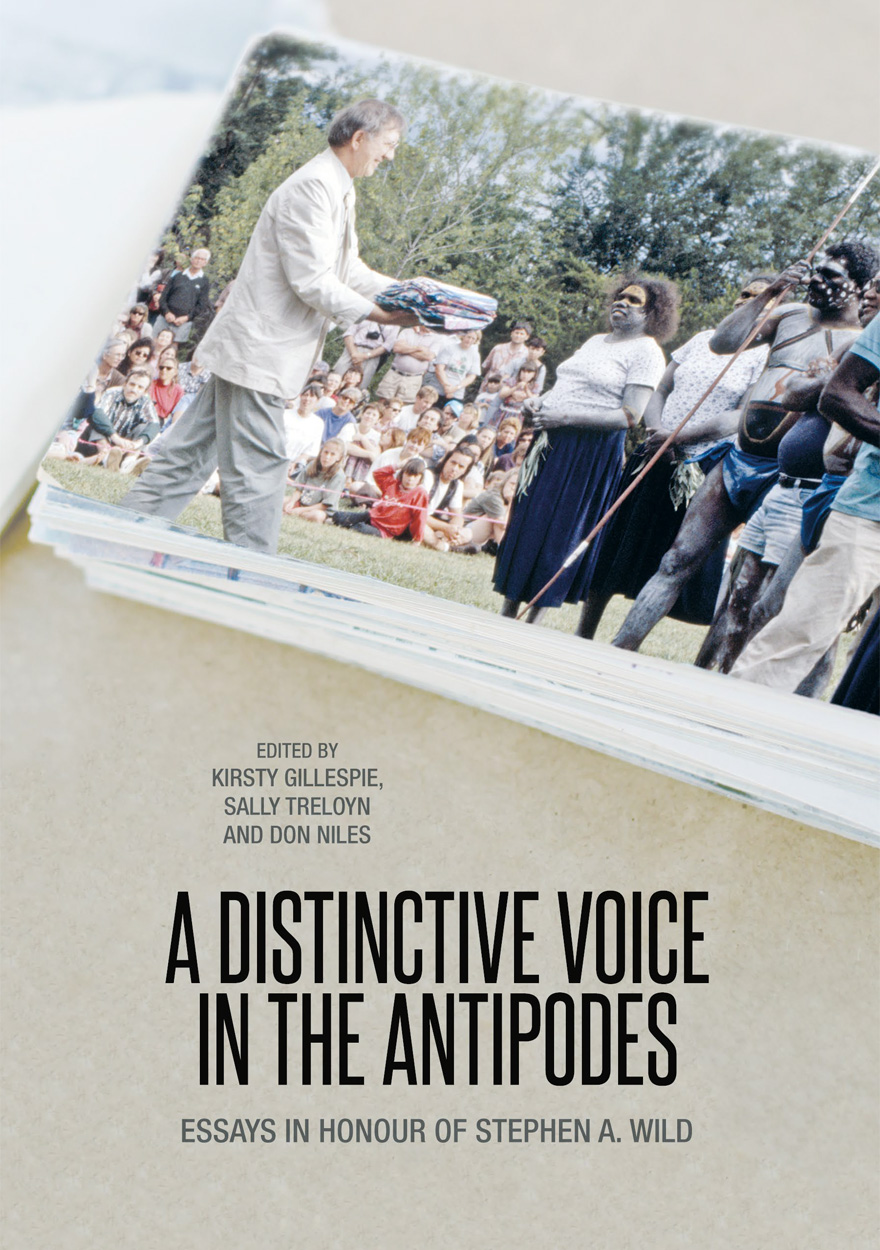
A Distinctive Voice in the Antipodes »
Essays in Honour of Stephen A. Wild
Publication date: July 2017
This volume of essays honours the life and work of Stephen A. Wild, one of Australia’s leading ethnomusicologists. Born in Western Australia, Wild studied at Indiana University in the USA before returning to Australia to pursue a lifelong career with Indigenous Australian music.
As researcher, teacher, and administrator, Wild’s work has impacted generations of scholars around the world, leading him to be described as ‘a great facilitator and a scholar who serves humanity through music’ by Andrée Grau, Professor of the Anthropology of Dance at University of Roehampton, London.
Focusing on the music of Aboriginal Australia and the Pacific Islands, and the concerns of archiving and academia, the essays within are authored by peers, colleagues, and former students of Wild. Most of the authors are members of the Study Group on Music and Dance of Oceania of the International Council for Traditional Music, an organisation that has also played an important role in Wild’s life and development as a scholar of international standing.
Ranging in scope from the musicological to the anthropological—from technical musical analyses to observations of the sociocultural context of music—these essays reflect not only on the varied and cross-disciplinary nature of Wild’s work, but on the many facets of ethnomusicology today.

Indigenous Data Sovereignty »
Toward an agenda
Edited by: Tahu Kukutai, John Taylor
Publication date: November 2016
As the global ‘data revolution’ accelerates, how can the data rights and interests of indigenous peoples be secured? Premised on the United Nations Declaration on the Rights of Indigenous Peoples, this book argues that indigenous peoples have inherent and inalienable rights relating to the collection, ownership and application of data about them, and about their lifeways and territories. As the first book to focus on indigenous data sovereignty, it asks: what does data sovereignty mean for indigenous peoples, and how is it being used in their pursuit of self-determination?
The varied group of mostly indigenous contributors theorise and conceptualise this fast-emerging field and present case studies that illustrate the challenges and opportunities involved. These range from indigenous communities grappling with issues of identity, governance and development, to national governments and NGOs seeking to formulate a response to indigenous demands for data ownership. While the book is focused on the CANZUS states of Canada, Australia, Aotearoa/New Zealand and the United States, much of the content and discussion will be of interest and practical value to a broader global audience.
‘A debate-shaping book … it speaks to a fast-emerging field; it has a lot of important things to say; and the timing is right.’
— Stephen Cornell, Professor of Sociology and Faculty Chair of the Native Nations Institute, University of Arizona
‘The effort … in this book to theorise and conceptualise data sovereignty and its links to the realisation of the rights of indigenous peoples is pioneering and laudable.’
— Victoria Tauli-Corpuz, UN Special Rapporteur on the Rights of Indigenous Peoples, Baguio City, Philippines
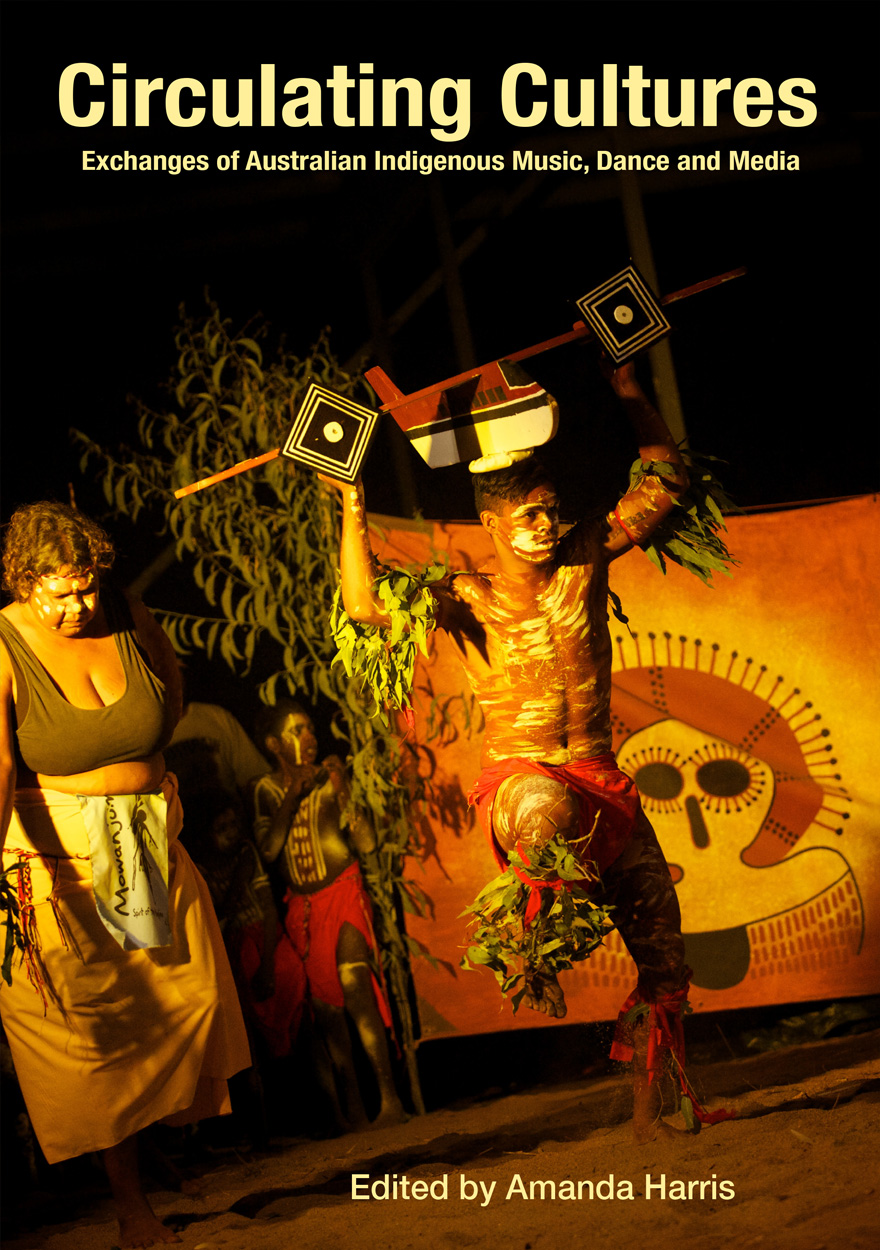
Circulating Cultures »
Exchanges of Australian Indigenous Music, Dance and Media
Edited by: Amanda Harris
Publication date: December 2014
Circulating Cultures is an edited book about the transformation of cultural materials through the Australian landscape. The book explores cultural circulation, exchange and transit, through events such as the geographical movement of song series across the Kimberley and Arnhem Land; the transformation of Australian Aboriginal dance in the hands of an American choreographer; and the indigenisation of symbolic meanings in heavy metal music. Circulating Cultures crosses disciplinary boundaries, with contributions from historians, musicologists, linguists and dance historians, to depict shifts of cultural materials through time, place and interventions from people. It looks at the way Indigenous and non-Indigenous performing arts have changed through intercultural influence and collaboration.

Indigenous Australians and the National Disability Insurance Scheme »
Authored by: Nicholas Biddle, Fadwa Al-Yaman, Michelle Gourley, Matthew Gray, J. Rob Bray, Brendan Brady, Le Anh Pham, Emma Williams, Maxine Montaigne
Publication date: October 2014
The National Disability Insurance Scheme (NDIS) is one of the major policy innovations of the early 21st century in Australia, representing a new way of delivering services to people with a disability and those who care for them. It has the potential to transform the lives of hundreds of thousands of people, giving them greater certainty and control over their lives. There is a higher incidence of disability in the Aboriginal and Torres Strait Islander population than in the Australian population more generally, so the NDIS is of particular relevance to Indigenous Australians. However, Indigenous Australians with a disability have a very distinct age, geographic and health profile, which differs from that of the equivalent non-Indigenous population. Furthermore, the conceptualisation of disability and care in many Indigenous communities, particularly in remote areas, may differ markedly in comparison to more settled parts of the country, and there is the added complexity of a unique history of interaction with government. In considering these issues in detail, this Research Monograph provides a resource for policy makers, researchers and service providers who are working in this important policy area. Its major conclusion is that the NDIS, if it is to be an effective policy for Indigenous Australians, needs to take into account their very particular needs and aspirations.

The Aranda's Pepa »
An introduction to Carl Strehlow’s Masterpiece Die Aranda- und Loritja-Stämme in Zentral-Australien (1907-1920)
Authored by: Anna Kenny
Publication date: December 2013
The German missionary Carl Strehlow (1871-1922) had a deep ethnographic interest in Aboriginal Australian cosmology and social life which he documented in his 7 volume work Die Aranda- und Loritja-Stämme in Zentral-Australien that remains unpublished in English. In 1913, Marcel Mauss called his collection of sacred songs and myths, an Australian Rig Veda. This immensely rich corpus, based on a lifetime on the central Australian frontier, is barely known in the English-speaking world and is the last great body of early Australian ethnography that has not yet been built into the world of Australian anthropology and its intellectual history.
The German psychological and hermeneutic traditions of anthropology that developed outside of a British-Australian intellectual world were alternatives to 19th century British scientism. The intellectual roots of early German anthropology reached back to Johann Gottfried Herder (1744-1803), the founder of German historical particularism, who rejected the concept of race as well as the French dogma of the uniform development of civilisation. Instead he recognised unique sets of values transmitted through history and maintained that cultures had to be viewed in terms of their own development and purpose. Thus, humanity was made up of a great diversity of ways of life, language being one of its main manifestations. It is this tradition that led to a concept of cultures in the plural.

Macassan History and Heritage »
Journeys, Encounters and Influences
Edited by: Marshall Clark, Sally K. May
Publication date: June 2013
This book presents inter-disciplinary perspectives on the maritime journeys of the Macassan trepangers who sailed in fleets of wooden sailing vessels known as praus from the port city of Makassar in southern Sulawesi to the northern Australian coastline. These voyages date back to at least the 1700s and there is new evidence to suggest that the Macassan praus were visiting northern Australia even earlier. This book examines the Macassan journeys to and from Australia, their encounters with Indigenous communities in the north, as well as the ongoing social and cultural impact of these connections, both in Indonesia and Australia.

A Good Life »
Human rights and encounters with modernity
Authored by: Mary Edmunds
Publication date: May 2013
This book is a story. It’s a story about ordinary people in very different parts of the world dealing with rapid change in the late twentieth and early twenty-first centuries. It’s about times of turbulent and violent social upheaval and rupture with the past. It’s about modern times. It’s also about being human; what it is to be human in a modernising and globalising world; how, in responding to the circumstances of their times, different groups define, redefine, and attempt to put into practice their understandings of the good and of what constitutes a good life. And it’s about how human rights have come to be not abstract universal principles but a practical source of consciousness and practice for real people.
Drawing on the author’s experience as an anthropologist, the book examines different groups over the last three decades of the twentieth century and the first years of the twenty-first: Thai factory workers over a period of two coups in the 1970s; Spanish nuns in the 1980s, in the aftermath of the Second Vatican Council and the end of the Franco dictatorship; Aboriginal people in the remote Pilbara region of Western Australia dealing with the impact of late colonialism and moves towards self-determination, from the 1980s to the present. Each of these groups has its own stories, illuminating ways in which, despite the assault of modernisation on deeply held traditional beliefs and practices, particular cultural understandings and practices continue to shape people’s responses to their novel circumstances. The very diversity of the studies presented in the book raises some of the most compelling moral and social questions of our time and invites the reader, both academic and lay, to focus on what it is that makes us human; whether there are human universals as well as cultural particularities; whether human rights provide universal norms and practices; what unites as well as divides us; and where morality, and understandings of a good life, can be sourced in a secular modern world.
“This is a book about hope, the hope that we have ways to live together in a rapidly changing world which will enable us to ‘live a good life in the modern world.’”
Hon. Fred Chaney AO.

Survey Analysis for Indigenous Policy in Australia »
Social Science Perspectives
Edited by: Boyd Hunter, Nicholas Biddle
Publication date: November 2012
Indigenous policy is a complex domain motivated by a range of social, cultural, political and economic issues. The Council of Australian Governments ‘closing the gaps’ agenda for addressing Indigenous disadvantage in Australia now includes six targets with well defined and measurable outcomes for policy action. In this context there is a continuing and pressing need for robust debate to understand how meaningful improvement in Indigenous outcomes might be achieved.
This monograph presents the peer-reviewed proceedings of the 2011 CAEPR/ABS conference on ‘Social Science Perspectives on the 2008 National and Aboriginal Torres Strait Islander Social Survey’. It is the fourth CAEPR monograph since 1992 to reflect on national surveys of Indigenous Australians. The conference covered topics including child development, crime and justice, culture, wellbeing, the customary economy, demography, education, employment, fertility, health, housing, income and financial stress, mobility, poverty, social exclusion, and substance abuse. The papers summarise the strengths and limitations of the 2008 NATSISS, discuss the types of policy-relevant questions it can inform, and consider future survey design.
A social survey such as the NATSISS can ultimately never tell those responsible for developing public policy what to do, but it can provide useful information to inform policy decisions. This volume will be useful for researchers and policy makers, and relevant to the wider national debate and, in particular, Indigenous communities and organisations.

Peopled Landscapes »
Archaeological and Biogeographic Approaches to Landscapes
Edited by: Simon G. Haberle, Bruno David
Publication date: January 2012
This impressive collection celebrates the work of Peter Kershaw, a key figure in the field of Australian palaeoenvironmental reconstruction. Over almost half a century his research helped reconceptualize ecology in Australia, creating a detailed understanding of environmental change in the Late Pleistocene and Holocene. Within a biogeographic framework one of his exceptional contributions was to explore the ways that Aboriginal people may have modified the landscape through the effects of anthropogenic burning. These ideas have had significant impacts on thinking within the fields of geomorphology, biogeography, archaeology, anthropology and history. Papers presented here continue to explore the dynamism of landscape change in Australia and the contribution of humans to those transformations. The volume is structured in two sections. The first examines evidence for human engagement with landscape, focusing on Australia and Papua New Guinea but also dealing with the human/environmental histories of Europe and Asia. The second section contains papers that examine palaeoecology and present some of the latest research into environmental change in Australia and New Zealand. Individually these papers, written by many of Australia’s prominent researchers in these fields, are significant contributions to our knowledge of Quaternary landscapes and human land use. But Peopled Landscapes also signifies the disciplinary entanglement that is archaeological and biogeographic research in this region, with archaeologists and environmental scientists contributing to both studies of human land use and palaeoecology. Peopled Landscapes reveals the interdisciplinary richness of Quaternary research in the Australasian region as well as the complexity and richness of the entangled environmental and human pasts of these lands.
— Prof. Peter Hiscock, The Australian National University

Exploring the Legacy of the 1948 Arnhem Land Expedition »
Edited by: Martin Thomas, Margo Neale
Publication date: June 2011
In 1948 a collection of scientists, anthropologists and photographers journeyed to northern Australia for a seven-month tour of research and discovery—now regarded as ‘the last of the big expeditions’. The American–Australian Scientific Expedition to Arnhem Land was front-page news at the time, but 60 years later it is virtually unknown. This lapse into obscurity was due partly to the fraught politics of Australian anthropology and animus towards its leader, the Adelaide-based writer-photographer Charles Mountford. Promoted as a ‘friendly mission’ that would foster good relations between Australia and its most powerful wartime ally, the Expedition was sponsored by National Geographic, the Smithsonian Institution and the Australian Government. An unlikely cocktail of science, diplomacy and popular geography, the Arnhem Land Expedition put the Aboriginal cultures of the vast Arnhem Land reserve on an international stage.