



Search titles
Displaying results 1 to 10 of 1168.
State, Communities and Forests In Contemporary Borneo »
Edited by: Fadzilah Majid Cooke
Publication date: July 2006
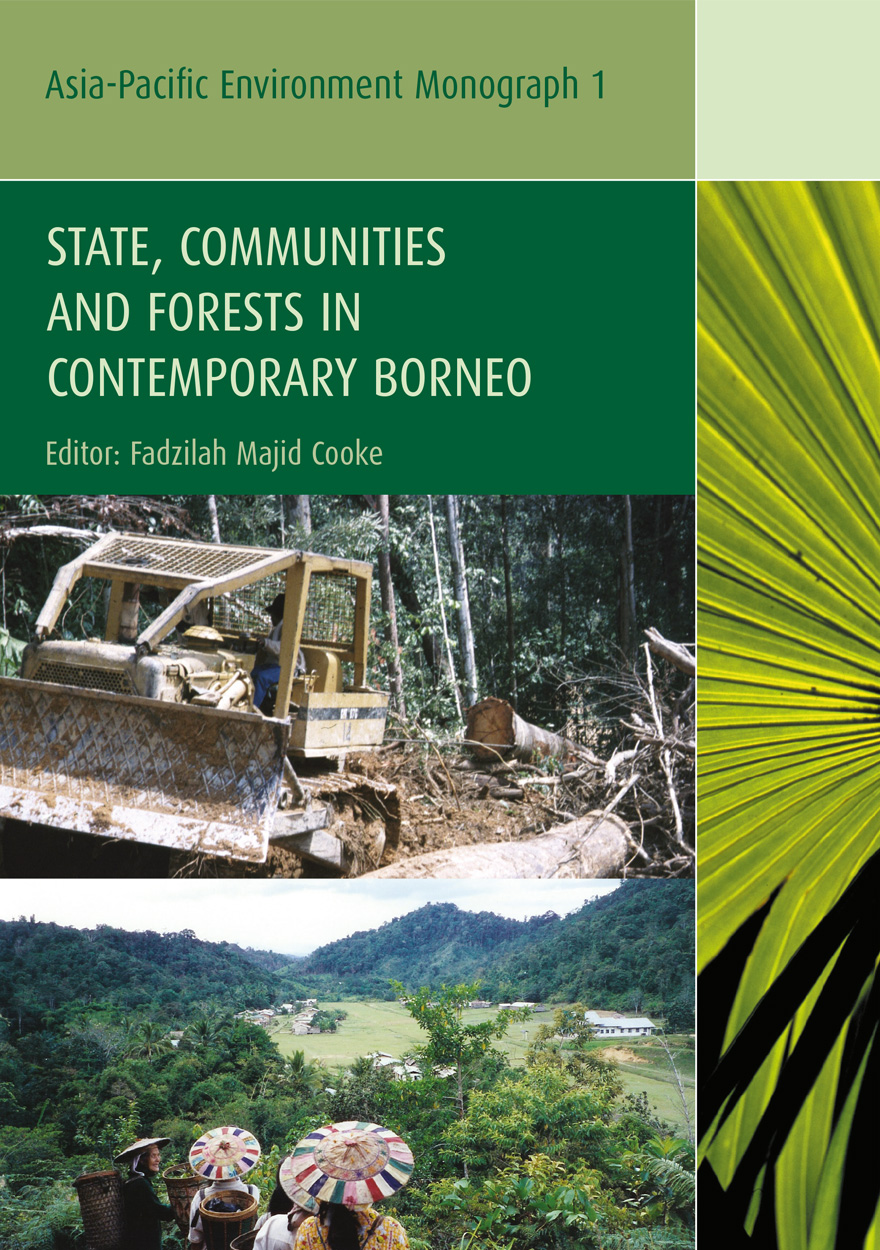
The name ‘Borneo’ evokes visions of constantly changing landscapes, but with important island-wide continuities. One of the continuities has been the forests, which have for generations been created and modified by the indigenous population, but over the past three decades have been partially replaced by tree crops, grass or scrub. This book, the first in the series of Asia-Pacific Environmental Monographs, looks at the political complexities of forest management across the whole island of Borneo, tackling issues of tenure, land use change and resource competition, ‘tradition’ versus ‘modernity’, disputes within and between communities, between communities and private firms, or between communities and governments. While it focuses on the changes taking place in local political economies and conservation practices, it also makes visible the larger changes taking place in both Indonesia and Malaysia. The common theme of the volume is the need to situate local complexities in the larger institutional context, and the possible gains to be made from such an approach in the search for alternative models of conservation and development.

Myanmar »
The state, community and the environment
Edited by: Monique Skidmore, Trevor Wilson
Publication date: October 2007
Despite deteriorating economic and developmental conditions, worsening environmental problems, and troubles arising from the unresolved status of its ethnic minorities, Myanmar seems no closer to a political resolution. Myanmar’s economy continues to stagnate, with severe implications for its people. Low levels of international assistance have exacerbated the situation.
Myanmar—the state, community and the environment examines the missed opportunities by government and opposition groups to find a way out of the political impasse and improve the standard of living of the people of Myanmar.
This collection provides insights into the country’s economic development, in particular the vital rice-marketing sector and the attempts to expand existing industrial zones. It focuses, for the first time, on Myanmar’s environmental governance with in-depth case studies, and on the increasing need for effective environmental protection and sustainability.

The Neoliberal State, Recognition and Indigenous Rights »
New paternalism to new imaginings
Edited by: Deirdre Howard-Wagner, Maria Bargh, Isabel Altamirano-Jiménez
Publication date: July 2018
The impact of neoliberal governance on indigenous peoples in liberal settler states may be both enabling and constraining. This book is distinctive in drawing comparisons between three such states—Australia, Canada and New Zealand. In a series of empirically grounded, interpretive micro-studies, it draws out a shared policy coherence, but also exposes idiosyncrasies in the operational dynamics of neoliberal governance both within each state and between them. Read together as a collection, these studies broaden the debate about and the analysis of contemporary government policy.
The individual studies reveal the forms of actually existing neoliberalism that are variegated by historical, geographical and legal contexts and complex state arrangements. At the same time, they present examples of a more nuanced agential, bottom-up indigenous governmentality. Focusing on intense and complex matters of social policy rather than on resource development and land rights, they demonstrate how indigenous actors engage in trying to govern various fields of activity by acting on the conduct and contexts of everyday neoliberal life, and also on the conduct of state and corporate actors.

Future-Proofing the State »
Managing Risks, Responding to Crises and Building Resilience
Publication date: May 2014
This book focuses on the challenges facing governments and communities in preparing for and responding to major crises — especially the hard to predict yet unavoidable natural disasters ranging from earthquakes and tsunamis to floods and bushfires, as well as pandemics and global economic crises.
Future-proofing the state and our societies involves decision-makers developing capacities to learn from recent ‘disaster’ experiences in order to be better placed to anticipate and prepare for foreseeable challenges. To undertake such futureproofing means taking long-term (and often recurring) problems seriously, managing risks appropriately, investing in preparedness, prevention and mitigation, reducing future vulnerability, building resilience in communities and institutions, and cultivating astute leadership. In the past we have often heard calls for ‘better future-proofing’ in the aftermath of disasters, but then neglected the imperatives of the message.
Future-Proofing the State is organised around four key themes: how can we better predict and manage the future; how can we transform the short-term thinking shaped by our political cycles into more effective long-term planning; how can we build learning into our preparations for future policies and management; and how can we successfully build trust and community resilience to meet future challenges more adequately?

The Absent Presence of the State in Large-Scale Resource Extraction Projects »
Edited by: Nicholas A. Bainton, Emilia E. Skrzypek
Publication date: August 2021
Standing on the broken ground of resource extraction settings, the state is sometimes like a chimera: its appearance and intentions are misleading and, for some actors, it is unknowable and incomprehensible. It may be easily mistaken for someone or something else, like a mining company, for example.
With rich ethnographic material, this volume tackles critical questions about the nature of contemporary states, studied from the perspective of resource extraction projects in Papua New Guinea, Australia and beyond. It brings together a sustained focus on the unstable and often dialectical relationship between the presence and the absence of the state in the context of resource extraction. Across the chapters, contributors discuss cases of proposed mining ventures, existing large-scale mining operations and the extraction of natural gas. Together, they illustrate how the concept of absent presence can be brought to life and how it can enhance our understanding of the state as well as relations and processes forming in extractive contexts, thus providing a novel contribution to the anthropology of the state and the anthropology of extraction.
‘The Absent Presence fills a major gap in our knowledge about the relationship between states and companies – at a time when resource extraction seems to be more contested than ever. Bainton and Skrzypek have curated an incredibly impressive volume that should be read by all those interested in exploring corporate and state power, and the ever-present impacts of extraction. A highly recommended read.’
— Professor Deanna Kemp, Director of the Centre for Social Responsibility in Mining, The University of Queensland
‘Countless books have been written on the sovereign state and how it imposes a particular kind of order on economic and social interactions. What is original and compelling about this collection is the portrait of how two very different states converge when it comes to “extractive ventures”. From the presumption of exclusive sovereignty over mineral resources, to the bargains that are struck with major (often global) corporations, and the relative indifference to environmental impacts, there is a remarkable consistency in the patterns that are referred to as “state effects”. These effects are brought from the background to the foreground in this book through the blending of creative and critical thinking with detailed empirical research.’
— Tim Dunne, Pro-Vice-Chancellor and Professor of International Relations, The University of Queensland
‘This brilliant and intriguing title provides a timely contribution to understanding the actual functions and strategies of state (and state-like) institutions in resource arenas. The dialectics of presence-absence and its refractions at different levels and scales of government allow the authors to go beyond stereotypes about the (strong, weak, failed or corrupt) state, highlighting more commonalities than expected between Papua New Guinea and Australia, and even New Caledonia.’
— Dr Pierre-Yves Le Meur, Anthropologist, Senior Researcher, French National Research Institute for Sustainable Development, Joint Research Unit SENS (Knowledge Environment Society)

The Federated States of Micronesia’s Engagement with the Outside World »
Control, Self-Preservation and Continuity
Authored by: Gonzaga Puas
Publication date: September 2021
This study addresses the neglected history of the people of the Federated States of Micronesia’s (FSM) engagement with the outside world. Situated in the northwest Pacific, FSM’s strategic location has led to four colonial rulers. Histories of FSM to date have been largely written by sympathetic outsiders. Indigenous perspectives of FSM history have been largely absent from the main corpus of historical literature. A new generation of Micronesian scholars are starting to write their own history from Micronesian perspectives and using Micronesian forms of history. This book argues that Micronesians have been dealing successfully with the outside world throughout the colonial era in ways colonial authorities were often unaware of. This argument is sustained by examination of oral histories, secondary sources, interviews, field research and the personal experience of a person raised in the Mortlock Islands of Chuuk State. It reconstructs how Micronesian internal processes for social stability and mutual support endured, rather than succumbing to the different waves of colonisation. This study argues that colonisation did not destroy Micronesian cultures and identities, but that Micronesians recontextualised the changing conditions to suit their own circumstances. Their success rested on the indigenous doctrines of adaptation, assimilation and accommodation deeply rooted in the kinship doctrine of eaea fengen (sharing) and alilis fengen (assisting each other). These values pervade the Constitution of the FSM, which formally defines the modern identity of its indigenous peoples, reasserting and perpetuating Micronesian values and future continuity.

Interpreting Myanmar »
A Decade of Analysis
Authored by: Andrew Selth
Publication date: December 2020
Since the abortive 1988 pro-democracy uprising, Myanmar (formerly Burma) has attracted increased attention from a wide range of observers. Yet, despite all the statements, publications and documentary films made about the country over the past 32 years, it is still little known and poorly understood. It remains the subject of many myths, mysteries and misconceptions. Between 2008 and 2019, Andrew Selth clarified and explained contemporary developments in Myanmar on the Lowy Institute’s internationally acclaimed blog, The Interpreter. This collection of his 97 articles provides a fascinating and informative record of that critical period, and helps to explain many issues that remain relevant today.

Eyewitness to Early Reform in Myanmar »
Authored by: Trevor Wilson
Publication date: March 2016
By 2000, a ruthless military regime had ruled Myanmar for more than a decade, polarising opinion inside and outside Burma/Myanmar — with Western countries locked into non-UN sanctions and Asian countries and the rest of the world locked into unenthusiastic cooperation with Myanmar. While the United Nations and its agencies faced numerous obstacles as they sought to encourage national reconciliation in Myanmar, conditions in Myanmar were slowly starting to change. With a reform faction in charge, the military regime itself after 1999 slowly began experimenting with modest changes, before committing in 2008 to transfer power via a constitutional referendum and national elections, both of which it effectively controlled. This book provides the first eyewitness account of the early reform experiments.
Dictatorship, Disorder and Decline in Myanmar »
Edited by: Monique Skidmore, Trevor Wilson
Publication date: December 2008
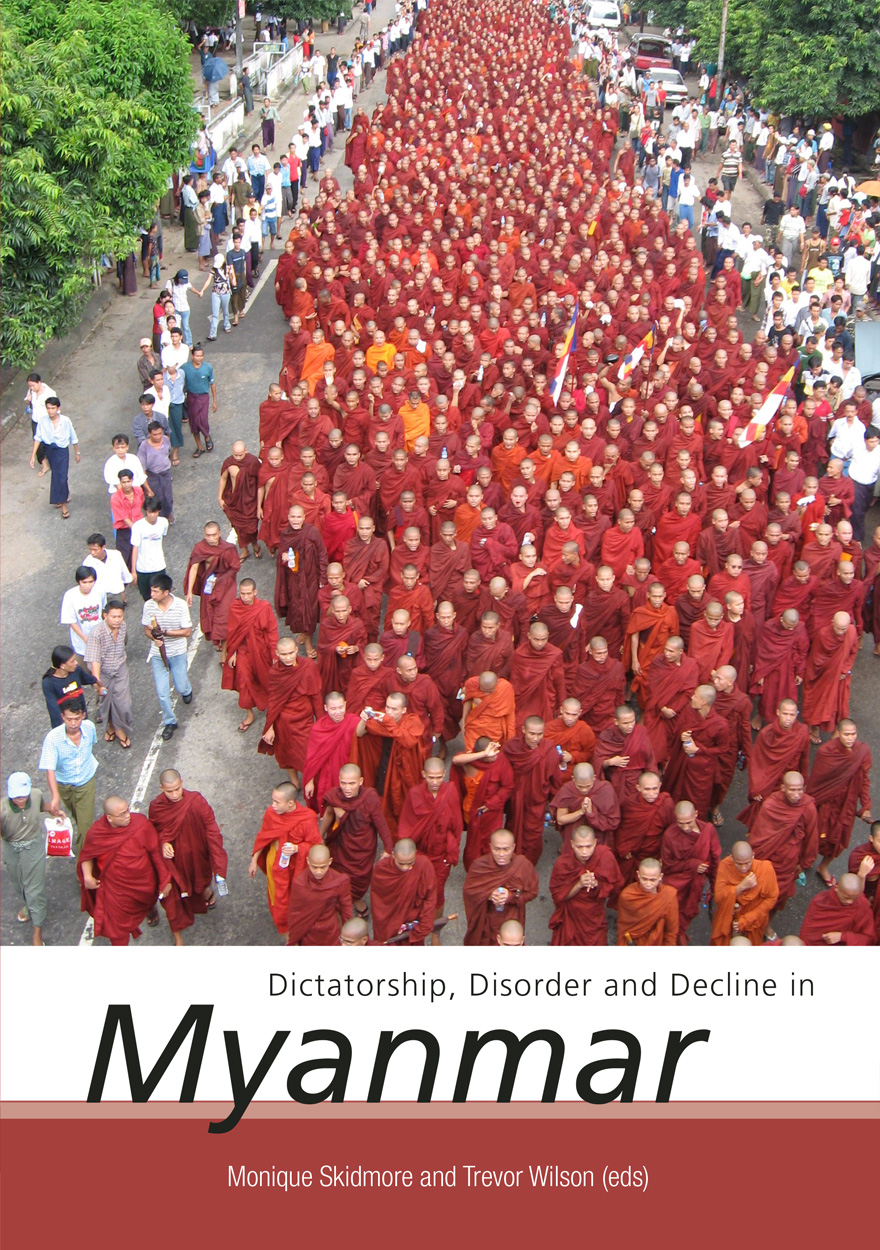
Mass peaceful protests in Myanmar/Burma in 2007 drew the world’s attention to the ongoing problems faced by this country and its oppressed people. In this publication, experts from around the world analyse the reasons for these recent political upheavals, explain how the country’s economy, education and health sectors are in perceptible decline, and identify the underlying authoritarian pressures that characterise Myanmar/Burma’s military regime.

Sharpening the Sword of State »
Building executive capacities in the public services of the Asia-Pacific
Edited by: Andrew Podger, John Wanna
Publication date: November 2016
Sharpening the Sword of State explores the various ways in which 10 jurisdictions in the Asia-Pacific enhance their administrative capabilities through training and executive development. It traces how modern governments across this region look to develop their public services and public sector organisations in the face of rapid global change. For many governments there is a delicate balance between the public interest in promoting change and capacity enhancement across the public service, and the temptation to micro-manage agencies and be complacent about challenging the status quo. There is a recognition in the countries studied that training and executive development is a crucial investment in human capital but is also couched in a much wider context of public service recruitment, patterns of entry and retention, promotion, executive appointment and career development. This empirical volume, authored by academics and practitioners, is one of the first to chart these comparative differences and provide fresh perspectives to enable learning from international experiences.