



Search titles
Displaying results 831 to 840 of 1179.

Information Systems Foundations: The Role of Design Science »
Edited by: Dennis Hart, Shirley Gregor
Publication date: December 2010
This volume presents papers from the fourth biennial Information Systems Foundation Workshop, held at The Australian National University in Canberra from 2–3 October, 2008. The focus of the workshop was, as for the others in the series, the foundations of Information Systems as an academic discipline. The emphasis in this workshop was on the movement known as ‘Design Science’ and its importance in practical disciplines such as Information Systems. The chapters in the volume provide a critical examination of current design science ideas, with the role of human creativity given special mention. The philosophical underpinnings of design science thinking are also examined. Practically, the volume shows how the design science approach can be used in academic research that leads to artefacts that add value for individuals, organizations and society.
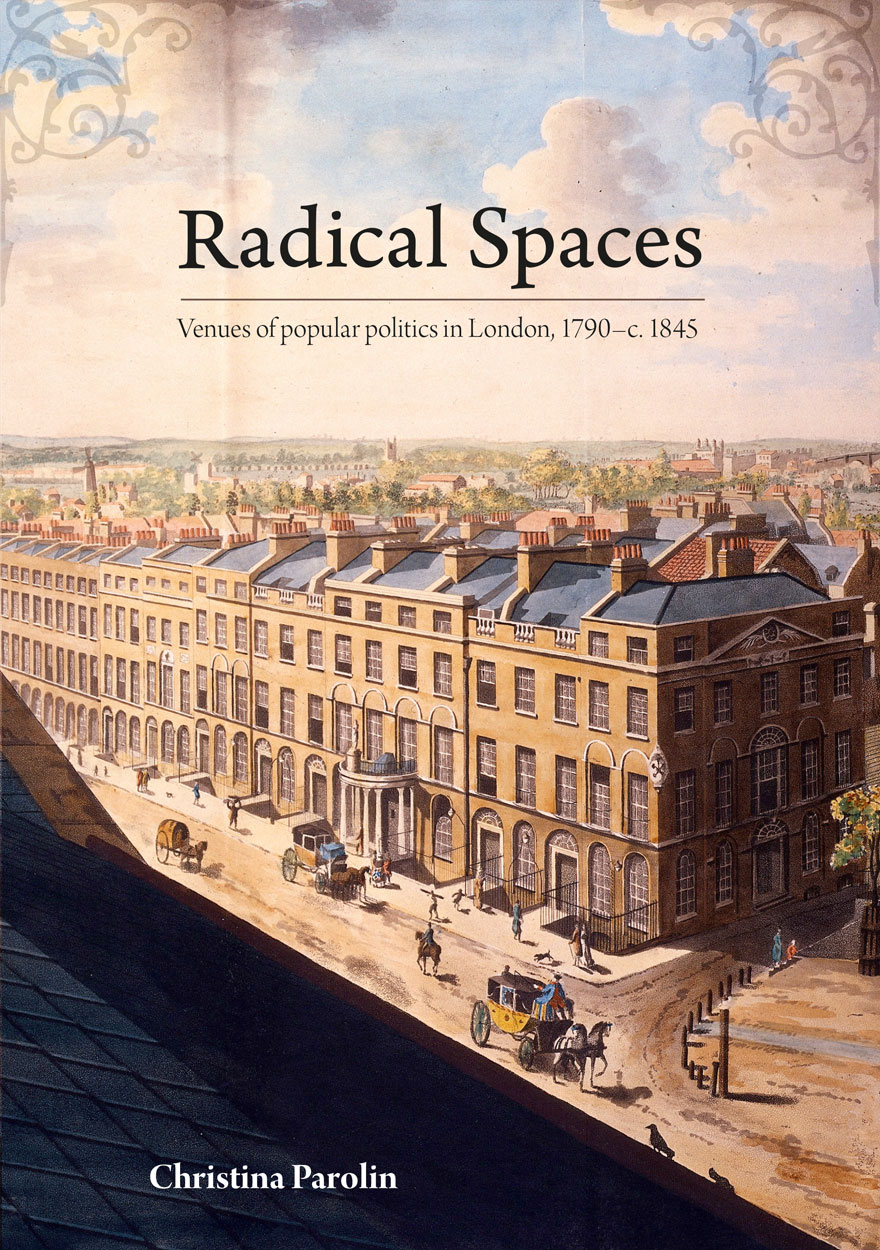
Radical Spaces »
Venues of popular politics in London, 1790–c. 1845
Authored by: Christina Parolin
Publication date: December 2010
Radical Spaces explores the rise of popular radicalism in London between 1790 and 1845 through key sites of radical assembly: the prison, the tavern and the radical theatre. Access to spaces in which to meet, agitate and debate provided those excluded from the formal arenas of the political nation–the great majority of the population–a crucial voice in the public sphere. Radical Spaces utilises both textual and visual public records, private correspondence and the secret service reports from the files of the Home Office to shed new light on the rise of plebeian radicalism in the metropolis. It brings the gendered nature of such sites to the fore, finding women where none were thought to gather, and reveals that despite the diversity in these spaces, there existed a dynamic and symbiotic relationship between radical culture and the sites in which it operated. These venues were both shaped by and helped to shape the political identity of a generation of radical men and women who envisioned a new social and political order for Britain.

The Rudd Government »
Australian Commonwealth Administration 2007–2010
Edited by: Chris Aulich, Mark Evans
Publication date: December 2010
This edited collection examines Commonwealth administration under the leadership Prime Minister Kevin Rudd from 2007-2010. This was a remarkable period in Australian history: Rudd’s government was elected in 2007 with an ambitious program for change. However, as the chapters in this book demonstrate, these ambitions were thwarted by a range of factors, not the least being Rudd’s failure to press ahead when he confronted ‘road blocks’ such the ETS or managing his massive agenda which constantly elevated issues to ‘first order priority’. Although he started his term with stratospheric approval ratings, only two years later his support had collapsed and on 24 July 2010 he became the first sitting Prime Minister to be removed by his own Party before the expiry of his first term.
In this book, expert contributors consider the Rudd Government’s policy, institutional and political legacy. The 14 chapters are organized into four sections, outlining the issues and agendas that guided Rudd’s government, changes to the institutions of state such as the public service and parliament, followed by discussions of key issues and policies that marked Rudd’s term in office. The final section examines Rudd’s leadership and reflects on the personal foibles and political factors that brought his Prime Ministership undone. The Rudd Government has been produced by the ANZSOG Institute for Governance at the University of Canberra. It is the tenth in a series of books on successive Commonwealth administrations. Each volume has provided a chronicle and commentary of major events, policies and issues that have dominated successive administrations since 1983. As with previous volumes in the series, contributors have been drawn from a range of universities and other organisations.

Steep Slopes »
Music and change in the Highlands of Papua New Guinea
Authored by: Kirsty Gillespie
Publication date: December 2010
The Duna live in a physical environment of steep slopes that are sometimes difficult to traverse. A stick of bamboo used as a prop goes a long way in assisting a struggling traveller. Similarly, the Duna live in a social and cultural environment of steep slopes, where the path on which they walk can be precarious and unpredictable. Songs, like the stick of bamboo, assist the Duna in picking their way over this terrain by providing a forum for them to process change as it is experienced, in relation to what is already known.
This book is a musical ethnography of the Duna people of Papua New Guinea. A people who have experienced extraordinary social change in recent history, their musical traditions have also radically changed during this time. New forms of music have been introduced, while ancestral traditions have been altered or even abandoned. This study shows how, through musical creativity, Duna people maintain a connection with their past, and their identity, whilst simultaneously embracing the challenges of the present.

Agenda - A Journal of Policy Analysis and Reform: Volume 17, Number 2, 2010 »
Edited by: William Coleman
Publication date: December 2010
Agenda is a refereed, ECONLIT-indexed and RePEc-listed journal of the College of Business and Economics, The Australian National University. Launched in 1994, Agenda provides a forum for debate on public policy, mainly (but not exclusively) in Australia and New Zealand. It deals largely with economic issues but gives space to social and legal policy and also to the moral and philosophical foundations and implications of policy.
Subscribe to the Agenda Alerting service if you wish to be advised on forthcoming or new issues.
Download for free
Not available for purchase

ANU Undergraduate Research Journal: Volume Two, 2010 »
Publication date: December 2010
The ANU Undergraduate Research Journal presents outstanding essays taken from ANU undergraduate essay submissions. The breadth and depth of the articles chosen for publication by the editorial team and reviewed by leading ANU academics demonstrates the quality and research potential of the undergraduate talent being nurtured at ANU across a diverse range of fields.
Established in 2008, AURJ was designed to give students a unique opportunity to publish their undergraduate work; it is a peer-reviewed journal managed by a team of postgraduate student editors, with guidance from the staff of the Office of the Dean of Students.
Download for free
Not available for purchase

Altered Ecologies »
Fire, climate and human influence on terrestrial landscapes
Edited by: S. Haberle, J. Stevenson, M. Prebble
Publication date: November 2010
Like a star chart this volume orientates the reader to the key issues and debates in Pacific and Australasian biogeography, palaeoecology and human ecology. A feature of this collection is the diversity of approaches ranging from interpretation of the biogeographic significance of plant and animal distributional patterns, pollen analysis from peats and lake sediments to discern Quaternary climate change, explanation of the patterns of faunal extinction events, the interplay of fire on landscape evolution, and models of the environmental consequences of human settlement patterns. The diversity of approaches, geographic scope and academic rigor are a fitting tribute to the enormous contributions of Geoff Hope. As made apparent in this volume, Hope pioneered multidisciplinary understanding of the history and impacts of human cultures in the Australia- Pacific region, arguably the globe’s premier model systems for understanding the consequences of human colonization on ecological systems. The distinguished scholars who have contributed to this volume also demonstrate Hope’s enduring contribution as an inspirational research leader, collaborator and mentor. Terra Australis leave no doubt that history matters, not only for land management, but more importantly, in alerting settler and indigenous societies alike to their past ecological impacts and future environmental trajectories.
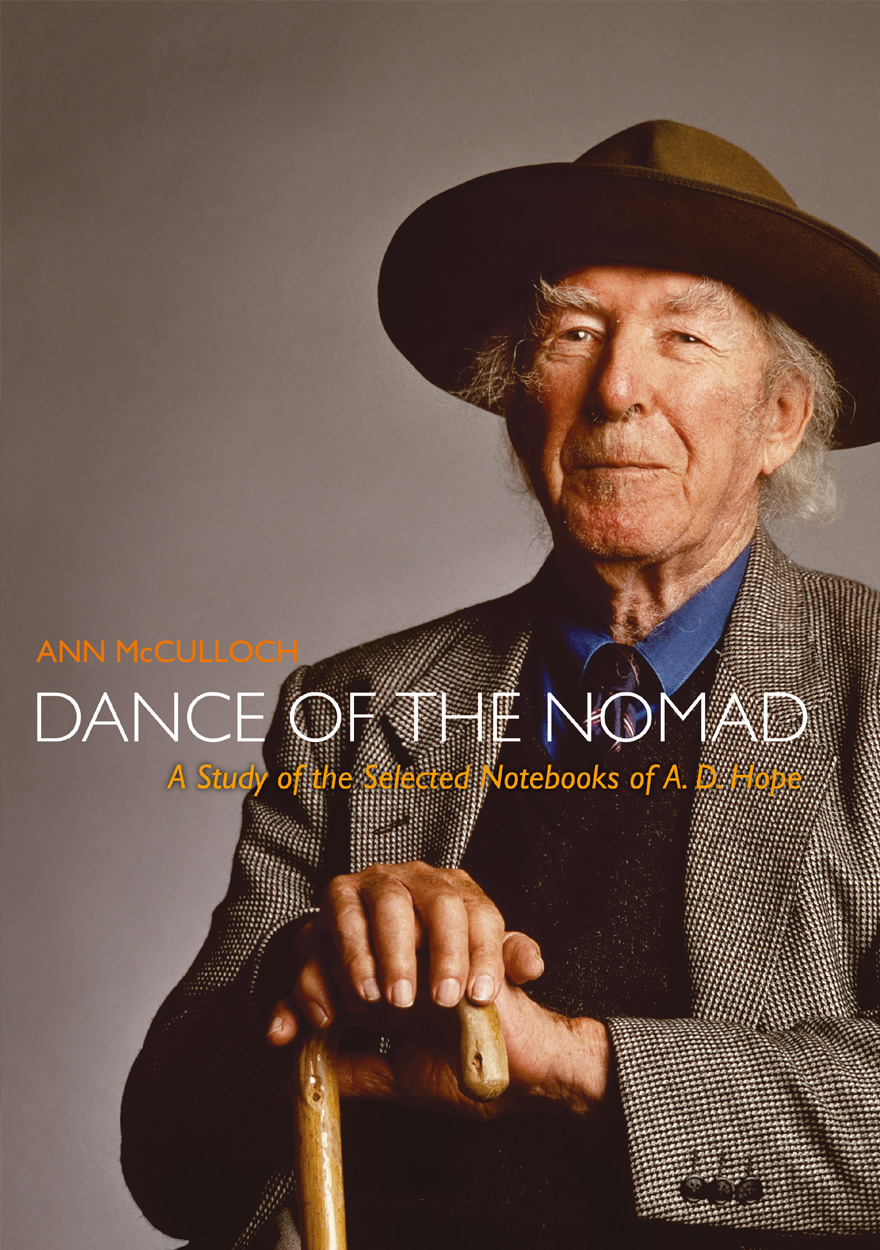
Dance of the Nomad »
A Study of the Selected Notebooks of A.D.Hope
Authored by: Ann McCulloch
Publication date: November 2010
The notebooks of A. D. Hope are a portrait of the contradictory essence of the poet’s intellect and character. Shot through with threads of self-awareness and revelation, Hope imbued his notebooks with irony and humour, forming them as a celebration of the joy and terror of human existence. Stripped of intimate revelation, the entries give witness to Hope’s view that art is a superior force in the creation of new being and values, and a guide for the conduct of our lives.
Seeking to find pathways through the maze of an intellectual life, this is a profound and timely contribution to Australia’s literary scholarship. Ann McCulloch’s analysis of this thematic selection of Hope’s notebooks reveals him to be relentless in his experimentation with ideas. Revealing the originality of his thinking and the astonishing range of his reading and interests, this edition is a testament to the intellect of one of Australia’s towering literary figures.

Green Carbon Part 2 »
The role of natural forests in carbon storage
Authored by: Sandra L. Berry, Heather Keith, Brendan Mackey, Matthew Brookhouse, Justin Jonson
Publication date: November 2010
This report is the second in a series that examines the role of natural forests and woodlands in the storage of carbon. Understanding the role of natural ecosystems in carbon storage is an important part of solving the climate change problem. This report presents a landscape-wide green carbon account of the ‘Great Western Woodlands’ (GWW), sixteen million hectares of mostly contiguous natural woody vegetation to the east of the wheatbelt in south-western Western Australia. For the first time, we provide an overview of the vegetation structure, climate, geology and historical land use of the GWW, and examine how these interact to affect the carbon dynamics of this region’s landscape ecosystems. An analysis of time-series of satellite imagery is used to develop a fire history of the GWW since the 1970s. These layers of environmental information, along with field survey data and remotely sensed greenness, are used to construct a spatial model to estimate biomass carbon stocks of the woodlands at the present day, and to infer an upper limit to the carbon sequestration potential of the GWW. A range of management options to enable protection of high quality carbon stocks and restoration of degraded stocks are evaluated.

The Hmong of Australia »
Culture and Diaspora
Edited by: Nicholas Tapp, Gary Yia Lee
Publication date: November 2010
The Hmong are among Australia’s newest immigrant populations. They came as refugees from Laos after the communist revolution of 1975 ended their life there as highland shifting cultivators. The Hmong originate from southern China where many still remain, and others live in Vietnam, Thailand and Burma. Hmong refugees are now also settled in the USA, Canada, France, Germany and French Guyana. Already the beauty and richness of traditional Hmong culture, in particular their shamanism and embroidered costume, has attracted the attention of the Australian public, but little is known about these people, their background or the struggles they have faced to adjust to a new life in Australia.This interdisciplinary collection of articles deals with their music and textiles, gender and language, their social adaptation and their global diaspora. The book aims to bring knowledge of the Hmong to a wider public and contribute to the understanding of these people.