



Search titles
Displaying results 41 to 50 of 1168.

The 2006 Military Takeover in Fiji »
A Coup to End All Coups?
Publication date: April 2009
This book explores the factors behind – and the implications of – the 2006 coup. It brings together contributions from leading scholars, local personalities, civil society activists, union leaders, journalists, lawyers, soldiers and politicians – including deposed Prime Ministers Laisenia Qarase and Mahendra Chaudhry. The 2006 Military Takeover in Fiji: A Coup to End All Coups? is essential reading for those with an interest in the contemporary history of Fiji, politics in deeply divided societies, or in military intervention in civilian politics.
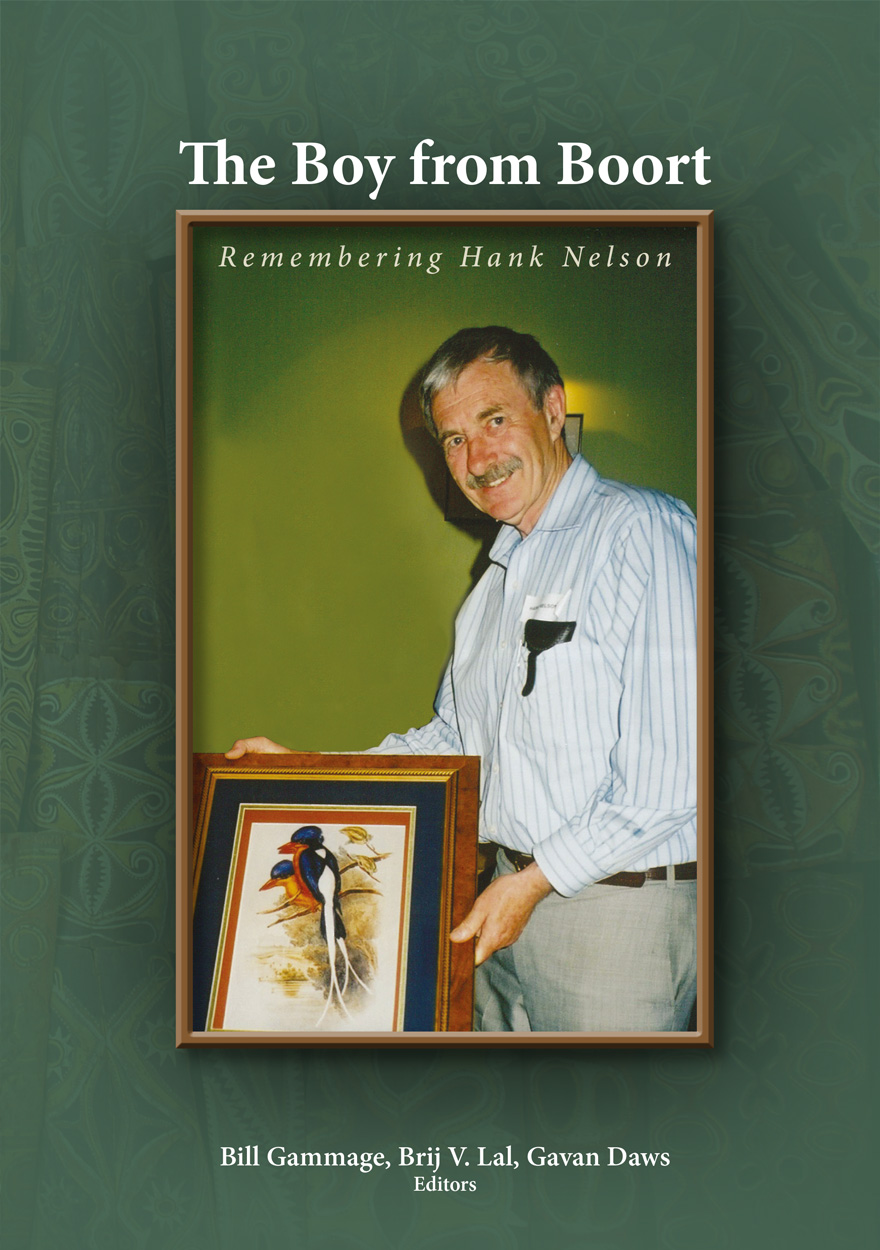
The Boy from Boort »
Remembering Hank Nelson
Edited by: Bill Gammage, Brij V. Lal, Gavan Daws
Publication date: July 2014
Hank Nelson was an academic, film-maker, teacher, graduate supervisor and university administrator. His career at The Australian National University (ANU) spanned almost 40 years of notable accomplishment in expanding and deepening our understanding of the history and politics of Papua New Guinea, the experience of Australian soldiers at war, bush schools and much else. This book is a highly readable tribute to him, written by those who knew him well, including his students, and also contains wide-ranging works by Hank himself. –Professor Stewart Firth, ANU.

Making Sense of the Census »
Observations of the 2001 Enumeration in Remote Aboriginal Australia
Publication date: March 2004
Special enumeration procedures for Indigenous Australians were introduced in the 1971 Census, and have been a feature of the Australian national census ever since. In 2001, as in previous years, the Indigenous Enumeration Strategy (IES) involved the use of locally recruited, mostly Indigenous, interviewers and the administration of modified forms.
This monograph presents the results of the first detailed comparative appraisal of the IES. Three CAEPR researchers observed the 2001 Census enumeration, each in a different remote-area context: Martin at Aurukun, a major Aboriginal township on Cape York Peninsula, Morphy at a small outstation community in the Northern Territory, and Sanders in the town camps of Alice Springs. The Australian Bureau of Statistics facilitated the research by granting the researchers status as official observers.
The introductory chapter by John Taylor gives a brief history of the IES and sets the context for the research. The three case-studies form the central chapters, and are followed by a concluding chapter that summarises the findings and recommendations.
While each locality had its unique characteristics, the authors found some common problems across the board which lead to general recommendations about the future design of the IES. They advocate a simplification of the enumeration procedure, the abandonment of the ‘two-form’ structure, the focusing of the IES more narrowly on people in ‘traditionally-oriented’ discrete Indigenous communities, and substantial changes in the design and content of any new ‘special Indigenous’ census form.
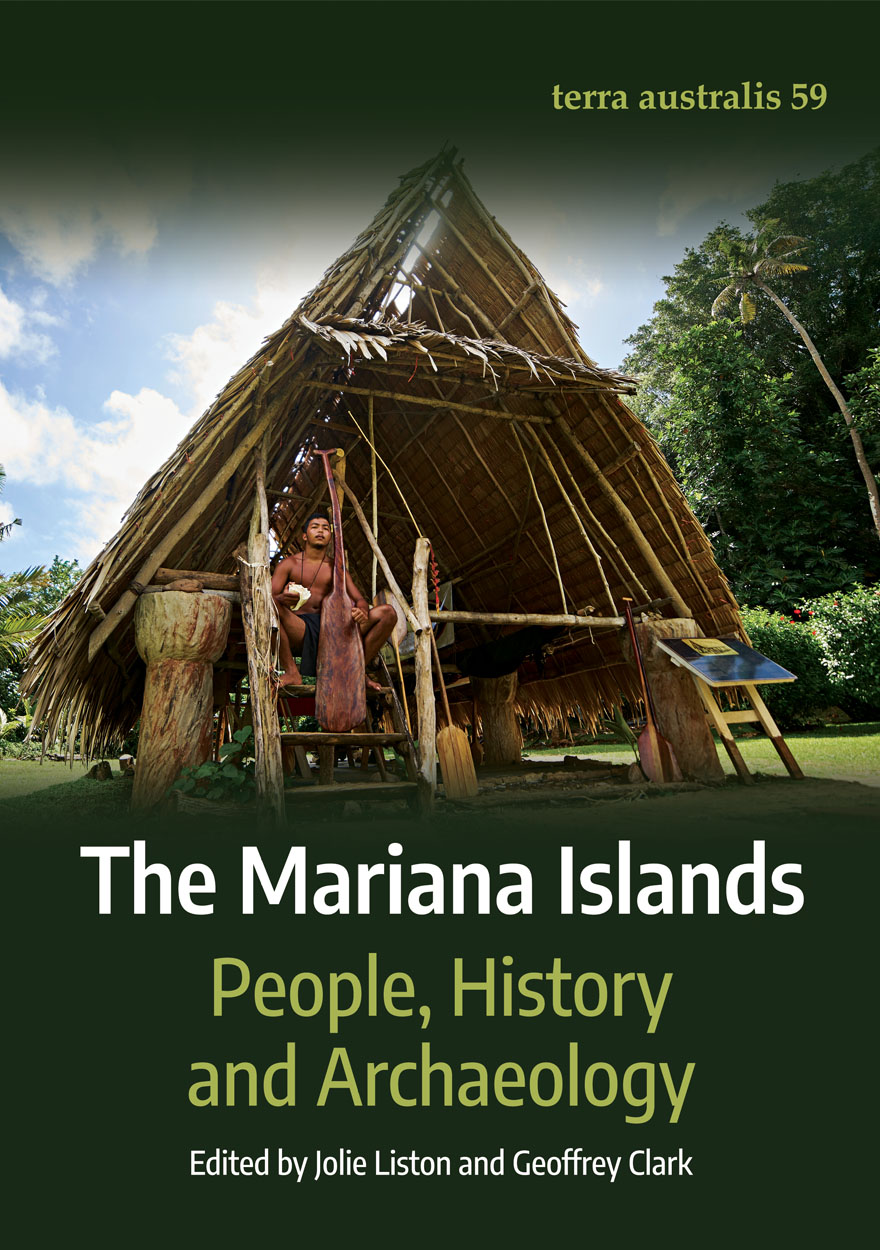
The Mariana Islands »
People, History and Archaeology
Edited by: Jolie Liston, Geoffrey Clark
Publication date: 2026
The Mariana Islands: People, History and Archaeology brings together new research about the history of the Mariana Islands through community perspectives, archaeological investigations, and anthropological and historical studies. The colonisation and growth of societies in the Mariana Islands, and of those elsewhere in Micronesia, are often seen as peripheral compared with those of Melanesia and Polynesia that tend to dominate scholarly and public views of Pacific history. The Marianas were the first remote archipelago to be recorded by Europeans with the arrival of Magellan in 1521, and the islands have a long and complicated history with colonial ‘great powers’, which during World War II involved the establishment of the remote Pacific’s sole concentration camp. Initial colonisation over 3,000 years ago was by migrants from East Asia who were related to, but genetically different from, Lapita groups who extended human occupation as far east as Tonga and Samoa. Later population movements to the Marianas, some involving Papuan people, point to a mobile Pacific that was connected to insular Asia, New Guinea and other parts of Oceania. Migration and local development contributed to the formation of a unique and vibrant CHamoru culture. The volume is dedicated to two pioneer archaeologists, Darlene Moore and Roz Hunter-Anderson, who established modern archaeological practice in the Marianas through projects involving community members and elders in the preservation of cultural heritage sites and the creation of new land use histories.
‘The Mariana Islands: People, History and Archaeology brings archaeology into conversation with CHamoru memory, oral history and cultural practice to reconnect with the lives of i Manaotåomo’na, The People of Before. Through diverse topics and approaches, the book illuminates the complexities of ancestral and recent histories, offering a richer understanding of the Mariana Islands and its people.’
—Kelly Marsh-Taitano, Curator of Archaeological Collections, Guam Cultural Repository
Coming soon
Notify me
An Atlas of the Global Water Cycle »
Based on the IPCC AR4 Climate Models
Authored by: Wee Ho Lim, Michael L. Roderick
Publication date: July 2009
What do climate models predict for the rainfall where you live? What about evaporation or runoff? Should your local community consider constructing new dams or do the existing water storages appear adequate? What about the availability of water for irrigation farming? Do the predictions differ between different climate models or do all the models basically predict the same changes in water availability where you live?
These are all simple questions but it is surprisingly hard for an individual, whether they be a farmer, water resources engineer, teacher or interested citizen, to answer them. As researchers active in the field we could not answer the questions either. In fact, we had never seen a compilation of the rainfall, evaporation and runoff predictions made by all the different climate models.
The Atlas contains maps and tables that document model predictions contributed by international climate modelling groups to the 2007 4th Assessment Report of the Intergovernmental Panel on Climate Change. The predictions are made available here via the wonders of the internet and ongoing cooperation by the international climate modelling community who routinely archive their results.
The maps and tables in the Atlas document rainfall, evaporation and runoff estimates for the 20th century along with predictions of the same quantities at the end of the 21st century. Whatever your interest, we hope you find the Atlas as helpful as we do.
Indigenous People and the Pilbara Mining Boom »
A baseline for regional participation
Authored by: John Taylor, B. Scambary
Publication date: January 2006
The largest escalation of mining activity in Australian history is currently underway in the Pilbara region of Western Australia. Pilbara-based transnational resource companies recognise that major social and economic impacts on Indigenous communities in the region are to be expected and that sound relations with these communities and the pursuit of sustainable regional economies involving greater Indigenous participation provide the necessary foundations for a social licence to operate.
This study examines the dynamics of demand for Indigenous labour in the region, and the capacity of local supply to respond. A special feature of this study is the inclusion of qualitative data reporting the views of local Indigenous people on the social and economic predicaments that face them.
The basic message conveyed is that little has been achieved over the past four decades in terms of enhancing Indigenous socioeconomic status in the Pilbara. On the basis of planned economic development and corporate interest in pursuing Indigenous engagement, progress is now possible but major efforts are required from all interested stakeholders (Indigenous organisations, miners and governments) in order to ensure that this occurs.

The Ayes Have It »
The history of the Queensland Parliament, 1957–1989
Authored by: John Wanna, Tracey Arklay
Publication date: July 2010
‘The Ayes Have It’ is a fascinating account of the Queensland Parliament during three decades of high-drama politics. It examines in detail the Queensland Parliament from the days of the ‘Labor split’ in the 1950s, through the conservative governments of Frank Nicklin, John Bjelke- Petersen and Mike Ahern, to the fall of the Nationals government led briefly by Russell Cooper in December 1989. The volume traces the rough and tumble of parliamentary politics in the frontier state. The authors focus on parliament as a political forum, on the representatives and personalities that made up the institution over this period, on the priorities and political agendas that were pursued, and the increasingly contentious practices used to control parliamentary proceedings. Throughout the entire history are woven other controversies that repeatedly recur – controversies over state economic development, the provision of government services, industrial disputation and government reactions, electoral zoning and disputes over malapportionment, the impost of taxation in the ‘low tax state’, encroachments on civil liberties and political protests, the perennial topic of censorship, as well as the emerging issues of integrity, concerns about conflicts of interest and the slide towards corruption. There are fights with the federal government – especially with the Whitlam government – and internal fights within the governing coalition which eventually leads to its collapse in 1983, after which the Nationals manage to govern alone for two very tumultuous terms. On the non-government side, the bitterness of the 1950s split was reflected in the early parliaments of this period, and while the Australian Labor Party eventually saw off its rivalrous off-shoot (the QLP-DLP) it then began to implode through waves of internal factional discord.

Framing the Islands »
Power and Diplomatic Agency in Pacific Regionalism
Authored by: Greg Fry
Publication date: October 2019
Since its origins in late eighteenth-century European thought, the idea of placing a regional frame around the Pacific islands has never been just an exercise in geographical mapping. This framing has always been a political exercise. Contending regional projects and visions have been part of a political struggle concerning how Pacific islanders should live their lives. Framing the Islands tells the story of this political struggle and its impact on the regional governance of key issues for the Pacific such as regional development, resource management, security, cultural identity, political agency, climate change and nuclear involvement. It tells this story in the context of a changing world order since the colonial period and of changing politics within the post-colonial states of the Pacific.
Framing the Islands argues that Pacific regionalism has been politically significant for Pacific island states and societies. It demonstrates the power associated with the regional arena as a valued site for the negotiation of global ideas and processes around development, security and climate change. It also demonstrates the political significance associated with the role of Pacific regionalism as a diplomatic bloc in global affairs, and as a producer of powerful policy norms attached to funded programs. This study also challenges the expectation that Pacific regionalism largely serves hegemonic powers and that small islands states have little diplomatic agency in these contests. Pacific islanders have successfully promoted their own powerful normative framings of Oceania in the face of the attempted hegemonic impositions from outside the region; seen, for example, in the strong commitment to the ‘Blue Pacific continent’ framing as a guiding ideology for the policy work of the Pacific Islands Forum in the face of pressures to become part of Washington’s Indo-Pacific strategy.

The Chinese Communist Party »
A 100-Year Trajectory
Edited by: Jérôme Doyon, Chloé Froissart
Publication date: January 2024
This volume brings together an international team of prominent scholars from a range of disciplines, with the aim of investigating the many facets of the Chinese Communist Party’s 100-year trajectory. It combines a level of historical depth mostly found in single-authored monographs with the thematic and disciplinary breadth of an edited volume. This work stands out for its long-term and multiscale approach, offering complex and nuanced insights, eschewing any Party grand narrative, and unravelling underlying trends and logics, composed of adaption but also contradictions, resistance and sometimes setbacks, that may be overlooked when focusing on the short term.
Rather than putting forward an overall argument about the nature of the Party, the many perspectives presented in this volume highlight the complex internal dynamics of the Party, the diversity of its roles in relation to the state, as well as in its interaction with society beyond the state. Our historical approach stresses impermanence beyond the apparent permanence of the Party’s organisation and ideology while also bringing to light the recycling of past practices and strategies. Looking at the Party’s evolution over time shows how its founding structures and objectives have had a long-lasting impact as well as how they have been tweaked and rearranged to adapt to the new economic and social environment the Party contributed to creating.

Hybridity on the Ground in Peacebuilding and Development »
Critical Conversations
Publication date: March 2018
Hybridity on the Ground in Peacebuilding and Development engages with the possibilities and pitfalls of the increasingly popular notion of hybridity. The hybridity concept has been embraced by scholars and practitioners in response to the social and institutional complexities of peacebuilding and development practice. In particular, the concept appears well-suited to making sense of the mutually constitutive outcomes of processes of interaction between diverse norms, institutions, actors and discourses in the context of contemporary peacebuilding and development engagements. At the same time, it has been criticised from a variety of perspectives for overlooking critical questions of history, power and scale. The authors in this interdisciplinary collection draw on their in‑depth knowledge of peacebuilding and development contexts in different parts of Asia, the Pacific and Africa to examine the messy and dynamic realities of hybridity ‘on the ground’. By critically exploring the power dynamics, and the diverse actors, ideas, practices and sites that shape hybrid peacebuilding and development across time and space, this book offers fresh insights to hybridity debates that will be of interest to both scholars and practitioners.
‘Hybridity has become an influential idea in peacebuilding and this volume will undoubtedly become the most influential collection on the idea. Nuance and sophistication characterises this engagement with hybridity.’
— Professor John Braithwaite