



Search titles
Displaying results 151 to 160 of 577.
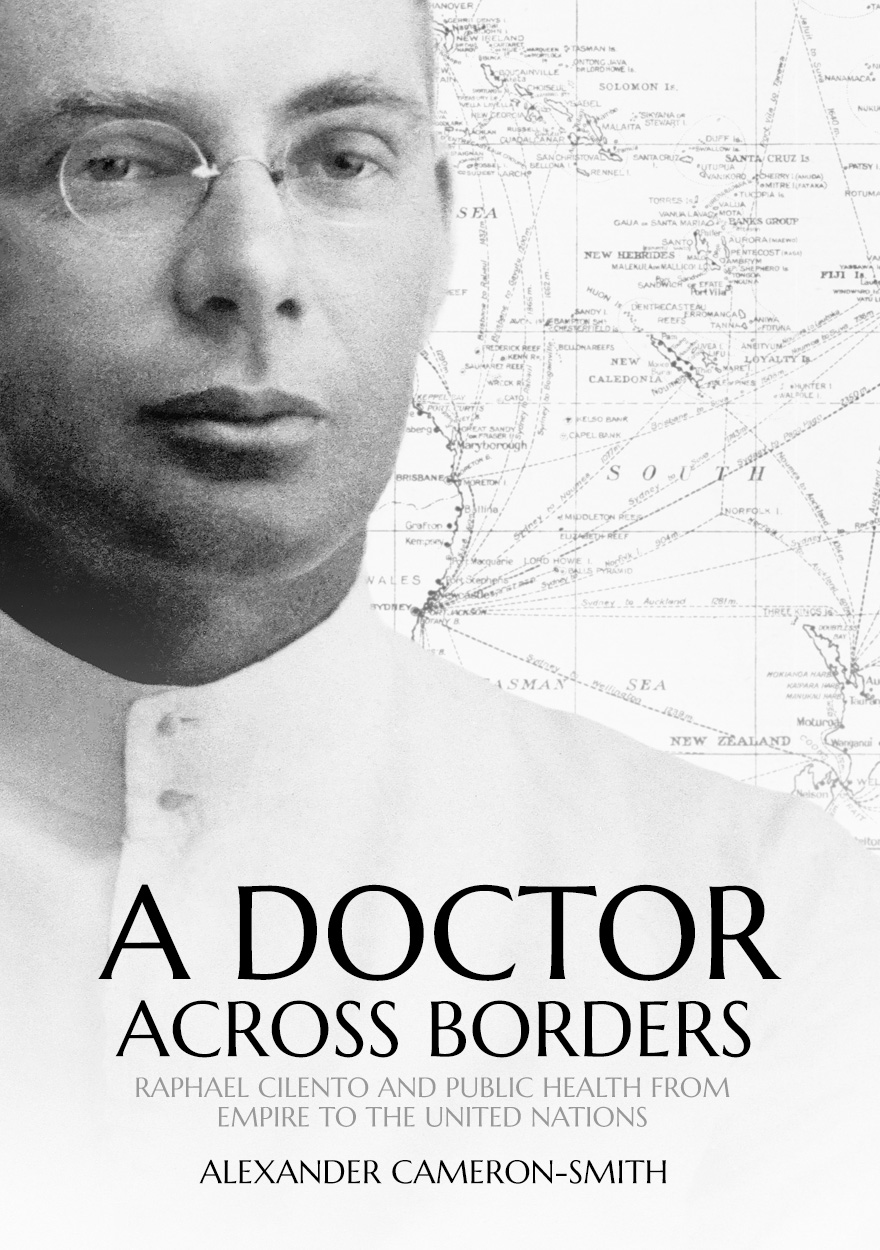
A Doctor Across Borders »
Raphael Cilento and public health from empire to the United Nations
Authored by: Alexander Cameron-Smith
Publication date: February 2019
In his day, Raphael Cilento was one of the most prominent and controversial figures in Australian medicine. As a senior medical officer in the Commonwealth and Queensland governments, he was an active participant in public health reform during the inter-war years and is best known for his vocal engagement with public discourse on the relationship between hygiene, race and Australian nationhood. Yet Cilento’s work on tropical hygiene and social welfare ranged beyond Australia, especially when he served as a colonial medical officer in British Malaya and in the Mandated Territory of New Guinea. He also worked with the League of Nations Health Organization in the Pacific Islands and oversaw international social welfare programs for the United Nations. On one level, this professional mobility allowed ideas and practices of public health and government to circulate between colonial spaces of northern Australia, the Pacific Islands and Asia. On another, it meant that Cilento’s Pacific colonialism and colonial experience shaped his understanding of Australian national health and welfare. Rather than attempt a comprehensive biography of Cilento, this book instead uses this border-crossing career as a means to explore several material and discursive facets of Australia’s relationships to the Pacific and the world.

The Court as Archive »
Publication date: February 2019
Until the late 20th century, ‘an archive’ generally meant a repository for documents, as well as the generic name for the wide range of documents the repository might hold. An archive could be visited, and then also searched, to discover past actions or lives that had meaning for the present. While historians and historiographers have long understood the contests that archives contain and represent, the very idea of ‘the archive’ has, over the last 40 years, become the subject and object of widening and intensified consideration. This consideration has been intellectual (from scholars in a wide range of disciplines) and public (from communities and individuals whose stories are held captive, or sometimes hidden or excluded from official archives), as well as institutional. It has involved scrutiny and critique of official archives’ limitations and practices, as well as symbolic, affective and theoretical expansion and heightened expectation of what ‘the archive’ is or should be. The very language of ‘the archive’ now carries freight as administrative practice, normative value, metaphor, description and aspiration in different ways than it did in the 20th century.
This collection offers a unique contribution to these reinvigorated and sometimes new conversations about what an archive might be, what it can do as a consequence, and to whom it bears custodial responsibilities. In particular, this collection addresses what it means for contemporary Australian superior courts of record to not only have constitutional and procedural duties to documents as a matter of law, but also to acknowledge obligations to care for those materials in a way that understands their public meaning and public value for the Australian people, in the past, in the present and for the future.

Drawing in the Land »
Rock Art in the Upper Nepean, Sydney Basin, New South Wales
Authored by: Julie Dibden
Publication date: February 2019
Drawing in the Land offers an important contribution to the field of rock art research and Australian archaeology. It provides a detailed study of the previously under-examined rock art of the Hawkesbury/Nepean area of New South Wales. The study presents a detailed historiography of Australian rock art research and, through the lens of landscape archaeology, offers an innovative contribution to rock art studies in the wider Sydney Basin.
The volume’s theoretical focus on materiality, embodied practice and performance allows for the charting of ideational change and provides a unique contribution to the late Holocene archaeology of NSW and contact archaeology within Australia more broadly.

Pacific Exposures »
Photography and the Australia–Japan Relationship
Authored by: Melissa Miles, Robin Gerster
Publication date: December 2018
Photography has been a key means by which Australians have sought to define their relationships with Japan. From the fascination with all things Japanese in the late nineteenth century, through the era of ‘White Australia’, the bitter enmity of the Pacific War, the path to reconciliation in the post-war period and the culturally complicated bilateralism of today, Australians have used their cameras to express a divided sense of conflict and kinship with a country that has by turns fascinated and infuriated. The remarkable photographs collected and discussed here for the first time shed new light on the history of Australia’s engagement with its most important regional partner. Pacific Exposures argues that photographs tell an important story of cultural production, response and reaction—not only about how Australians have pictured Japan over the decades, but how they see their own place in the Asia-Pacific.
‘Pacific Exposures presents the first study of the photographic exchanges between Australia and Japan—its photographers, personalities, motivations, anxieties and tensions—based on a diverse range of archival materials, interviews, and well-chosen photographs.’
— Dr Luke Gartlan, University of St Andrews
‘[Pacific Exposures] will become a key text on Australia’s interactions with Japan, and the way that photographs can inform cross-cultural relations through their production, consumption and circulation.’
— Prof. Kate Darian-Smith, University of Tasmania
In the media
Listen to the ABC Radio interview: Japan in Focus (from 13:06).

Aboriginal History Journal: Volume 42 »
Edited by: Ingereth Macfarlane
Publication date: December 2018
In this volume, Peter Sutton provides a survey of the articles published by linguist Dr Luise Hercus (1926–2018) in Aboriginal History, honouring the contribution she has made to the journal since its inception. The seven articles this year highlight the wealth of sources that feed into historical research of Indigenous Australia. The role of performance in the events organised by the National Aborigines Day Observance Committee (NADOC) in 1957–67 in Sydney shows up the contest between state assimilationist goals and Indigenous participants’ insistence on distinction, continuity and survival (Jonathon Bollen and Anne Brewster). The then radical agenda – in a protectionist policy regime – of the advocacy group, the Aborigines’ Protection League in South Australia in the 1920s–30s, is examined in a detailed study of the group’s campaigns and campaigners (Rob Foster). A picture of colonial reception of Aboriginal performance and the public assertion of local Aboriginal cultural priorities in 1893 Darwin is developed in the historical contextualisation of a collection of Aboriginal artefacts found in the Marischal Museum, Aberdeen (Gaye Sculthorpe). A nuanced analysis of the relationship between the Catholic Benedictine Mission at New Norcia and the Western Australian Native Welfare Department draws on the correspondence between the Abbot of New Norcia and A.O. Neville (Elicia Taylor). A large body of reader responses to a recent online article on the deep history of Aboriginal Australia provides a way to map the strengths and weaknesses in the general Australian public’s apprehension of that long history (Lynette Russell and Billy Griffiths). A spatial history argues against the concept of ‘fringe camps’ and for a pattern of demonstrable continuities between precolonial, colonial and recent Aboriginal people’s favoured camp places and the locations of urban contemporary park spaces in Brisbane and townships in south-eastern Queensland (Ray Kerkhove). In the format of an interview, the themes concerning the writing of Aboriginal history and contemporary political debates that are developed in Tim Rowse’s recent book Indigenous and Other Australians since 1901 (2017) are explored (Miranda Johnson and Tim Rowse).
Aboriginal History Inc. is a publishing organisation based in the Australian Centre for Indigenous History, Research School of Social Sciences, The Australian National University, Canberra.
For more information on Aboriginal History Inc. please visit aboriginalhistory.org.au.
Download for free
Not available for purchase
Australian Journal of Biography and History: No. 1, 2018 »
Publication date: December 2018
In this first issue, a diverse range of essays primarily relates to questions of individuals and the contexts in which they functioned, the ‘middle ground’ between a life and the times. Four of them concern Australian women who operated and negotiated various fields of endeavour, only one of which—the role of headmistress of a girls’ school—was unambiguously a woman’s domain. The profile of Miss Annie Hughston (1859–1943) shows how a strong figure could have a disproportionate influence on women entering male bastions. Similarly, Nancy Atkinson, a pioneering bacteriologist at the University of Adelaide, was not only a scientific researcher of note but a teacher of generations of graduate students. Yet when the chair in her field finally became available, she was overlooked in favour of a male English import, despite having acted in the role for many years. She was valued it seems more for her teaching than her research, a classic tendency to ascribe to women in scientific circles a nurturing rather than a knowledge-creating function. Jean Andruana Jimmy (1912–1991), a Yupngayth woman from Mapoon in north Queensland, also became prominent in community leadership and land rights activism, areas that had been assumed to be male spheres. Yet leading her community was by no means as revolutionary as was often assumed by outside European observers, for Andruana saw herself resuming a role that was entirely consistent with women’s responsibilities. Sophie Scott-Brown’s portrait of the playwright and director Eunice Hangar examines the nature of reading as ‘a simultaneously social and individualistic activity’ and its implications for understanding the way Australians have read English writers.
The article on the nineteenth-century journalist and gold commissioner Fredrick Dalton explores the potential of nineteenth-century mobilities in the formation of identity. Karen Fox explores how family history, in this case the Stephen and Street ‘legal dynasty’, can illuminate an understanding of legal and power relations in a geographic setting. The article on André Kostermans, a renowned Dutch Indonesian botanist, is also on one level a story of shifting identity. Born in the Dutch East Indies, and trained in botany in Holland, Kostermans was interned by the Japanese during World War II, and used his skills to supplement the diet of his fellow prisoners of war, and to develop a ‘bush’ procedure for producing surgical-grade alcohol, actions that undoubtedly saved the lives of many. After the war, his career was almost ruined by the Indonesian government’s response to his homosexuality. In the final essay, the University of Xian scholar Tiping Su discusses the problem of the ‘missing’ Chinese in the Australian Dictionary of Biography, explaining the various issues in identifying and historicising the many Chinese who sojourned in Australia, as well as those who stayed.
Download for free
Not available for purchase
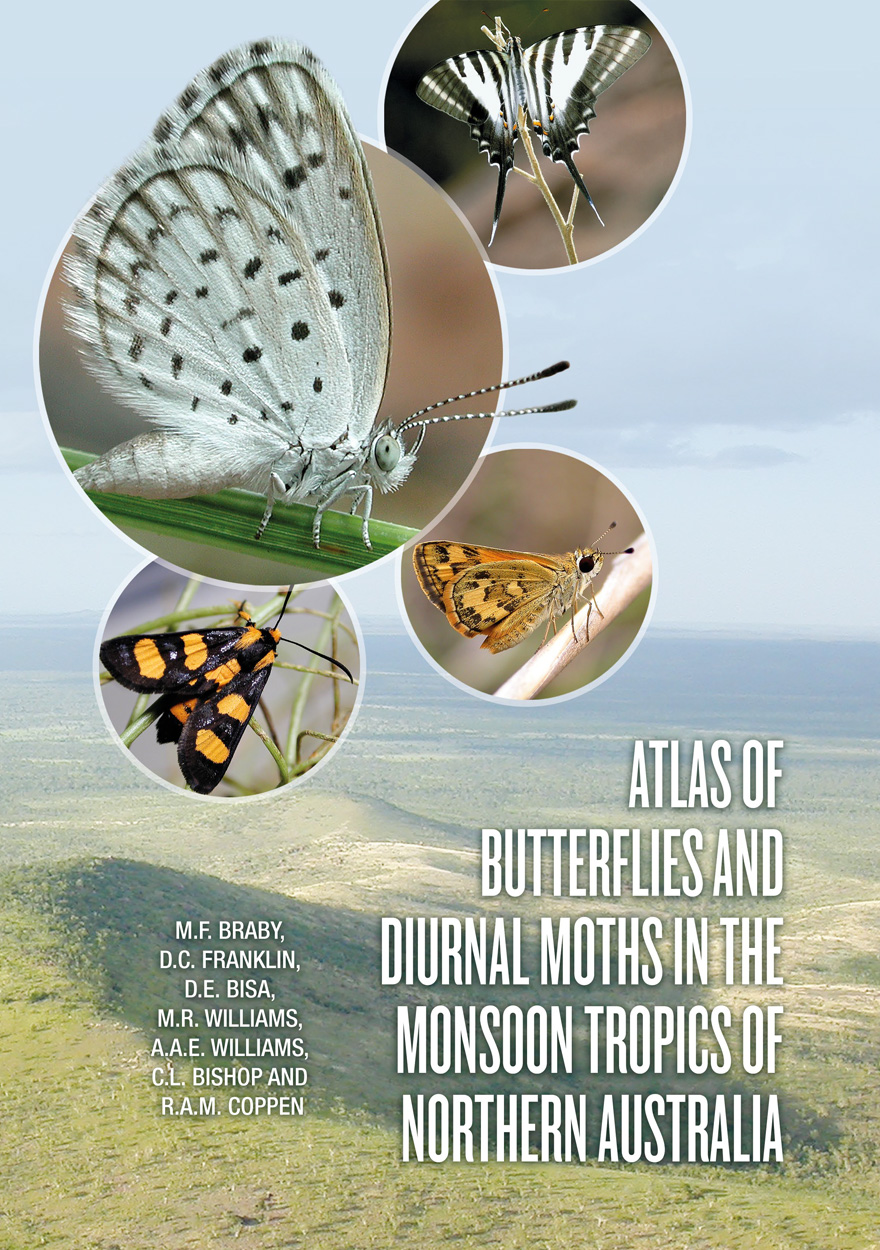
Atlas of Butterflies and Diurnal Moths in the Monsoon Tropics of Northern Australia »
Authored by: M.F. Braby, D.C. Franklin, D.E. Bisa, M.R. Williams, A.A.E. Williams, C.L. Bishop, R.A.M. Coppen
Publication date: December 2018
Northern Australia is one of few tropical places left on Earth in which biodiversity—and the ecological processes underpinning that biodiversity—is still relatively intact. However, scientific knowledge of that biodiversity is still in its infancy and the region remains a frontier for biological discovery. The butterfly and diurnal moth assemblages of the area, and their intimate associations with vascular plants (and sometimes ants), exemplify these points.
However, the opportunity to fill knowledge gaps is quickly closing: proposals for substantial development and exploitation of Australia’s north will inevitably repeat the ecological devastation that has occurred in temperate southern Australia—loss of species, loss of ecological communities, fragmentation of populations, disruption of healthy ecosystem function and so on—all of which will diminish the value of the natural heritage of the region before it is fully understood and appreciated. Written by several experts in the field, the main purpose of this atlas is to compile a comprehensive inventory of the butterflies and diurnal moths of northern Australia to form the scientific baseline against which the extent and direction of change can be assessed in the future. Such information will also assist in identifying the region’s biological assets, to inform policy and management agencies and to set priorities for biodiversity conservation.
In the media
Read the IFL Science article: Incredible Butterfly And Moth Diversity Hotspot Discovered In Northern Australia.
Read the Fairfax article: Butterfly 'detective' solves 120-year-old north Australian mystery.

The Lives of Stories »
Three Aboriginal-Settler Friendships
Authored by: Emma Dortins
Publication date: December 2018
The Lives of Stories traces three stories of Aboriginal–settler friendships that intersect with the ways in which Australians remember founding national stories, build narratives for cultural revival, and work on reconciliation and self-determination. These three stories, which are still being told with creativity and commitment by storytellers today, are the story of James Morrill’s adoption by Birri-Gubba people and re-adoption 17 years later into the new colony of Queensland, the story of Bennelong and his relationship with Governor Phillip and the Sydney colonists, and the story of friendship between Wiradjuri leader Windradyne and the Suttor family. Each is an intimate story about people involved in relationships of goodwill, care, adoptive kinship and mutual learning across cultures, and the strains of maintaining or relinquishing these bonds as they took part in the larger events that signified the colonisation of Aboriginal lands by the British. Each is a story in which cross-cultural understanding and misunderstanding are deeply embedded, and in which the act of storytelling itself has always been an engagement in cross-cultural relations. The Lives of Stories reflects on the nature of story as part of our cultural inheritance, and seeks to engage the reader in becoming more conscious of our own effect as history-makers as we retell old stories with new meanings in the present, and pass them on to new generations.

Skin, Kin and Clan »
The dynamics of social categories in Indigenous Australia
Publication date: April 2018
Australia is unique in the world for its diverse and interlocking systems of Indigenous social organisation. On no other continent do we see such an array of complex and contrasting social arrangements, coordinated through a principle of ‘universal kinship’ whereby two strangers meeting for the first time can recognise one another as kin. For some time, Australian kinship studies suffered from poor theorisation and insufficient aggregation of data. The large-scale AustKin project sought to redress these problems through the careful compilation of kinship information. Arising from the project, this book presents recent original research by a range of authors in the field on the kinship and social category systems in Australia. A number of the contributions focus on reconstructing how these systems originated and developed over time. Others are concerned with the relationship between kinship and land, the semantics of kin terms and the dynamics of kin interactions.
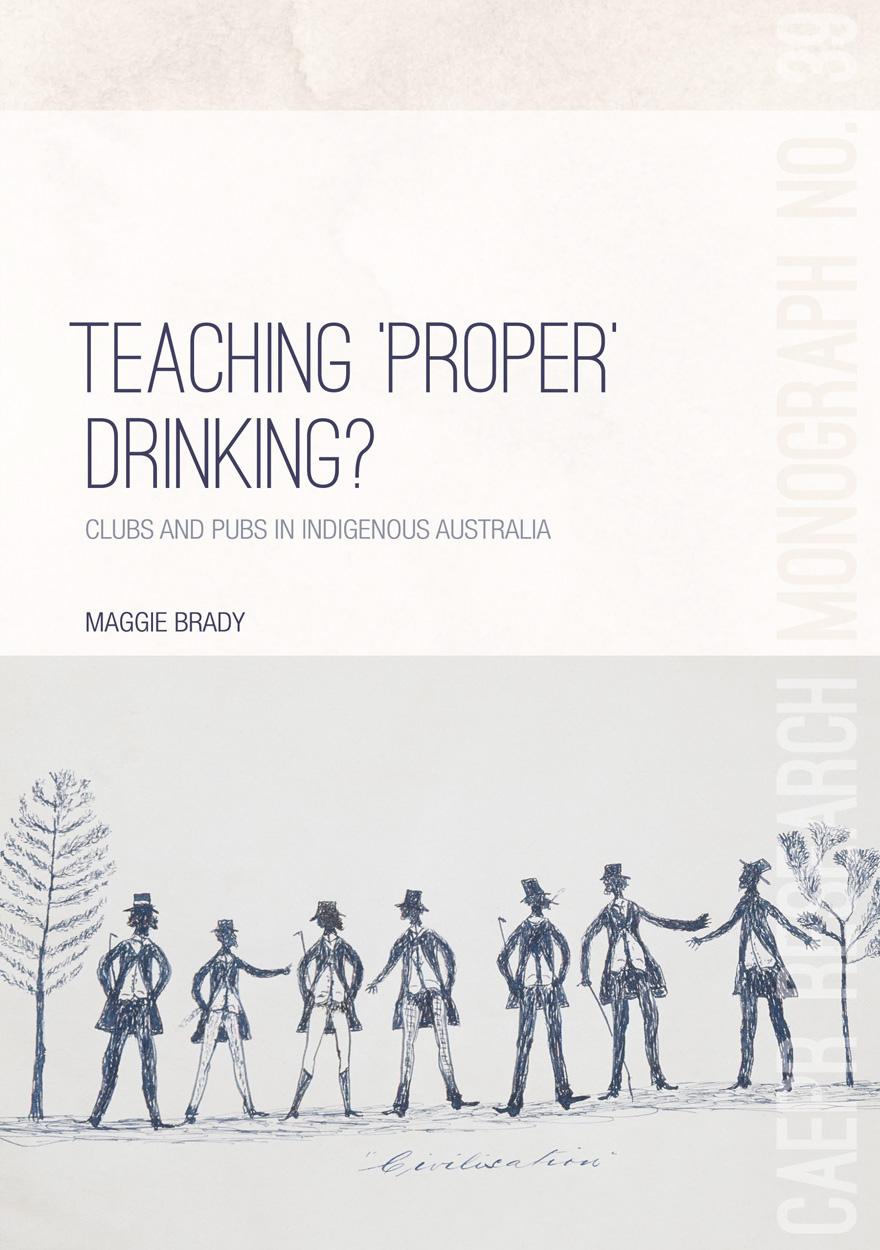
Teaching ‘Proper’ Drinking? »
Clubs and pubs in Indigenous Australia
Authored by: Maggie Brady
Publication date: December 2017
In Teaching ‘Proper’ Drinking?, the author brings together three fields of scholarship: socio-historical studies of alcohol, Australian Indigenous policy history and social enterprise studies. The case studies in the book offer the first detailed surveys of efforts to teach responsible drinking practices to Aboriginal people by installing canteens in remote communities, and of the purchase of public hotels by Indigenous groups in attempts both to control sales of alcohol and to create social enterprises by redistributing profits for the community good. Ethnographies of the hotels are examined through the analytical lens of the Swedish ‘Gothenburg’ system of municipal hotel ownership.
The research reveals that the community governance of such social enterprises is not purely a matter of good administration or compliance with the relevant liquor legislation. Their administration is imbued with the additional challenges posed by political contestation, both within and beyond the communities concerned.
‘The idea that community or government ownership and management of a hotel or other drinking place would be a good way to control drinking and limit harm has been commonplace in many Anglophone and Nordic countries, but has been less recognised in Australia. Maggie Brady’s book brings together the hidden history of such ideas and initiatives in Australia … In an original and wide-ranging set of case studies, Brady shows that success in reducing harm has varied between communities, largely depending on whether motivations to raise revenue or to reduce harm are in control.’
— Professor Robin Room, Director, Centre for Alcohol Policy Research, La Trobe University
In the Media
Read the Alice Spring News article: ‘Proper’ drinking: elusive goal but how hard have we tried?
Awards
Shortlisted – 2019 Chief Minister's Northern Territory History Book Award