



Search titles
Displaying results 11 to 20 of 1168.

Reshaping the State »
Chinese Political Institutions under Xi Jinping
Authored by: Wen-Hsuan Tsai
Publication date: February 2026
‘Based on extensive fieldwork and impressive analytic skills, Wen-Hsuan Tsai has produced the most detailed and informative account of the evolving political system in Xi Jinping’s China that I have ever read. It is essential reading for everyone seeking to understand the management and deployment of political power in contemporary China. The book convincingly shows that even though Xi Jinping may have centralized power in his own hands, institutions still matter. Indeed, they are holding China together.’
—Kjeld Erik Brødsgaard, Copenhagen Business School
‘This engaging and thought-provoking academic work reflects the scholar’s dedication to enhancing our understanding of Chinese governance. It blends institutional resonance with leadership dynamics, addressing the knowledge gap in the West about the complexities of the Chinese Communist Party’s resilience and institutions. By examining the idiosyncrasies, risks and challenges of contemporary China—both a major global influence and the world’s second-largest economy—it encourages readers to reflect deeply on its governance and implications.’
—Hon S. Chan, City University of Hong Kong
‘As a leading scholar on China’s elite politics, Dr Wen-Hsuan Tsai reveals how Xi Jinping reshaped the party-state to achieve institutional centralization and made and implemented domestic and foreign policy as the supreme leader of China. This book opens the “black box” of Chinese leadership politics, policymaking and implementation. It is a must-read for anyone who wants to gain deep knowledge about political dynamics in contemporary China.’
—Suisheng Zhao, University of Denver
Format: Hardback

CHS Toolkit: Training group leaders how to include people with chronic disease in community activities »
Authored by: Susan Abbott, Amy Vassallo, Paul Dugdale, David Greenfield
Publication date: April 2011
The purpose of this package is to support you to improve the inclusion of people with chronic disease in community activities in your local area. It contains information and resources to help you to plan, deliver and evaluate educational activities with your local community. The first section details the aim, rationale and background for the development of this package. The overall aim of this package is to educate community group leaders about chronic disease issues. Community leaders equipped with such knowledge will be better able to support people with chronic disease to manage their conditions while encouraging their participation in community group activities.
Download for free
Not available for purchase
CHS Guide: How to include people with chronic disease in community activities »
Authored by: Susan Abbott, Stefan Baku, Paul Dugdale, David Greenfield
Publication date: April 2011
This guide provides community group leaders with useful information and strategies to assist them in welcoming people with chronic disease to their activities. Group leaders may be enthusiasts in their specific activity. They may be fitness instructors or committee members, paid or voluntary, qualified or unqualified.
Download for free
Not available for purchase

Politics and State Building in Solomon Islands »
Edited by: Sinclair Dinnen, Stewart Firth
Publication date: May 2008
Politics and State Building in Solomon Islands examines a crisis moment in recent Solomon Islands history. Contributors examine what happened when unrest engulfed the capital of the small Melanesian country in the aftermath of the 2006 national elections, and consider what these events show about the Solomon Islands political system, the influence of Asian interests in business and politics, and why the crisis is best understood in the context of the country’s volatile blend of traditional and modern politics.
Until the disturbances of April 2006 and subsequent deterioration in bilateral relations between Australia and Solomon Islands under the Sogavare government, experts had hailed the Regional Assistance Mission to Solomon Islands (RAMSI) as an unqualified success. Some saw it as a model for ‘cooperative intervention’ in ‘failing states’ worldwide. Following these developments success seems less certain and aspects of the RAMSI model appear flawed.
Using the case of Solomon Islands, this book raises fundamental questions about the nature of ‘cooperative intervention’ as a vehicle for state building, asking whether it should be construed as a mainly technical endeavour or whether it is unavoidably a political undertaking with political consequences. Providing a critical but balanced analysis, Politics and State Building in Solomon Islands has important implications for the wider debate about international state-building interventions in ‘failed’ and ‘failing’ states.
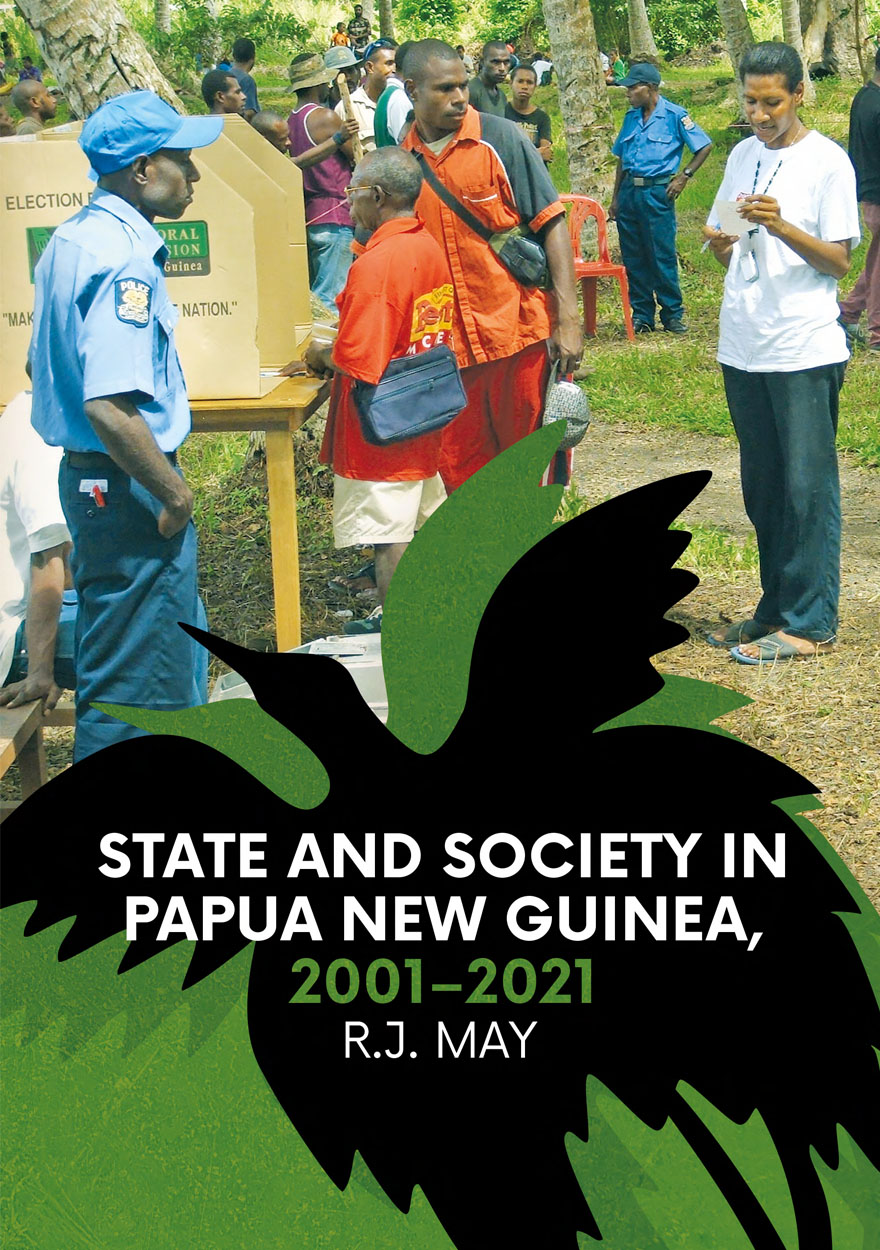
State and Society in Papua New Guinea, 2001–2021 »
Authored by: R.J. May
Publication date: August 2022
In a previous volume, State and Society in Papua New Guinea: The First Twenty-Five Years (2001, reprinted by ANU E Press in 2004), a collection of papers by the author published between 1971 and 2001 was put together to mark Papua New Guinea’s first 25 years as an independent state. This volume presents a collection of papers written between 2001 and 2021, which update the story of political and social development in Papua New Guinea in the first two decades of the twenty-first century.
The chapters cover a range of topics, from an evaluation of proposals for political reform in the early 2000s, a review of the discussion of ‘failing states’ in the island Pacific and the shift to limited preferential voting in 2007, to a detailed account of political developments from the move against Sir Michael Somare in 2011 to the election of Prime Minister Marape and his performance to 2022. There are also chapters on language policy, external and internal security, religious fundamentalism and national identity, and the sustainability of economic growth.

A New Rival State? »
Australia in Tsarist Diplomatic Communications
Publication date: October 2018
A New Rival State? is a unique collection of dispatches written in 1857–1917 by the Russian consuls in Melbourne to the Imperial Russian Embassy in London and the Russian Foreign Ministry in St Petersburg. Written by eight consuls, they offer a Russian view of the development of the settler colonies in the late nineteenth century and the first years of the federated Commonwealth of Australia. They cover the federalist movement, the changing domestic political situation, labour politics, the treatment of the Indigenous population, the ‘White Australia’ policy, Australia’s defensive capacity and foreign policy as part of the British Empire.
The bulk of the material is drawn from the Russian-language collection The Russian Consular Service in Australia 1857–1917, edited by Alexander Massov and Marina Pollard (2014), using documents from the archive of the Russian Foreign Ministry.
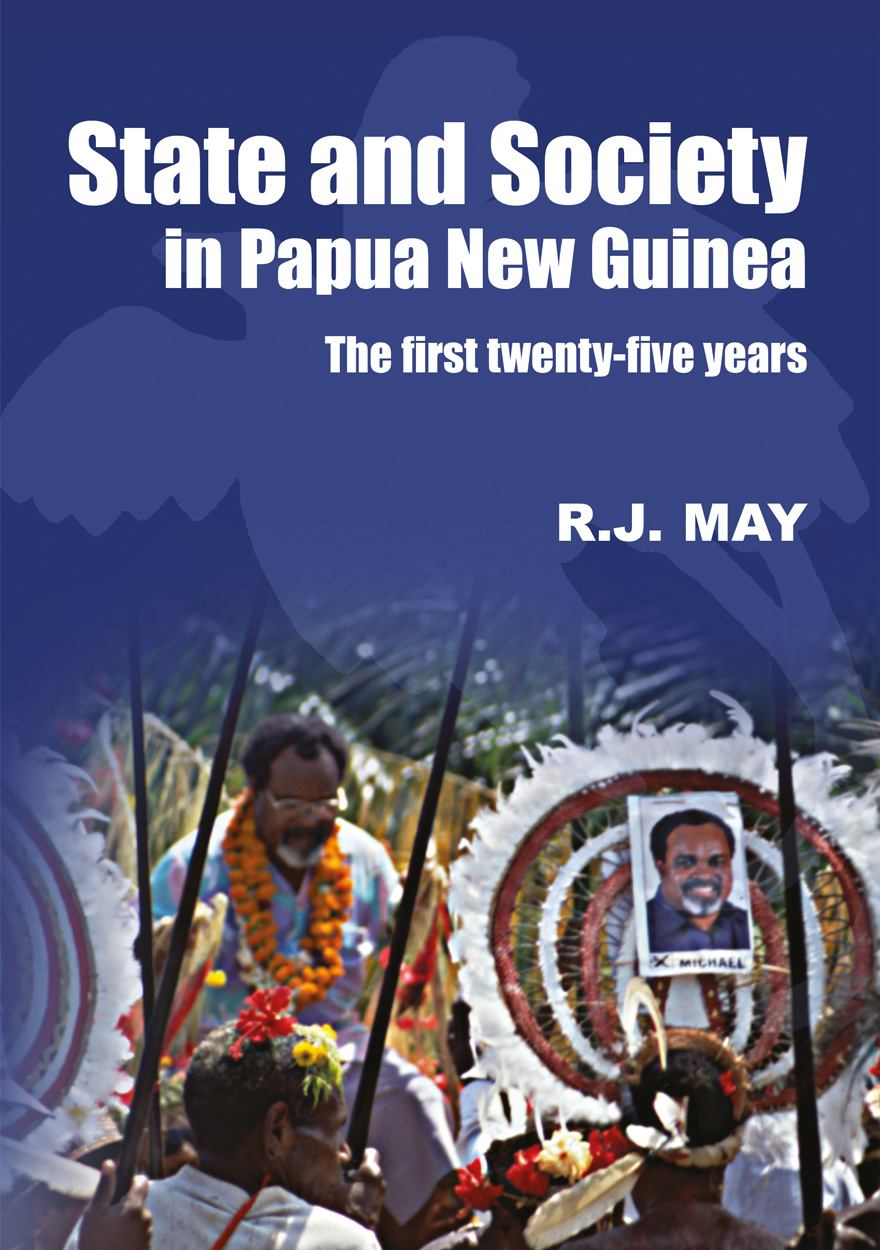
State and Society in Papua New Guinea »
The First Twenty-Five Years
Authored by: R.J. May
Publication date: May 2004
On the eve of Papua New Guinea’s independence in 1975 there were many – both within the country and outside – who predicted political anarchy, with the possibility of an army coup or authoritarian single-party dominance, and economic collapse. Such fears appeared to have been justified when in 1975 both the North Solomons (Bougainville) and Papua unilaterally declared their independence. In fact, however, PNG achieved a smooth transition, and in its first decade as a new state enjoyed a high degree of political and economic progress. It remains one of the few post-colonial states that has maintained an unbroken record of democratic government.
Nevertheless, from around the mid-1980s a number of problems have become apparent, including: a decline in government capability; increasing problems of urban and rural lawlessness; poor economic management, with growing evidence of nepotism and corruption; environmental degradation associated with mining and logging, and increasing pressure on land; and, from 1988, a rebellion on Bougainville.
This volume brings together a number of papers written by the author between 1971 and 2001 which address issues of political and economic development and social change in Papua New Guinea.
Dr R.J. May is a senior fellow in the Department of Political and Social Change, Research School of Pacific and Asian Studies at The Australian National University. He was formerly a senior economist with the Reserve Bank of Australia and later foundation director of IASER in PNG (now the National Research Institute). In 1976 he was awarded the Independence Medal for his services to banking and research in PNG.

After the Coup »
Myanmar’s Political and Humanitarian Crises
Edited by: Anthony Ware, Monique Skidmore
Publication date: December 2023
The coup in Myanmar on 1 February 2021 abruptly reversed a decade-long flirtation with economic and political freedoms. The country has since descended into civil war, the people have been plunged back into conflict and poverty, and the state is again characterised by fragility and human insecurity. As the Myanmar people oppose the regime and fight for their rights, the international community must find ways to act in solidarity. There is an urgent need for new policy settings and for practical engagement with local partners and recipient groups.
The contributors to After the Coup offer timely insights into ways international actors can try to reduce the suffering of millions of citizens who are again being held hostage by a brutal and self-serving regime. Chapters analyse topics including coercive statecraft, international justice, Rakhine State (Rohingya) dynamics, pandemic weaponisation, higher education, non-state welfare and aid delivery, activism from exile, self-determination and power sharing in the National Unity Government’s alternative constitution, and the roles of China and the Association of Southeast Asian Nations.

Civil Society and Transitional Justice in Asia and the Pacific »
Publication date: November 2019
Over the last two decades, civil society has helped catalyse responses to the legacies of violent conflicts and oppressive political regimes in Asia and the Pacific. Civil society has advocated for the establishment of criminal trials and truth commissions, monitored their operations and pushed for take-up of their recommendations. It has also initiated community-based transitional justice responses. Yet, there has been little in-depth examination of the breadth and diversity of these roles. This book addresses this gap by analysing the heterogeneity of civil society transitional justice activity in Asia and the Pacific.
Based upon empirically grounded case studies of Timor-Leste, Indonesia, Cambodia, Myanmar, Bougainville, Solomon Islands and Fiji, this book illustrates that civil society actors can have different – and sometimes competing – priorities, resources and approaches to transitional justice. Their work is also underpinned by diverse understandings of ‘justice’. By reflecting on the richness of this activity, this book advances contemporary debates about transitional justice and civil society. It will also be a valuable resource for scholars and practitioners working on Asia and the Pacific.
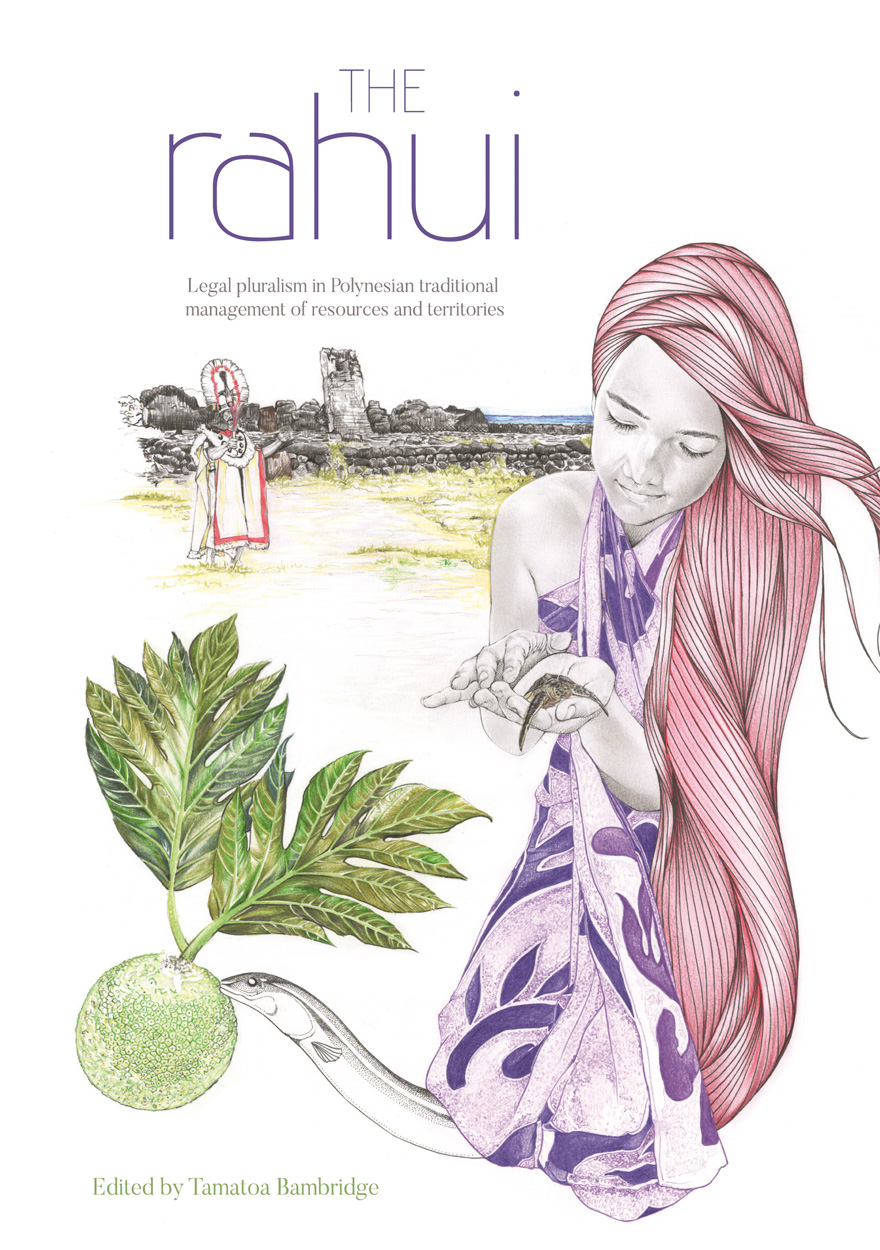
The Rahui »
Legal pluralism in Polynesian traditional management of resources and territories
Edited by: Tamatoa Bambridge
Publication date: March 2016
This collection deals with an ancient institution in Eastern Polynesia called the rahui, a form of restricting access to resources and/or territories.
While tapu had been extensively discussed in the scientific literature on Oceanian anthropology, the rahui is quite absent from secondary modern literature. This situation is all the more problematic because individual actors, societies, and states in the Pacific are readapting such concepts to their current needs, such as environment regulation or cultural legitimacy. This book assembles a comprehensive collection of current works on the rahui from a legal pluralism perspective. This study as a whole underlines the new assertion of identity that has flowed from the cultural dimension of the rahui. Today, rahui have become a means for indigenous communities to be fully recognised on a political level. Some indigenous communities choose to restore the rahui in order to preserve political control of their territory or, in some cases, to get it back. For the state, better control of the rahui represents a way of asserting its legitimacy and its sovereignty, in the face of this reassertion by indigenous communities.