



Search titles
Displaying results 1 to 10 of 136.

East Asia Forum Quarterly: Volume 18, Number 2, 2026 »
Publication date: May 2026
There is renewed focus on cooperation among middle powers following Canadian Prime Minister Mark Carney’s address at the March 2026 World Economic Forum in Davos. But the shift towards more active middle power diplomacy predates Carney’s remarks. This issue of the East Asia Forum Quarterly brings together analyses of how key middle powers across the Asia Pacific are seeking to work in concert—despite the significant constraints to strengthen their strategic position and sustain the regional and international order. The regional landscape is still complicated, but cannot be fully understood through the lens of great power competition alone.
Download for free
Not available for purchase
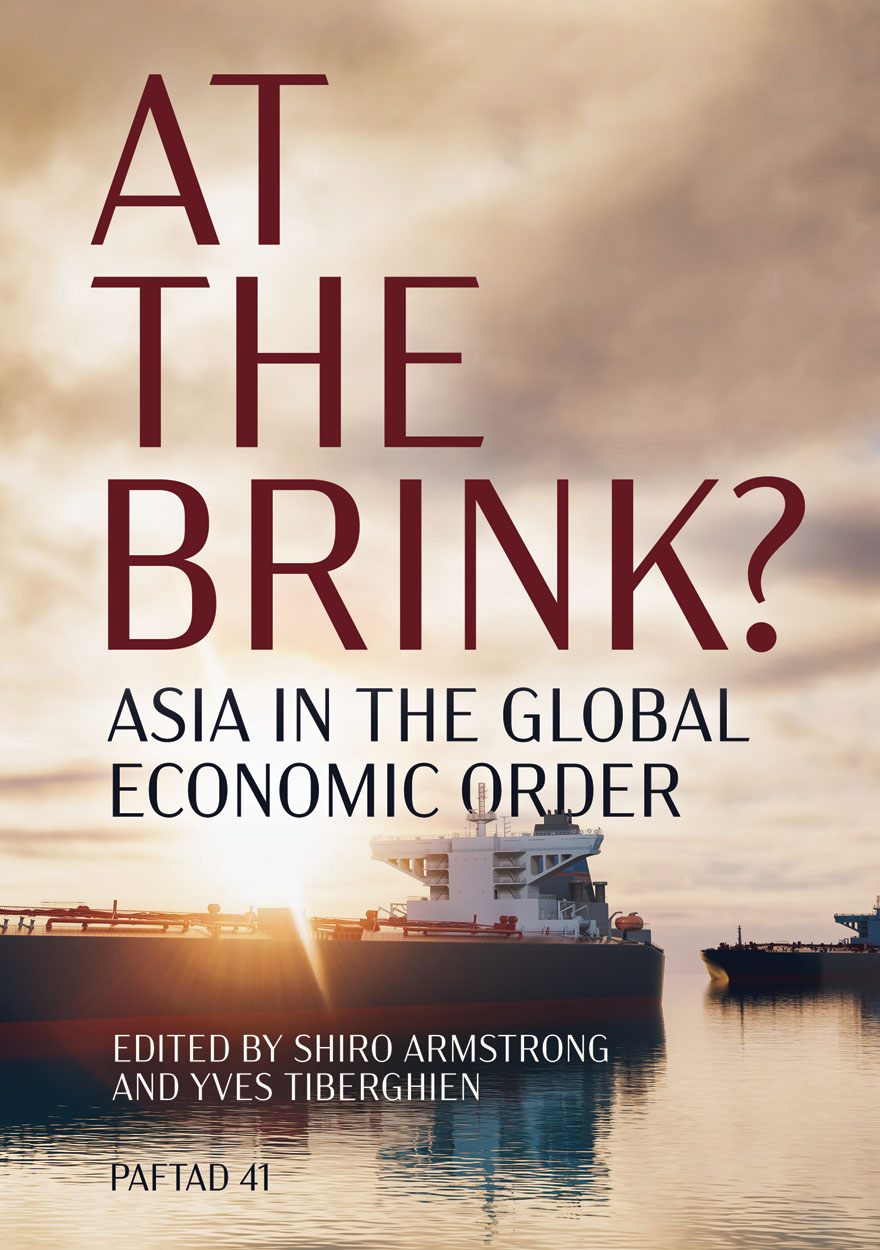
At the Brink? »
Asia in the Global Economic Order
Edited by: Shiro Armstrong, Yves Tiberghien
Publication date: 2026
The global economic order is undergoing a period of profound transformation. Heightened geopolitical rivalry, rapid technological change and growing concerns about economic security are reshaping trade, investment, supply chains and global governance. These developments raise fundamental questions about the future of openness, cooperation and economic growth for Asia and the Pacific region.
This volume brings together leading scholars and policy experts from across Asia and the Pacific to examine how the region is navigating an increasingly contested international economic environment. The chapters explore the dynamics of great-power competition, the restructuring of global supply chains, the strategic role of technology and the pressures facing the liberal international economic order. They also consider the prospects for regional cooperation and the policy choices that may allow the region to sustain economic integration and prosperity in a more fragmented world. The book offers nine innovative proposals to buttress the global economic order and respond to current challenges.
Based on papers presented at the 41st Pacific Trade and Development (PAFTAD) Conference, At the Brink? offers timely analysis of the evolving global economic landscape and provides insights into how Asia and the wider international community can respond to the challenges of a shifting world economy.
Coming soon
Notify me
East Asia Forum Quarterly: Volume 18, Number 1, 2026 »
Publication date: February 2026
Critical minerals and rare earths have moved to the centre of economic security agendas. As decarbonisation accelerates and US–China rivalry deepens, governments are racing to secure the supply chains that power green technologies and advanced manufacturing. This issue of the East Asia Forum Quarterly examines the geopolitics of Asia’s resources trade. It explores the tensions between interdependence and rising protectionism, or ‘resource nationalism’, and assesses the implications for regional growth and the global energy transition. Strategic competition may be reshaping mineral supply chains, but the region’s enduring complementarity between producers and consumers suggests that managing vulnerabilities—rather than dismantling interdependence—offers the more durable path forward.
Download for free
Not available for purchase
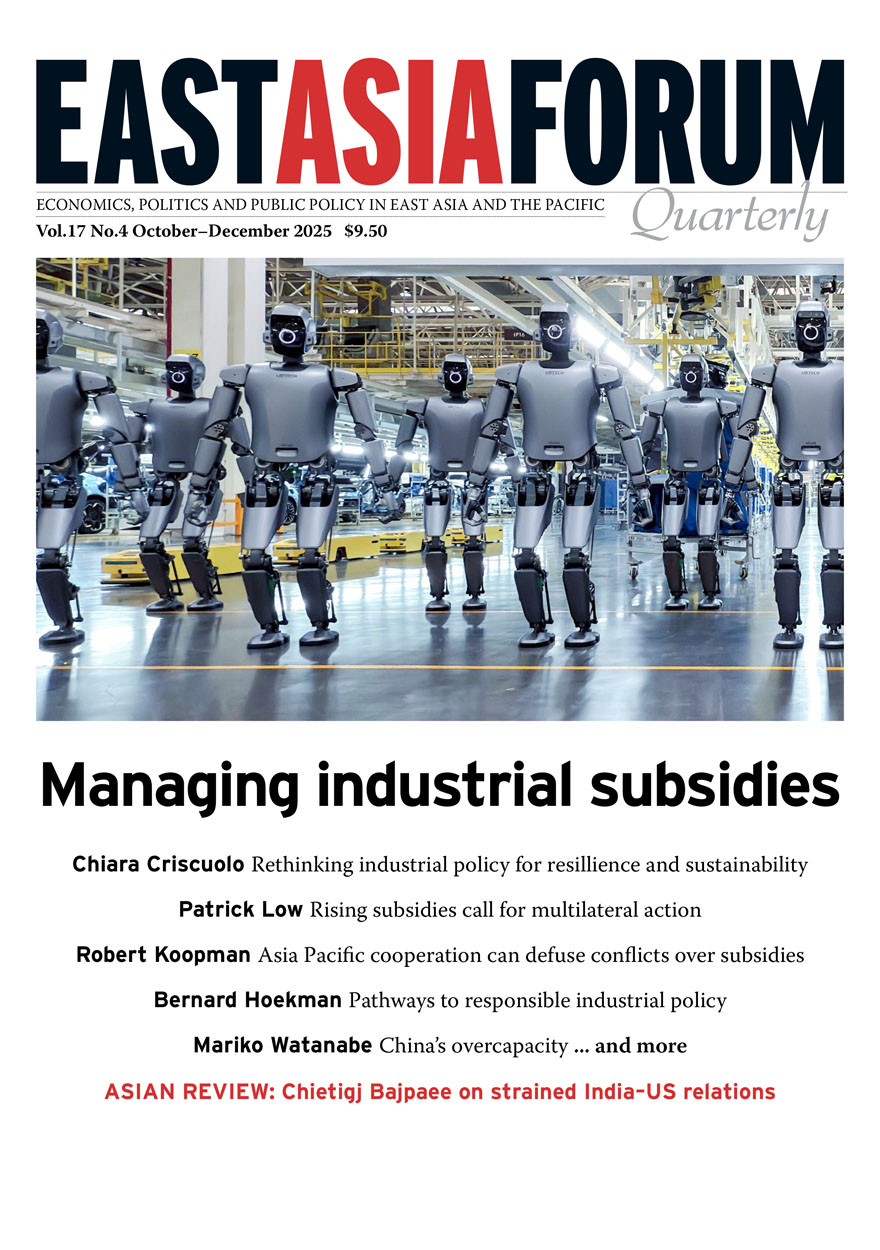
East Asia Forum Quarterly: Volume 17, Number 4, 2025 »
Publication date: December 2025
Industrial policy has returned to the mainstream, with subsidies as an increasingly popular policy instrument of choice. While East Asia is deeply invested in the open global trade regime, multilateral rules are outdated, weakly enforced and ill-equipped to manage the widening gap among countries with unequal fiscal capacity. This issue of the East Asia Forum Quarterly examines the rationale, forms and effects of industrial policy resurgence, identifying both its risks and the conditions for its success. It argues that regional coordination of industrial policy would require greater transparency and peer review, using existing frameworks as well as new plurilateral agreements for that purpose. The region has the platforms and leverage to lead collective efforts to manage industrial policies without undermining the rules-based multilateral order, but whether it can will depend on mobilising the political will.
Download for free
Not available for purchase
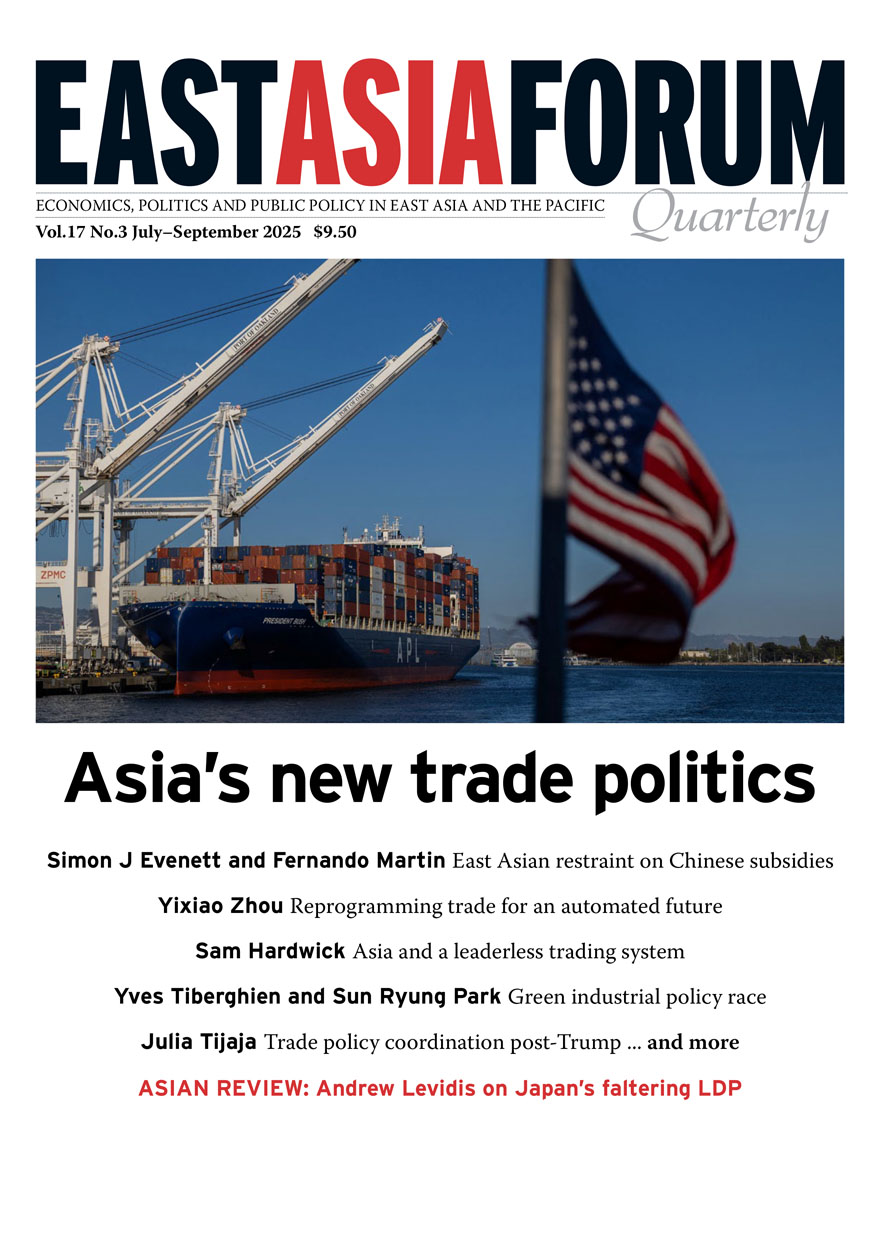
East Asia Forum Quarterly: Volume 17, Number 3, 2025 »
Publication date: August 2025
US protectionism is reshaping Asia’s trade politics. Rising tariffs and unpredictability from Washington are chilling investment, disrupting supply chains and driving governments towards transactional deals that corrode longstanding multilateral rules. This edition of East Asia Forum Quarterly maps the terrain on which Asia must choose between short-term accommodation and long-term growth and resilience. In an increasingly fragmented world, Asia’s best defence is to strengthen institutions to safeguard integration and hunker down behind the multilateral system—while preparing to take a leading role in rebuilding it.
Download for free
Not available for purchase
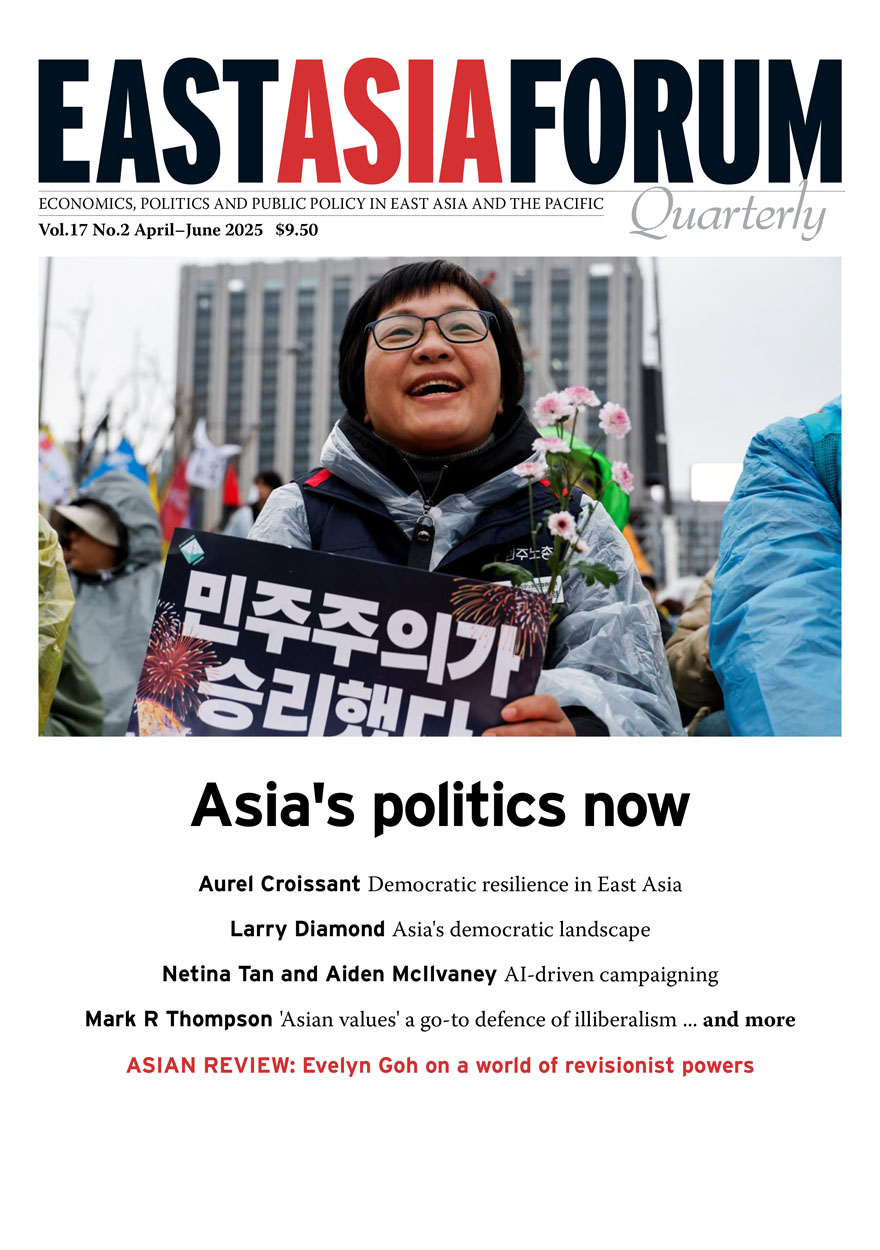
East Asia Forum Quarterly: Volume 17, Number 2, 2025 »
Publication date: May 2025
Asia is home to some of the world’s most diverse political systems—from liberal democracies to authoritarian regimes and hybrid states. As global democracy faces renewed pressure, this edition of East Asia Forum Quarterly explores how political systems across Asia are evolving amid rising autocratisation. It examines why economic development alone cannot explain democratic outcomes in the region and how authoritarian success stories are reshaping debates about governance. With ideological contestation intensifying, Asia is not just adapting to global political trends—it is helping to define them.
Download for free
Not available for purchase

East Asia Forum Quarterly: Volume 17, Number 1, 2025 »
Publication date: March 2025
The global landscape has shifted dramatically since Donald Trump’s return to the presidency in January 2025. His decision to exit the Paris Agreement and impose heavy tariffs has escalated uncertainty surrounding both climate action and the global economic order. This edition of East Asia Forum Quarterly explores how ASEAN and its regional partners can step in to safeguard multilateral trade and climate cooperation, advocating for green trade policies and sustainable investment. The region has the potential to reshape the global response to climate change and maintain economic stability through strategic collaboration.
Download for free
Not available for purchase

East Asia Forum Quarterly: Volume 16, Number 4, 2024 »
Publication date: December 2024
The global economy’s trajectory toward instability has been evident since Trump 1.0. A second Trump presidency will likely amplify protectionism, strategic competition and global disorder. This edition of East Asia Forum Quarterly examines how Asia can respond, emphasising the region’s role in defending multilateralism, addressing climate change and ensuring global stability.
Download for free
Not available for purchase
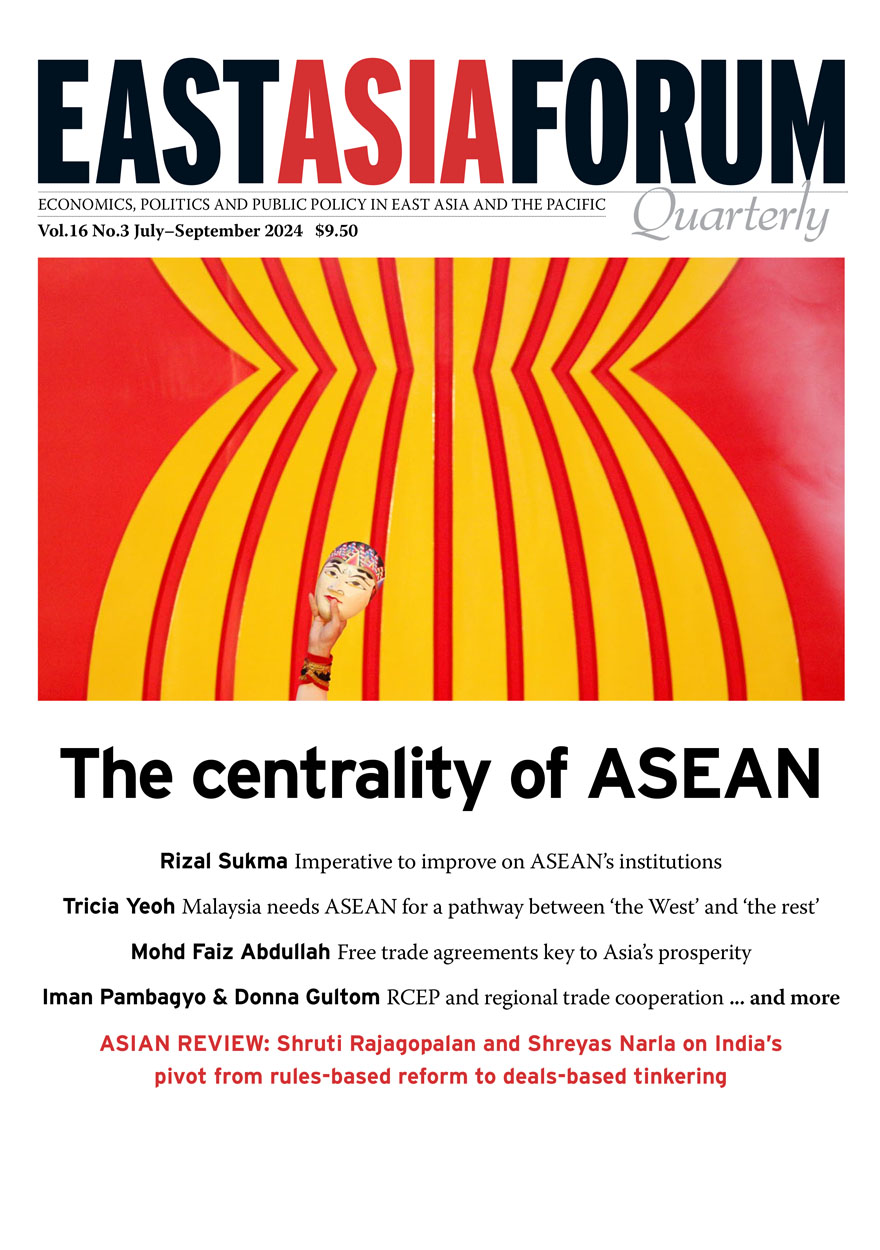
East Asia Forum Quarterly: Volume 16, Number 3, 2024 »
Publication date: September 2024
ASEAN's rise as the cornerstone of regional diplomacy and security in the 1990s may have seemed improbable, but it was crucial. Today, a shifting regional geopolitical landscape challenges ASEAN’s relevance. Great power competition and waning global political commitment to multilateral arrangements threaten its role as East Asia’s 'steering committee'. This edition of East Asia Forum Quarterly explores how ASEAN can maintain its centrality, calling for proactive leadership and stronger regional cooperation.
Download for free
Not available for purchase

East Asia Forum Quarterly: Volume 16, Number 2, 2024 »
Publication date: June 2024
Key in globalisation, supply chains connect producers to consumers across nations and specialisations. Recently, geopolitics, the COVID-19 pandemic and European conflicts have reshaped these networks. Supply chains are increasingly influenced by statecraft and protectionism, moving away from multilateral cooperation. This issue of East Asia Forum Quarterly explores the rapid transformation of supply chains, the paradox of digital innovation in trade and the consequences of economic isolationism.
Download for free
Not available for purchase