



Books
Browse or search ANU Press' range of books or find out more about the publications' authors and co-publishers. Download the book for free or buy a print-on-demand copy.
Displaying results 631 to 640 of 803.
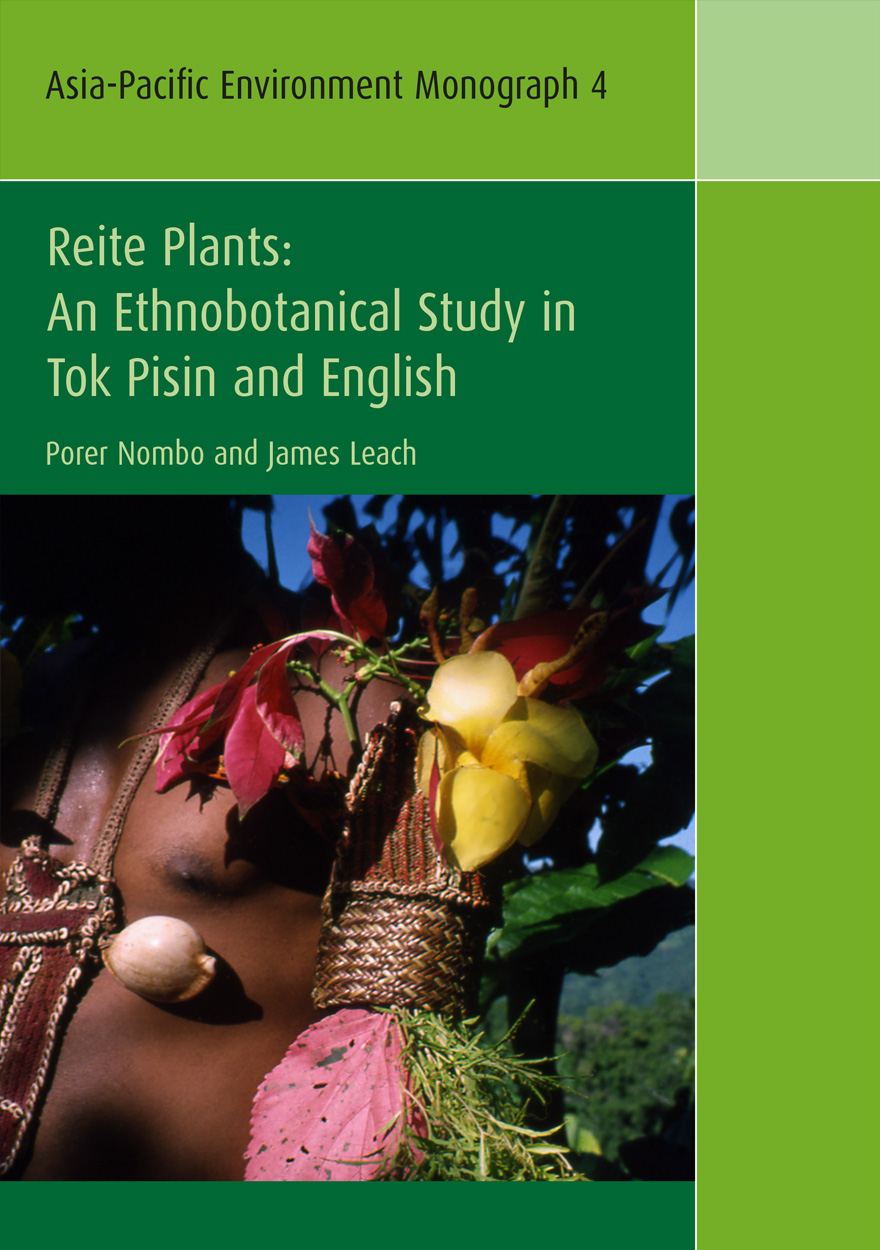
Reite Plants »
An Ethnobotanical Study in Tok Pisin and English
Authored by: Porer Nombo, James Leach
Publication date: January 2010
Reite Plants is a documentation and discussion of the uses of plants by speakers of the Nekgini language, a people who reside in the hinterland of the Rai Coast in northern Papua New Guinea. High quality images and detailed information about traditional customary practices using plants provide a unique entry into understanding Nekgini social and cultural life. The book contains a discussion of the ownership of plant knowledge in the context of both local and contemporary global trends. As a dual language, co-authored text, the book is a unique contribution to the ethnobotany and anthropology of Melanesia. Reite Plants represents the product of a long term collaborative work between the authors.
This book makes an important contribution … Nombo and Leach provide an exciting example of how much a deeper exploration of cultural context adds to the field of ethnobotany. It will make very good company with the classic ethnobiological collaborative work of Saem Majnep and Ralph Bulmer on the birds and animals of the Madang highlands.
— Robin Hide, The Australian National University

Gunnar Landtman in Papua »
1910 to 1912
Authored by: David Lawrence, Pirjo Varjola
Publication date: January 2010
Despite poverty and neglect the coastal Kiwai of the northern Torres Strait and Fly estuary are a strong and vibrant people with a long tradition of work in the marine industries of the Torres Strait. Regrettably their current social, economic and political problems are marginal to both Papua New Guinea and Australia. Gunnar Landtman’s research, undertaken between 1910 and 1912, is still a foundation stone for understanding the position of the Kiwai today. In those two years in Papua, Landtman managed to record a large collection of valuable legends and stories, many of which are still told today. He travelled widely throughout the Torres Strait, the southwest coast of Papua and the Fly estuary and even to the Gulf District. He made a comprehensive collection of Kiwai material culture now housed in the Museum of Cultures in Helsinki and a second, duplicate set for the Cambridge Museum. He also collected some of the earliest examples of Gogodala material culture available for research. In 1913, he published, Nya Guinea färden [New Guinea expedition], a detailed travelogue of his work and life among the Kiwai and, while he wrote a substantial corpus of work on the Kiwai in English, Swedish and Finnish over the next twenty years, this personal account in Swedish has not been translated into English before. It forms a crucial link between Landtman’s serious academic works and his intimate personal journey of discovery. The aim of this book is to bring the personal face of the serious anthropologist to greater attention.
David Lawrence began studying the Gunnar Landtman collections held by the National Museum of Finland when he was researching customary exchange across the Torres Strait for his doctorate at James Cook University. He was also fortunate to be able to spend two years of fieldwork in the Fly estuary region and visited nearly all the communities described by Landtman. He is a Visiting Fellow at the Resource Management in Asia/Pacific program of The Australian National University and has published works on Kakadu National Park and the Great Barrier Reef Marine Park.
Introducing China »
The World's Oldest Great Power Charts its Next Comeback
Authored by: Ron Huisken
Publication date: January 2010
China’s transformation has been patiently, methodically and very deliberately constructed by a leadership group that has equally carefully protected its monopoly on power. Today’s China is proceeding with great seriousness and determination to become a first-rank state with a balanced portfolio of power and no major vulnerabilities. China takes itself very seriously and is inviting the world to overlook the formidable hard power assets it is determined to acquire in favour of simply enjoying the fruits of its market and trusting in the sincerity of its rhetoric on being determined to become a benign and peaceful new-age major power.
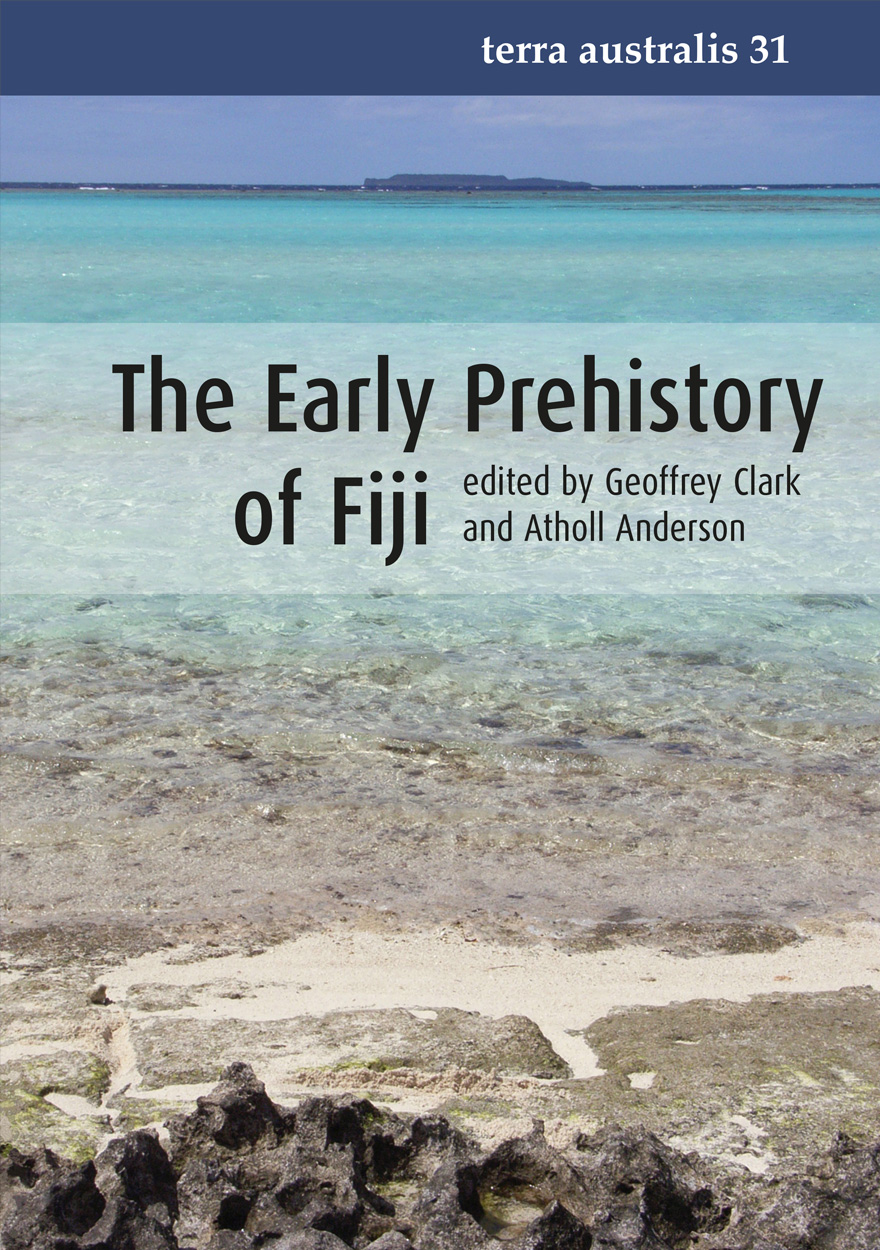
The Early Prehistory of Fiji »
Edited by: Geoffrey Clark, Atholl Anderson
Publication date: December 2009
I enjoyed reading this volume. It is rare to see such a comprehensive report on hard data published these days, especially one so insightfully contextualised by the editors’ introductory and concluding chapters. These scholars and the others involved in the work really know their stuff, and it shows. The editors connect the preoccupations of Pacific archaeologists with those of their colleagues working in other island regions and on “big questions” of colonisation, migration, interaction and patterns and processes of cultural change in hitherto-uninhabited environments. These sorts of outward-looking, big-picture contextual studies are invaluable, but all too often are missing from locally- and regionally-oriented writing, very much to its detriment. In sum, the work strongly advances our understanding of the early prehistory of Fiji through its well-integrated combination of original research and the reinterpretation of existing knowledge in the context of wider theoretical and historical concerns. In doing so The Early Prehistory of Fiji makes a truly substantial contribution to Pacific and archaeological scholarship.
Professor Ian Lilley, The University of Queensland

Phoenix from the Ashes? »
Russia's Defence Industrial Complex and its Arms Exports
Authored by: Cameron Scott Mitchell
Publication date: December 2009
The continued existence of the Russian defence and arms industry (OPK) was called into question following the disintegration of the Soviet Union in 1991. Industry experts cited the lack of a domestic market, endemic corruption, and excess capacity within the industry as factors underpinning its predicted demise. However, the industry’s export customers in China, India and Iran during those early years became the OPK’s saving grace. Their orders introduced hard currency back into the industry and went a long way to preventing the forecasted OPK collapse. Although pessimistic predictions continued to plague the OPK throughout the 1990s, the valuable export dollars provided the OPK the breathing space it needed to claw back its competitive advantage as an arms producer. That revival has been further underpinned by a new political commitment, various research and development initiatives, and the restoration of defence industry as a tool of Russian foreign policy.
The short-term future of the Russian OPK looks promising. The rising domestic defence order is beginning to challenge the export market as the OPK’s most important customer. Meanwhile, exports will be safeguarded by continued foreign demand for niche Russian defence products. Although the long-term future of the OPK is more difficult to predict, Russia’s solid research and development foundation and successful international joint military ventures suggest that the current thriving trend in exports is likely to continue. Russia represents the next generation of affordable and rugged military equipment for the arsenals of the developing world. Coupled with Russia’s growing ability to rearm itself through higher oil prices and a more streamlined defence industry, the future of the OPK looks bright.

One World—Many Paths to Peace »
Edited by: Venerable Alex Bruce
Publication date: November 2009
In June 2007, The Australian National University’s College of Law hosted an extraordinary symposium in Canberra of religious leaders to discuss the issue of religion and world peace. In a world torn by violence and intolerance in the name of religion, the visit to Australia of His Holiness the Dalai Lama represented an ideal opportunity to bring together representatives of the Buddhist, Christian, Islamic and Jewish traditions to further the fundamental message that the world’s religions are really causes for peace and harmony. In the presence of His Holiness the Dalai Lama, representatives of the Christian, Jewish and Islamic spiritual traditions explained why their respective traditions embodied the highest ideals of wisdom and compassion and thus were not the principal cause of war and dissention within society. As part of that process, this volume includes chapters that explain the basic tenets of Christianity, Buddhism, Islam and Judaism. Experts in their fields have written these chapters for the sole purpose of presenting their spiritual tradition in as transparent and accessible a form as possible
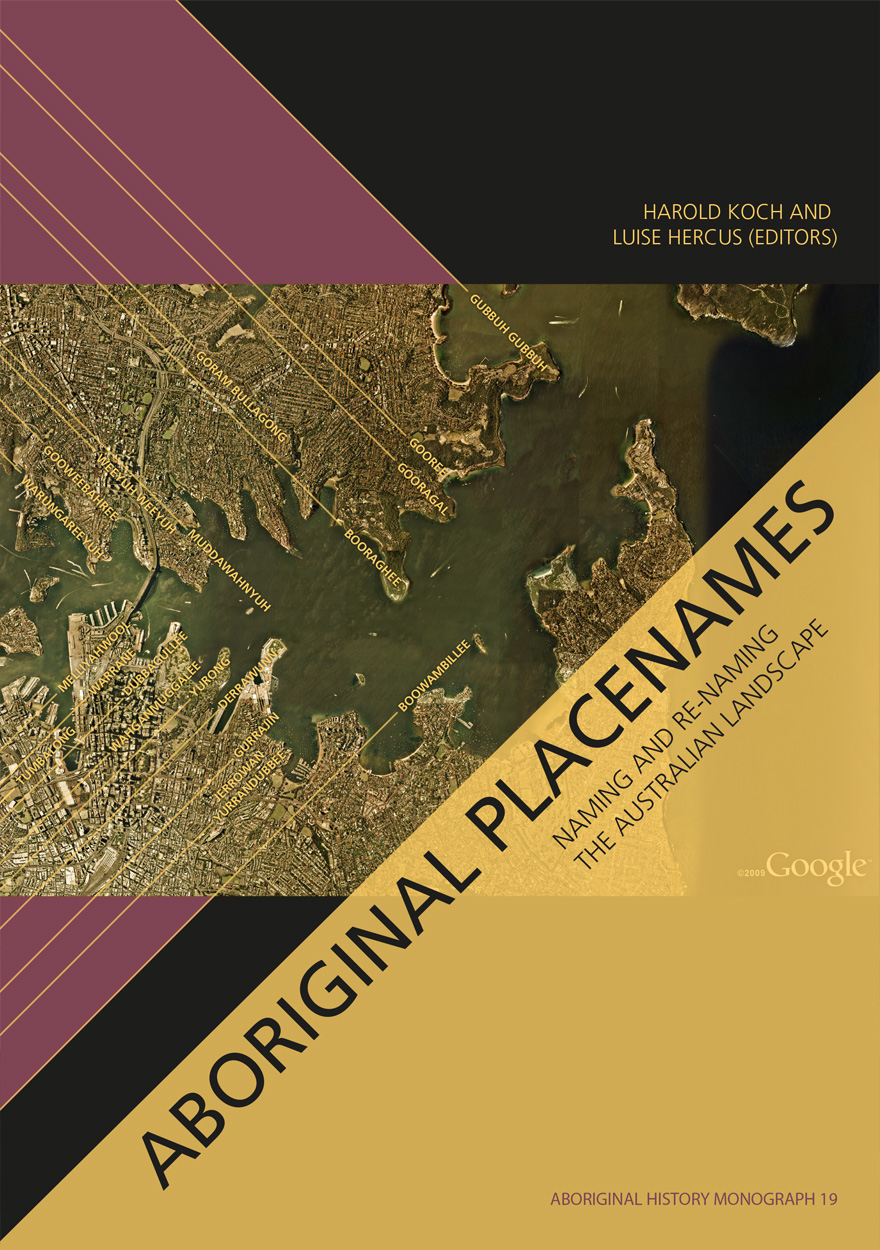
Aboriginal Placenames »
Naming and re-naming the Australian landscape
Edited by: Harold Koch, Luise Hercus
Publication date: October 2009
Aboriginal approaches to the naming of places across Australia differ radically from the official introduced Anglo-Australian system. However, many of these earlier names have been incorporated into contemporary nomenclature, with considerable reinterpretations of their function and form. Recently, state jurisdictions have encouraged the adoption of a greater number of Indigenous names, sometimes alongside the accepted Anglo-Australian terms, around Sydney Harbour, for example. In some cases, the use of an introduced name, such as Gove, has been contested by local Indigenous people.
The 19 studies brought together in this book present an overview of current issues involving Indigenous placenames across the whole of Australia, drawing on the disciplines of geography, linguistics, history, and anthropology. They include meticulous studies of historical records, and perspectives stemming from contemporary Indigenous communities. The book includes a wealth of documentary information on some 400 specific placenames, including those of Sydney Harbour, the Blue Mountains, Canberra, western Victoria, the Lake Eyre district, the Victoria River District, and southwestern Cape York Peninsula.
For more information on Aboriginal History Inc. please visit aboriginalhistory.org.au.

The Architecture of Security in the Asia-Pacific »
Edited by: Ron Huisken
Publication date: October 2009
We cannot expect in East Asia over the foreseeable future to see the sort of conflation of sovereign states that has occurred in Europe. We must anticipate that, for the foreseeable future, the requirement will be for the sensible management and containment of competitive instincts.
The establishment of a multilateral security body in East Asia that includes all the key players, and which the major powers invest with the authority to tackle the shaping of the regional security order, remains a critical piece of unfinished business.

Timing is Everything »
The Politics and Processes of New Zealand Defence Acquisition Decision Making
Authored by: Peter Greener
Publication date: October 2009
This book identifies the critical factors that shaped and influenced New Zealand’s defence acquisition decision-making processes from the election of the Fourth Labour Government in 1984 and the subsequent ANZUS crisis, through to the 11 September 2001 terrorist attacks on the United States and the following ‘war on terror’. It explores and analyses decision-making processes in relation to the ANZAC frigates, the military sealift ship HMNZS Charles Upham, the F-16 strike aircraft, the P-3C Orion maritime patrol aircraft upgrade, and the LAV IIIs.

What does the Honeybee See? And how do we Know? »
A critique of scientific reason
Authored by: Adrian Horridge
Publication date: October 2009
This book is the only account of what the bee, as an example of an insect, actually detects with its eyes. Bees detect some visual features such as edges and colours, but there is no sign that they reconstruct patterns or put together features to form objects. Bees detect motion but have no perception of what it is that moves, and certainly they do not recognize “things” by their shapes. Yet they clearly see well enough to fly and find food with a minute brain. Bee vision is therefore relevant to the construction of simple artificial visual systems, for example for mobile robots. The surprising conclusion is that bee vision is adapted to the recognition of places, not things.
In this volume, Adrian Horridge also sets out the curious and contentious history of how bee vision came to be understood, with an account of a century of neglect of old experimental results, errors of interpretation, sharp disagreements, and failures of the scientific method. The design of the experiments and the methods of making inferences from observations are also critically examined, with the conclusion that scientists are often hesitant, imperfect and misleading, ignore the work of others, and fail to consider alternative explanations. The erratic path to understanding makes interesting reading for anyone with an analytical mind who thinks about the methods of science or the engineering of seeing machines.