


LCNAU Studies in Languages and Cultures

LCNAU Studies in Languages and Cultures Series publishes works on languages and cultures, showcasing the research profile of the sector. Volumes may take the form of monographs or edited collections, and cover one or more languages, in areas such as pedagogy, languages and technology, language policy, translation and interpreting, and studies in culture, in the broadest sense (including cinema, history, literature, gender studies, etc., relative to one or more languages).

Works are to be in English, with references given both in the original language, and in English translation. Manuscripts should be in the range of 60,000 to 80,000 words.

Volumes accepted for publication may contain graphs and tables, and an agreed number of images for which permission to publish has been supplied prior to publication.

LCNAU is committed to mentoring its members and to assisting them to achieve high quality research and publication outputs. Membership of LCNAU is a prerequisite for publication in LCNAU Studies in Languages and Cultures.

The LCNAU Studies Series is due to publish its first three volumes in 2024 and 2025, but it is not yet able to accept unsolicited manuscripts.

Please note: The following list of titles is sorted by publication date, with the most recent first.

Displaying results 1 to 2 of 2.
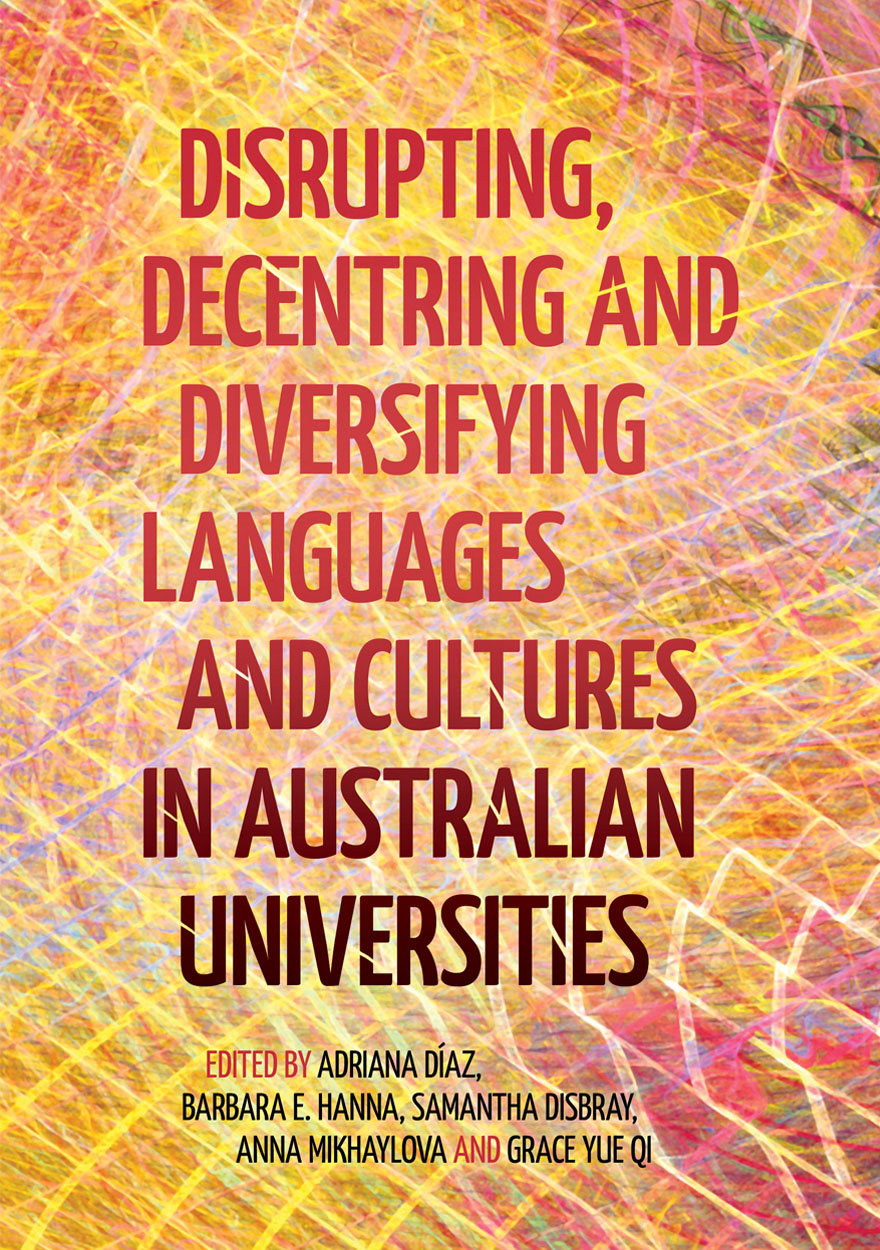
Disrupting, Decentring and Diversifying Languages and Cultures in Australian Universities »
Publication date: November 2025
How can languages and cultures in Australian higher education be disrupted, decentred and diversified? Contributors to this volume advance theoretical, critical (self-)reflections and position papers, pedagogical explorations of classroom practice as well as data-driven empirical investigations to challenge, resist and stretch how languages and cultures are both taught and imagined in research. From metaphorical conceptualisations of knowledge production, discussions of virtual reality, and innovation and creativity viewed through the lens of Indigenous epistemologies, to language learning curricula designed to challenge heteronormativity and cisgenderism, and a reconceptualisation of the role of language educators as designers, each chapter emphasises the vital role of innovation as the driving force of positive disruption. What emerges here is the resilience and adaptability demanded of languages and cultures researchers and educators as they navigate an ever-shifting educational landscape. Taken as a whole, this volume serves as a testament to these scholars’ collective capacity to adapt, evolve, embrace and actively drive change, fostering a more diverse, equitable and inclusive future for their field.

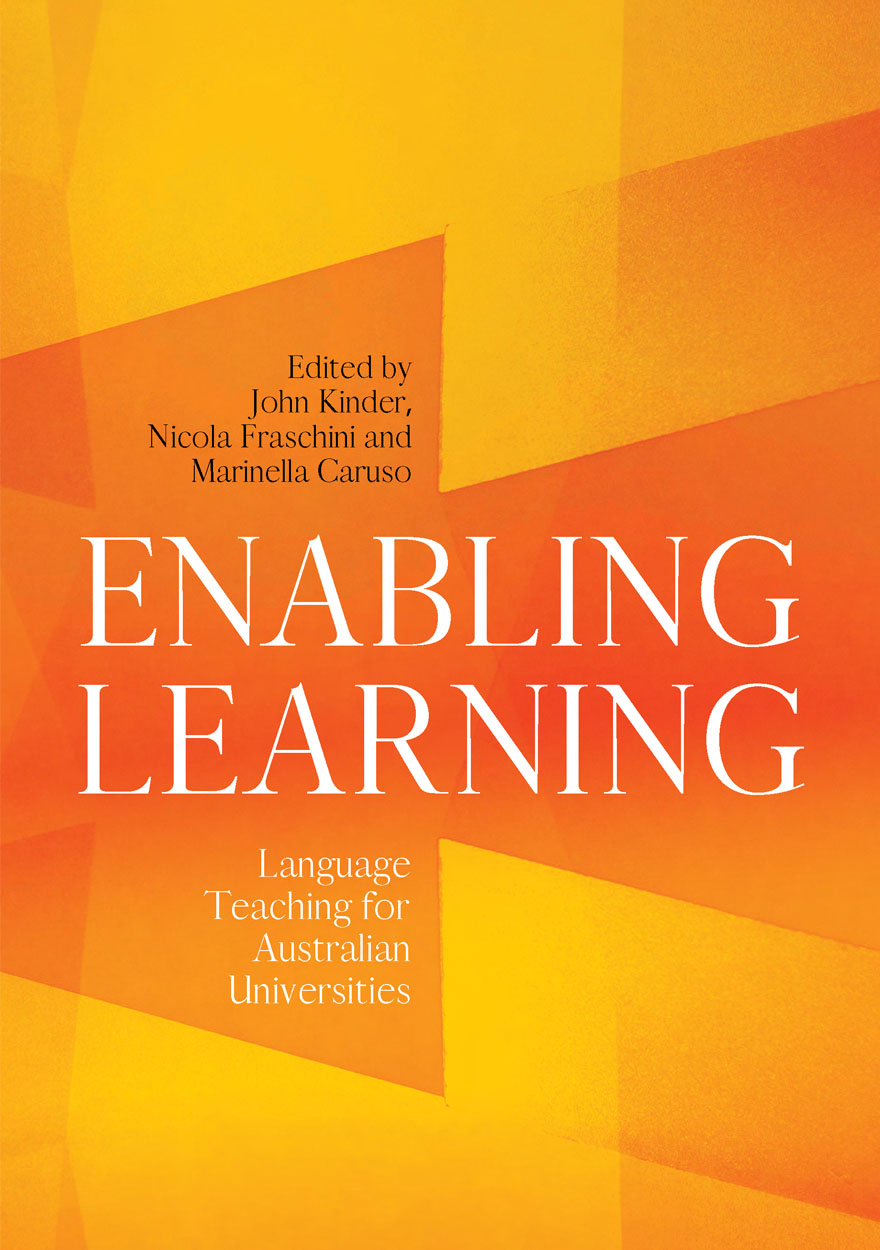
Enabling Learning »

Language Teaching for Australian Universities

Publication date: December 2024
Enabling Learning: Language Teaching for Australian Universities illuminates efforts by tertiary language educators to facilitate the learning of languages at the university level. The educators’ endeavours recounted in this volume address a range of specific aspects of the language learning experience or language teaching within tertiary education institutions. The chapters offer an overview of learning approaches and experiences, from the beginner to the advanced level, of different learning environments, from the traditional to online and hybrid, and of different languages, from Indigenous to European to East Asian. This work foregrounds the relevance of improved accessibility to language learning in the university context, presents innovative educational solutions informed by the examination of specific contexts, and asserts the importance of developing intercultural competence.